




Popular reservoir will be drained and closed to recreation amid Denver drought response
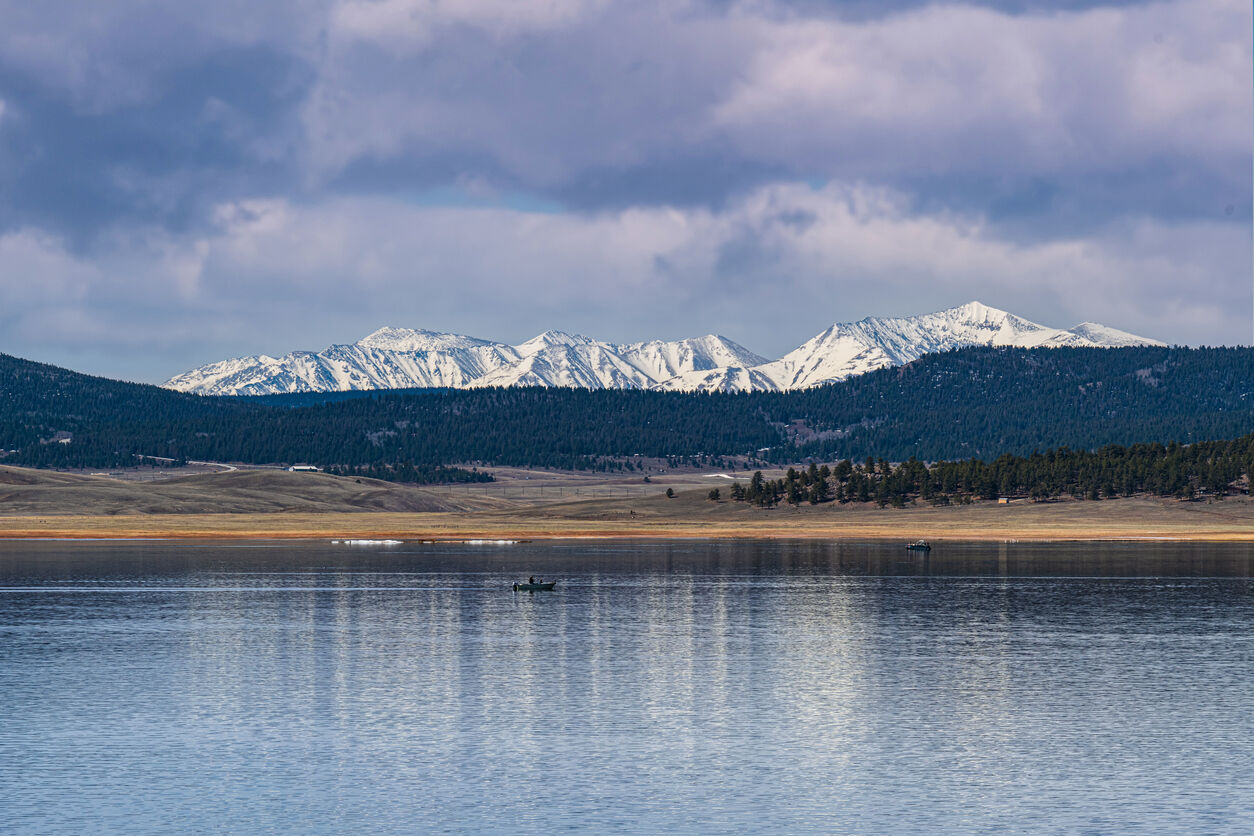
Per a press release from Denver Water, Antero Reservoir is set to be closed to recreation in 2026 following a brief period of public use.
Drought concerns are behind the closure, related to how Antero Reservoir has the highest ratio of evaporation-to-storage of any of Denver Water’s reservoirs. Given this reality, the water that’s in Antero Reservoir will be moved to Cheesman Reservoir in the Sedalia area. This move is expected to prevent roughly 5,000 acre-feet of water evaporation with one acre-foot of water being enough to cover the annual water use of three to four single-family households. In other words, moving the water to Cheesman Reservoir is expected to preserve enough water to satisfy the needs of 15,000 to 20,000 single-family households. Per Denver Water’s latest report, Antero Reservoir has a capacity of 20,122 acre-feet and is 88 percent full while Cheesman Reservoir has a capacity of 79,064 acre-feet and is 78 percent full.
According to a press release from Denver Water, Antero Reservoir is considered a “drought reservoir,” used to provide water when severe drought is present. The consolidation of its water with that of Cheesman Reservoir will mean that more water is ultimately available. It’s also worth noting that the move will allow Denver Water to rely more heavily on its South Platte River Basin supplies opposed to using more water from west of the Continental Divide where more extreme drought is present.
The entirety of the Denver metro area is experiencing stage three drought (with stage four being the highest stage of severity) per April 14 data released by the U.S. Drought Monitor. Widespread stage four drought is present in the northwest quadrant of the state with roughly 98 percent of Colorado experiencing drought at some level.
While the removal of Antero Reservoir’s water is set to mean no recreation at the popular spot for the majority of the 2026 season, another key concern that comes with draining the water is fish loss. In order to minimize fish loss, Colorado Parks and Wildlife has announced an emergency fish salvage that’s set to take place until sunset on May 13. During this salvage, all bag and possession limits have been lifted for all fish species in the reservoir. All other fishing regulations still apply and motorized boating and commercialized fishing are not allowed. Hand-launched vessels and shoreline angling are permitted. It’s also worth noting that camping will be allowed at the reservoir until May 13 in designated areas (find rules related camping here).
Another noteworthy aspect of the Antero Reservoir draining is that it remains unknown when it will be refilled, as the refilling will be subject to when drought conditions improve. The reservoir was also drained amid drought in 2002 – that time it wasn’t reopened until 2007. It’s worth noting that it was also looking like the reservoir would be drained due to drought in 2013, though a series of late-season snowstorms ultimately prevented this. A dam rehabilitation project also meant draining the reservoir in 2015.
Also related to Denver’s struggle with drought – drought pricing has been approved for residential customers in Denver and its suburbs. Additional information about those added fees can be found here.
STAY INFORMED: Get free Colorado news with our daily newsletter (Click here)
Get OutThere
Signup today for free and be the first to get notified on new updates.
PREV
PREVIOUS
Another backcountry skier rescued in mountains in Pitkin County
A backcountry skier was evacuated by Mountain Rescue Aspen teams on Sunday after sustaining a knee injury, marking MRA’s second backcountry rescue in the area in two days. According to Mountain Rescue Aspen, the Pitkin County Regional Emergency Dispatch Center received a medical SOS at about 11:46 a.m. on Sunday from the Lindley Hut area […]

Dryness worsens in Colorado with 98% of state now experiencing drought
Colorado’s drought situation has again worsened with 98 percent of the state now experiencing drought, according to the U.S. Drought Monitor. While this is a slight uptick above the 95 percent of the state that was experiencing drought the week prior, what’s more concerning is the portion of the state that’s now experiencing ‘drought stage […]