







EDITORIAL: Vance to AFA grads: Value AI, hallow humanness
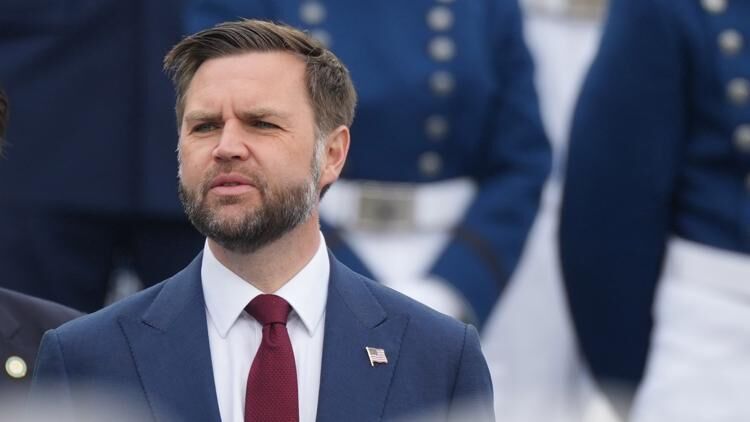
Credit Vice President JD Vance for threading a messaging needle on Thursday at the Air Force Academy graduation that too many 2026 commencement speakers have mangled.
Whether or not you agree with the vice president’s politics, the war in Iran or anything else about the Trump administration, one can appreciate how Vance last week “understood the assignment,” as some of the 931 Generation Z cadet graduates might say. Credit the Marine-turned-politician for not making the speech about himself, or even the Trump term, but about them — the young people amassed in front of him.
He homed in on the concerns of not only the cadets they’ve been and graduates they are now, but the air-and-space warfighters they’ll be. Perhaps most importantly, Vance put the speech’s finger on the pulse of the humans — the husbands, wives, fathers, mothers and community members — they’ll become in an ever-more-complex technological age. Ultimately, they’ll serve among the leaders of our nation’s defense, and Vance offered them meaningful food for thought.
That’s not exactly easy, or to be expected, when you consider the military setting, and cultural moment, Vance was tasked with meeting at this crossroads. These impressive academy graduates spent recent weeks watching viral videos via their social media algorithms of peers’ commencements. The speakers surfacing on their smartphones struggled with students’ booing of canned, surface-level shout-outs to artificial intelligence — as if AI is a fleeting consideration to this generation.
But as Colorado, and the nation, wrestles with the transcendent, breakneck changes created by AI and its accompanying data centers, many of our young people are fearful of what Vance described Thursday as an era of unprecedented uncertainty.
He brought up the boos of the viral videos. He acknowledged how the assembled cadets for four years have not only become aware AI is already a tool of warfare, but “fundamentally changes what it means to be human.” The VP further warned it’s each cadet’s very humanness that will be the target of their enemies. Opponents will study “everything from attention spans … to the most advanced technology.”
“But, the VP warned, “they’ll ultimately be studying you.”
The path to victory? It’s via the adaptability engrained by “repeated exposure to intense fatigue, uncertainty and responsibility.”
Something only a human could do.
Duty — resilience in toiling — will lead to “trust, versatility and fortitude,” enabling “thriving in uncertainty.”
Something only a human could appreciate.
So with the nation’s 250th, and the state’s 150th, anniversaries a month away, Vance, who is Roman Catholic, stressed the following to Falcon Stadium: The most important part of his speech was his endorsement of the sentiment of the first American pontiff, Pope Leo IV’s, first encyclical, “Magnifica Humanitas” (Magnificent Humanity), released last week.
The message? To not outsource the most important moral decisions to digital technology. To use it, a tool, for what it is — a tool. To walk the line of morality and innovation in a manner that preserves the kind of human nature young people pine to protect. And our officer corps needs.
Vance’s speech previewed that possibility. It ditched despairing data-center doom and gloom. Yet, it also acknowledged the natural inclination igniting our youth’s AI apprehension.
So, Mr. Vice President, what’s the strategy — in combat and in the community?
“Use technology to make you better. But never submit to it. You are the masters of warfare. But also, your minds — and your hearts — are the opposite of artificial.”