







Purchase of Colorado 14er praised as ‘landmark transaction’ for future of access
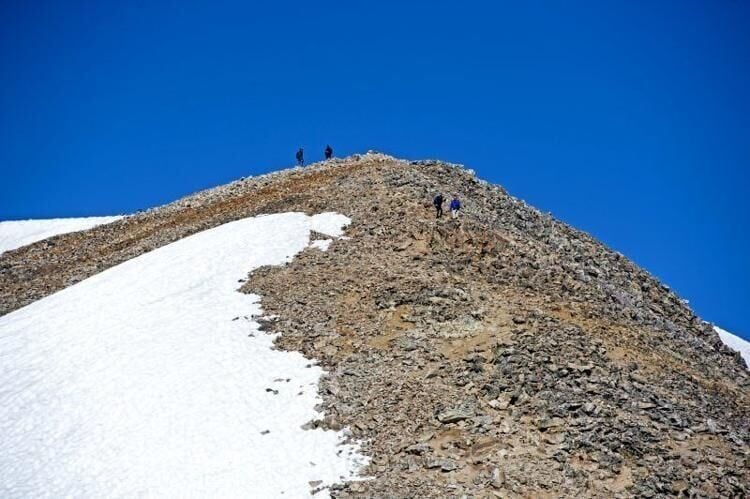
Parker Seibold, The Gazette
Access to a controversial cluster of 14,000-foot peaks in Colorado has a new fate thanks to a “landmark transaction,” in the words of one advocate.
The Conservation Fund, a leading nonprofit in land and water conservation across the nation, announced Thursday it had secured nearly 300 acres in a move the organization said solved long-standing liability concerns that previously closed summits and parts of the hiking loop called Decalibron.
The loop comprises fourteeners Democrat, Cameron, Lincoln and Bross. With the acquisition from John Reiber, who for decades has owned mining claims along the route, The Conservation Fund announced a legal return for hikers to Mount Democrat as well as U.S. Forest Service-owned Mount Cameron, which was previously blocked by private property.
Popular trails closing in Colorado Springs, sparking latest controversy in Bear Creek watershed
In a news release, The Conservation Fund’s Kelly Ingebritson said buying Democrat was “a once-in-a-lifetime opportunity and a model for how conservation can solve America’s recreational access issues and benefit local communities.”
The acquisition also includes the popular Kite Lake trailhead, the portal to the peaks in the Mosquito Range. Closure notices have been posted there since a March ruling by the Senate Judiciary Committee, which declined to amend the Colorado Recreational Use Statute to the liking of landowners, including Reiber.
That refusal, he said at the time, reinforced fears of being sued by a climber on his high-alpine land that was inherently dangerous. Those were fears sparked by a judge in a 2019 ruling that the government had to pay $7.3 million to a bicyclist injured while riding Air Force Academy land.
Since then, closure signs have been seen along the trail to Mount Lindsey, another fourteener along the private Trinchera Blanca Ranch. This summer saw Reiber open mounts Lincoln and Democrat to hikers who signed a waiver online. Lincoln remains subject to that waiver, Ingebritson said.
Leaf peeping on the Front Range: Check out these Colorado parks and trails for the best displays
Also this summer, Colorado Fourteeners Initiative continued work on a new, safer path to summit Mount Shavano — parts of which the nonprofit purchased from private landowners in 2016.
“More than 10% of Colorado’s fourteeners are on or accessed by private land, which has posed access concerns over the decades,” Colorado Fourteeners Initiative Executive Director Lloyd Athearn said in Thursday’s news release. “Through this landmark transaction, The Conservation Fund has now taken mounts Democrat and Cameron off that list and ensured that hikers will get to experience these peaks in every future climbing season without fear of closure.”
Asked if The Conservation Fund harbored any liability concerns, Ingebritson told The Gazette: “We specialize in buying and holding land” and “are prepared for this responsibility.”
She said the plan is to convey the land to the Forest Service by the end of the year.
Dealing the land long held by his family “was a tough decision,” Reiber said.
“I hope hikers will be prepared for challenges, complete their ascent, stay safe, keep on the trail, avoid sensitive high alpine tundra, understand the inherent dangers, and leave the mountain as they found it,” he said. “My wish is that others will enjoy this place that has meant so much to me.”
Support for the purchase came from Park County’s Land and Water Trust Fund along with several other trusts and foundations. The Conservation Fund declined to disclose terms of the deal.
Mount Democrat’s purchase marked “a huge step forward for everyone who loves Colorado’s outdoors,” read a statement from a grassroots coalition aiming to amend Colorado’s Recreational Use Statute, Fix CRUS.
“However, the sale is also a stark reminder that our work isn’t done. We need to continue building momentum to strengthen Colorado’s Recreational Use Statute for the sake of all our fourteeners, trails, and the communities that rely on them.”