







PERSPECTIVE: Remembering Governor Dick Lamm
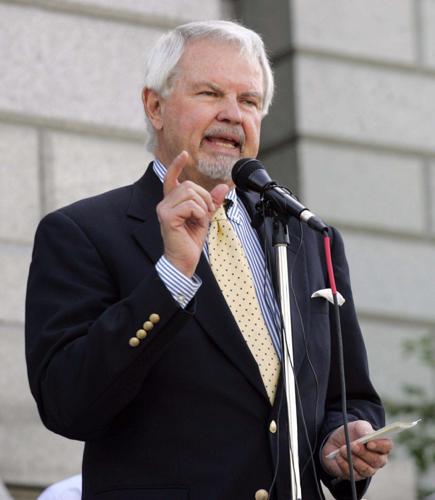
Former Colorado Gov. Dick Lamm addresses a Defend Colorado Now rally in 2006 at the state Capitol in Denver.
The associated press file
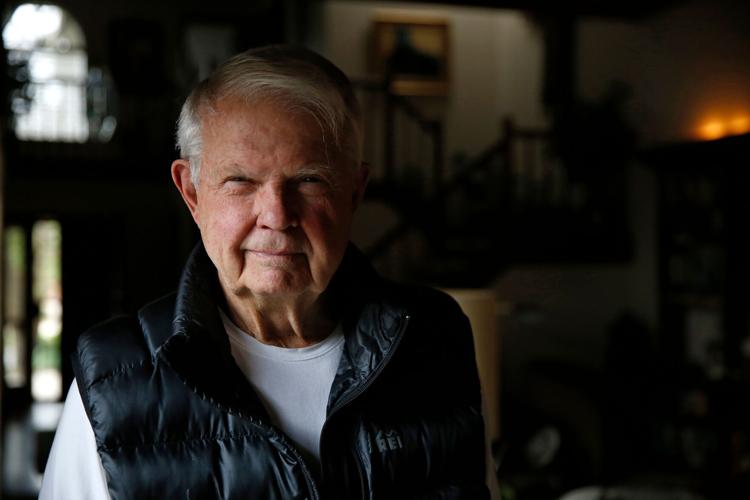
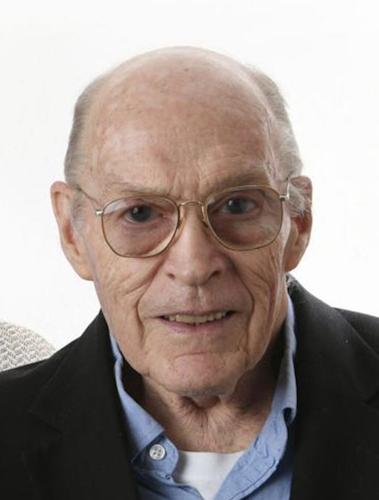
Dick Lamm was the most popular and most controversial governor in modern Colorado political history.
He was stubborn, outspoken, and also the most published governor in Colorado history. He loved to read, write and argue about public policy issues. He was blessed in having an attractive and vivacious spouse who shared his passion for policy and public life.
He passed away in late July, a week before he would have turned 86. Memorial services will be held to celebrate his life and service at 3:30 p.m. Aug. 31 at Wings Over the Rockies Museum, in Denver’s Lowry neighborhood, 7711 E. Academy Blvd. The services will be streamed on Denver’s CBS 4 television station.
We remember him as a very bright and dedicated person who loved politics and liked the give and take of trying to put political coalitions together. He espoused contrarian positions yet he seldom bore grudges or engaged in petty personal disputes. He had a special way of making his views known and being amicable with those who disagreed.
He was also willing to admit his mistakes — at least some of the time. He was noted, too, for mentoring large numbers of younger people to engage in political life. He did that even as he grew increasingly frustrated with what he considered to be a dysfunctional two-party system in America.
Richard Douglas Lamm began his public service career in Colorado by coming to Fort Carson in Colorado Springs 64 years ago, in 1957, as a young Army officer. He fell in love with Colorado and its mountains. He would in subsequent years climb nearly all our fourteeners (14,000-feet-high mountains), kayak in most of our rivers, and ski at most of our destination ski resorts. He was also a vigorous cross-country skier and runner.
His four-decade career in Colorado and national politics was remarkable. He was a representative in the state Legislature from south Denver during the Lyndon Johnson and Richard Nixon presidencies. He began running for governor in 1974 when President Nixon was struggling with his Watergate scandal. Lamm served as governor while President Gerald Ford and President Jimmy Carter were in the White House and through three-quarters of the Ronald Reagan presidency.
Lamm served three terms (12 years) as Colorado governor. He ran unsuccessfully for the Democratic nomination to be Colorado’s U.S. senator in 1992. Then, in quite a political surprise, he ran for Ross Perot’s Reform Party nomination for president in 1996. That effort was upended when Perot decided at the last moment to run for the Reform Party nomination.
For the record, Lamm won about 35% of the vote against Perot in the 1996 Reform Party presidential primary. Perot was subsequently defeated for president by Democrat Bill Clinton in the general election in the fall.
Lamm graduated with a degree in accounting from the University of Wisconsin. He later earned a law degree from the University of California at Berkeley. In 1962, he returned to Denver as an accountant and young lawyer. Like a lot of young lawyers, he got involved in various causes. He migrated to electoral politics before he was 30-years-old.
He loved being a state legislator and became well-known as a crusading advocate for abortion rights, women’ rights, and “limits to growth” environmentalism.
Lamm was elected governor of Colorado in 1974 at 39. It was a good election year for Democrats, in Colorado and across the nation. Because of the Watergate scandal, President Nixon had been forced to resign in August. Nixon’s misbehavior weakened Republican candidates nationwide.
It was the same year Democrat Gary Hart won his first race for the U.S. Senate from Colorado and Tim Wirth won an upset victory to become a young member of the U.S. House of Representatives from the Boulder area.
Lamm had been a leader in the fight to prevent the 1976 Winter Olympics from being held in Colorado. He argued that most people did not want to use public finances to subsidize the always costly Olympics. He contended, too, that the construction and growth involved would turn Denver into another Los Angeles.
This made him popular with many people and controversial with many others. Lamm enjoyed being controversial and was an early and regular advocate for sustainability, population limits, and a less consumptive society. His views were similar to those of the Earth First Movement and inspirational environmentalists such as Edward Abbey and Aldo Leopold.
Lamm won his first gubernatorial election in 1974 with 53.2% of the vote in what was then considered a pretty Republican state. During most of his 12 years as governor, both houses of the Colorado state Legislature were firmly under the control of opposition party Republicans. Lamm regularly battled with the Republican state legislature on issues such as opposing oil shale development on Colorado’s Western Slope.
He was an early advocate of the Equal Rights Amendment to the U.S. Constitution, which expanded rights for women. It was passed in Colorado and by Congress but failed to win the support of three-fourths of the state legislatures. He also made waves by supporting physician-assisted suicide, long before that idea became widely supported. He further stirred the pot by arguing that we were wasting too much of our health funds on keeping older people alive for a few more months rather than investing more in preventive health care for younger people.
Despite supporting these causes, Lamm’s electoral popularity went up rather than down. He won reelection as governor in 1978 with 58.7% of the vote. He won his third race for governor in 1982, now in the Ronald Reagan presidential era, by a remarkable 65.7%.
He was still popular in 1987 when he voluntarily exited the Colorado governorship. He had a good shot at winning a fourth term as governor if he had wanted to run.
Lamm liked being a teacher and a maverick. He did not mind upsetting Democrats by opposing immigration and supporting tighter controls at the U.S./Mexico border. He railed against the wasteful medical care system in the United States and worried about the rapidly rising costs of entitlement programs.
Lamm’s political philosophy was a complicated blend of liberalism, populism, environmentalism, nationalism, and even libertarianism. His accounting background encouraged his frequently saying: “We are living on borrowed time and on borrowed money.” He became more conservative on at least a few issues the longer he was in office, and even more of a curmudgeonly Cassandra in later years.
He was also a crusader for preserving the vulnerable American West from exploitive oil shale developments. Lamm gave increasingly dire warnings about how large-scale U.S. energy projects would threaten the natural beauty of Colorado.
He loved talking about hard public choices: “Our streams must support fish and wildlife, agriculture and industry. It is going to require a good deal of creative planning to bring about balance and harmony.”
Critics accused Lamm of being unnecessarily gloomy, but he would reply he was just being a realist. He worried about a Colorado that might end up with 10 million people living in it (we are well on our way at 6). He worried that too many state and U.S. government programs were misguided.
He liked the slogan: “Beware of solutions which are appropriate to the past but disastrous to the future.”
Lamm loved talking with people of all political viewpoints about how Colorado could do a better job of planning and responding to its economic and environmental challenges.
We remember a maturing Lamm who yearned to stay active in political life yet found the two-party system inadequate for new challenges. He openly criticized his Democratic Party for being too influenced by trial lawyers and labor unions. He was distressed by the relentlessly pro-growth and right-wing moneyed interests that influenced the Republican Party. He regularly talked with us and other friends about the dysfunctional aspects of the political and economic systems in the United States.
Most books that Lamm wrote were about public policy challenges such as the health care system, population growth, immigration, and threats to the environment. But his most revealing book was a novel titled “1988” cowritten with his longtime friend Arnie Grossman.
Their protagonist is a conservative Texas Democratic governor who decides to run for the U.S. presidency as an Independent. This governor has grown impatient with the special interests in the Democratic Party. He believes he could forge a middle, more moderate and sensible path between the major political parties.
One campaign issue was that he would upgrade border security (sound familiar?) and limit the flow of undocumented workers into the U.S.
Lamm and Grossman were writing in the mid-1980s. This novel, in a number of ways, presciently anticipated the maverick Ross Perot presidential campaigns of 1992 and 1996. It also foresaw elements in the campaigns of Republican Donald Trump for the U.S. presidency in 2016 and 2020. The novel also helps explain Lamm’s falling out with the Colorado Democratic Party and joining Ross Perot’s Reform Party in the 1990s.
Lamm liked his role as a catalyst and provocateur. He liked solving problems and getting Coloradans to think sensibly about the future. Many of those who disliked his policy choices nonetheless admired him for being honest, forthright, and “telling it like it is,” at least from his viewpoint.
Lamm was gracious, engaging, and blessed with a healthy sense of humor. He loved Colorado, loved being in public life, and loved lecturing and teaching. His was, as his family and so many friends have said, a memorable life memorably lived.
Tom Cronin and Bob Loevy write regularly about Colorado and national politics.
Tom Cronin and Bob Loevy write regularly about Colorado and national politics.