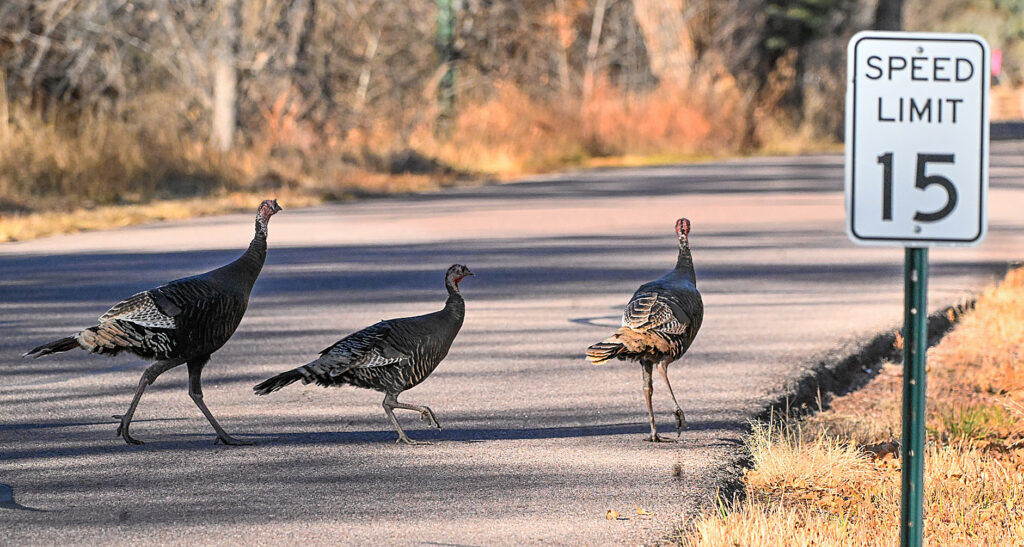
After Colorado reintroduction, wild turkeys are a common urban encounter
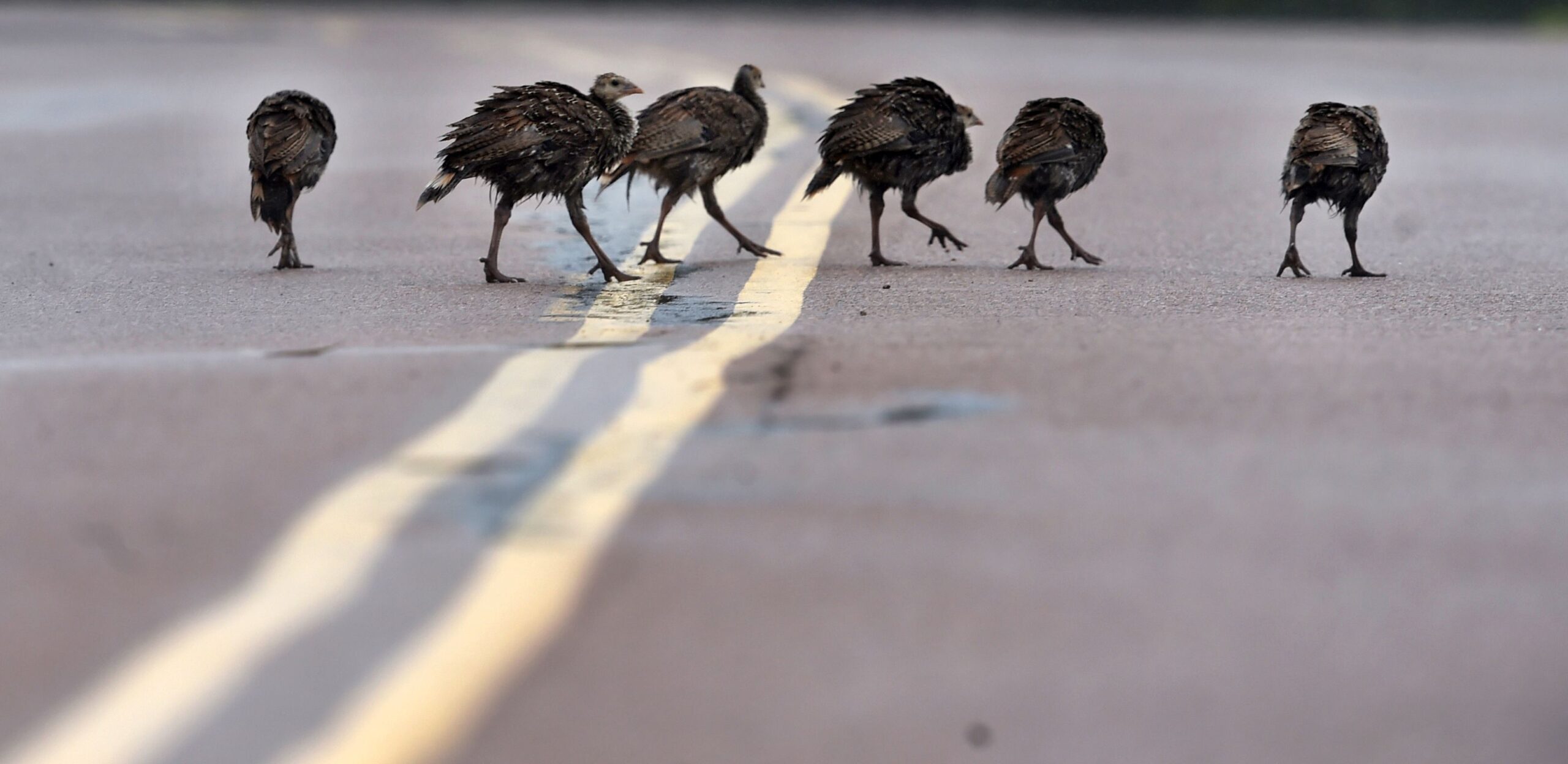
Since moving into her neighborhood in 2017, Fountain resident Nicole Henderson has sighted her feathered neighbors like clockwork. She’s taken videos of them scratching at front lawns and bobbing their heads as they make meandering road crossings.
“They are out every morning,” she said.
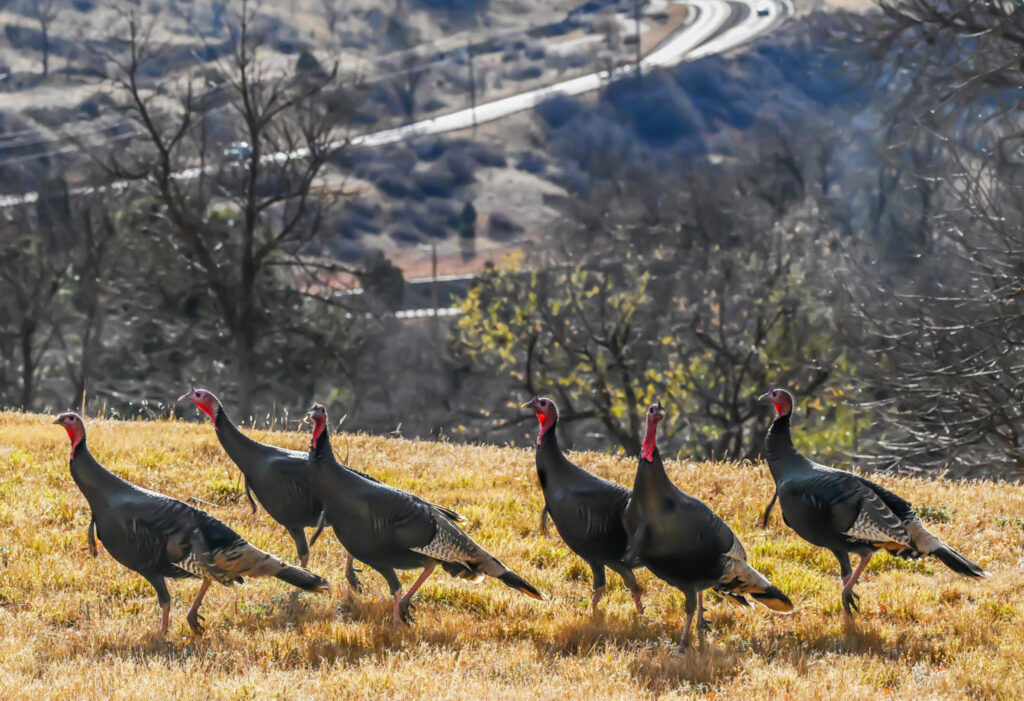
After a successful reintroduction program, turkeys are now in the category of urban wildlife. At certain places, the birds are almost as common as mule deer and just as comfortable around humans.
Maybe too comfortable, sometimes. The Greeley Police Department posted a PSA with hundreds of comments this May, hinting at prior turkey encounters with too-specific warnings. Don’t pet the birds, the post warned. Don’t bother the one with a missing foot. Don’t try to chase them into lakes with your car.
“These birds are basically tiny dinosaurs with attitude problems,” the post read. “If you make eye contact, it’s already too late.”
The Fountain gang seems docile, venturing out with regularity from where Henderson says they likely bed down on some farmland near Metcalfe Park. She said they’ll run away if you get too close, but are otherwise unbothered.
The turkey has become so common, it’s hard to imagine that the species used to be a rarity. According to Colorado Parks and Wildlife, only about 30,000 existed on the continent during the Great Depression, victims of overhunting and habitat destruction.
Julie Stiver, a wildlife biologist with Colorado Parks and Wildlife, said she was feeling thankful this season that the turkey has made such a strong recovery.
“Without the foresight from some of our predecessors, they wouldn’t be here,” she said.
Conservation efforts began in the late 20th century by protecting the birds from overhunting, preserving habitat and transplanting individuals to new areas. Colorado Parks and Wildlife introduced one subspecies, the Rio Grande, which can now be found in the river corridors of Eastern Colorado. Another subspecies, the Merriam’s turkey, typically stays in the foothills west of I-25. There are more turkeys in Colorado now than there were in the world during the species’ lowest point.
Without the pressure from unregulated commercial hunting, it turns out turkeys are one of the continent’s most adaptable native species. Since the reintroduction program, turkeys can be found well beyond their historical territory. From swampy Florida forests to the Great Plains, turkeys are found in every U.S. state except Alaska. The turkey is also one of the very few species to be domesticated by humans in the Americas.
That adaptability may be part of the reason turkeys seem so comfortable around humans. Predators that threaten the birds typically avoid human activity, so turkeys may feel safer closer to people. They also learn to expect food from planted vegetation and spill from backyard bird feeders.
The real turkey show, other than when they headline on your dining room table, is in the spring.
“They are most active and most fascinating in the spring,” said Stiver.
Turkeys are hierarchical, often vying for position among the other birds. That’s a potential reason for the sometimes chaotic behavior of the birds during the spring mating season. A turkey might not grasp the difference between a real threat and a delivery truck or a morning jogger.
“They’re just trying to survive like any animal is trying to survive,” said Stiver.
Spring is the time to witness some of the turkey’s most sophisticated social behavior. Researchers have documented brothers and half-brothers performing “wingman” duties for each other during mating display rituals. Both turkeys put in the work to impress a potential mate, but only one benefits.
Turkey hens start teaching their babies, called poults, early. Stiver says they’ve been seen “talking” to their poults even while still in the egg, making the sounds the hatchings will need to recognize. Just two weeks after hatching, baby turkeys will be ready to fly into trees at night to avoid predators and keep warm.
Turkey-human cohabitation can go more smoothly if people avoid feeding them, says Travis Sauder, an assistant area wildlife manager at Colorado Parks and Wildlife. That can be directly, with bird feed, or indirectly by leaving out attractants. He said discouraging turkeys in residential areas also discourages their predators from venturing in as well.
“It can create a lot of issues in neighborhoods,” he said.
The state of Colorado issues hunting licenses for turkeys to help regulate the population and fund conservation. The CPW sold 5,000 licenses for turkeys this fall.
Stiver said a turkey sighting is not something she takes for granted, even in the most mundane places.
“It’s actually a really special thing,” she said.