







Aurora paramedic’s prison sentence wiped out in Elijah McClain case
Peter Cichuniec's five-year prison sentence reduced to four years of probation.
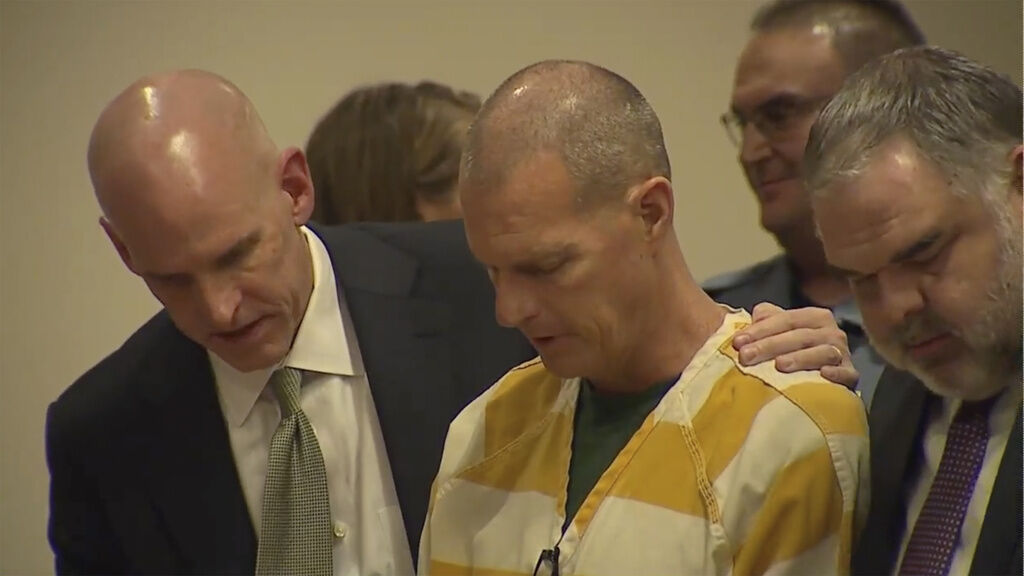
A paramedic convicted of the most serious charge in the death of Elijah McClain will no longer spend time behind bars after an Adams County judge converted his sentence to probation on Friday.
Peter Cichuniec, convicted of second-degree assault and criminally negligent manslaughter in McClain’s 2019 death, had been sentenced to five years in prison in March. That was essentially the minimum sentence for his assault conviction.
A spokesman for the Colorado Attorney General’s Office confirmed on Friday that Adams County District Judge Mark Warner converted Cichuniec’s sentence to four years of probation.
“After considering the evidence, a statewide grand jury indicted Cichuniec, and a jury of his peers found him guilty for his criminal acts that led to the death of Elijah McClain,” said Attorney General Phil Weiser in a statement. “We are disappointed the court reduced his sentence today, but we respect the decision.”
McClain was first contacted by three Aurora officers on Aug. 24, 2019, after someone called 911 about a man who was “suspicious” and wearing a ski mask.
Aurora Police officers Nathan Woodyard, Randy Roedema and Jason Rosenblatt confronted McClain on an Aurora street, and a physical struggle began. After Roedema said he saw McClain try to grab Rosenblatt’s gun – an assertion prosecutors repeatedly questioned – the officers twice put him in a neck hold with the objective of rendering him unconscious.
McClain vomited and inhaled some of it, then suffered a series of medical problems, including low levels of oxygen and high levels of acid in his body.
McClain said repeatedly “I can’t breathe,” before Cichuniec approved a dose of the sedative ketamine that was administered by another paramedic, Jeremy Cooper.
McClain’s heart stopped a short time later – and although paramedics revived him, he never regained consciousness and died three days later.
Multiple medical experts blamed McClain’s death on the ketamine.
Cichuniec was the highest-ranking paramedic on scene – and of the three first responders convicted in McClain’s death. He faced the longest possible sentence because second-degree assault is a crime of violence.
Initially, the Adams County district attorney did not charge anyone in connection to McClain’s death.
In June 2020, Colorado Gov. Jared Polis appointed Attorney General Phil Weiser as special prosecutor, tasking the latter with investigating and, if the facts supported prosecuting individuals, to do so. Weiser took the case to a statewide grand jury, resulting in an indictment against Cooper, Cichuniec, and the three officers.
Cooper had authority for medical decisions at the scene and Cichuniec had the administrative responsibility for scene safety. Cichuniec requested the ketamine dose from Falck Rocky Mountain, a private ambulance company that contracts with Aurora Fire Rescue, and Cooper administered the injection and dosage.
The duo concluded from officers’ statements that McClain was experiencing “excited delirium,” a condition that included symptoms like extreme aggression, strength, paranoia and resistance to pain. Colorado’s regulatory board that licenses law enforcement officers, the Peace Officer Standards and Training Board, last year voted to strike “excited delirium” from all training documents, starting in January.
Prosecutors in the trial argued that neither of the paramedics assessed McClain before diagnosing him. Cooper did not communicate or check on McClain until six minutes after the ketamine was injected, at which time he was already unresponsive.
Initially, the Adams County district attorney did not charge anyone in connection to McClain’s death.
In June 2020, Colorado Gov. Jared Polis appointed Attorney General Phil Weiser as special prosecutor, tasking the latter with investigating and, if the facts supported prosecuting individuals, to do so. Weiser took the case to a statewide grand jury, resulting in an indictment against Cooper, Cichuniec, and the three officers.
Cooper had authority for medical decisions at the scene and Cichuniec had the administrative responsibility for scene safety. Cichuniec requested the ketamine dose from Falck Rocky Mountain, a private ambulance company that contracts with Aurora Fire Rescue, and Cooper administered the injection and dosage.
The duo concluded from officers’ statements that McClain was experiencing “excited delirium,” a condition that included symptoms like extreme aggression, strength, paranoia and resistance to pain. Colorado’s regulatory board that licenses law enforcement officers, the Peace Officer Standards and Training Board, last year voted to strike “excited delirium” from all training documents, starting in January.
Prosecutors in the trial argued that neither of the paramedics assessed McClain before diagnosing him. Cooper did not communicate or check on McClain until six minutes after the ketamine was injected, at which time he was already unresponsive.
The three police officers were also tried.
A jury returned a split verdict for Roedema and Rosenblatt. Roedema was found guilty of criminally negligent homicide and third-degree assault and in January he was sentenced to 14 months in Adams County Jail, along with four years probation.
Rosenblatt and Woodyard were acquitted in a separate trials.
The jury found Cichuniec guilty of second-degree assault for administering drugs without consent and acquitted him of second-degree assault with intent to cause bodily harm.
Warner sentenced Cooper, a former Aurora Fire Rescue paramedic, to 14 months in a work release program, four years of probation and 100 hours of public service.
A jury had convicted him of criminally negligent homicide, though Cooper and Cichuniec were found not guilty of manslaughter, the most serious of the charges, and of second-degree assault causing serious bodily injury.
This story includes previous reporting by Kevin Vaughan and Janet Oravetz. Denver Gazette reporters Sage Kelley and Carol McKinley contributed.
For more on this story and other Denver news, visit our news partners at 9NEWS.com.
