







Aurora’s next step — restore civic ownership | Michael A. Hancock
In my previous column, I argued that Aurora faces a quiet but serious civic problem: a spiral of political disengagement in which fewer citizens participate, a narrower slice of the electorate gains disproportionate influence, and more residents begin to feel that City Hall no longer belongs to them.
That diagnosis matters. But diagnosis alone is never enough.
If Aurora is to avoid the long-term consequences of civic withdrawal, it must do more than name the problem. It must begin the harder work of restoration. And that work starts with a simple idea: citizens must once again see themselves not as spectators of city government, but as stewards of the city itself.

This is not merely a matter of boosting voter turnout, though turnout matters. It is a matter of restoring civic ownership.
A healthy city cannot function when most of its people interact with public life only as frustrated observers or passive consumers of political outcomes. Self-government requires something more. It requires citizens who believe the city is, in a real sense, theirs to shape, protect, and improve.
That spirit has weakened in many American cities, and Aurora is not immune.
When local politics becomes dominated by activist energy, symbolic gestures, insider dynamics, or ideological performance, ordinary residents begin to withdraw. They stop seeing government as a shared civic enterprise and start seeing it as a distant arena run by people unlike themselves and uninterested in their concerns. Once that perception takes hold, participation falls. And as participation falls, the process becomes even less representative of the broader community.
That is the cycle Aurora must break.
The answer, however, is not to substitute one ideological faction for another. It is not to intensify polarization, nor to demand artificial political uniformity. Cities as large and diverse as Aurora will always contain disagreement. That is normal. In many ways, it is healthy.
The real issue is whether city government remains anchored in the practical purposes for which it exists.
A city government should first concern itself with the conditions that allow ordinary life to flourish: safe streets, reliable infrastructure, responsive public institutions, a healthy business climate, attainable housing, stable neighborhoods, and public spaces that are orderly and usable. Those are not glamorous goals. They do not generate national attention. They are, however, the essential work of municipal government.
When those priorities become secondary to ideological signaling or political theater, civic trust begins to erode.
Restoring civic ownership therefore requires a shift in both public expectations and public leadership.
First, Aurora needs a culture of civic seriousness.
Citizens are more likely to engage when they sense that public life is grounded in reality, honesty, and competence. They are less likely to engage when meetings feel performative, when language obscures rather than clarifies, or when practical concerns are repeatedly subordinated to abstractions. A city earns participation when it demonstrates seriousness about the things that most directly affect the lives of its residents.
Second, Aurora must widen the circle of participation beyond the most organized and ideologically motivated voices.
One of the great distortions of low-turnout local politics is that it creates the appearance of consensus where none truly exists. A handful of intense factions can come to speak as though they represent the will of the city, when in reality they often represent only the will of those most committed to showing up. That is not a healthy equilibrium. It is a vacuum.
The only durable answer is broader participation by ordinary citizens: parents, homeowners, renters, small business owners, workers, retirees, church members, neighborhood leaders, and residents who may not think of themselves as political, but who care deeply about what kind of city Aurora becomes.
Third, public leaders must act in ways that invite civic confidence rather than civic resignation.
People return to public life when they believe their involvement can matter. They participate when they see responsiveness, accountability, and respect for the concerns of ordinary residents. They disengage when outcomes feel predetermined, dissent feels unwelcome, or institutions appear captured by narrow interests and insulated from consequences.
Trust cannot be demanded. It must be earned.
And finally, citizens themselves must reject the temptation of learned helplessness.
Apathy is often described as indifference. More often, it is disappointment hardened into passivity — the quiet conclusion that showing up will not change anything. But that conclusion becomes self-fulfilling. The more decent, practical, community-minded people withdraw, the more power they leave in the hands of those most eager to fill the void.
Aurora’s future should not be determined by the loudest factions, the most ideological constituencies, or the most organized activist circles. It should be shaped by a broad public with enough confidence, seriousness, and civic pride to insist that local government reflect the real needs of the city.
Aurora is not a hopeless city. It is a vibrant, growing, ambitious city with enormous potential. What it needs now is a renewed understanding that self-government is not something that happens in the background while everyone else lives their lives. It is one of the conditions that makes a good life possible.
If Aurora is to avoid the spiral of disengagement, it must restore the connection between citizen and city. That means a government worthy of trust, a political culture grounded in practical stewardship, and citizens willing to reclaim their role as owners of the community they share.
Because in the end, the health of a city is determined not only by the people who govern it, but by the people who still believe it belongs to them.
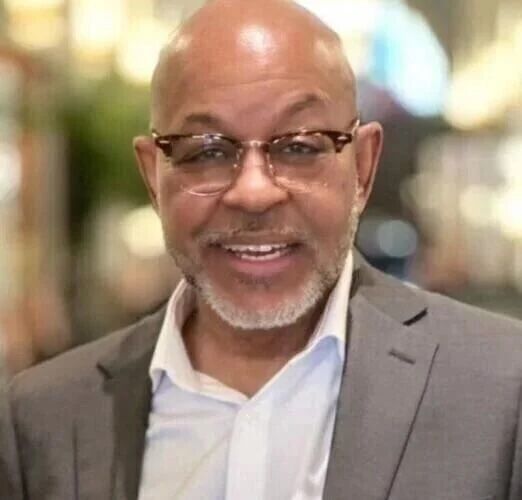
Michael A. Hancock is a retired high-tech business executive and a Coloradan since 1973. Originally from Texas, he is a musician, composer, software engineer and U.S. Air Force veteran whose wide-ranging interests – from science and religion to politics, the arts and philosophy – shape his perspective on culture, innovation and what it means to be a Coloradan.