







CDOT to host open house Wednesday on Colorado Boulevard BRT amid traffic diversion fears
The Colorado Department of Transportation will hold its second public open house Wednesday to address plans for bus rapid transit improvements along Colorado Boulevard as officials study options that could include dedicated bus lanes and “road dieting.”
The meeting, from 5 to 7 p.m. at Clayton Early Learning Center, 3801 Martin Luther King Jr. Blvd., comes as the project remains in the alternatives analysis phase. It follows a first open house in September 2024 and ongoing surveys.
Bus rapid transit, or BRT, combines features of light rail such as dedicated lanes and signal priority with the flexibility of buses to improve speed, reliability and safety.
The project would upgrade service from Hampden Avenue at Southmoor Station north to East 40th Avenue on a corridor that is part of Denver’s high-injury network and has significant gaps in sidewalks and ADA-compliant infrastructure, according to CDOT.
Options under review include side-running bus lanes, a hybrid with center-running lanes north of Alameda Avenue, and mixed-flow with no dedicated lanes. CDOT has noted that the center-running alternative has weaknesses, including unacceptable traffic impacts, higher construction costs and greater disruption.
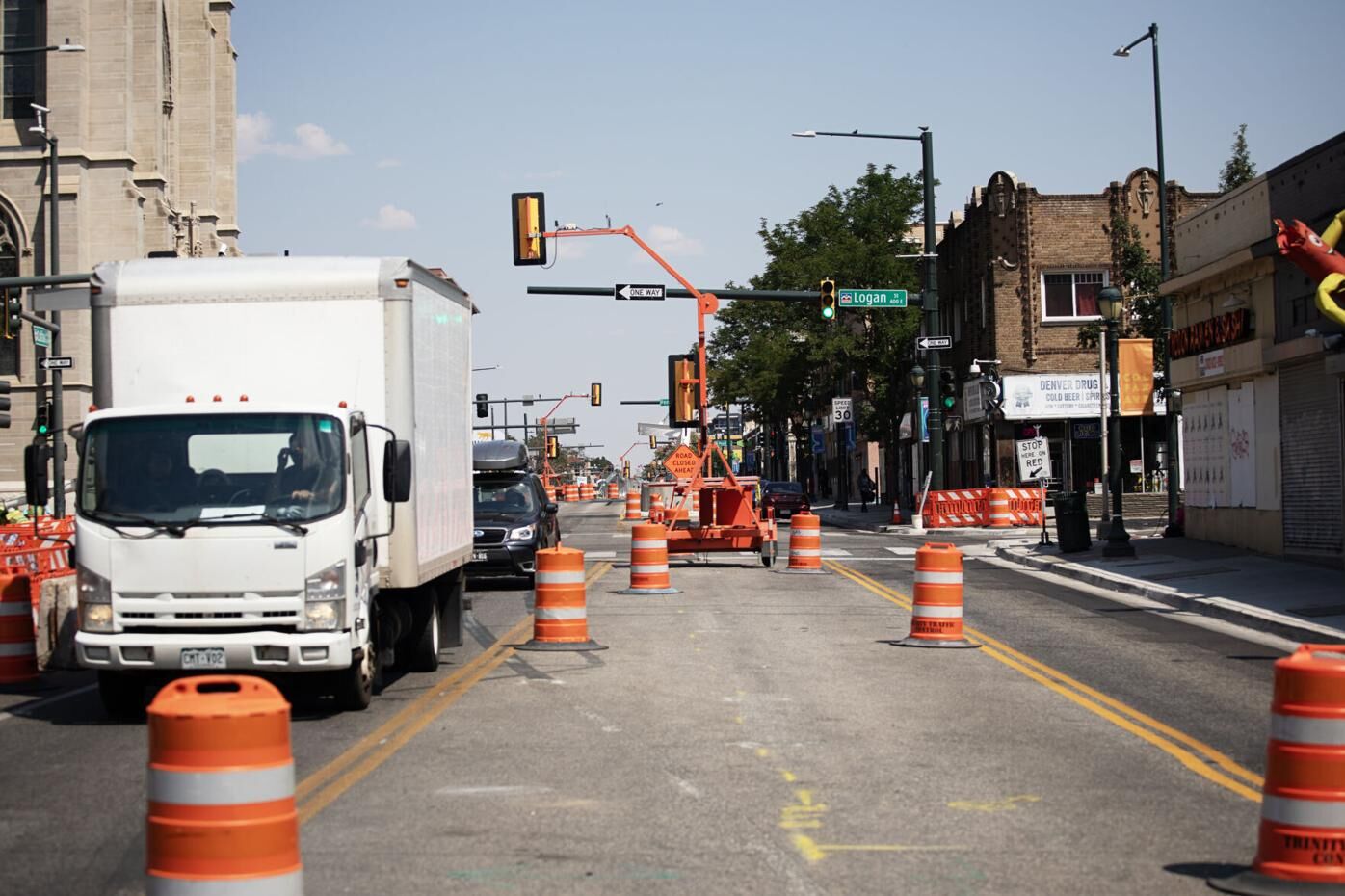
Contruction on the Regional Transportation District’s BRT on east Colfax into Aurora began this week, after similar work from downtown Denver for the past year.
Some neighborhood groups and drivers have raised concerns about potential vehicle delays from “road dieting” — the reallocation of traffic lanes to buses and/or bike/scooter lanes — and potentially disruptive traffic diversions onto adjacent residential streets. They point to ongoing construction on the Colfax Avenue BRT project as a cautionary example.
Michael Atkins, vice president of the Hilltop Neighborhood Association, said in April that residents agree the corridor needs fixes.
“We all in the neighborhood agree that Colorado Boulevard is old, a mess, needs to be fixed, needs to be changed,” he said. “I think the question just becomes, ‘What about it needs to change?’”
Advocates, meanwhile, are pushing for strong, dedicated lanes. In an April 28 sign-on letter to CDOT, the Denver Streets Partnership and partner organizations urged “dedicated, continuous bus-only lanes along the entire corridor” to deliver true BRT service rather than buses stuck in general traffic.
Compared with the Colfax Avenue BRT project, the Colorado Boulevard project is earlier in the process, with construction not expected before 2030.
Colfax modeling showed drivers on some trips could face several additional minutes of delay from dedicated lanes.
CDOT is working with the RTD, the City and County of Denver, Arapahoe County, Glendale and the Denver Regional Council of Governments (DRCOG) on the federally funded study.
The agency is also accepting online survey responses. Details and meeting information are available on the project website.
Denver Gazette partner 9News contributed to this story.