







Colorado campus visits restore hope for humanity | Pius Kamau
Once in a while, we visit a place or a time where and when we feel comforted. We are reminded that life does not have to be all chaos, all the time. On two consecutive days it was my good fortune to experience encounters with two groups of happy people, all of them meeting with a single aim: to learn from and to enjoy each other’s company.
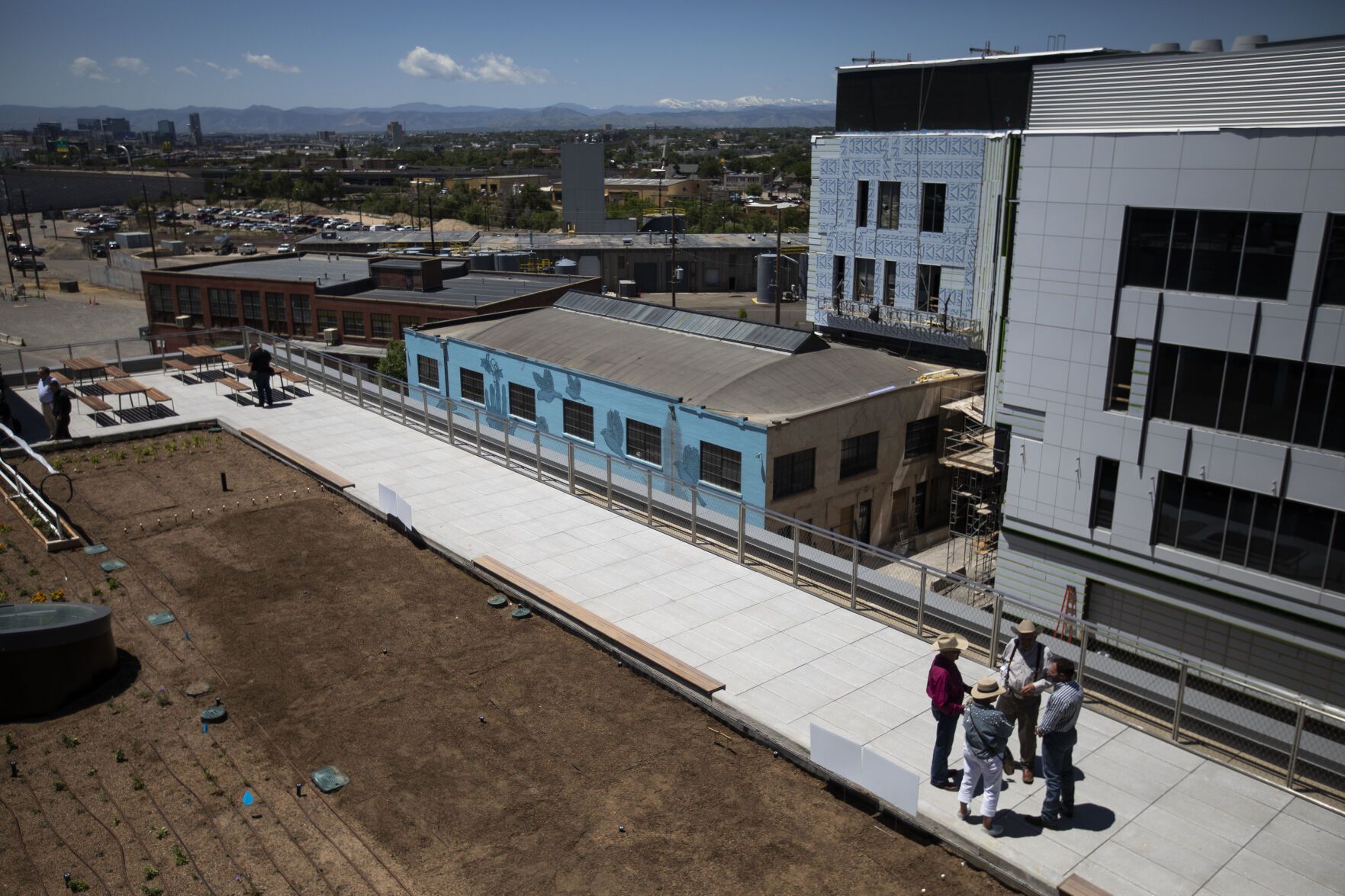
On the first day I attended a live taping of the KUNC-NPR radio station’s podcast at Colorado State University Extension. KUNC’s NOCO Podcast had never been taped before an audience. The podcast titled, “From Winter Stress to Garden Success,” was held in the University Center for the Arts’ capacious auditorium. I had no idea what sort of audience I was going to be part of, but was gratified to be surrounded by a happy, curious crowd that cared for nature, environment and the havoc wreaked upon our lives, gardens, forests, and wilderness by the changing-weather-patterns.
As we filed into the auditorium, many demonstrated a comforting attitude of welcome to me. They lacked the usual contrarian atmosphere common to many of our public gatherings.
The podcast host, Erin O’Toole, resembled an orchestra conductor; interviewing the panelists, she fluently directed the flow of discussion into many directions, completely confident with the material she covered. Her four panelists — Allison O’Connor Ph.D., Deryn Davidson, John Murgel and Karim Gharbi — covered turf grass, trees, horticultural biodiversity, and implementation of nature-based solutions that enhance urban resilience and livability. We heard discussions about low maintenance, high impact landscapes and the subject of mulch: its meaning, its content and significance in the urban garden.
I was particularly impressed by what was discussed about insects — pollinators as well as the stinging type — wasps. I came away better educated about watering of trees; how large diameter trees with thicker barks need more water compared to smaller trees. Soil composition and soil temperatures are important, as are the value of different creatures that live in the soils of our gardens.
The question-and-answer segment was energetic; the audience asked many questions, full of details about what a good garden needs at a time of increasing drought in North America. A brief but interesting discussion about the mycorrhizal relationship, or, the active symbiotic relationship between fungi and the root systems of trees, was intriguing. The understanding that trees are connected to each other through their root systems is breathtaking. Indeed, mycorrhizal networks exist to facilitate tree communication, learning and memory.
My second visit to CSU was to attend the annual gathering of CSU’s Africa Center, an event of the African student body, and their friends. I was impressed by many of the young students from across the African continent: Nigeria, Zambia, Congo, Ethiopia, and elsewhere as they discussed the affairs of their home countries. They spoke of Africa as one – thus reminding me of the connected trees’ root system that connected individuals to one another.
Ph.D. candidates from different disciplines included several women from across Africa. I was happy to engage in a discussion of world economic problems and their reference to Africa’s economies with a few who were now preparing to finish their Ph.D. studies in economics. It gave me great joy they had come this far — you see, in the past, African women were ignored where higher education was concerned.
The young people were pleased to meet this “ancient” naturalized American, who had lived in America for more years than many of them had been alive. We discussed their good fortune for getting into one of the best institutions of higher learning in America.
The only politics we discussed was about the poor leadership so endemic on the African continent. Perhaps, I thought, armed with the know-how their Ph.D.s offered them, they might become tomorrow’s leaders that Africa sorely needs. But the African music, African cuisine reminded me of my Africa of yore; an Africa that has changed irrevocably. In it all however, I was appreciative of the great generosity of the people of Fort Collins and northern Colorado.
Over a number of decades, I have known many at CSU, but the two days I talk about reminded me that in many of today’s institutions, great work takes place all the time. It is done by many whose names we don’t know. As some clamor for yesterday’s greatness, poor is the public that can’t know today’s greatness of its institutions.
Pius Kamau, M.D., a retired general surgeon, is president of the Aurora-based Africa America Higher Education Partnerships; co-founder of the Africa Enterprise Group and an activist for minority students’ STEM education. He is a National Public Radio commentator, a Huffington Post blogger, a past columnist for Denver dailies and is featured on the podcast, “Never Again.”