







Colorado governor signs bill requiring pollution controls, cost reporting for extended coal operations
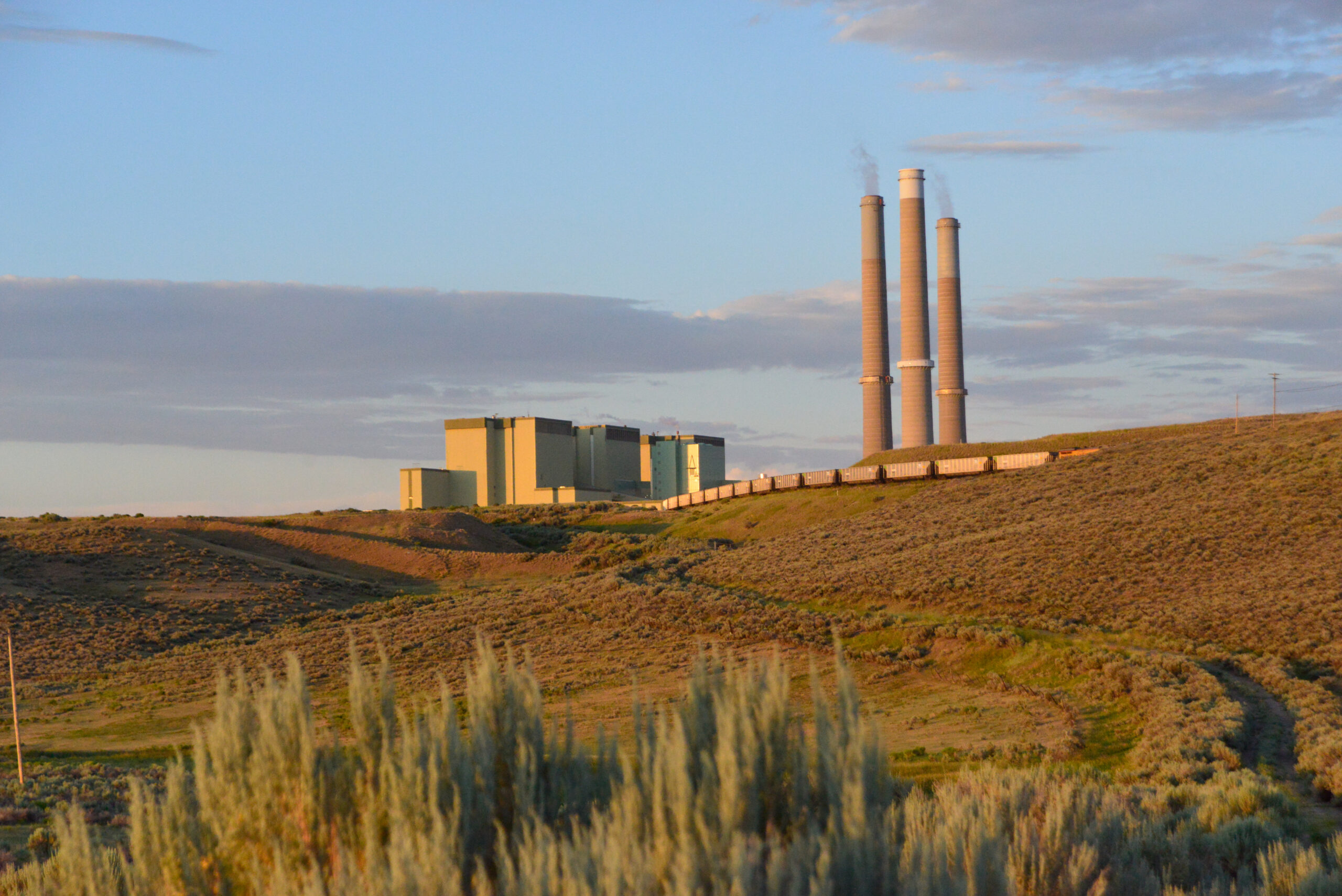
Gov. Jared Polis signed into law a bill in reaction to orders from the U.S. Department of Energy to keep older coal units online.
The federal government’s instructions applied to Craig Unit 1 in Colorado, one of five coal units affected nationwide.
The state legislation requires installation of modern pollution controls and cost reporting for any Colorado coal-fired power plants that continue operating beyond planned retirement dates.
The measure, House Bill 26-1226, also directs the Public Utilities Commission to support resource planning consistent with state clean energy goals.
The legislation signed June 4 targets qualifying coal units that emitted significant nitrogen oxides or sulfur dioxide in 2024. It requires the Air Quality Control Commission to adopt emission limits and mandates installation of advanced controls, such as selective catalytic reduction for nitrogen oxides and enhanced flue gas desulfurization systems for sulfur dioxide on any such units still operating starting in 2037.
Supporters argued that the legislation is necessary amid the federal government’s push to preserve the coal industry, while critics said it’s another in a long line of policies that go after energy sources that are, in fact, stable.
Amy Oliver Cooke, president of Always On Energy Research, said the bill adds to a pattern of state policies that penalize existing reliable generation before adequate replacements are available.
“Colorado elected officials, regulators, utilities and environmental NGOs have repeatedly underestimated the cost and challenge of replacing inexpensive, reliable, dispatchable generation,” Cooke said in an email. “Ratepayers pay the price in both cost and reliability.”
Cooke noted residential electricity rates have increased 35% during Polis’ tenure. She also cited her group’s modeling that places Colorado coal generation costs at roughly $32 per megawatt-hour, while total system costs for new wind and solar can exceed $200-$300 per megawatt-hour.
The bill’s sponsors and supporters framed it as necessary protection against federal overreach.
“Coal isn’t an energy affordability solution, and the Trump administration is only making this problem worse by forcing plants to stay open. As outside forces try to knock Colorado’s clean-energy transition off course, this law provides the guardrails to keep us rolling,” said Rep. Meg Froelich, D-Arvada, one of the bill sponsors.
In a statement, Margaret Kran-Annexstein, director of the Colorado Sierra Club, added, “Colorado is creating a path for just transition that supports coal communities and local workers while reducing climate and air pollution.”
At the Craig Station, orders from the Department of Energy extended operation of Unit 1 past its planned 2025 retirement. The federal agency issued the orders after determining there was a shortage of electric energy and generation facilities in the Western region, driven by accelerated coal plant retirements and growing electricity demand.
The agency said keeping the unit available is needed to maintain reliability.
Such planning decisions have become more complicated in recent years, as reliability concerns have forced adjustments to original retirement schedules, particularly with a projected 40% increase in demand coming from new data centers
A major turbine failure at Comanche Unit 3 in Pueblo in August 2025 left Colorado’s largest coal unit offline for months, contributing to state energy regulators’ decision to extend operation of Comanche Unit 2 by a year.
The state’s preferred path for meeting its clean-energy goals was laid out in the Colorado Energy Office Pathways to Deep Decarbonization report. That analysis modeled a baseline economic deployment scenario and six alternative pathways to reach 100% zero-emission electricity by 2040.
The Optimized 100 scenario, which relies heavily on wind, solar, batteries, geothermal and clean hydrogen, had total modeled costs of $51.6 billion, the net present value for 2023-2040. A small modular nuclear scenario came in higher at $60.8 billion in the same modeling.