







Colorado’s whitewater rafters gear for early snowmelt — and a potentially shorter season
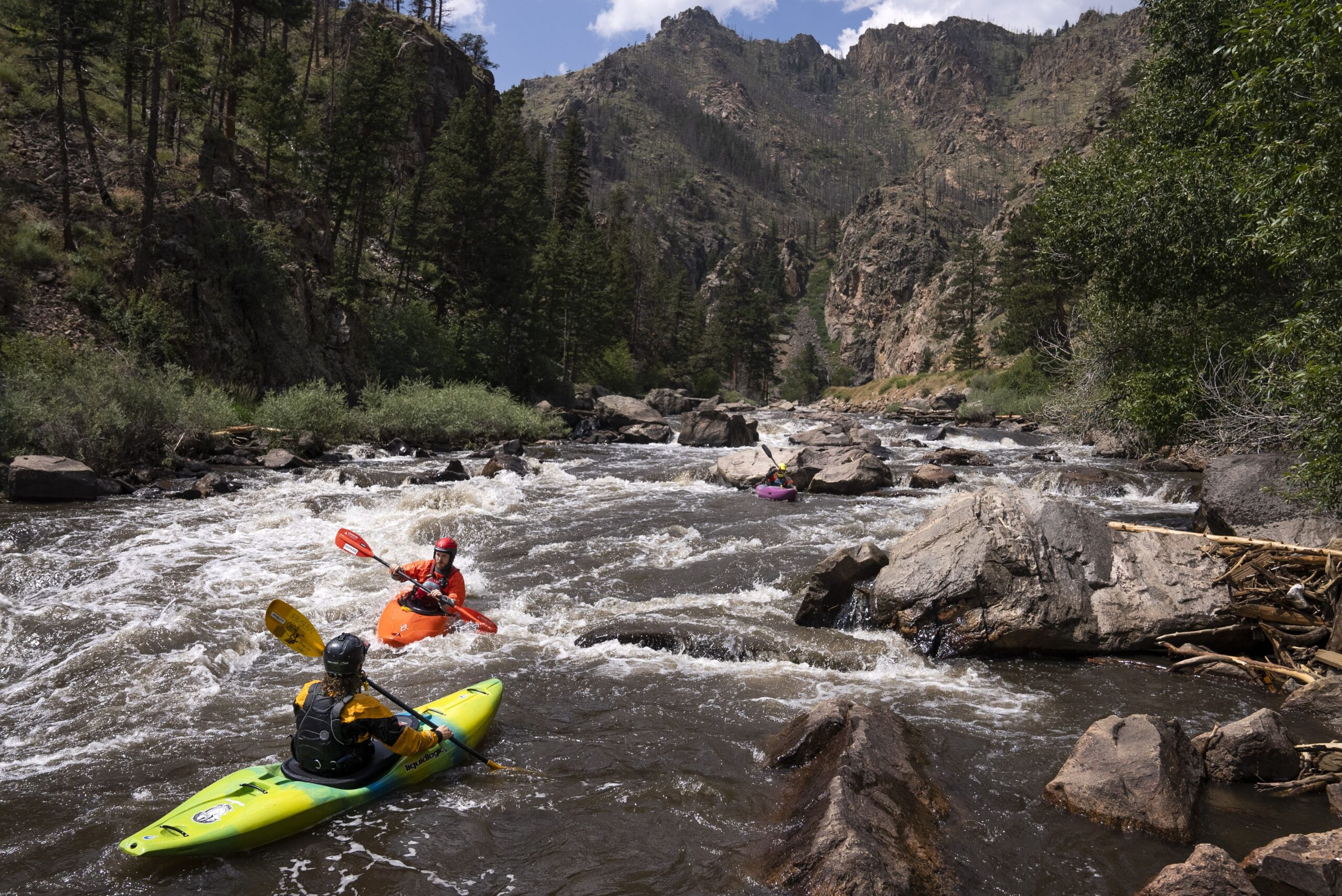
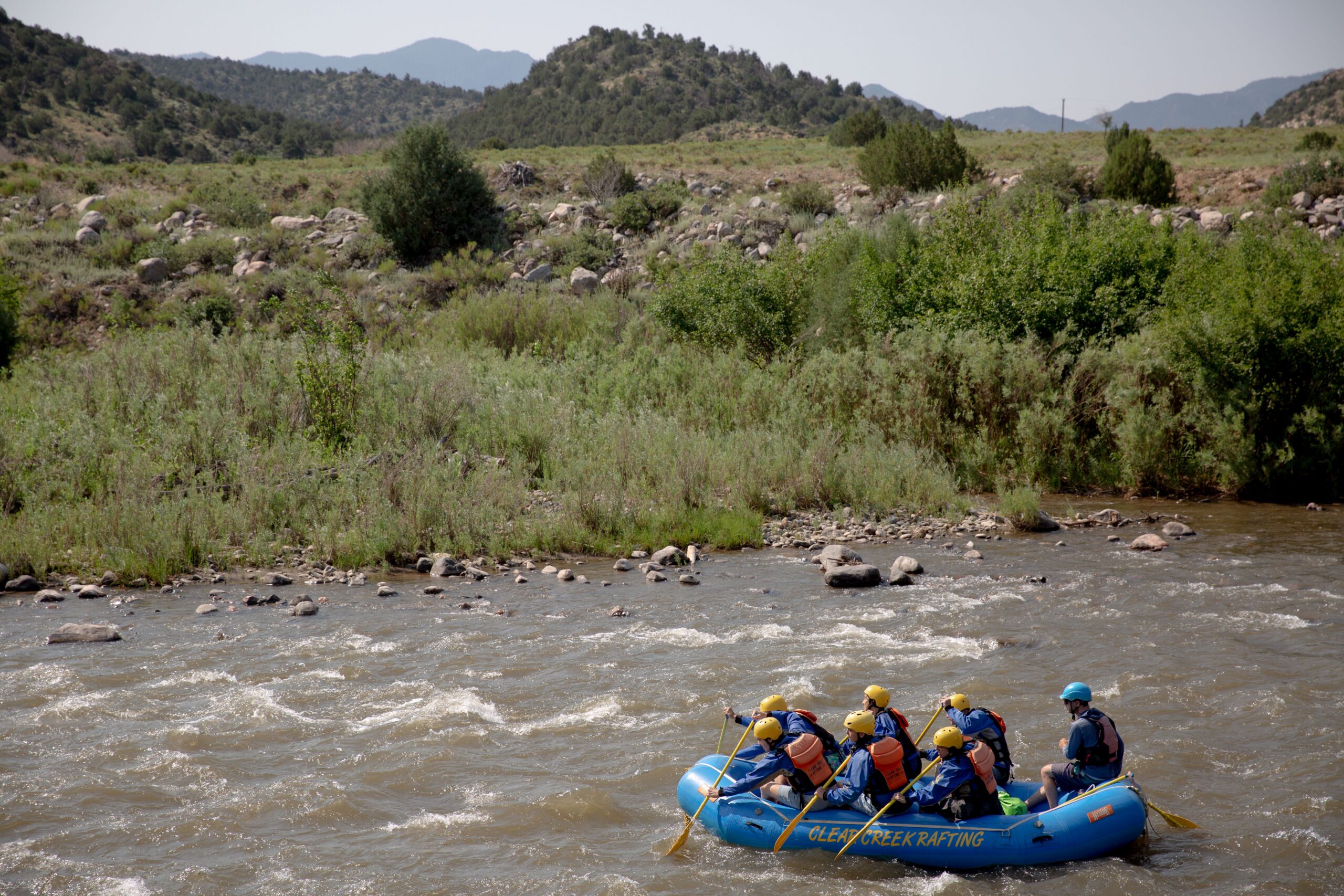
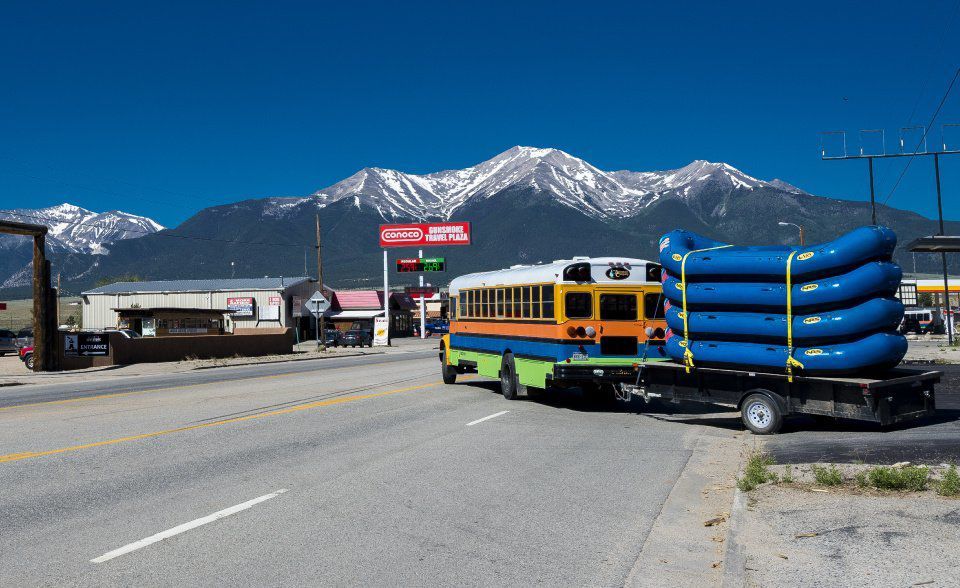
Ahead of Colorado’s whitewater season, the Clear Creek Rafting Co. bought about a dozen new Gumotex rafts designed to swim through shallower water.
It’s narrower, has smaller tubes and is built to withstand rockier terrain, said Dale Drake, owner of Clear Creek Rafting Co. in Idaho Springs.
Clear Creek — the body of water that starts in Loveland Pass and flows through Georgetown, Idaho Springs and downtown Golden — often runs out of water needed to run whitewater rafting expeditions before Labor Day, he said. But this year, with record-low snowpack and quick melt, he expects operations on the water could wind down earlier and they’ll have to solely operate on dam-controlled rivers, such as the Arkansas River.
The new boats could help make the most of Clear Creek though, Drake said.
“That’s one thing we’re doing to mitigate that potential low water season and hopefully extend the season and be able to offer trips longer for everyone,” he explained.
And he knows he’s not the only rafting business making similar investments this year, Drake added.
Colorado’s ski resorts already intend to close early as the low snowpack is melting fast due to record-breaking temperatures this month. While it’s still a bit too early to know how it could affect the state’s popular whitewater industry, businesses told The Denver Gazette they are preparing to see lower waters this year and a shorter season.
“It’s not the first time we’ve been through this, right?” Drake said, recalling “rough” years like 2002 and 2012.
“When we have seasons like this, we may edit or alter trips, and run different sections of the river. We’ll run trips as long as we’re able,” he said.
‘Extreme conditions’ — both low and high — can already be seen across Colorado’s rivers
Colorado’s snowpack seems to have peaked in early March and has melted to less than a third of what the average peak would reach in April.
Water across the Rocky Mountains is already being released into the rivers at an alarming rate, according to federal data from the United States Geological Survey.
Monitoring stations show dozens of sites are discharging far above what is normal at this time of year, citing “extreme conditions,” especially around Summit, Eagle, Grand and Clear Creek Counties.
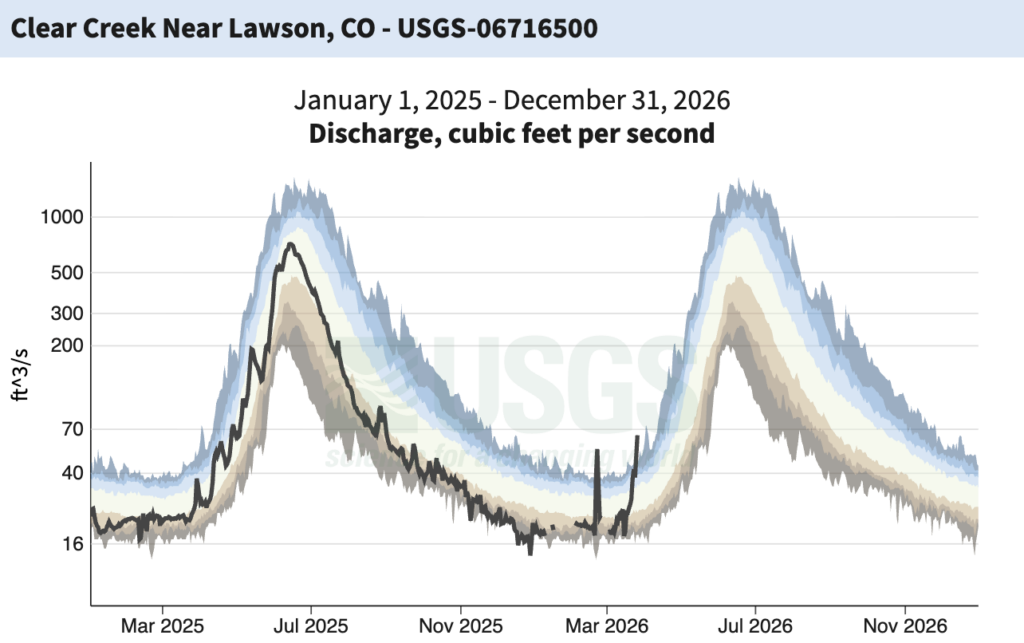
Water reached 3 feet at a gage site west of Idaho Springs measuring the height of Clear Creek on Friday, when it’s usually approximately 2.5 feet at this time of year.
The popular rafting waterway recorded its discharge at almost 48 cubic feet per second on Wednesday, the equivalent to about 360 gallons of water going through a foot of space every second.
The median discharge for the creek in late March is normally less than 30 cubic feet per second or 225 gallons.
Meanwhile, across the Front Range, several waterways are measuring extremely low levels.
Steven Fassnacht, snow hydrologist at Colorado State University, said he took a look at the Poudre River in Fort Collins a few days ago and saw how low it was — a concerning sign ahead of the summer season.
“There’s nothing with how much melt is occurring right now,” he said. “There should be a lot of water in the river and there isn’t,” he said.
It worries him for what that means for summer tourism and water recreation activities this year, he said.
It’s not just the lack of snow that is leading to lower waters, but Fassnacht explained the limited snow Colorado has this year is getting lost in several ways before it gets to rivers.
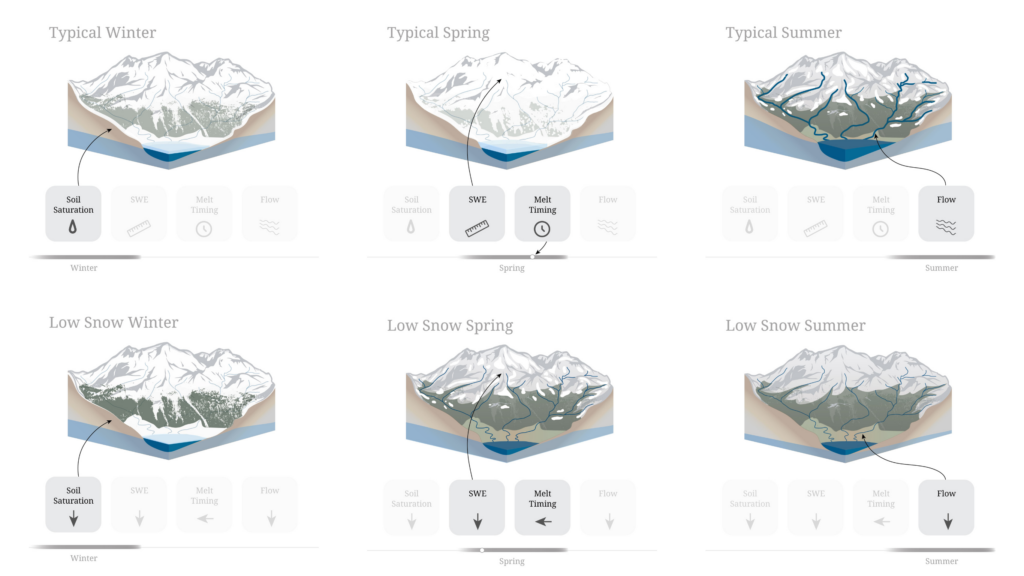
In low-snow years with early melts, the USGS explains how soil tends to be dry and needs more moisture. As the snow melts, the ground absorbs more than usual. Fassnacht explained it’s also been a very windy winter. As wind picks up snow from the mountains, it goes into the air and leaves snowflakes susceptible to evaporation.
Not only is snow melting fast and getting absorbed into the soil, but it’s also taken up into the atmosphere, leaving less water to fill Colorado’s rivers and lakes.
“We want something that has enough water to be fun. And I really doubt that we’re going to get to those levels,” he said. “You know, you’re going to be scraping over rocks.”
It’ll have an impact on fishing, as well.
“On a low-water year, our rivers are going to kind of peak earlier in the season and the resting water temperature is going to just remain high through probably July,” said Peter Stitcher, owner of Ascent Fly Fishing in Littleton. “It might not be viable to fish our rivers.”
Warmer waters can be detrimental — or even deadly — for trout, he explained.
Fishing trips might be limited to early mornings when it’s cooler or in higher elevations, he said. Another option is to fish high mountain lakes that require hiking.
Still, they’re praying for snow and rain, he said.
If it doesn’t come, Stitcher explained the emphasis this year will be on educating people.
“People still want to get out,” he said. “This is where we gather as a community, not just here in the shop, but on the water.”

Dam-controlled vs. free-flowing rivers
Like most boaters, Brandon Slate has a rock outside the Rocky Mountain Outdoor Center in Buena Vista where he stands to look at the Arkansas River and see how much water there is.
The water is higher, the owner of the business said.
It’s normal to see the river rise at this time of year, as winter releases dumps extra snow into the water.
“But that’s not what’s happening now,” Slate said.
This is more like the natural runoff seen usually later in the spring, he said, which signals it’ll soon be time to go back out on the water.
“It’s definitely like, ‘Oh, I wish that was staying up in the mountains right now and waiting for summer.’ But it is what it is,” Slate said. “It kind of got me excited.”
Sometimes, too much snow can cause dangerous rushes on the river when it melts. It can be thrilling for experts in rafting, he said, but low water may be better for beginners and people wanting to try paddleboarding and kayaking.
“What a great year to learn something new or try an inflatable kayak,” Slate said. “That’s kind of how I looked at this winter.”
The Arkansas River, one of the most popular rafting destinations in the U.S., has a voluntary flow management program established in 1990 to help release water and control the flows between July 1 and Aug. 15 to support the whitewater rafting industry.
It’ll help keep operations as normal as possible in a low-water year like this, Slate explained.
In the springtime, before the program begins, the Arkansas River is more reliant on the snowmelt, he said. When that extra water comes in, it will be a big help.
Still, he plans to shift operations toward other lighter water activities, such as inflatable kayaking.
“We’re a unique company that we’re not 100% relying on rafting,” he said. “So we’re going to be pushing our other opportunities.”
Colorado has a mix of rivers, such as dam-controlled rivers and free-flowing rivers, that will all be affected differently, said Sadie Conrad, board president, Colorado Whitewater Association.
“The big thing that’s going to be impacted is like our free-flowing or like natural flow rivers,” she said, “where we’re really dependent upon the snow melt and rain within the seasons to have a really great season.”
The paddling and rafting season usually begins in May for more experienced enthusiasts as snow rushes come down, Conrad said. Then, in June, less experienced rafters and paddlers start coming out to enjoy the calmer waters.
With the already melting snowpack, people might start going out as early as April.
“Everyone who’s an avid whitewater enthusiast is probably going to get out there earlier in the season and maybe pack it in in a shorter amount of time,” she said.
There’s definitely concern that the Poudre River and Boulder Creek could have a really short season this year, she said.
“When we say low water, it means there’s not even enough water to get a boat down there. So like, when that season’s like done, it’s like completely done,” she said.
Growth of outdoor recreation slows across Colorado
This dry winter comes as the state’s outdoor economy started to show signs of a slowdown in 2024 following the pandemic’s period of rapid growth, federal data shows.
The outdoor recreation industry generated more than $18 billion for Colorado in 2024, according to federal data from the U.S. Bureau of Economic Analysis.
Snow activities are king, generating more than $1.6 billion for the state. But boating and fishing are second at nearly $750 million.
While canoeing and kayaking is included in the boating category, whitewater rafting is classified as an “other conventional water” activity. The federal report doesn’t break the category down for Colorado, but it generated $3.5 billion across the U.S. in 2024, down from $4 billion in 2023 and a high of nearly $6.7 billion in 2021.
“Tourism has been challenging for the last couple of years in Colorado, right?,” Drake at Clear Creek Rafting Co. said. “So, yeah, without a doubt, we’re keeping an eye on things.”
There’s still some hope for temperatures to cool, for the snowpack to recover or get some rain, he said.
It may even come soon.
Weather models are showing potential for snow next week to kickoff April for both the mountains and Denver, according to 9News.
“It wouldn’t be fair to say we aren’t concerned,” Drake said about the snowpack. “We have to be. Everyone is.”
But it’s not the first time the rafting business has been through low-water years, and that historical knowledge to navigate it will be a benefit, he added.
“We can still provide a good experience and be prepared to have people here and take advantage of some of the beauty Colorado offers in whitewater,” Drake said.