







Denver Fire scrutinized over intergovernmental agreements
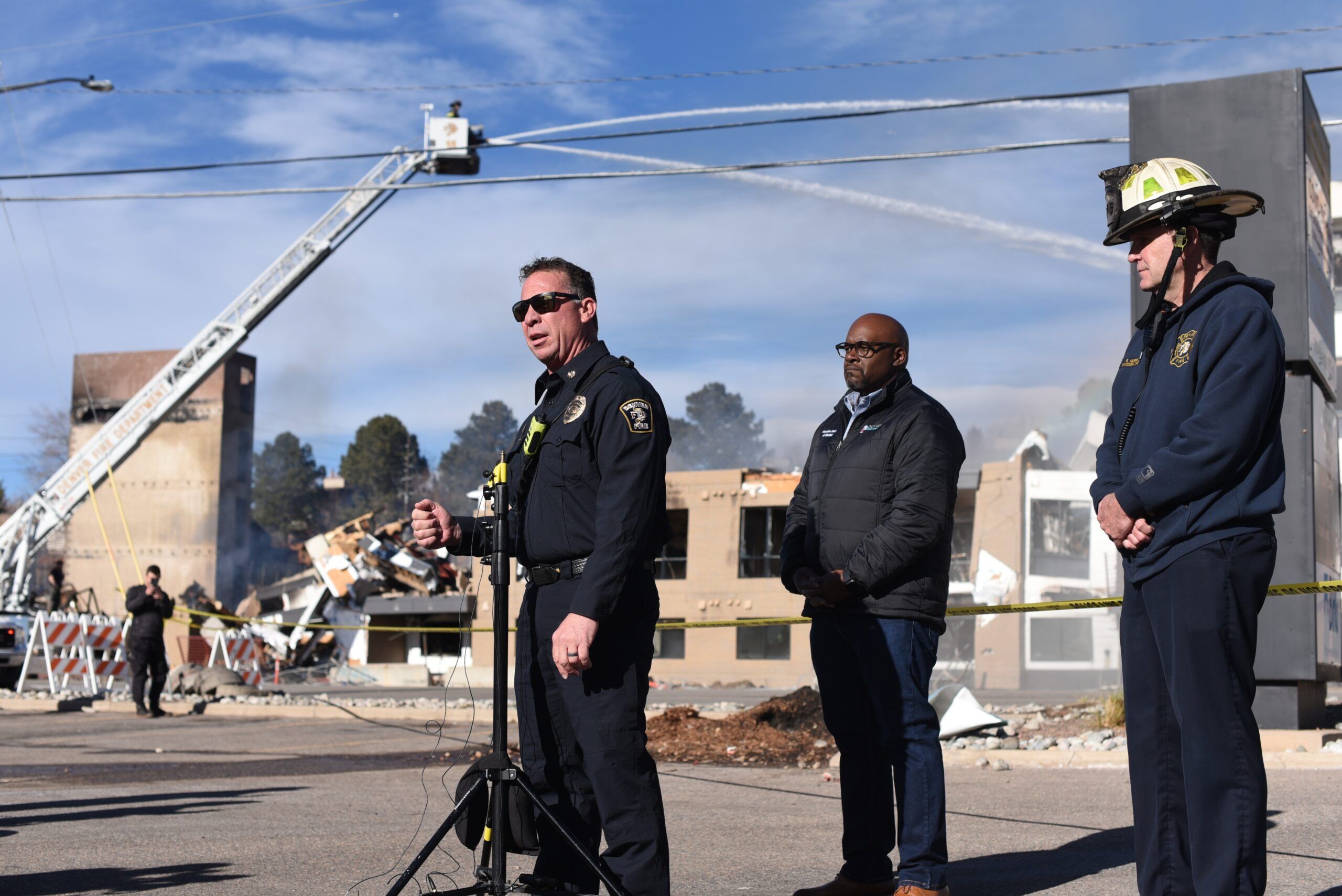
A new audit found that the Denver Fire Department is not closely reviewing the costs and benefits of its fire support agreements with neighboring municipalities.
The chief of the fire department signaled his agreement with that assessment, and the agency said it would comply with auditors’ recommendations.
Denver Fire provides support services to Englewood, Glendale, Sheridan and the Skyline Fire Protection District through multi-year intergovernmental agreements, collecting more than $60 million for its services from Sept. 1, 2020 to Sept. 1, 2025.
As part of the agreements, Denver Fire occupies two fire stations in Englewood and also operates out of Glendale’s and Sheridan’s municipal buildings.
But, according to a new audit by Denver City Auditor Tomothy O’Brien’s office, “the department’s process for renewing these intergovernmental agreements lacks transparency and a thorough review of the costs and benefits of each
arrangement.”
A major reason is that the department is not required to conduct a cost-benefit assessment to evaluate an agreement’s value, and its process for renewing agreements is “undocumented and informal.”
A city executive order defines an “intergovernmental agreement” as a
contract between Denver and another governmental agency to provide a service, function or facility.
The City Council’s approval is required for Denver Fire’s intergovernmental
agreements, as noted in the audit report.
“Denver Fire’s positive relationships with other municipalities are not enough to ensure agreement accountability,” O’Brien said in a statement. “Formal practices are needed for mutually beneficial agreements.”
Denver Fire leaders prioritized a relationship-focused approach to handling intergovernmental agreements, believing it makes it easier to resolve issues when they arise, auditors stated.
“I could have been better at seeking guidance on how to approach the situation,” said Denver Fire Chief Desmond Fulton, acknowledging he “inherited” the department’s informal process at the start of his tenure.
Denver Fire agreed to implement all recommendations from the auditors.
Other audit findings showed Denver Fire is also not tracking the actual costs to the city associated with the intergovernmental agreements, saying it does not have time to track expenses by fire station due to “staffing limitations and task complexity.”
Auditors added that the department also lacks a process to identify and track expense reimbursements.
Under the intergovernmental agreements with Denver Fire, municipalities submit either monthly or annual payments for services.
Auditors found that when the payment is late, interest accrues under the contract terms.
However, Denver Fire is not collecting interest, saying it might “impact relationships” with the municipalities.
| MUNICIPALITY | SERVICES | PAYMENT FREQUENCY | PAYMENT AMOUNT |
|---|---|---|---|
| ENGLEWOOD | Fire suppression, arson and fire investigation, *emergency medical services | Monthly | $587,800 |
| GLENDALE | Fire suppression, arson and fire investigation | Monthly | $244,755 |
| SHERIDAN | Fire suppression, prevention, arson and fire investigation | Monthly | $212,121 |
| SKYLINE PROTECTION DISTRICT | Fire suppression, **prevention, arson and fire investigation | Annually | $454,454 |
Source: Denver Fire’s intergovernmental agreements with Englewood, Glendale, Sheridan, and Skyline Fire Protection District.
But without clear policies on collecting late payments and interest, auditors said staff cannot track the interest owed to the city.
“By not collecting interest, Denver prioritizes relationships with other municipalities over Denver taxpayers’ money that may end up subsidizing losses,” O’Brien said. “With improved accountability, processes, and oversight, the department can better support financial sustainability within these agreements and operations.”
Fulton, the fire chief, told auditors: “I think relationships are very important, and we’ve taken the time to not only build these, but enhance them.”
“And we’re very fortunate where we could pick up a phone and call their police chief, or their city manager, city council, and it’s not lost on me, on the fact that these agencies or these cities can be served by bigger entities,” he added.
Denver Fire has not reassessed the cost-benefit of its current intergovernmental agreements, many of which exceed 10 years.
Experts noted that such reassessments are recommended to ensure service costs do not outpace payments.
In a written response to auditors, Fulton said Denver Fire would maintain a formal process to renew its intergovernmental agreements for emergency services, with approval authority vested in the fire chief, and the process being initiated 180 days prior to expiration.
The scope of service, cost-sharing, and performance standards will be among the key elements reassessed at each renewal.