







Denver’s Transplant Games of America honor organ donors, recipients
She’s small in stature, but her voice is mighty, emotive and soulful, indicative of the struggles Sara Millard has survived in her four decades.
At 4 feet 7 inches, she stands to play her autoharp, which rests on a table, and warms up with a cover of Christian singer-songwriter Amy Grant’s “Thy Word,” a fitting selection for Millard, a freshly crowned chaplain at CommonSpirit St. Mary-Corwin Hospital in Pueblo.
By happenstance, that’s the hospital where she learned a kidney was waiting for her in 2017, after a 17-year wait. And also where her donor was born in 1981 before dying in Aurora from a respiratory-related issue.
“To be able to walk somewhere where she was gives you a different feeling,” said Millard, 40, a Pueblo resident. “You know one life can end, but someone else’s story can keep going.”
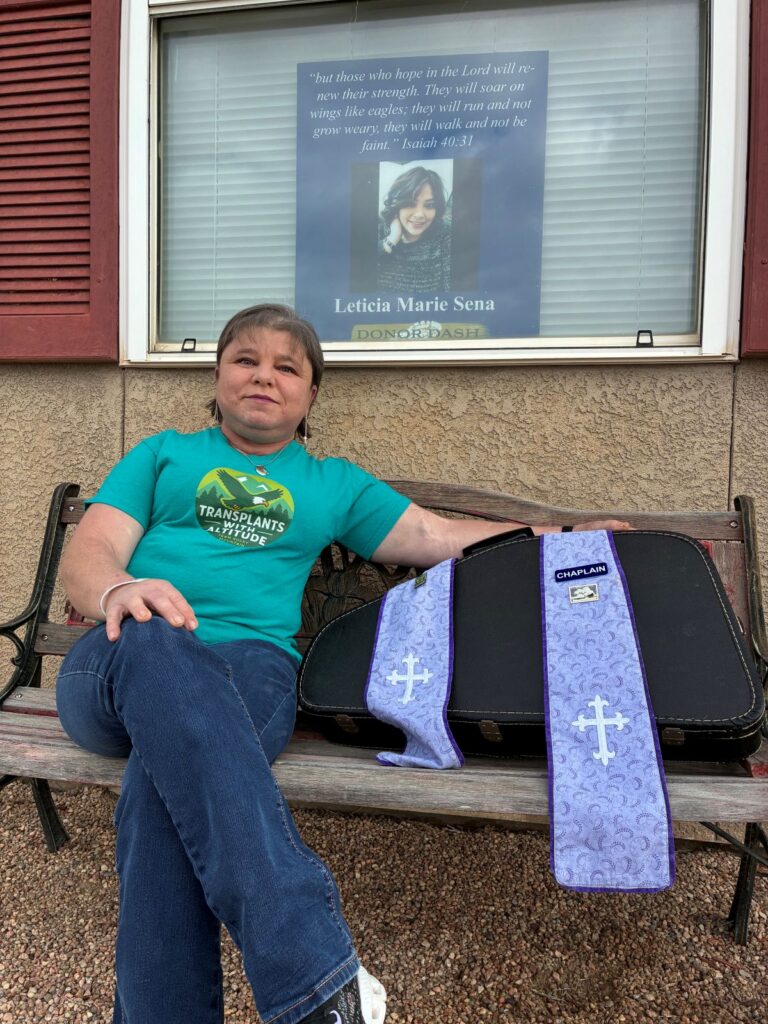
With her warmed-up alto-tenor voice, Millard rehearses a rough draft of her original song, “Never Be the Same,” which pays homage to her 35-year-old donor, Leticia Marie Sena. It’s the song she hopes to compete with in the Lyrics for Life competition during this year’s Transplant Games of America, held in Denver from June 18 to 23, where transplant recipients, living donors and donor families compete in a multitude of events.
“Never gonna be the same, they say it won’t be the same since I know your name,” Millard sings.
She’s also got a backup ditty, a much more lighthearted ode to the steroid prednisone, that she might also get to play at the games, if she makes it to the finals on June 19.
“Prednisone, prednisone, won’t you leave this chubby girl alone?” she sings.
Being able to sing today is one of the highest highs for Millard, after a life of many lows. Born with urinary retention, which destroyed her kidneys, she underwent her first surgery at 6 weeks old. At 14, she went on dialysis, and at 16, she received a kidney from her father, which lasted only about 18 months before she developed life-threatening urosepsis and it had to be removed, forcing her back to dialysis.
Two decades ago, at 21, she lost her voice entirely, along with the ability to breathe, as a result of a surgery to take out her parathyroid gland, which was damaged due to kidney disease. Her vocal cords got accidentally nicked, and she ended up with a tracheostomy.
“It took away my ability to communicate,” Millard said. “That was really dark, really heavy. The Lyrics for Life competition is an opportunity to do something I love, especially when you don’t know if it’s going to be taken away again. That’s where my joy lies. My hope is it won’t be taken away, but even if it does, I’ll have that moment.”
Concern for her future is valid. In her lifetime, she’s survived three heart attacks, the first of which happened in kindergarten — four strokes, and 246 surgical procedures. No. 247 is on the docket — another surgery on her throat to remove scar tissue pressing on her vocal cords and trachea.
“My choice is to try and find joy,” she said. “There are times when that joy is hard to find, but when I do, it doesn’t stop for a while. You never know when joy could fade or if it’s the last time you’ll feel it.”
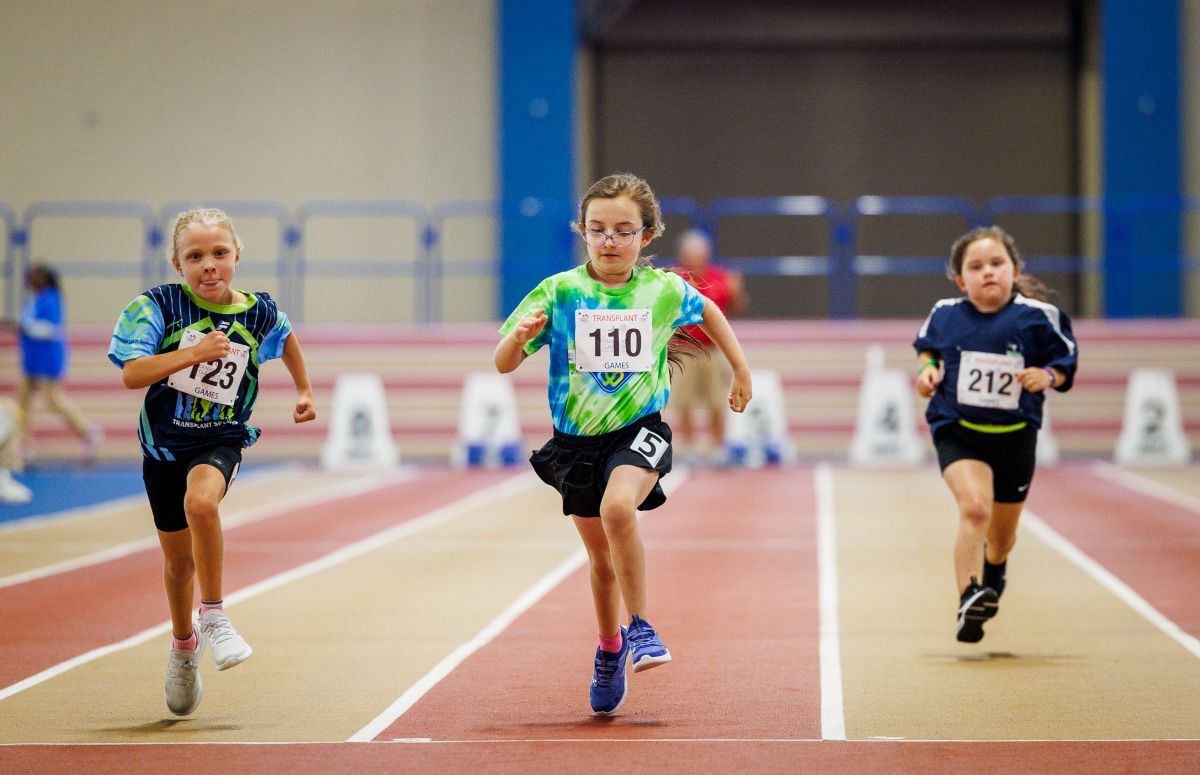
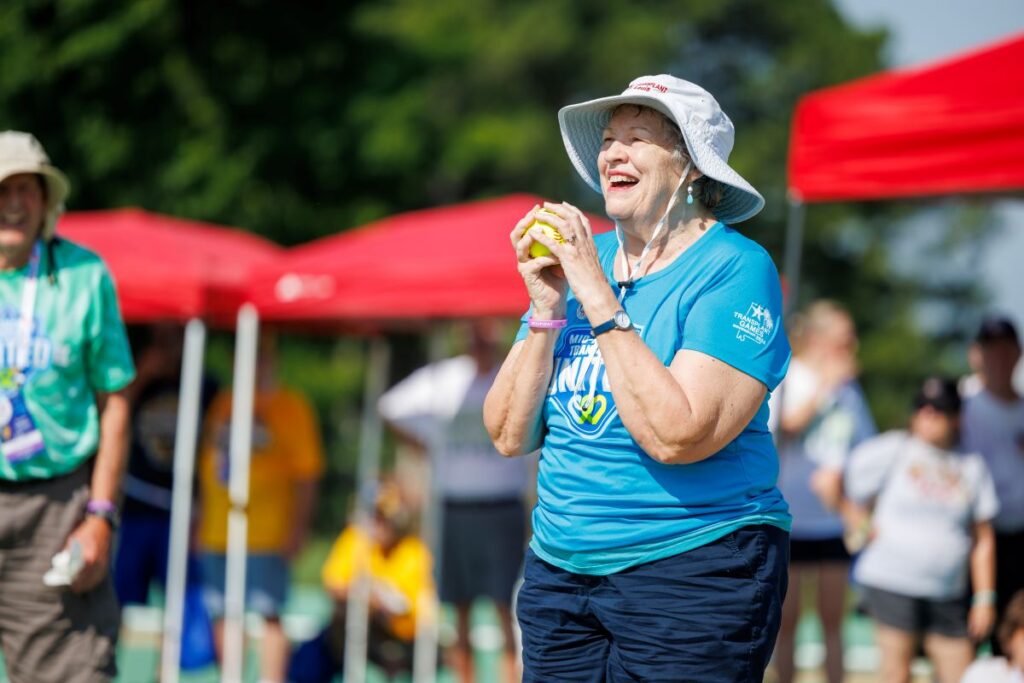
TGA, which takes place in a different city every two years, is an opportunity for those in the transplant community to come together and celebrate each other and the gifts of donation. It’s also a way to raise awareness of the need for organ donation.
More than 3,000 post-transplant athletes compete in more than 20 athletic and recreational competitions, including track and field, swimming, pickleball, tennis, cornhole, archery and ballroom dancing.
Started in 1990, TGA is now the largest gathering of organ, eye and tissue donors and recipients in the world. The public is welcome, and almost all of the activities are free.
“It’s a family reunion,” said Bill Ryan, president and CEO of Transplant Life Foundation, which organizes and produces TGA.
Ryan became an unwitting member of the transplant and donation space in 1986, when he lost an 18-year-old daughter to a car accident. Before her death, she indicated her desire to be an organ donor, and her family honored her wishes, donating her heart, kidneys, liver and long bones, which become tissue gifts. More than 40 people benefited from her donations.
Ryan later lost a second daughter, but due to her medical condition, she wasn’t a viable candidate for donation.
“I honor my daughters by being a part of something so special to people,” Ryan said. “Before my first daughter made that decision, I didn’t know much about organ donation. You go to work every day and don’t think about that kind of stuff until you’re part of it. I don’t know any of the people who got Michelle’s organs, but when I go to the games, every person I look at, I think it’s possible you might have one of my daughter’s kidneys, so it’s a way to connect with my daughter.”
More than 100,000 people in the U.S. are waiting for an organ; 15 to 17 will die every day because one wasn’t available. Half a million people are living with kidney and liver disease, and about 1,300 people in Colorado are waiting for a kidney.
“There’s a tremendous need for more organs,” Ryan said. “There are a lot of people still dying and not participating in the miracle of life that could extend life for another human being. That’s what we’re trying to do: make more organs available.”
About 60% of people in the U.S. are registered as organ donors. And last year, there were about 49,000 organ transplants, most of them donated organs from deceased donors. Another group — living donors — mostly donate a kidney or part of a liver to family members. There is also a small portion of altruistic donors who donate without a specific recipient.
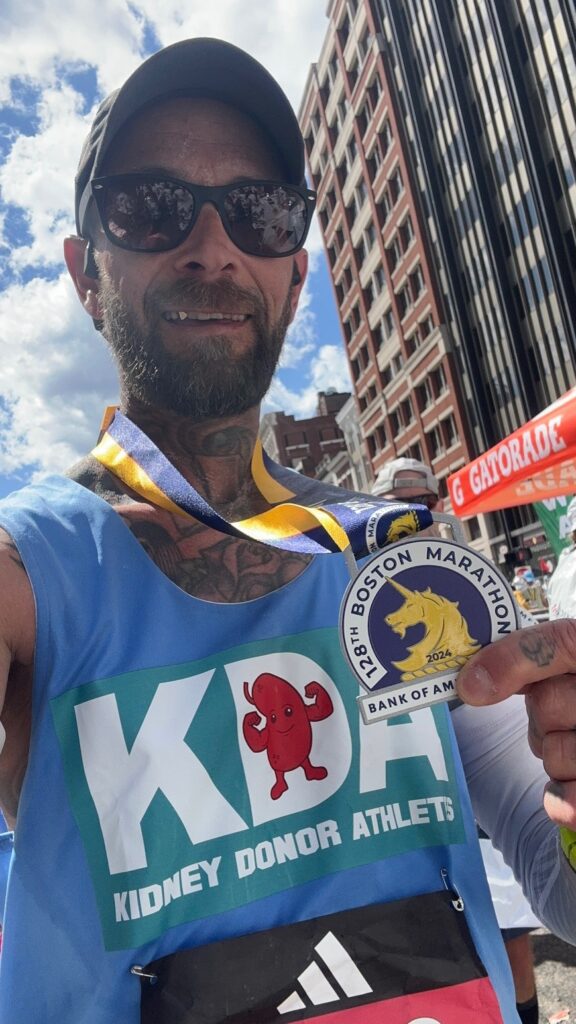
Colorado Springs resident and avid runner Michael Culley is one of those altruistic donors. He originally hoped to donate a kidney to a friend, but after going through testing, he learned they weren’t a match. However, because they went through the National Kidney Registry voucher system, both he and his friend rose to the top of the waiting and donor lists.
In 2024, Culley learned a Denver woman with lupus was a match for his kidney. He underwent surgery, and 32 days later, he ran the Boston Marathon. He’ll compete in running, cycling, bowling and pickleball events at TGA.
“She’s doing great,” said Culley, 50. “She was in really bad shape. It was hard for her to get out and do anything. When she got the transplant, it was like flipping a switch on. Her life changed.”
Culley’s friend also found a kidney match a few months later and is doing well.
Nothing has changed for Culley, at least physically.
“I feel exactly as I did beforehand, but mentally, emotionally and spiritually I feel so much better,” he said. “Because of something so simple for me to do, I was able to save others’ lives. Everyone should do that.”
Details
Transplant Games of America, June 18-23, Colorado Convention Center, 700 14th St., Denver; transplantgamesofamerica.org