







EDITORIAL: Hallucinogens as ‘therapy’ and now, ‘sacrament’
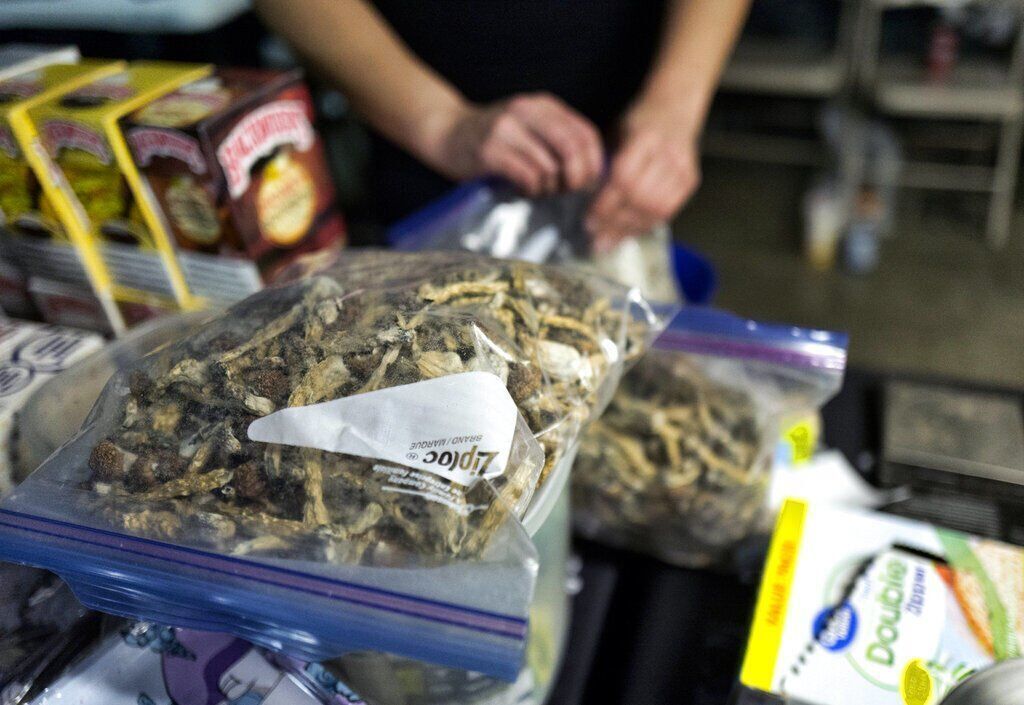
If some want to claim that mind-bending, hazardous and potentially deadly hallucinogens offer a path to “spiritual development” — that’s actually a tenet of a new, self-described “church” profiled in The Gazette this week — well, they’re free to believe as they wish.
But what hallucinogens clearly are not is medicine. They are not approved for use in treating PTSD, depression, schizophrenia or a host of other psychological disorders. No licensed medical professionals prescribe them as part of a treatment regimen.
That remains so despite Colorado’s terribly misguided decriminalization in 2022 of powerful hallucinogens such as psilocin, found in some species of mushrooms. That radical policy shift was ushered in by a ballot issue orchestrated and heavily funded by activists in the national legalization movement — not by anyone remotely connected to medical science.
Anyone claiming a scientific basis for the use of hallucinogens in treating physical or mental maladies is a dangerously naive quack, or more likely, a huckster. They are akin to the snake-oil and hair tonic pitchmen of old, except the oil and tonic did little harm other than to part you and your money. Hallucinogens, on the other hand, prompted a Boulder 15-year-old in 2024 to climb a crane at a construction site in his altered state of mind and fall 145 feet to his death.
Under Proposition 122, squishy state rules allow “magic mushrooms” to be consumed at licensed “healing centers” in various forms — as whole mushrooms, teas, capsules, tablets and tinctures, and also as chocolates and gummies.
If homegrown, hallucinogens also can be “given” away to anyone under the state’s rules.
That free rein to give drugs away evidently lets the Colorado Psychedelic Church do its thing. As reported by The Gazette, the Colorado Springs-based “congregation” insists it doesn’t even need a healing-center license because it doesn’t sell the substances and isn’t a healing center. It’s a church, you see — even if the IRS doesn’t regard it as such — and is protected by no less than the First Amendment.
Of course, there are fees for some services, such as individually guided sessions, starting at $250. And there are ceremonies at which hallucinogenic “sacraments” are distributed. Oh, and donations are accepted. After all, it’s a church, right?
None of it should come as a surprise. Proposition 122 allows — and licenses — “healing centers” for which there isn’t even a shred of medical science. Could hallucinogens dispensed at a purported religious congregation be far behind?
We’ll leave it to the state’s Department of Regulatory Agencies to assess whether such novel entities comply with the letter or spirit of the loose regulations adopted by the state to implement decriminalization.
The point is, it’s yet another reminder Colorado voters were conned. In reality, such slickly rebranded “magic mushrooms” are the latest cash crop of cynical drug merchants after de facto legalization.
The measure was backed by big money from out of state and sold as a miracle cure for mental-health issues. Veterans and other sympathetic figures were featured as the faces of the well-oiled campaign to offer testimonials to treatment using hallucinogens.
Meanwhile, the real faces of legalization — whether hallucinogens or marijuana — are Colorado’s kids. The drugs will wind up in their hands whether dispensed at an “adults-only” pot shop, a healing center — or at a “church.”
And too many of their parents will have to pick up the pieces of their children’s shattered lives and shattered minds.