







Frontier Airlines — with its hands out | Jimmy Sengenberger

When I was a teenager in the 2000s, Frontier Airlines was an all-star airliner and a source of Colorado pride. My family flew Frontier on vacations, and it always felt classy and high-quality. The in-flight movies and animals depicted on the side of each plane made it memorable and fun.
That was then. This is now.
These days, the trek to Frontier’s far-flung gates makes you feel like you’re in Podunk, DIA. Once you reach your gate, you may have to walk through the snow or rain to board a plane that trades comfort for a cheaper ticket.
It’s a sad story for the once-storied, Denver-based airline. But such is the fate of carriers that have gone the low-budget route — and now are seeking a bailout from the federal government. Frontier and other budget carriers are reportedly seeking a $2.5 billion relief fund established by Washington that could even lead to federal co-ownership of the airlines.
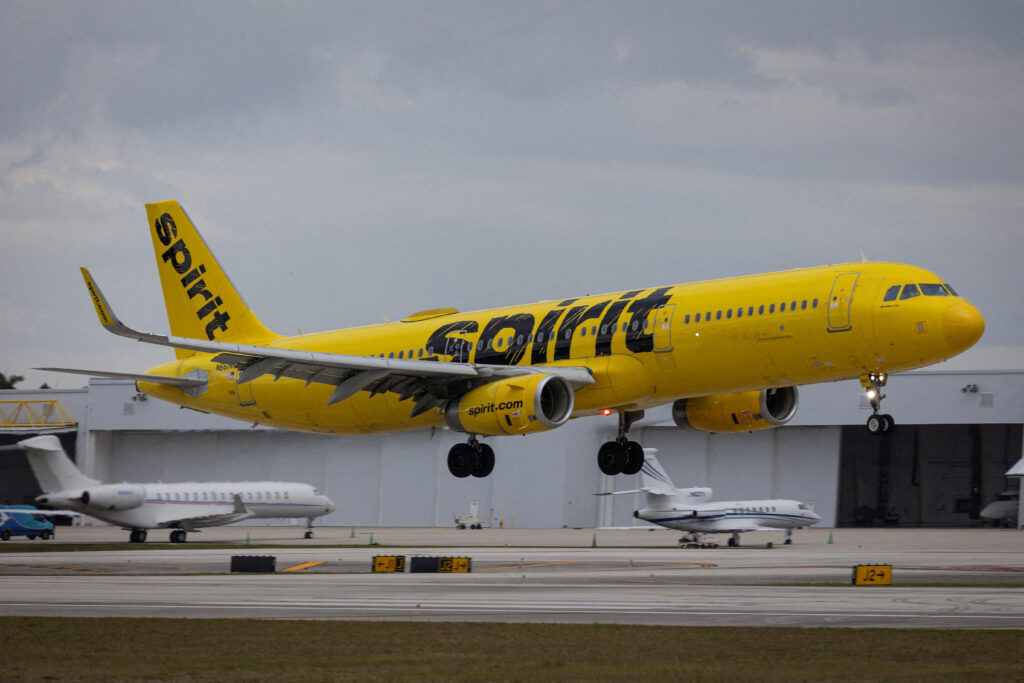
Frontier’s decline is emblematic of a struggling class of airlines, of which there are fewer after the collapse last week of Spirit Airlines. Spirit went under after failing to secure a $500 million taxpayer loan from the Trump administration, which would have granted the federal government warrants to purchase up to 90% of the company.
But let’s be clear: Spirit’s collapse isn’t because Trump wisely declined to bail them out. The company’s fiscal troubles long predate Trump’s decision, driven by skyrocketing debt and unprofitably low fares amid rising labor costs and interest rates.
The Iran conflict has sent jet fuel prices soaring, exacerbating the industry’s underlying problems and worsening its financial outlook.
But by 2022, things were already so gloomy that JetBlue proposed a $3.8 billion merger with Spirit.
The Biden administration challenged the deal as an antitrust violation, blocking it in January 2024. Spirit declared bankruptcy that December.
Ironically, federal Judge William Young acknowledged Spirit’s financial challenges and the prospect of greater competition for the “Big Four” airlines — but still ruled against the merger because it would stifle some low-fare competition.
So much for that. As the Journal editorialized: “The big boys are likely to snap up Spirit’s planes, airport gates and other assets, and there will be less competition than if the merger had been allowed.”
If JetBlue is the next domino, the feds will have nobody to blame but themselves. The Biden administration’s antitrust interference killed the one deal that might have kept Spirit in the sky — and thrown JetBlue a lifeline.
Over the weekend, U.S. Transportation Secretary Sean Duffy said he doesn’t think the proposed bailout of Frontier and other budget carriers is necessary.
“If they want to come to the U.S. government, we would be a lender of last resort. If they can find dollars in the private markets, I think that’s better for them,” Duffy said.
He’s right. But why leave the door open at all?
In the late 1970s, fearing the collapse of America’s “Big Three” automakers, Congress passed a bill authorizing $1.5 billion in federal loan guarantees to save Chrysler, signed by President Jimmy Carter — a lifeline Studebaker in the 1960s and American Motors Corporation in the 1980s never received.
Chrysler’s chairman, Lee Iacocca, had a turnaround plan: the K-car, which would take longer to bring to market. Chrysler agreed to implement cost-cutting measures, provide collateral and submit to oversight by the Chrysler Loan Guarantee Board.
My Boomer friend Keith Nobles summed it up for this Millennial: “Chrysler got bailed out. Iacocca was making TV commercials where he was saying, ‘Just wait for the K-car, it will be unlike any car ever built.’”
“Then the K-car turned out to be THAT!” Nobles continued. “Underwhelming doesn’t begin to describe it — but Chrysler sold a lot of them.”
For TV host Phil Donahue in 1979, a Chrysler bailout was a foregone conclusion. Legendary economist Milton Friedman disagreed.
“It’s a profit and loss system,” Friedman told Donahue, “and the loss part is even more important than the profit. Because it’s what gets rid of badly managed, poorly operated companies.”
“Should the people in this country bail out Chrysler by taking money out of their pockets — not to buy cars which they want to buy, but to pay for whatever has been the cause of the losses at Chrysler?” he asked.
This time would be much worse. Spirit, Frontier and other budget carriers wanted a combined $3 billion — a massive bailout to indefinitely stay afloat without any structural changes. Plus, it would be a unilateral action of the executive branch, not congressional legislation.
A 90% government ownership stake in Spirit would be extraordinary, even in an era where the Trump administration is already taking equity stakes in companies from Intel Corporation and Westinghouse Electric to U.S. Steel and MP Materials.
That private-sector businesses are clamoring to hand over ownership to the government makes it all the more alarming.
“When Chrysler loses money, it’s got to do something,” Friedman said. “When Amtrak loses money, it goes to Congress and gets a bigger appropriation.”
If the federal government effectively nationalized Spirit, Frontier or any other carrier, we’d have a slew of Amtrak airlines pleading for cash at every turn and stifling independent competition.
Coloradans have a stake in whether Frontier survives, but not like this. The airliner that made Colorado proud has seemingly stopped competing. Now, it’s asking Washington for handouts.
Milton Friedman called it decades ago. The Amtrak airlines are now boarding.
Jimmy Sengenberger is an investigative journalist, public speaker, and longtime local talk-radio host. Reach Jimmy online at Jimmysengenberger.com or on X (formerly Twitter) @SengCenter.