







Germinal founder Ed Baierlein takes his final, provocative curtain call
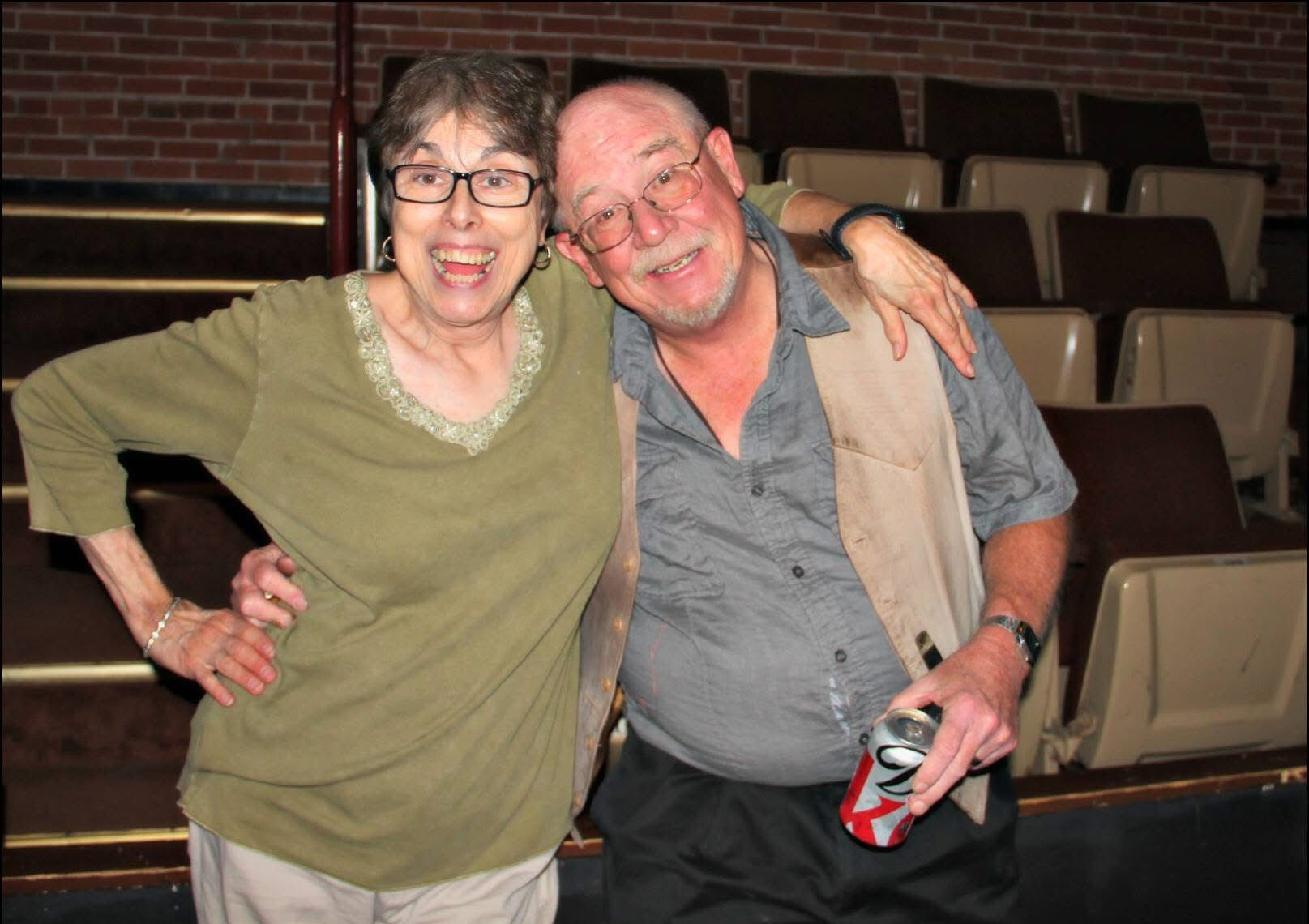
A COLORADO LIFE: 1943-2026
After taking a buyout from The Denver Post, I was still jonesing to cover the local theater community. So I asked Germinal Stage-Denver founder Ed Baierlein if I could be a fly on the wall to chronicle the 2013 making of “Offending the Audience,” which he had just announced would be the company’s final production in its storied northwest Denver home.
“Fine,” he told me … You’re in the play.”
Wait … what?
“Offending the Audience” would revisit what Baierlein described as “easily Germinal’s most notorious production” from back in 1976. It’s not so much a play as a proudly condescending lecture on the experience of attending live theater. There’s no story. It consists entirely of actors delivering insults directly at members of the audience in Austrian playwright Peter Handke’s repetitive, hypnotic and often confounding, Seuss-like language:
“YOU FOUL MOUTHS!”
“YOU SELLOUTS!”
“YOU DEADBEATS!”
“YOU PHONIES!”

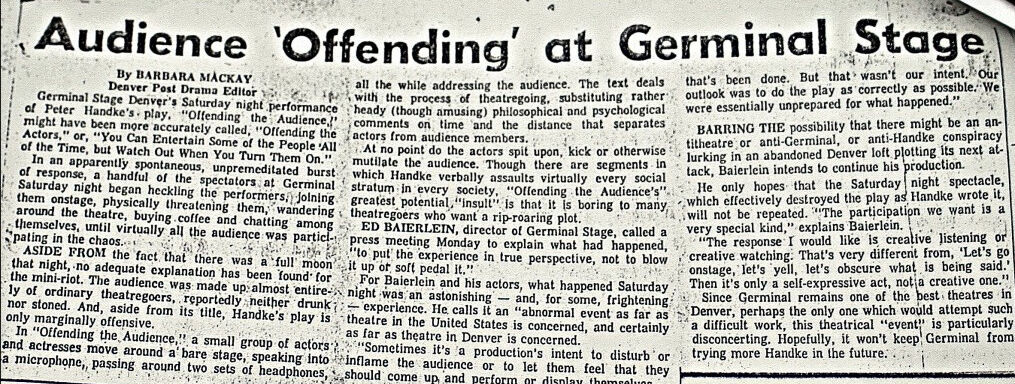
Back in 1976, one infamous performance sparked a spontaneous “mini-riot.” It began with a handful of irritated spectators heckling the performers. After more verbal provocation, they rushed the stage. They got up in the actors’ faces and even physically threatened them as their relentless patter droned on. Eventually, according to a subsequent Denver Post report, “virtually all the audience was participating in the chaos.”
It was like waterboarding with words.
We know all this went down because Baierlein, ever the showman, called a full-on press conference the next day to address (or perhaps stoke) the media’s interest in the incident. How unprecedented was this uproar? Well, when’s the last time you can remember a local theater company calling a press conference over anything … and the media showing up?
They showed up.
“Aside from the fact that there was a full moon that night, no adequate explanation has been found for the mini-riot,” Denver Post Drama Editor Barbara MacKay wrote at the time. “The audience was made up almost entirely of ordinary theatregoers, reportedly neither drunk nor stoned. Aside from its title, Handke’s play is only marginally offensive. At no point do the actors spit upon, kick or otherwise mutilate the audience.”
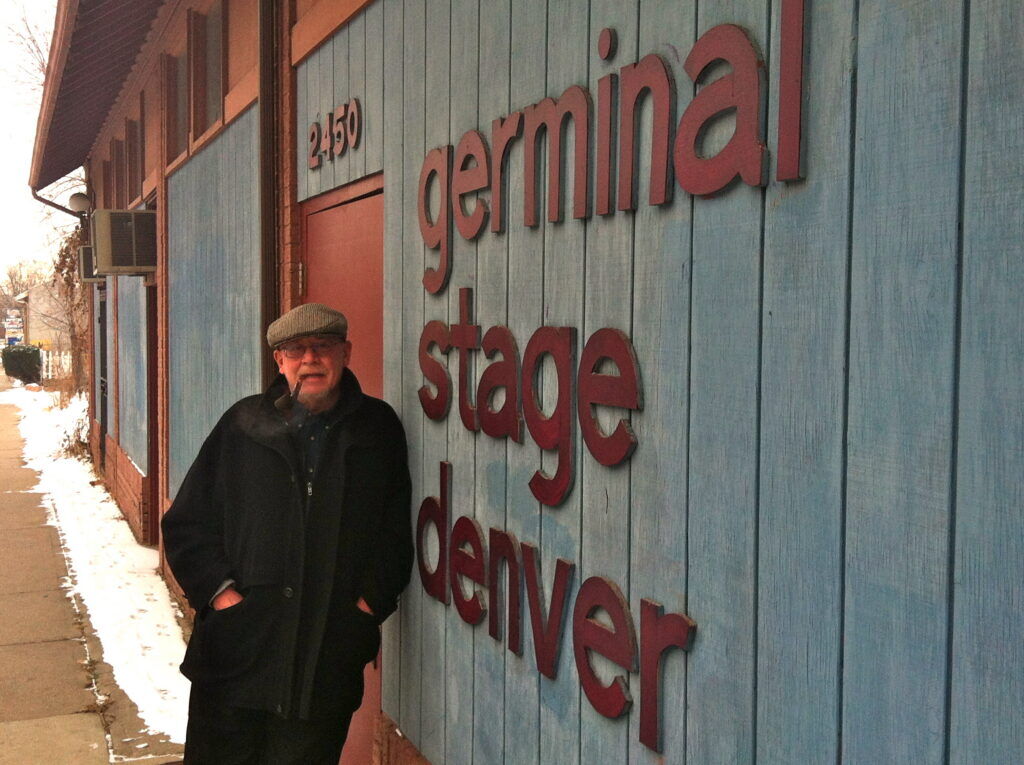
This all came about with the 2012 sale of the Germinal property at 44th Avenue and Alcott Street, ending a four-year ordeal without a buyer willing to keep operating the space as a theater. Instead, Baierlein sold to a real-estate developer, making way for a cobbler and the El Jefe restaurant, which surely have the foul smell of Baierlein’s immortal pipe smoke baked into their walls.
Baierlein thought there could be no better way to go out than to rekindle the company’s rebel ‘70s spirit by restaging “Offending the Audience.” Only, this time, Baierlein decided to re-gather 45 seminal actors who had played more than 450 combined roles on Germinal stages over the previous 39 seasons. (And, for some reason … me.)
“Dad first put that play on when he was 33 years old and still this angry young artist who wanted to piss people off,” said Baierlein’s only son, Tad. “He wanted to literally offend the audience. He wanted them to walk out. His attitude was, ‘Serves you right for coming here wanting to be entertained.’
“But the second time, he was a 69-year-old man, and he saw it more as an opportunity to gather together all the people who had loved this theater for all those years.”
In a fit of uncharacteristic nostalgia, Baierlein shared with me that, by diligently covering his theater and its work as a journalist for 12 years, I warranted a branch in the sprawling Germinal family tree. No matter that I am not an actor.
I was recovering from a traumatic brain injury at the time, and Baierlein knew it. But I kind of wanted to see if I could do it. So I spoke to my neurologist, who confirmed that memorizing this hodgepodge word salad would be beyond my brain’s present capacity. I tried to quit, feigning the altruism of not wanting to bring down the work of the 44 actual, veteran stage actors Baierlein had brought together for this important swan song,
“No,” Baierlein said bluntly. “You’re just scared.”
Yeah? Tell me something I don’t know, you big old bully!
Baierlein made me a deal: If I really could not get there, he would allow me to hold index cards with my lines written out, as kind of a crutch. But I was determined not to need them. So I devised a novel system that might help my brain along: I wrote out my weird lines on a dry-erase board and learned them in groups of color-coded, four-line stanzas.
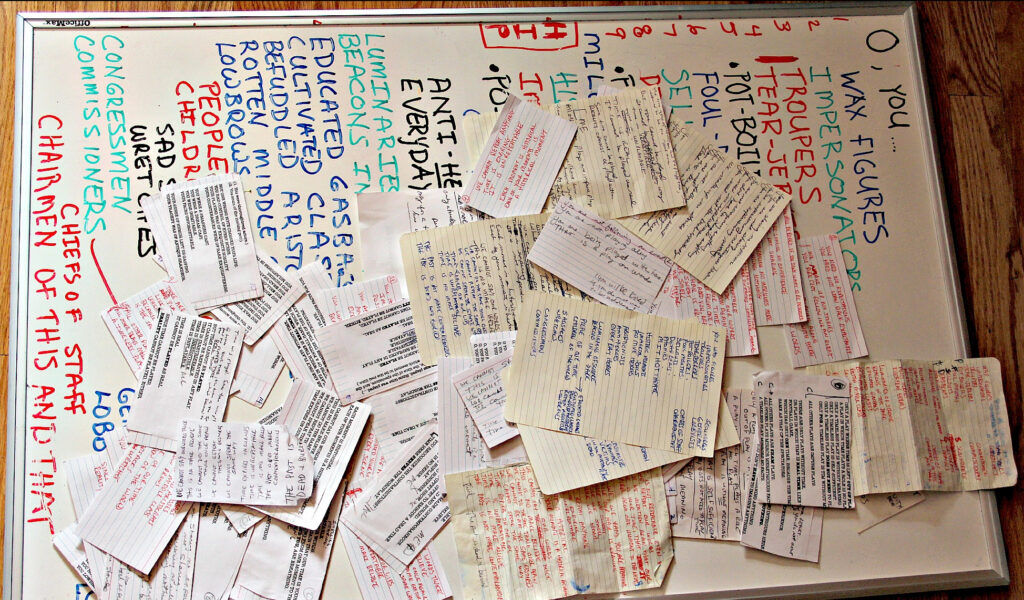
Miraculously, by opening night, I didn’t need no stinking index cards. The funny part was … well, a whole lot my castmates (many now in their late 60s and beyond) very much did. Baierlein ordered all of us to carry index cards. Otherwise, this 80-minute play might have taken us three hours to get through.
As opening night approached, “We will conspire to blow your collective mind!” Baierlein said in a media interview, sounding more like the avant-garde young button-pusher who opened Germinal in 1973 than the 69-year-old irascible old radical he had by then become.
Alas, our attempt at raising the ghosts inspired just one minor incident. One night, a lone man stood in silent protest of the verbal hypnosis he was undergoing. About half the audience took the cue and joined in, standing for about four minutes without ever disrupting the action. Then, they sat. Kind of anticlimactic, I thought. I was hoping for at least one call to the police.
Still, I was grateful for the opportunity, not only to chronicle an important closing chapter in local theater history (I called my series “Terminal Germinal”), but also to see first-hand the creative side of this Colorado theatrical giant in a way I never could in the 12 years I covered his work as a journalist.
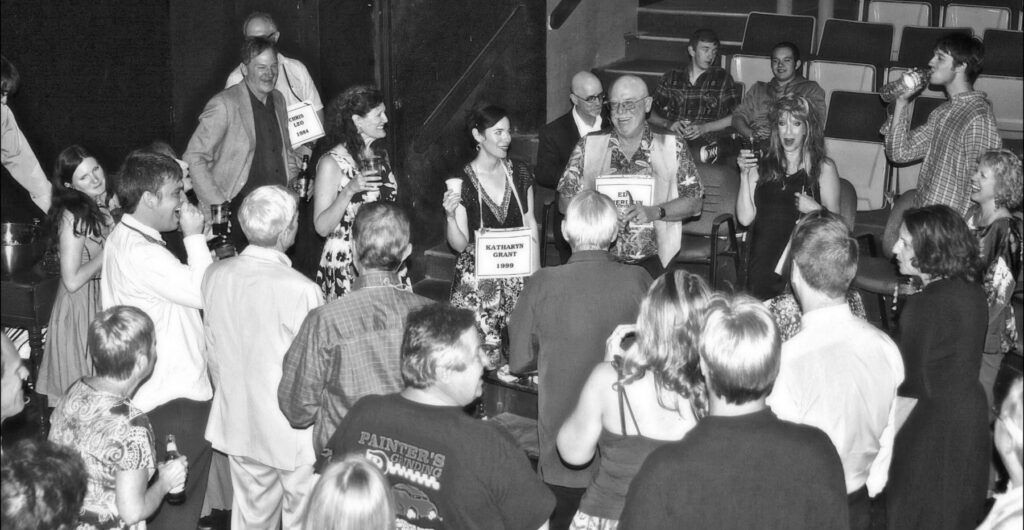
On this theater’s final closing night, I asked Baierlein how he felt. And he dropped his guard just long enough to reveal what a squishy, sentimental fool he really was:
“I feel like I do at the end of any other closing,” he told me. “I’m halfway glad this play is over – and I halfway wish it could have made more money.”
When word started to trickle out that Baierlein died of heart failure Friday at age 82, I soon discovered with great humor that I wasn’t the first actor Baierlein had inspired by calling them “chicken.”
“Ed refused to let me turn down the part of Stanley in ‘A Streetcar Named Desire,’” said former Denver actor Thomas Borrillo. “I told him I was afraid that the role was out of my reach. He told me that was because I was young and still dumb. He told me: ‘You are Stanley, you boob.’”
And so … he was.
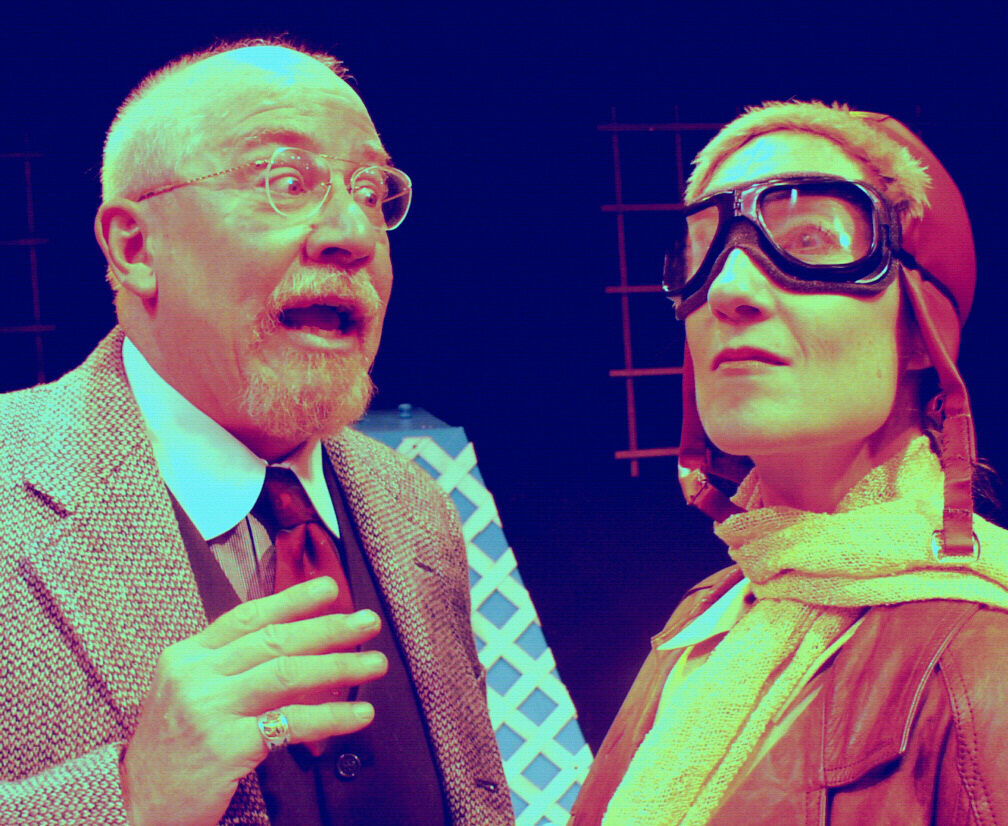
A remarkable record
It’s a challenge to adequately summarize Baierlein’s foundational contributions to the Colorado theater community, but here goes: He co-founded Germinal Stage-Denver in 1973 and presented his own signature brand of fiercely intelligent theater for 48 years in at least four locations before finally calling it quits in 2021.
It has been said that Denver had only five bona fide theater companies when Germinal began. The Bonfils and the seasonal Elitch Theatre were kingpins, along with the Gaslight, Changing Scene, Theatre Under Glass and Nomad. Dinner theaters such as the Country Dinner Playhouse and Heritage Square also were growing in popularity.
Meaning no disrespect to his friends and competitors, Baierlein told his colleagues at Germinal that “our job was to put everybody else out of business.” And, one by one, that is exactly what happened.
“And I would expect that anyone who starts a theater today should have the same attitude,” Baierlein said. “You want to be so good that people wouldn’t think about going to your theater third. They should want to go to your theater first.”
He says that, but Baierlein also founded, along with legends Henry Lowenstein and Al Brooks, what we know of today as the Colorado Theatre Guild – the leading advocacy group for live theater in the state.
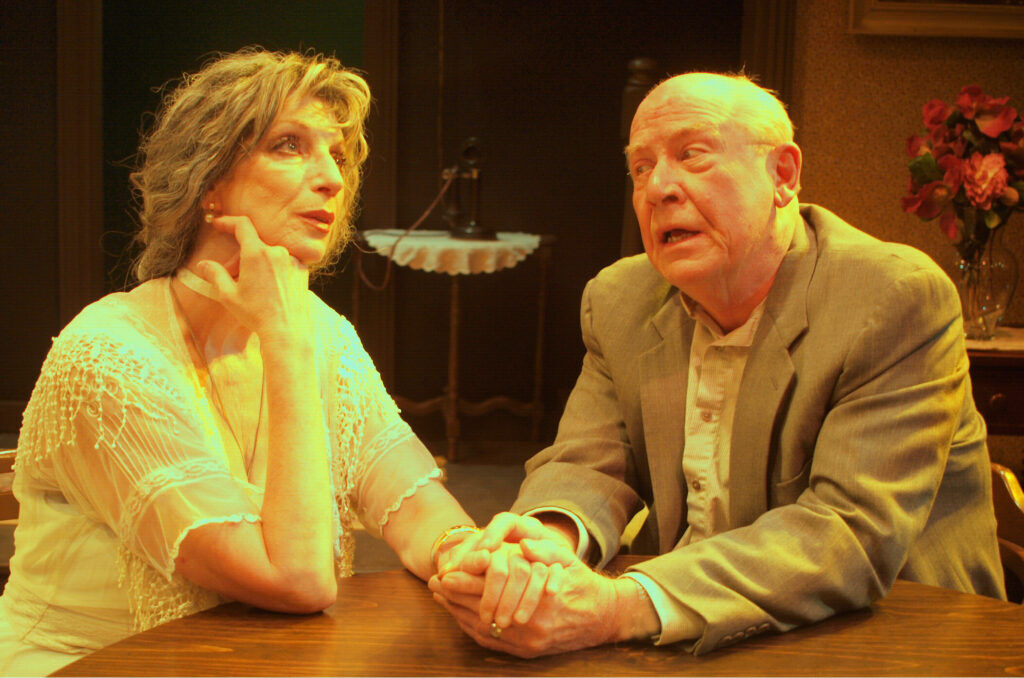
At a time when avant-garde theater has gone largely extinct, Baierlein was often called our leading purveyor of absurdist and experimental theater. He took particular delight in producing modernists like Beckett, Ionesco, Albee and Pinter. But even as the established masters of the day started to lose favor elsewhere, Germinal became even more so a reliable home for writers of the classics, like George Bernard Shaw, Eugene O’Neill, Henrik Ibsen and Tennessee Williams.
Germinal would give you postmodern reinterpretations of classics by Molière and Shakespeare alongside cutting-edge contemporaries like David Rabe and David Mamet, mixed in with comedies by A.R. Gurney and Alan Ayckbourn.
Tad Baierlein delights in any attempt to characterize the Germinal canon as any one thing.
“I think dad would just say that he put on the plays that he wanted to put on,” he said.
At one point, I asked Baierlein himself, and he said this: “I am interested in all kinds of theater, but the shows that really interest me to produce are plays of substance that avoid middle-class realism, because film does that better. It might be a European play, or one no one has ever heard of, but you can’t beat the plays of an Arthur Miller, a Eugene O’Neill or a Tennessee Williams for challenging the audience intellectually while still entertaining them.”
What distinguished Baierlein from many other greats of his era was the simple scope of his responsibilities. When Tad Baierlein says his father did it all at Germinal, he means everything – except perhaps the costumes, which were usually handled by his legendary mother, Sallie Diamond Baierlein.
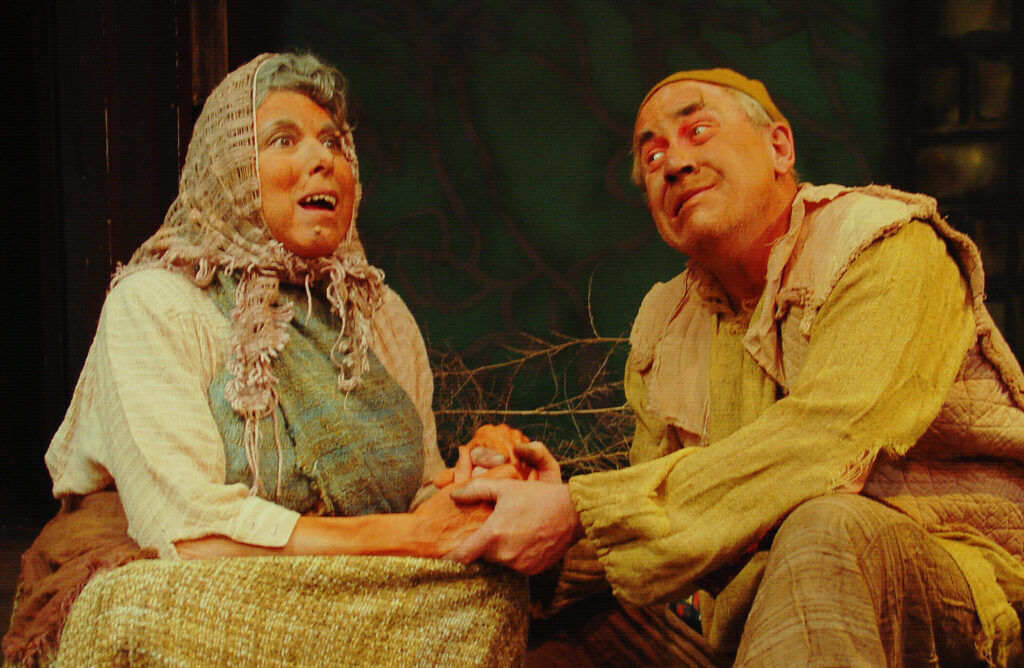
“He not only ran the business of the theater on a daily basis, he designed the lights, he built the sets, he ran the box office, he directed the shows and he acted in most of the shows,” Tad said. “His ability to keep that theater alive as long as he did, I don’t know. He just had this … magic.”
For 48 years, Denver’s best actors flocked to the Germinal for one reason: because it was hard. Baierlein, whom I once affectionately called “a fossil that has refused to calcify,” never simply went with the winds. He was George from “Who’s Afraid of Virginia Woolf,” braying into the blustery face of shifting theater trends. He obstinately defended forgotten theater like a vigilante, and in the process made an artistic home for dozens of local actors – notably legends like Erica Sarzin-Borrillo, Deborah Persoff, Michael Shalhoub, Lori Hansen and many more. And a launching pad for many then-promising young actors, like Emily Paton Davies, C. Kelly Leo, Elgin Kelley, Suzanna Wellens and Brian Landis Folkins.
“What we got from Germinal Stage-Denver was a challenge to audiences on the level of language and ideas that is unmatched by any other theater company operating in this town,” said actor Terry Burnsed.
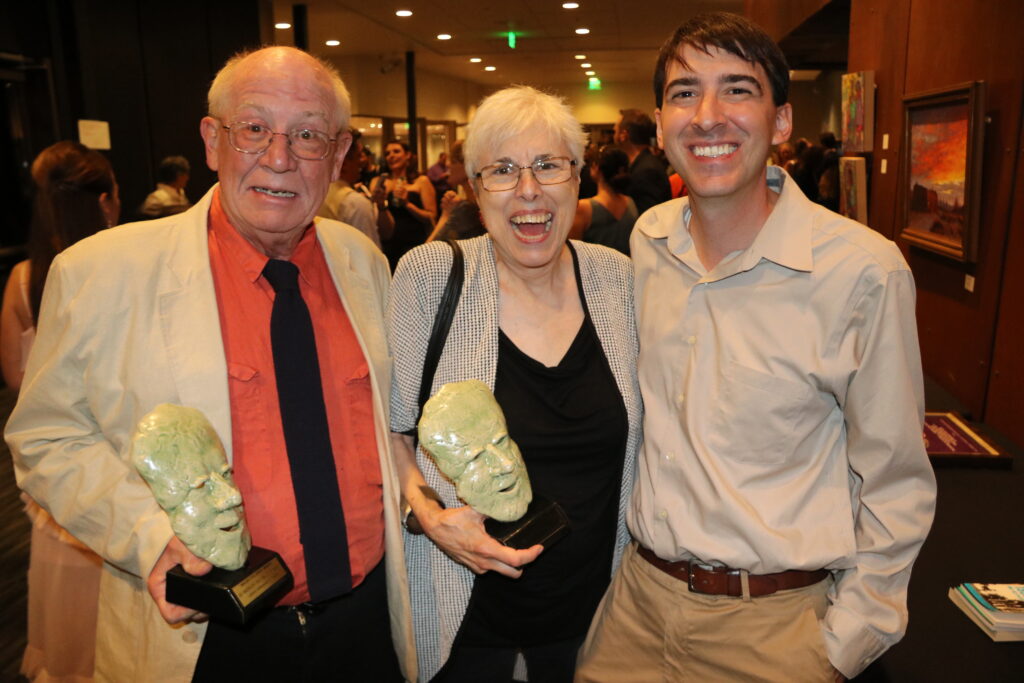
And while Baierlein directed nearly 200 plays in all, he starred in nearly as many himself, leaving an acting portfolio few actors in Denver history can match. (“I’m virtually undirectable, which is why I direct myself,” he once said.)
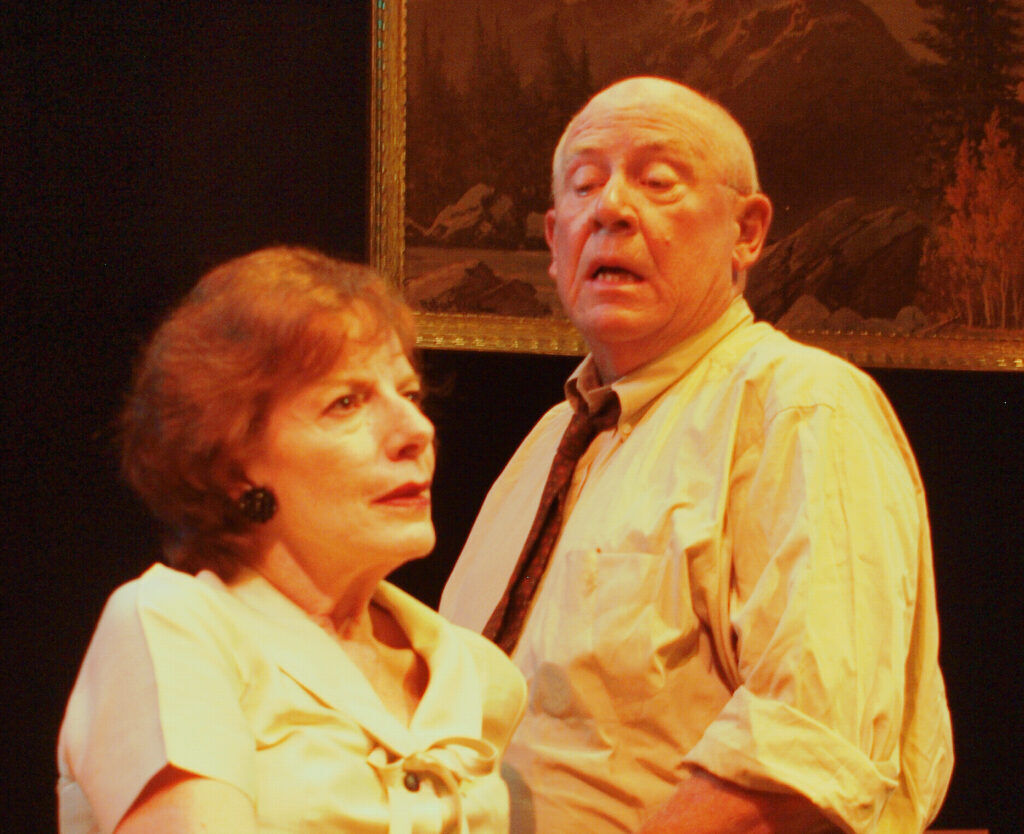
His seminal role may have been playing James Tyrone, the 65-year-old patriarch of O’Neill’s “Long Day’s Journey Into Night.” It’s a role Baierlein played at 31, and again when he was 69. Tad Baierlein would add his father’s performance as Davies, an elderly, homeless, racist drifter in “The Caretaker.”
“When the old man breaks down at the end of that play, I was crying,” Tad said. “It was maybe the first time I’d seen my dad in that vulnerable of a state, and it was absolutely awesome.”
In 2007, I named Baierlein the Denver Post’s Colorado Theater Person of the Year. He directed five plays that year and acted in three, including a demanding monologue about Oscar Wilde titled, “Diversions and Delights” – in addition to all his other responsibilities.
When I stopped by Germinal to interview Baierlein about his award on a snowy December morning, he was out front shoveling the snow off the sidewalk. He was 64 at that point. I asked him: “Shouldn’t you have someone to do this kind of thing for you by now?”
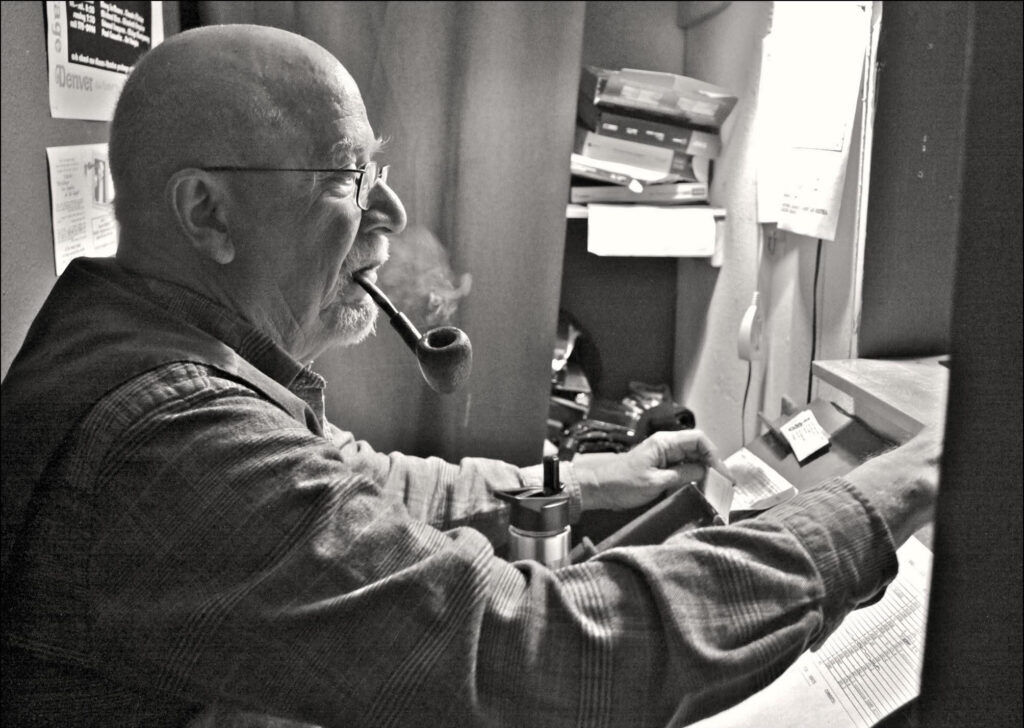
“How does Germinal Stage-Tucson sound?” Baierlein chortled amiably through pipe smoke, frozen breath – or both.
The Baierlein beginning
Baierlein was born Aug. 27, 1943, and grew up in Wilmington, Del., and Jersey City, N.J. He graduated from Gettysburg (Pa.) College and went to grad school at Penn State, where he met Diamond, ultimately his wife of 58 years and partner in all things.
They moved to Denver in 1967 after Ed enlisted in the Air Force and was assigned to Lowry, where he was an instructional film writer for three years. He then spent a year as playwright in residence for Al Brooks’ legendary Changing Scene before he and Diamond joined Joey and June Favre’s revered Third Eye Theatre, which in 1972 was the only paid, professional resident company of actors in Denver. The company cranked out 10 new plays in 44 weeks in 1972-73.
When it folded, the pair teamed up with actors Jack McKnight and Ginger Valone (one of Denver’s most respected thespians of the 1970s) to create Germinal Stage-Denver. For a year, the quartet got together once a week to read plays and throw $15 each into a kitty that would grow to $18,000.
Baierlein got a sweetheart deal from LoDo pioneer Bill Saslow, who helped him build an 82-seat theater in a rundown warehouse district one block west of the Old Spaghetti Factory at 1820 Market St. In that first season, one reviewer wrote he feared his car might be run over by a boxcar.
Soon they welcomed Tad, whose first appearance on the Germinal stage came prenatally. He was born between rehearsals for “Present Laughter” in 1980. Diamond went into labor and Baierlein took her to the hospital, “but only at a natural stopping place,” he once joked.
“I’m sure we would not have been as successful without Sallie, ” said company treasurer John Seifert, who equated the pair to Paul Newman and Joanne Woodward. “If we are ever on a green sled headed for hell, she’s the one who would be brave enough to roll over and whisper to Ed, ‘You better get this back on track now.'”
The couple moved Germinal to northwest Denver in 1987, where Baierlein liked to call his little 100-seat theater “the runt stepchild of small, nonprofit theaters – a corner grocery of Thespis holding its own against the supermarkets.” From 2013-21, Germinal continued on as an itinerant company performing in a variety of spaces.
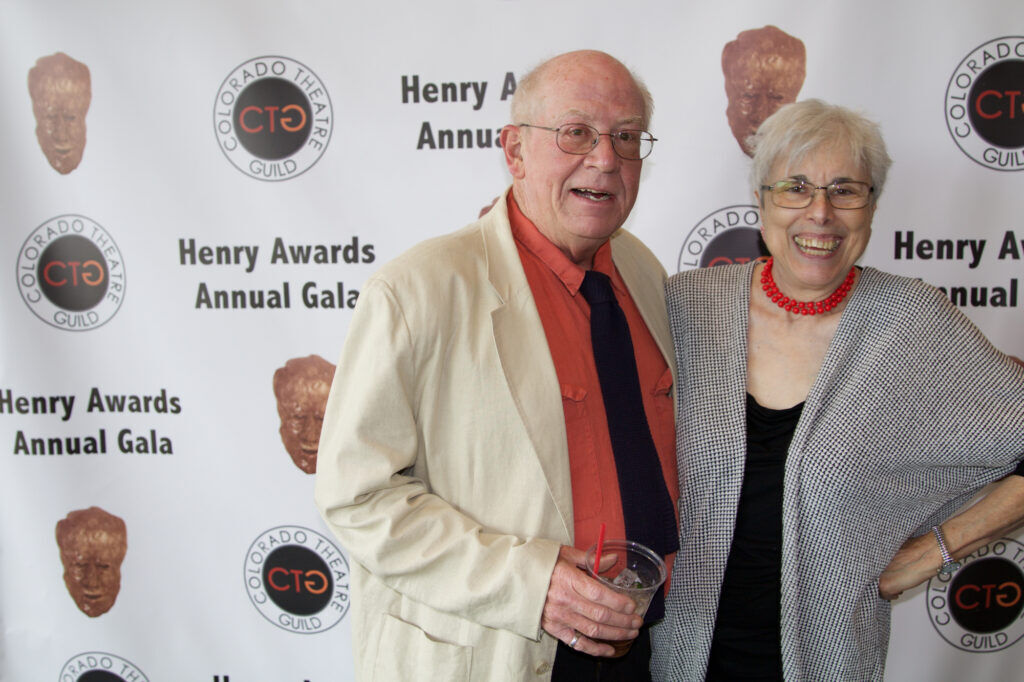
In 2017, Ed Baierlein was presented with the Colorado Theatre Guild’s Lifetime Achievement Award.
Those who only knew Baierlein from Germinal might not know that he dearly loved musical theater, classic films and golf – so much so that he took a second job as the official starter at the Harvard Gulch par-3 golf course. Which was kind of funny, given that he was eventually fired for being too surly. (I’d say “irascible”).
There are many great ways to end a tribute to a man whose impact on Denver arts will have no end. But I’m thinking of the final words of “Offending the Audience,” which Baierlein spoke himself, leaving no doubt as to the squishy center of that delightfully caustic exterior.
“You fellow humans, you,” he said. “You were welcome here – and we thank you.”
But that’s not how I’m ending this. Because I once asked Baierlein straight out how he wanted to leave this mortal coil.
“I either want to drop dead walking up the 16th fairway at Willis Case Golf Course,” he said of a stretch that goes by the nickname “Cardiac Hill” – ”or onstage playing Othello to my son’s Iago, just as Charles and Edmund Kean did in 1833.
“I want my son on stage with me when I die,” he said, “so I can say to him, ‘Speak to them for me!”‘
ED BAIERLEIN/Seminal roles
- Alexandr, the insufferable old hypochondriac of ‘Uncle Vanya’ – Baierlein at his blistering best
- James Tyrone, ‘Long Day’s Journey into Night.’ Who else would have the temerity to play that monster role at age 31 – and again at 69?
- Baierlein starred as Martin Doul, a blind beggar, opposite his wife in J.M. Synge’s ‘The Well of the Saints’
- Cornelius ‘Con’ Melody in Eugene O’Neill’s ‘A Touch of the Poet’ – a volcanic, dangerous performance
- Escurial in a one-act of the same name by Belgian Michel De Gelderod. ‘It’s about a mad king and his fool egging on his madness,’ said Tad Baierlein. ‘I remember dad flying around that stage in a way I’ve never seen before or since.’