







GUEST OPINION: Phil Weiser’s HPE challenge and global telecommunications
Colorado Attorney General Phil Weiser has positioned himself as one of the country’s most active antitrust enforcers. That includes leading a coalition of state attorneys general challenging the Justice Department allowing the merger between two telecom companies, Hewlett Packard Enterprise and Juniper Networks, to move forward.
But March 12 reporting about the national security considerations behind the merger raises an important question for Colorado: now that additional details have come to light addressing many of the original concerns, should that challenge continue, or will continuing it significantly undercut the state’s booming technology industry?
Colorado has spent years building a reputation as a hub for advanced technology, telecommunications infrastructure, and aerospace research. Decisions about how regulators approach major technology mergers inevitably shape the environment for companies and investors operating here.
And in this case, they can impact national security too.
According to reports surrounding the recent departure of former Justice Department antitrust official Gail Slater, the intelligence community had raised concerns about blocking the merger. CIA Director John Ratcliffe reportedly warned that preventing the deal could pose national security risks and questioned why intelligence officials had not been consulted earlier in the DOJ’s process.

Those revelations clarify that the government’s decision was not simply the result of lobbying pressure, as some critics like AG Weiser have suggested in their case against it. Instead, it reflected concerns raised by national security officials about the United States’ ability to compete with Chinese telecommunications giants.
The strategic stakes are clear. China’s Huawei controls roughly 30 percent of the global telecom equipment market, while no American company holds even a double-digit share.
Huawei’s dominance is closely tied to the Chinese Communist Party’s system of state support and industrial policy. Telecommunications infrastructure is not just another industry; it is the backbone of the digital economy and a key arena of geopolitical competition.
Colorado observers have increasingly raised alarms about China’s growing economic footprint. As Tony Henderson, president of the Denver chapter of the NAACP, recently wrote, “one of the biggest [threats] is China’s economic and political influence sneaking into our state, from farmland and water rights to telecom infrastructure and crypto money laundering.”
Against that backdrop, strengthening an American competitor in global telecommunications markets takes on greater strategic importance.
Yet despite these developments, a coalition of state attorneys general led by Weiser continues to challenge the DOJ settlement in federal court.
Their campaign revolves around the Tunney Act, which requires courts to review antitrust settlements to ensure they serve the public interest. But these new reports indicating the CIA and intelligence community’s support for the merger now make the public interest clear.
For Colorado, the broader implications are worth considering. The state has invested heavily in advanced technology, telecommunications infrastructure, and research institutions. Policies that signal hostility toward large-scale innovation risk discouraging investment in sectors where scale and integration increasingly matter.
Colorado’s rapidly expanding tech sector illustrates what is at stake. Retired U.S. Army Colonel Martin A. Perryman recently noted that Colorado ranks third nationally in tech-sector concentration and fifth for venture capital investment. “Colorado isn’t just participating in the AI era,” Perryman wrote. “We’re helping to build it.”
Colorado is also home to some of the nation’s most sensitive defense and aerospace assets, including NORAD and U.S. Northern Command. In a world where digital infrastructure and national security are increasingly intertwined, strengthening America’s technological base should remain a priority.
Antitrust enforcement remains essential to protect consumers and prevent genuine monopolization. But enforcement should also account for the broader strategic environment in which American companies operate.
Now that new reporting has clarified the national security considerations surrounding the HPE-Juniper merger, it may be worth reconsidering whether continuing to challenge the settlement best serves the public interest — for Colorado and for the country.
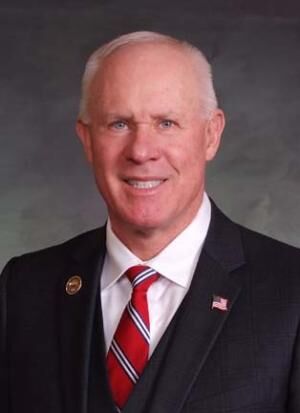
Anthony Hartsook is a Colorado State Representative for House District 44 in Parker, and the Minority Caucus Chair. He served with honor and distinction during a highly successful 26-year career as an intelligence officer in the U.S. Army. He is a decorated combat veteran with deployments to Iraq, Afghanistan, and the first Gulf War, along with tours in Italy, Korea, and the Pentagon Joint Staff Intelligence Directorate. He retired with the rank of Lieutenant Colonel.