







Is 2026 a make-or-break season for the Deion Sanders era at Colorado?
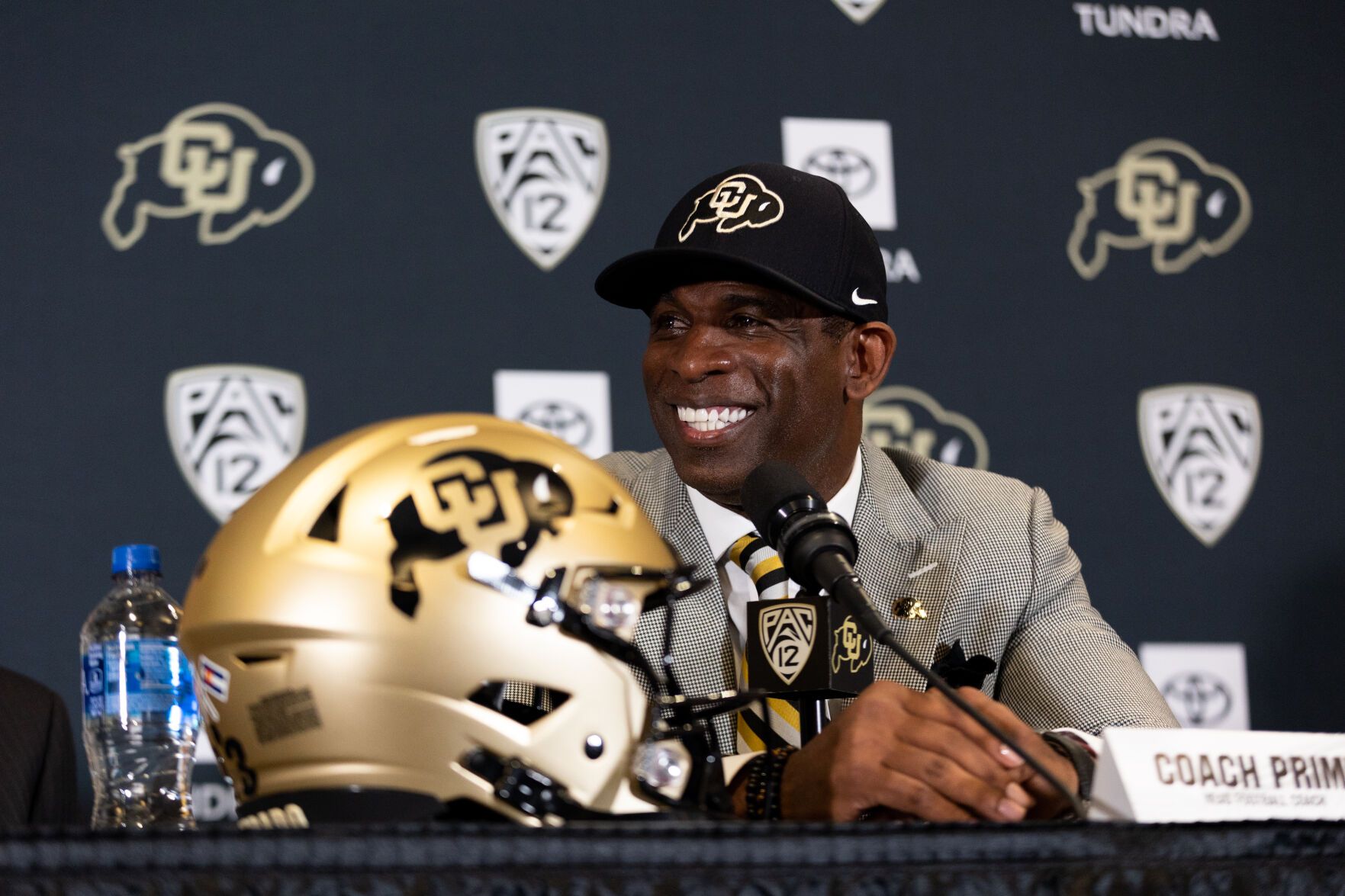
It’s hard to believe, but the Deion Sanders era at Colorado is a few months away from its fourth season.
And his 2026 season has less juice than any other during his tenure, an alarming sign entering the second year of a $54 million contract extension. There’s the 3-9 record from 2025, a Sanders-era worst, that doused enthusiasm. There was the subsequent departure of key players to the transfer portal, notably star offensive tackle Jordan Seaton.
So what’s next in the never-boring Coach Prime era?
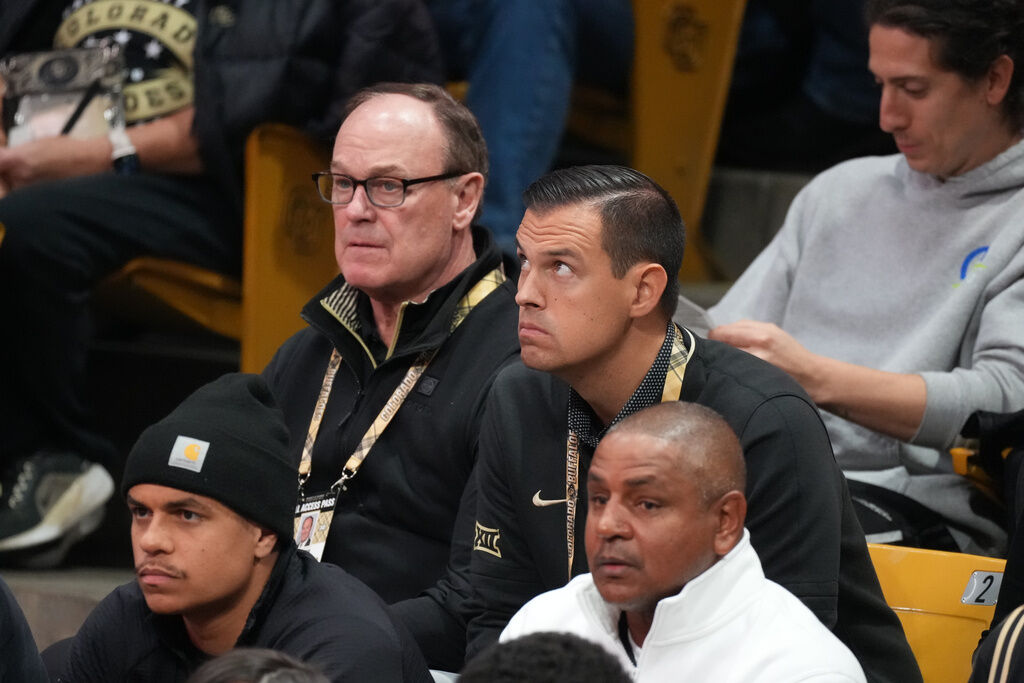
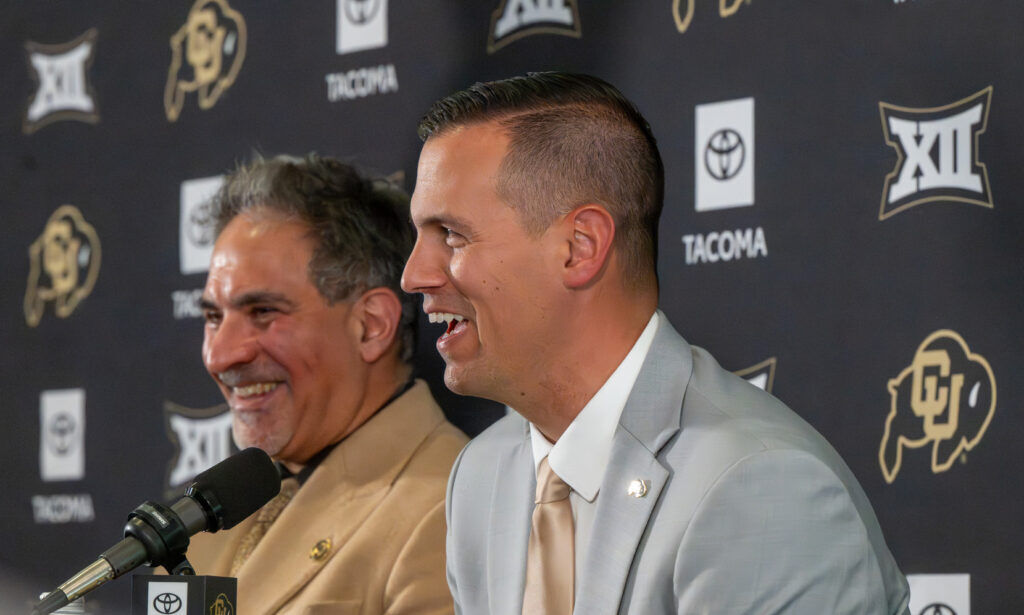
“The belief is there. I can feel it when I’m around the program, and I hear the coaches talking and the players talking,” CU athletics director Fernando Lovo told The Denver Gazette. “A lot of times, that’s where it starts. Do you believe you can win at a high level? I can say from my short time being here and being around the program that they feel that way. There’s always growth. It’s not always linear, as they say.
“We’re going to continue to make sure we’re doing things the right way, so that when we get to the season and towards the end of the season, we’re playing in meaningful games in November and December because that’s our goal. That’s what we want.”
Each season of Sanders’ tenure has felt distinct.
The first, beginning with a 3-0 start that captivated the nation, was supposed to be a tone-setter. Sanders hired offensive whiz Sean Lewis, then the Kent State head coach, in what felt like a move that would set up CU up beyond Sanders’ tenure. He also brought in a veteran defensive coordinator in Charles Kelly.
But a six-game losing streak saw that first season go up in flames with a 4-8 record. Coach Prime was quick to make changes, building an NFL-style program with veteran coordinator Pat Shurmur leading the offense and highly respected Bengals assistant Robert Livingston earning his first shot as a defensive coordinator.
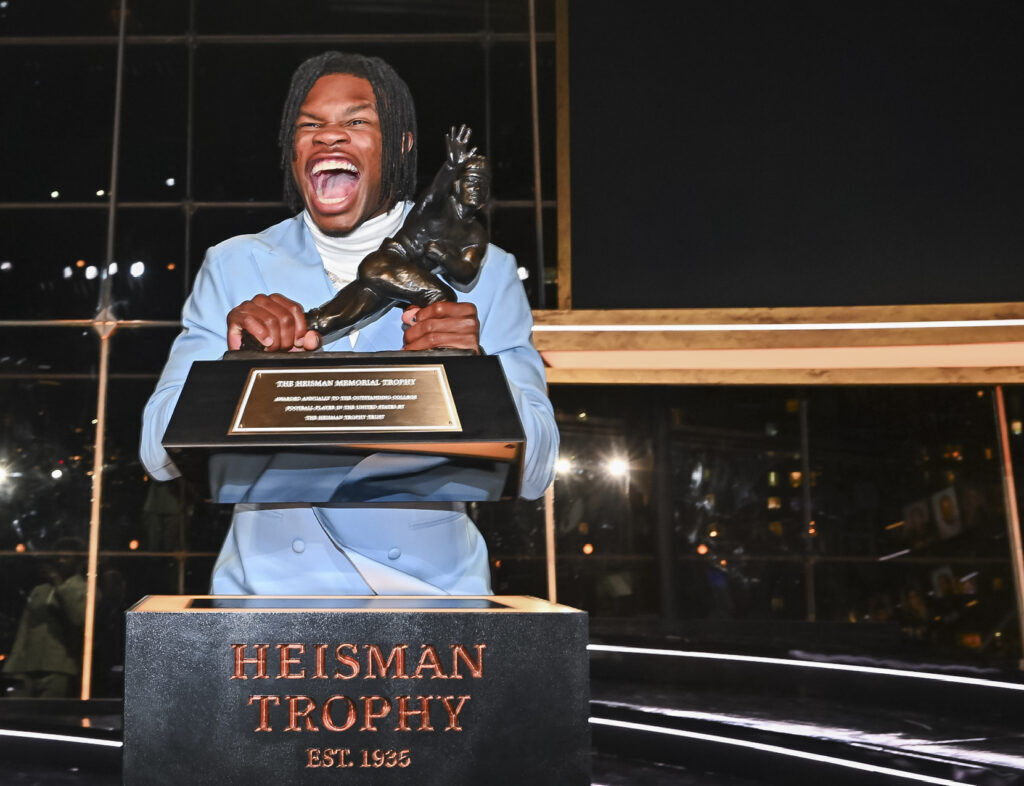
The changes worked. The Sanders era peaked with 2024’s nine-win campaign that featured a battle to the end to make the Big 12 championship game, an Alamo Bowl appearance and, most notably, Travis Hunter’s Heisman Trophy.
The Buffs rode the momentum into the 2025 season, retaining the coordinators and supplementing a veteran roster with older transfers in an attempt to reach the Big 12 championship game.
After Sanders spent the summer battling bladder cancer, his team fell apart after three losses in games where the Buffs led by double digits. A 53-7 blowout loss at Utah — after a bye — sunk CU to 3-5. Effort waned down the stretch during a five-game losing streak.
As Sanders enters year two of his five-year contract extension, one question surrounds Folsom Field: What now?
“It’s been a bit of a roller coaster,” David Ubben, a national college football writer for The Athletic, told The Denver Gazette. “I don’t know what the giant picture is, you know? Deion talks a lot about having a plan and sticking to it, and I think from a personnel standpoint and their approach to the portal that has been mostly consistent, but in terms of what the plan is from the ‘X’s and O’s’ standpoint, it’s been hard to track, I would say.”
The NFL approach that defined the last two seasons of the coaching staff is gone. Shurmur wasn’t brought back after reportedly having play-calling duties stripped late in 2025, while Livingston took a job working under Broncos defensive coordinator Vance Joseph.
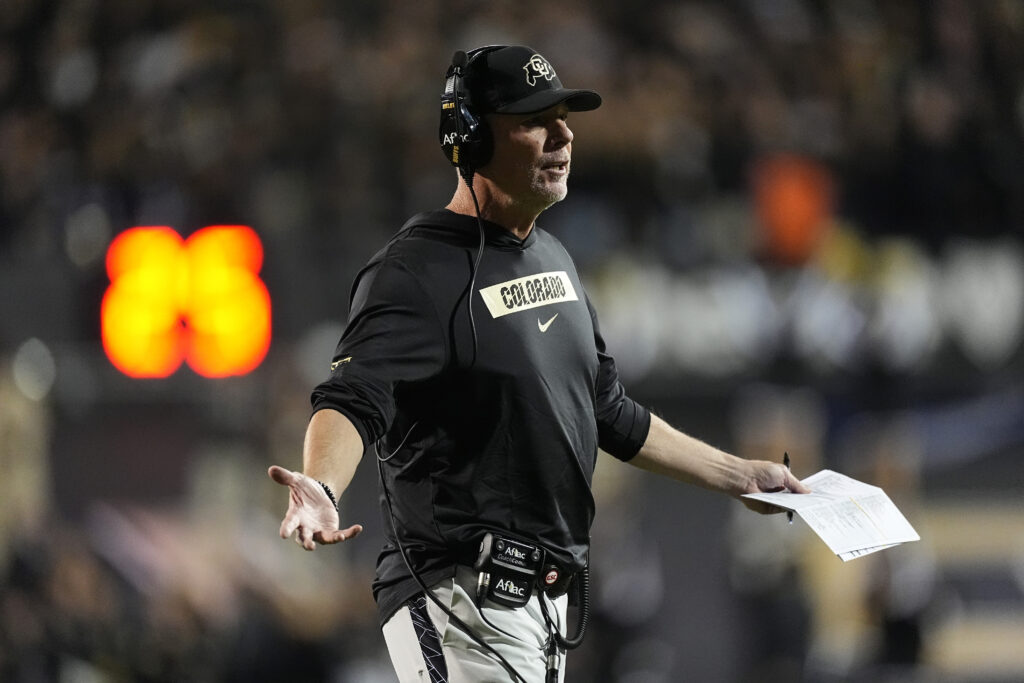
Brennan Marion, who left Sacramento State after one season as the head coach, brings his “GoGo” offense to Boulder, while Chris Marve, who has previous defensive coordinator experience, was promoted from linebackers coach. Warren Sapp is gone. So is Marshall Faulk. The coaching staff, which Sanders repeatedly said is the best it’s been during his tenure, has a noticeable college feel to it, with Marion at the forefront.
“I did think it was interesting that Deion was so heavy with everything NFL when Shedeur was there, and now with Brennan, I mean, it’s a really interesting offense, but it’s a very much a college offense and I don’t know that I call it inconsistency, but just the difference is odd to me,” Ubben said. “But Brennan’s offense has worked pretty much everywhere that it has gone where he’s gotten a chance to run it and it’s fun to watch.
“If you’re looking for the most unique offensive schemes in the country, the “GoGo” is probably at the top of the list. He’s a pretty strong personality and a guy that a lot of people have kept an eye on. I think when you look at him and his body of work, the fact that you could lose a starting quarterback midway through the season, play a pretty unproven guy, and still go to a conference championship game at a place in UNLV that like has really struggled prior to him and Barry Odom’s arrival is pretty amazing. That’s probably some of his best work.”
Whether Marion can replicate that success in the Big 12 will be arguably the biggest storyline heading into the season. But there is plenty of confidence from within CU that the pieces are in place for a bounce back this fall.
The Buffs bounced from four to nine wins from 2023 to 2024. A big jump total this season isn’t all that likely, however. ESPN’s Bill Connelly, the creator of the advanced predictive metric SP+, has CU at No. 65 in the country in his projections for the upcoming season. That’s one spot ahead of West Virginia, the final Big 12 team in those rankings.
But projections are projections for a reason. Connelly admits he is higher on the Buffs than his model suggests, thanks to a different approach to the transfer portal in which productive players from lower levels were prioritized over former top recruits that didn’t play much at big-time SEC programs.
“We saw last year that Colorado still has an awfully low floor, but if (Julian) Lewis indeed comes into his own at QB, the ceiling could be just as high. There’s more proven production on this roster than even the nine-win 2024 team had,” Connelly wrote in his Big 12 preview. “It has to jell, and massive makeovers always come with risks. But I like this team’s potential a lot more than SP+ does.”
Once again, it will come down to the transfer additions. So far, 2024 is the only home run while 2023 and 2025 were mostly whiffs. It’s not just about roster spots and playing time anymore, either. There’s real money involved, and one bad season could lead to donor fatigue that dramatically affects your budget for the following season.
“Your player evaluations are really critical,” Lovo told The Denver Gazette. “They always have been, but now you have to evaluate and then valuate players. It’s a two-step process now.
“You’ve got to be really buttoned up when it comes to that, so that when you’re taking these young men, whether it’s out of high school or the transfer portal, you’re taking the right player that fits the culture you want to build, that’s valued at the appropriate level so you can build a roster that’s competitive across the board (and) build some depth. And I think coach (Sanders) has done a really good job with that in this offseason.”
Barring another poor season below expectations that makes Sanders’ position untenable or a really successful, double-digit win season that sees a desperate SEC program pay what it takes to hire Coach Prime away, it’s hard to see 2026 as being his last in Boulder.
“I have never been paid $10 million to do a job, especially one that let me do whatever they wanted me to do, but if I did, I don’t know that I’d be rushing out the door,” Ubben said. “People always say like, ‘Oh, how long is he going to be around for?’ And it’s like, it seems like a pretty good situation there. I don’t know that I’m going to be hustling out of there, so especially after the new contract, I can’t say I’m surprised that he’s sticking around. He’s got a pretty good gig.”