Is a new ‘Independents Day’ dawning in Colorado? | Vince Bzdek

Some day in the not-too-distant future, Americans may look back at this moment in history and single out Colorado as the place a new birth of “independents” occurred.
Colorado Springs was, in fact, featured in a national political magazine recently as one of the epicenters of a movement by voters away from political parties.
“If the two major parties ever do die, they might bury them in Colorado Springs,” read a headline in Politico.
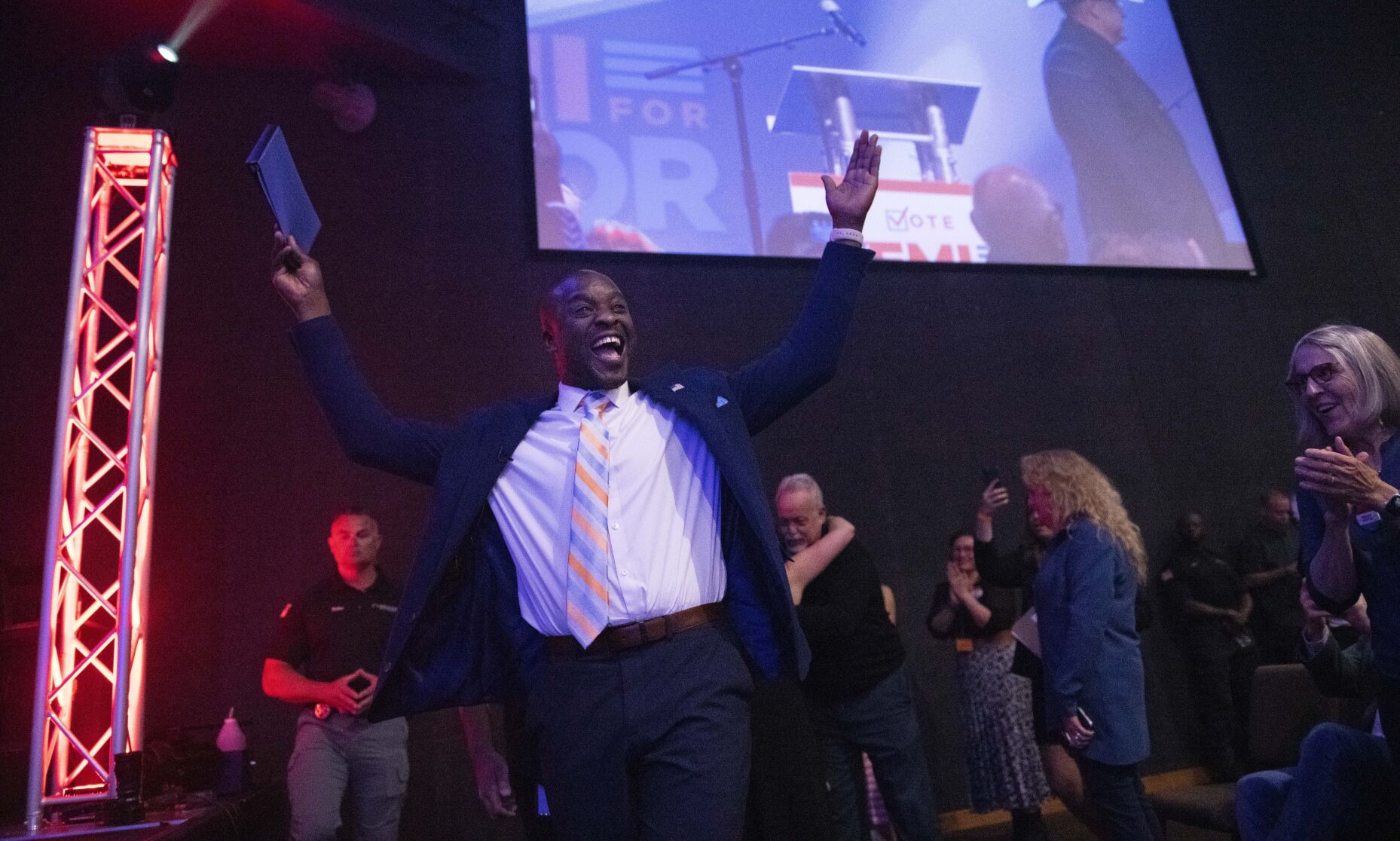
The article focused on the victory of independent mayoral candidate Yemi Mobolade in a town that has long been a Republican stronghold. Mobolade told reporter David Siders that when he ran for mayor of Colorado Springs as an independent, he did it to represent people who “don’t like the party chaos,” who “live our quiet lives.”
During the interview, Mobolade pointed out a book on a table in his office, “A Declaration of Independents,” and said his victory represented a “tipping point” for America’s two parties in the city. He predicted a similar tipping point is coming for the entire country some time in the next half-century, when parties will lose their stranglehold on the American political system.
In the past few weeks, after many years of increasing their numbers, unaffiliated voters became a majority in El Paso County. The same thing is happening statewide: more than 48% of Colorado voters are now unaffiliated and that number may soon surpass the number of Democrats and Republicans combined. And, according to a report published in USA Today in December, Colorado leads the nation in the percentage increase of unaffiliated voters since 2008.
The American West, which tends to breed independent thinkers, is ground zero for this movement, according to U.S. News & World Report. Throughout most of 2024, independents were the largest bloc of registered voters in Arizona and Nevada, for example, and the trend is even more pronounced among voters under 30 in the Southwest.
The same thing has been happening countrywide to a lesser degree, as more and more people grow disillusioned with both Democrats and Republicans and the hyperpolarization and extremism that has come to dominate politics. About 43% of all U.S. voters now identify as independent, according to Gallup, while about 27% of Americans identify as Republicans and another 27% as Democrats.
So what does this surge of independents mean going forward? For this fall’s elections? For independent candidates? And for politics in general? Are unaffiliated voters changing politics permanently, or just opting out and leaving fewer people in control?
Two recent polls show Donald Trump behind Joe Biden by 2 to 3 percentage points among independent voters, and those voters could be the deciding factor in swing states where candidates have razor-thin margins.
But more independents doesn’t necessarily mean that independent presidential candidates like Robert F. Kennedy will win elections or that a permanent independent or third party is in our future.
Mobolade told Siders he is not optimistic about the near-term prospects of his success being replicated statewide or nationally. Third parties “have not figured out a way to elevate the vehicle and the infrastructure needed to be on par with the two-party system,” he said. Voters seem to be jaded about any kind of party structure.
That doesn’t mean this surge of independents won’t lead to some permanent changes: Some folks in Colorado already have launched efforts to further accelerate the parties’ decline.
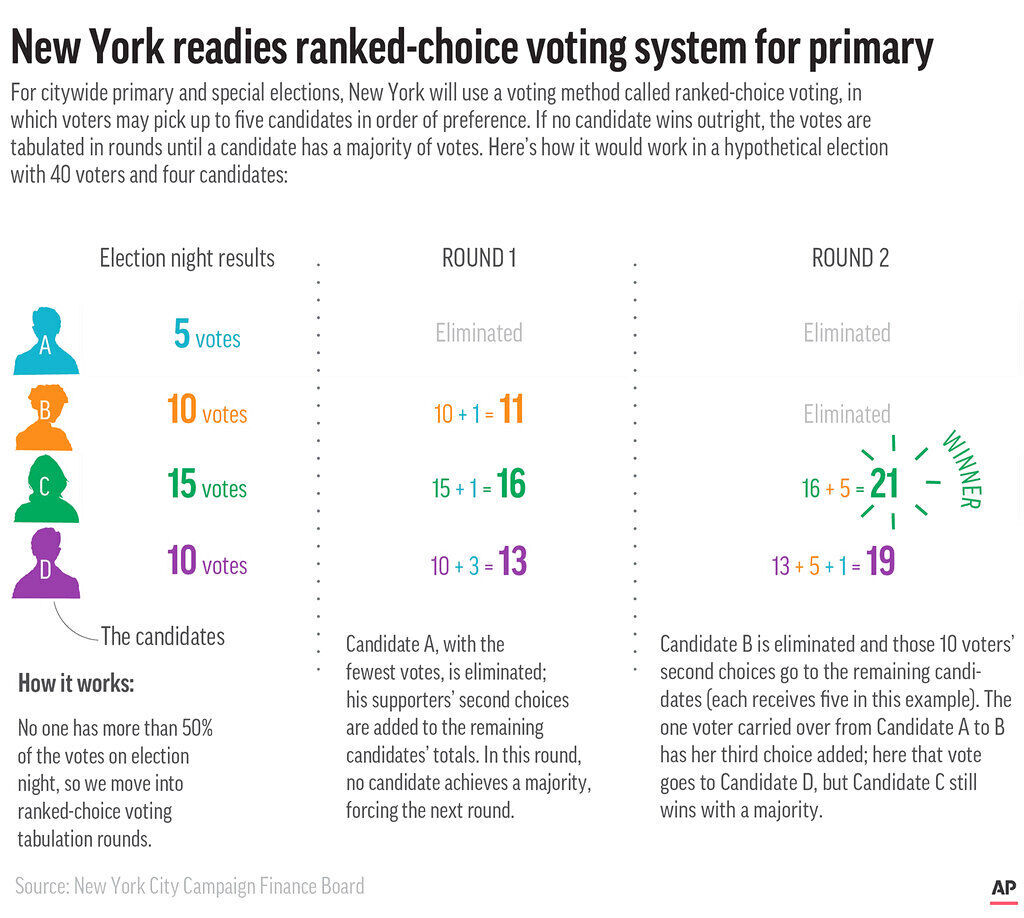
A national group based in Denver, United America, and backed by Kent Thiry, the former chief executive of the Denver-based dialysis giant DaVita, is focused on replacing party primaries with all-candidate primaries across the country. United America is driving a ballot measure this fall to institute ranked-choice voting in Colorado, in which candidates of both parties appear on one ballot and a voter’s second choice — if their favorite candidate falls short — could help decide the outcome.
It’s a system designed in part to elevate less partisan candidates, since party affiliation doesn’t really matter. Candidates could run as, well, people, rather than Democrats, Republicans or even independents.
What if, for example, our presidential election didn’t just feature Trump and Biden, but also featured Peyton Manning and Elon Musk and Taylor Swift, and you could rank your candidates 1, 2, 3 and 4 on your ballot? (I know, I know — Swift would win in a landslide.)
Ranked-choice voting is already used some in Alaska and Maine and in dozens of cities and towns across the country — including a handful in Colorado. And this November, voters in Oregon, Alaska and Nevada, in addition to Colorado, will likely vote on going further and embracing statewide ranked voting.
“Colorado, which has had a history of leading on election and ballot reforms, can be a place that shows the rest of the country what’s possible and what we do when we put voter first and not party first,” said Curtis Hubbard, spokesman for Colorado Voters First, which is spearheading the campaign to get ranked voting on Colorado’s ballot.
“A big part of the motivation is really a simple belief that any voter should be able to vote in any taxpayer-funded elections,” said Hubbard. “What our existing system does, it essentially creates systems where voters don’t have meaningful votes, where too often the race is decided in the primary.”
In a state where nearly half the voters are unaffiliated, Hubbard said, “we shouldn’t have our choices sent to us by political parties, but instead, the choice really belongs to voters, so creating this open primary where every voter gets to participate and can vote for any candidate they want regardless of their political affiliation or the candidate’s political affiliation, we think really give voters a voice that matters and choices that matter.”
Ranked voting faces headwinds, of course.
At the end of the legislative session, for example, politicians stuck a “midnight amendment” in Senate Bill 210. If the ballot measure passes, the new law signed by Gov. Jared Polis will require that ranked voting be tested first at a municipal level before being used statewide, delaying implementation. But Polis subsequently promised to make sure statewide ranked-choice voting is fully implemented if it is truly the will of the people this fall.
“The parties know and love and work in the status quo,” complains Hubbard. “They are fighting tooth and nail to defend the status quo. They are using every tool in their toolbox, including resorting to this type of abuse of power that tries to undermine or blunt a ballot initiative before the voters even have an opportunity to weigh in on it.”
In other words, parties will not go gently into that good night.
Five Republican-leaning states have already banned ranked-choice voting, where critics have complained that the system is confusing, and say that asking voters to rank choices rather than just pick one candidate is ripe for abuse and error.
Democrats complain that ranked-choice voting could lead to more wealthy candidates by replacing party nomination procedures with a “jungle” primary that candidates buy their way into. And candidates in a “jungle primary” aren’t really vetted in any way before an election, which could lead to more unqualified candidates.
The big question I have: Will this ranked voting model, if it is passed, truly help end the deep polarization in our state and country? Will it stop fringe candidates from running because they have to play to the great wide middle rather that the extreme ends of either party in party primaries?
Many political scientists are skeptical that tweaks to the electoral system like ranked-choice voting can fully heal the nation’s widening partisan divide, because the causes of it are so much broader. Ranked voting won’t eliminate social media and its tendency to amplify the most extreme voices and most divisive content, for example.
There’s no silver bullet, but we’ve got to try something. So many people are disgusted with our negative politics and their lack of true choices right now that it feels like we are at an uneasy inflection point. We’ve always been a nation of innovators and inventors, always willing to try new technologies and new ways of thinking. Politics shouldn’t be immune to that kind of reinvention.
So let me close by referencing an earlier document that pleaded the case for new forms of independence rather well:
“Governments are instituted among Men, deriving their just powers from the consent of the governed — Whenever any Form of Government becomes destructive of these ends, it is the Right of the People to alter or to abolish it, and to institute new Government, laying its foundation on such principles and organizing its powers in such form, as to them shall seem most likely to effect their Safety and Happiness.”
Strong words from the original Declaration of Independence.