







New Colorado film chief gears up for Boulder’s Sundance debut
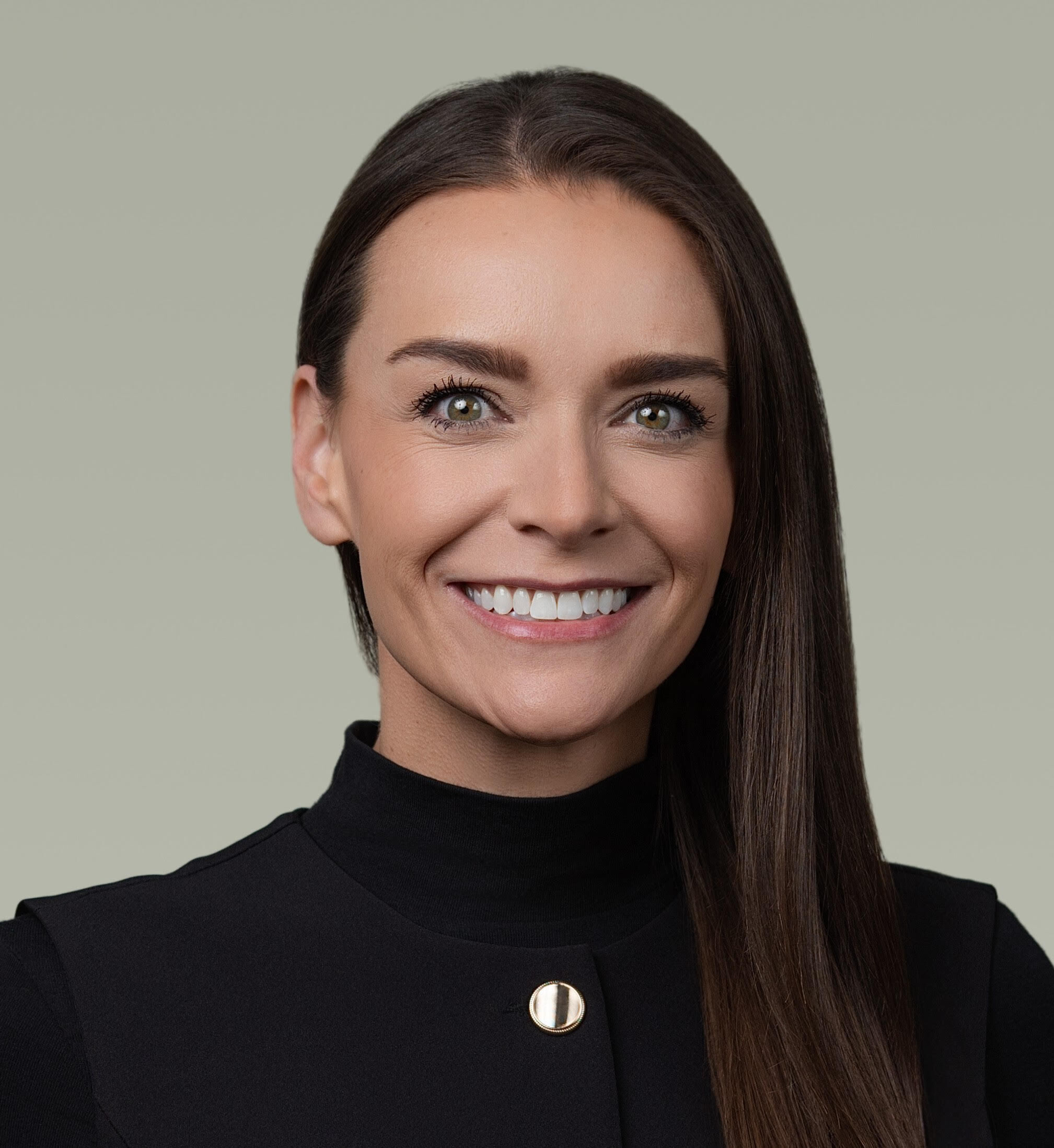
Lauren Grimshaw Sloan hopes to elevate the state as filmmaking location
Lauren Grimshaw Sloan assumed her position as Colorado film commissioner in January — the pivotal year when the Sundance Film Festival transitions to Boulder for its 2027 debut. The independent film festival was named after the Sundance Kid character in “Butch Cassidy and the Sundance Kid,” filmed in part in Colorado.
Sundance is all but sure to elevate the landscape of film in Colorado. But Sloan, who succeeds Donald Zuckerman as film commissioner, is quick to emphasize she had nothing to do with the Sundance deal. Sloan is equally swift to underscore the celebrated festival as a creative springboard for filmmakers and film aficionados in Colorado.
Moreover, Sundance holding sway will clearly demonstrate the economic power of film.
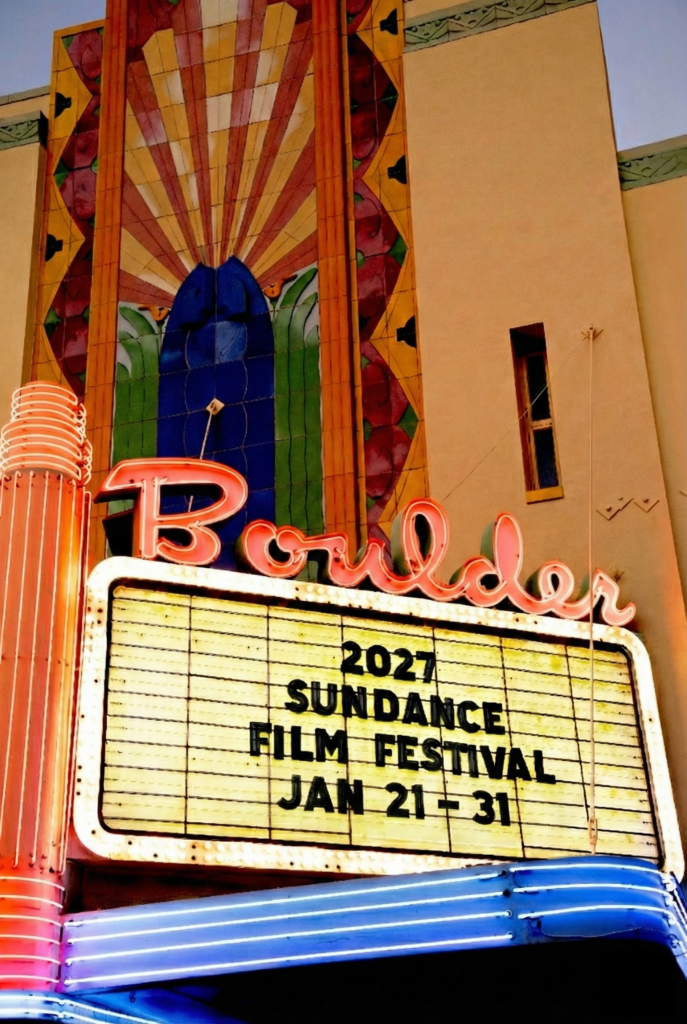
“Sundance is coming to town, and there’s a lot of enthusiasm in Colorado across the board,” said Sloan, swigging a Diet Coke she set down near her two cellphones. “I was in Boulder last week, and they’ve been convening community. The Boulder County Film Commission calls it a ‘Schmoozer,’ and last week they had more than 400 people. It’s encouraging.”
Colorado has lost ground in the filmmaking industry
Colorado’s film industry could use some encouragement. Despite spectacular cinematic locations, an impressive history of content creation and what Sloan deems an ample professional crew base, the state’s film and television production lags behind many states, including neighboring New Mexico.
Why? Simply put, Colorado hasn’t fully invested in filmmaking in the state, and that’s a red flag for filmmakers greenlighting production. Colorado offers a comparatively paltry maximum of a 22% refundable tax credit incentive on film production in the state. And Colorado caps the tax credit at a meager $5 million per year. By comparison, the state of Georgia spends a billion dollars a year on film incentives.
“In the grand scheme of things, $5 million is very small. Our incentive percentage of up to 22 percent of a budget does not get a lot of attention. It needs to be closer to 30 percent to stand out,” Sloan said.
“For filmmakers, money talks. Filmmakers and producers are now not just state-shopping, they are country-shopping. With states or countries offering 30 to 35 percent incentive and with more much more money to deploy, we’re not going to be able to compete,” said Sloan.
“We have the data. There is a 16-to-1 return on investment when we are investing in the industry,” said Sloan. “We are not throwing a check to Hollywood, we’re investing in Colorado jobs and the film, TV and media landscape as an economic driver.”
Meanwhile, to counterbalance Colorado’s lower incentive percentages and budget cap, Sloan emphasizes the state’s ability to get filmmakers their tax credits faster.
“Sometimes, filmmakers have to wait years,” she said. “We make the refund happen faster, and that can make a difference and naturally attract more productions. Our rebate is modest, but we’re expedient. And even with our small staff of four, we are determined to offer supportive, white-glove service to filmmakers.”
Part director, part producer, part leading lady
As head of the Office of Film, Television and Media — which includes video games — Sloan’s role falls under the aegis of the Colorado Office of Economic Development and International Trade. And while she’s adamant about the importance of film as entertainment and culture, Sloan also focuses on the bottom line and knows that greenlit projects generate greenbacks in both the state and local economies.
“My job is to look out for the industry in Colorado and create more opportunities, more production, building our infrastructure into a larger film ecosystem,” Sloan said.
In recent months, Sloan’s office formed the Colorado Film and Television Festival Coalition.
“Colorado has an incredible number of festivals that are economic drivers — around 75 film festivals in Colorado that we’re aware of,” she said. “We’re trying to get everybody together and talking about audience and development and other points.”
Sloan praised Colorado’s collaborative esprit de corps.
“In New York, everyone feels competitive. It’s the nature of New York and not limited to film,” she said. “Here, everybody is wanting each other to succeed for the greater good of film in Colorado.”
Sloan followed the yellow-brick road
When Sloan was a little girl, like a lot of kids, she obsessed over “The Wizard of Oz.”
“It’s still in my top five favorite movies,” said Sloan. “I would dress up in my Dorothy outfit, and I had the dog, Toto, and I would skip around while watching the movie. This was a private experience. My parents weren’t allowed to watch with me. This was my gateway to film, and I still like a story with a journey.”
Sloan’s journey wasn’t exactly the yellow brick road, but her career path has been somewhat golden. As a teenager growing up in Winnetka, on the North Shore of Chicago, she visited her aunt, a Hollywood costume designer, on the sets of “90210” and “Sabrina the Teenage Witch.”
Sloan studied film at Pennsylvania State University. Following graduation, she took a job with a production company in New York City. After a meet-cute with her now husband, she moved with him to Colorado.
“I’m an indoor cat,” Sloan said. “I don’t hike or bike or ski or do all the things.”
But she does value Colorado’s cinematic natural resources, and her office helps steward the state’s environment during on-location film production.
Sloan said, “The film office partners with 14 regional liaisons working with local jurisdictions on the film permitting process.”
Sloan learned more about the process of filmmaking while serving as Colorado’s deputy film commissioner from 2012 to 2016. She then worked as an executive for Seriesfest from 2019 to January 2026.
Colorado filmmakers play supporting roles
Maureen Maloney, president of Women in Film and Media Colorado (WIFMCO), is a documentary filmmaker.
“I am thrilled about Lauren becoming the film commissioner,” Maloney said. “The film industry has so many different aspects, so having someone who has worked in the variety of roles she has is essential.”
Maloney added, “In particular, I think being part of Seriesfest, which is so close to the heart of the industry, gives her the perspective we need in [the film commissioner] role. The future of media in Colorado is going to depend on having leadership that understands where the industry has been, where it’s going and our unique strengths in Colorado.”
WIFMCO is part of a national organization, Women in Film and Television United States (WIFT US), whose president, Alicia Leeper, also is a past president of WIFMCO.
“Our mission is to empower and connect leaders and members of affiliates across the United States. We foster collaboration, share resources and support regional activities that strengthen local organizations while advancing the nationwide community of filmmakers,” said Leeper, an actress, writer and film producer.
“We love Lauren! I’m so happy for her new role,” said Leeper. “She’s going to do amazing things for our film community. I’m very excited to see what she does in the role, and I’m thrilled to see a woman like her in the seat.”
A former Colorado film commissioner looks back and ahead
The seat previously was held by one of Sloan’s predecessors, Kevin Shand, who has extensive experience as a film commissioner. In California, he served as Stanislaus County Film Commissioner from 2002 to 2005. Shand was Colorado Film Commissioner from 2005 to 2011. In Oklahoma, from 2021 to 2022, he was film commissioner for the Cherokee Nation.
Shand now teaches film production and film business in the Community College of Aurora Cinematic Arts Department. He also runs his film production company Pedras Productions. Shand met Sloan through Seriesfest and later invited her to speak to his CCA class, which she did.
“In the past six months, Lauren has done a phenomenal job,” Shand said. “She’s visible. She’s accessible. She’s active and open and receptive. She’s collaborative.”
That said, Shand knows full well that Sloan has her work cut out for her.
“People have been making movies in Colorado since the 1890s, over 120 years. Colorado had the first legislated film commission in the United States and is a founding member of the Association of Film Commissioners International (AFCI),” he said.
Colorado filmmaking formerly banked on location
“Until the late 1990s, early 2000s, filmmaking was a lot like real estate — really based on location,” Shand added.
Produced in 2010 or 2011 while Shand was film commissioner, “The Brief History of Film in Colorado” notes that in the first 100 years of moviemaking, more than 375 films were shot at least in part in the state. But in the past 11 years prior, the video notes, only 11 movies were made in Colorado.”
After the turn of the millennium, when Canada and states like New Mexico and Louisiana jumped on the incentive bandwagon, studio executives opted to shoot on locations that stretched budgets with alluring rebates.
“Back in the ‘90s, we were shooting things like ‘Father Dowling’ and ‘Perry Mason’ and ‘Diagnosis Murder’ in metro Denver. LSI — Lighting Services Incorporated — had a big facility with multiple sound stages, plus an equipment rental house. Now they’re downsized to one small sound stage in Littleton,” Sloan said.
“At one point, Colorado was the home base for a company called High Noon Entertainment, one of the largest creators of reality TV. They were doing 200 hours of reality TV per year here. High Noon had approximately 400 employees here,” she said. “The company was sold and subsequently moved most of its operations to the East Coast.”
Film is business
As a producer, Shand understands filmmaking as an art but also an industry.
“A line I use a lot is this statement: There are four letters in ‘film’ and eight letters in ‘business’ because the business side is twice as important. If you can’t make money doing it, nobody is ever going to fund it,” said Shand. “Ultimately, filmmaking is a business. There is a creative aspect, and many people look at it as art or a self-funded passion project. But from a state perspective, we have to look at film as a business.”
Like Sloan, Shand underscored the return on investment generated by Colorado’s film incentive program.
“Our state film incentive doesn’t just incentivize creatives, it incentivizes small business owners and some medium and large businesses. People often assume the majority of money goes to big-time producers or big-time actors and that we’re not funding Joe Colorado,” he said.
“When I was film commissioner, Eddie Murphy did a movie in Denver, and they spent $3.5 million in 12 days. They booked 2,000 room nights at the Brown Palace Hotel. And the dry cleaner across the street saw business go way up,” Shand said.
Colorado demands accountability before rewarding tax refunds
To bolster Sloan’s case for increasing film incentives and the rebate cap in the state, Shand also emphasized the economic hoops filmmakers must jump through to collect Colorado’s tax incentive.
“When filmmakers come here and hire our people and film our locations, they basically grow our Colorado economy,” Shand said.
“But production companies don’t get their credit until after the fact. They need to apply. They need to qualify. They need to have 50 percent or more cast and crew be Colorado residents. If they have 48 percent Colorado residents, they don’t get the money. We’re not chasing Hollywood. We’re promoting our own creatives,” Shand added. “The filmmakers have to spend the money in Colorado and prove they spent the money. The spending is vetted by Colorado-based CPAs who put their license on the line to make sure the credit was earned.”
Like Sloan, Shand sees Sundance as a springboard for Colorado’s film industry.
“Sundance can help,” he said. “The state is giving $35 million to Sundance over 10 years, and the festival is conservatively expected to generate $100 million to $150 million per year in airline tickets, festival tickets, hotels, rental cars, eating out, tourism before and after the festival.”
Boulder likely will outshine Park City as Sundance home
Shand added that Sundance likely will grow and expand in Colorado.
“It’s easier to get direct international flights. We have more hotel rooms. I am cautiously optimistic, but if we don’t get better incentives, we won’t compete as a location for filmmakers,” he said. “We can’t compete with Texas spending $200 million per year on incentives.”
Nonetheless, Shand said, as far as a location for filmmaking, Colorado hasn’t been entirely left on the cutting room floor.
“I don’t think it’s ever too late,” Shand said. “One really good part about film is that new work is always coming down the line. We always need new content. We need to get into supporting our content creators. It ultimately comes down to our legislators. I would love if our legislature took a look at our entire incentive program to ask ‘how do we make it better?’ ‘How do we make it competitive with other states’?”
As Colorado’s new film commissioner, Sloan asks similar questions.
“Sundance is an opportunity for Colorado film to meet the moment,” Sloan said. “We’re attached to this incredibly major festival. How are we using that to further the mission of the office to attract more production, to showcase our state and build film infrastructure?”
For the answers, stay tuned for the next act.