







New management eyed for Maroon Bells, continuing a trend across federal lands in Colorado
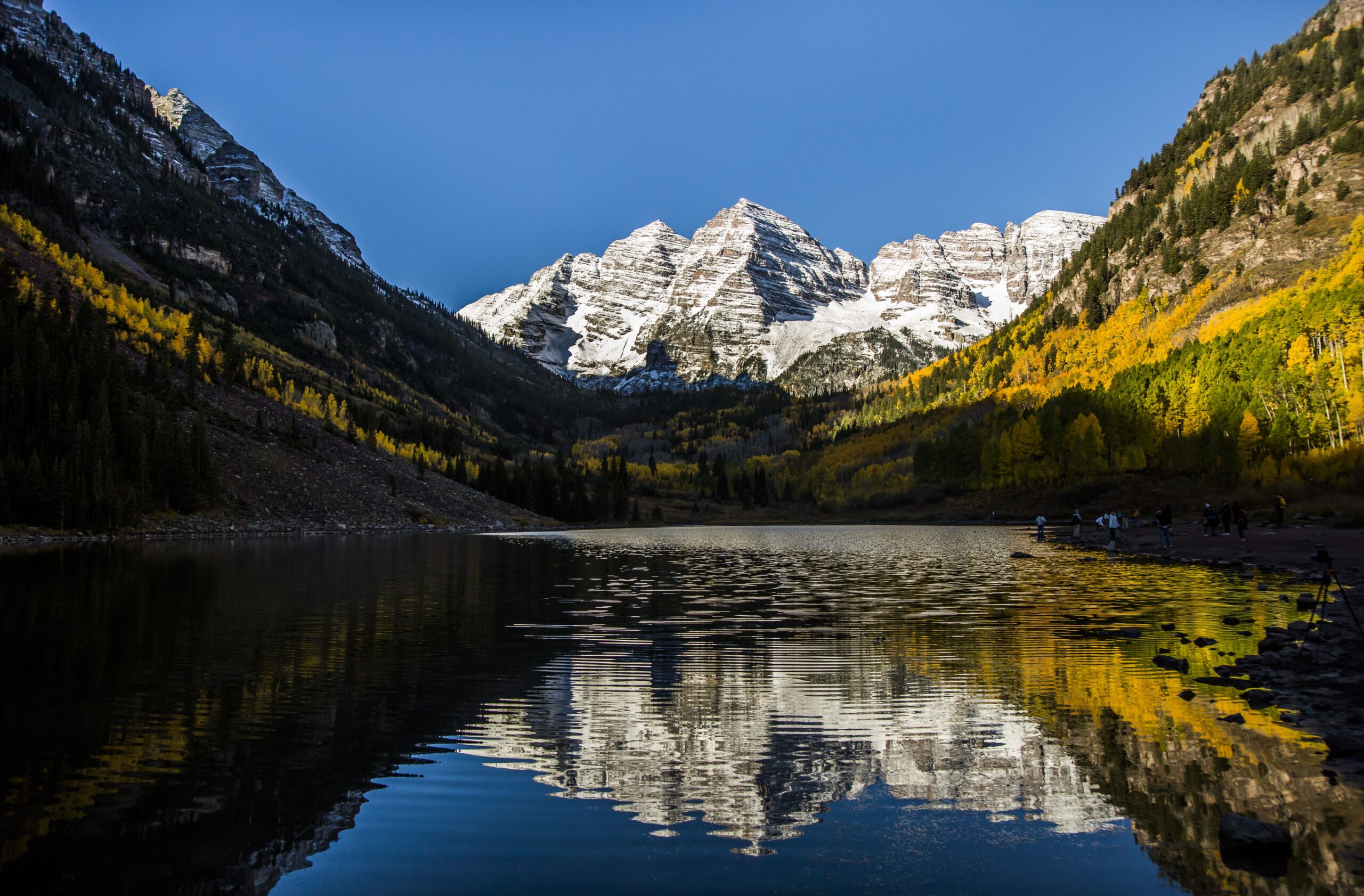
One of Colorado’s top postcard images will remain the same.
But behind the scenes, the management of Maroon Bells Scenic Area could look different.
The U.S. Forest Service is considering a special-use permit for Pitkin County to manage the day-to-day around the iconic lake reflecting the twin peaks.
Between May and October of last year, about 191,000 people visited the Maroon Bells Scenic Area either by shuttle out of Aspen or by reservations allowing drivers to park themselves. The Forest Service has also managed reservations for camping while maintaining bathrooms, water and electricity at the site, which serves as a gateway to Maroon Bells-Snowmass Wilderness. All the while, the Forest Service has looked to maintain trails and tend to noxious weeds.
Under the proposed special-use permit, those responsibilities would shift to Pitkin County.
“It’s been a challenge for a number of years to keep it staffed,” said David Boyd, public affairs officer for White River National Forest. “The revenue generated from fees doesn’t cover the whole scenic area.”
Annual costs amount to $600,000, while revenues have come in around $220,000, Boyd said. “So then we use other Forest Service funds to fill the gap.”
But the funds have only stretched so far, from Gary Tennenbaum’s view. He’s director of Pitkin County’s Open Space and Trails program.
“Last year, due to all the staffing cuts, they weren’t able to open all the bathrooms. They weren’t able to run the electricity up there, and they weren’t able to run water up there,” Tennenbaum said.
He said that would change this summer thanks to a Maroon Bells-based supervisor the county was providing ー a staff position the Forest Service would otherwise have to pay. Still, Tennenbaum pointed to “millions of dollars in deferred maintenance,” along with environmental upkeep.
Just as it is an economic driver, “the Maroon Bells is an incredible natural resource,” he said. “And it’s just not being managed appropriately right now.”
At a meeting this month, Pitkin County commissioners sounded interested in local officials taking up the task.
“They see it in all aspects of everything; the federal cuts are affecting everything from health and human services to public health to public lands,” Tennenbaum said. “And so they want to do everything in their power to help.”
In the coming months, he said an operating plan would take shape and be brought to the Forest Service and county for approval.
That plan will include increased fees, Tennenbaum said. Currently, parking reservations are $10 and shuttle rides are $16 for adults, $10 for kids.
“In fee areas, the goal is to have fees cover the costs,” Tennenbaum said, alluding to the deficit the Forest Service has faced at Maroon Bells.
The idea is “an enterprise fund to manage it,” he said, adding: “The Forest Service can’t raise fees very easily, but either a concessionaire or a special-use permittee can.”
Such arrangements have grown in the surrounding White River National Forest and across federal lands in Colorado.
A nearby example is Hanging Lake, where the city of Glenwood Springs has managed reservations. Elsewhere in the national forest, local governments have managed reservations and shuttles to Quandary Peak. The Forest Service has looked to Colorado Parks and Wildlife as another partner; a draft plan outlining how the agency might manage Sweetwater Lake could come later this summer or fall.
CPW could take on a greater role managing recreation around Pikes Peak under a concept currently being explored. New management is coming to another 14,000-foot mountain on the Front Range this summer: The Forest Service has turned to Denver Mountain Parks to operate Mount Blue Sky Scenic Byway.
And federal land managers have increasingly turned to concessionaires at campgrounds and other popular sites ー leading to some concerns of public lands being privatized.
“It’s something on the county’s mind. We do not want the privatization of public lands,” Tennenbaum said. “And so that’s why a lot of counties are stepping up, because they want to show that public lands are important, and they should be funded and managed appropriately.”