







Colorado eyes professional licensing requirements for funeral services
The timing could not be any better for those who want to see major changes in how Colorado’s funeral industry operates.
Lawmakers will have before them in 2024 a sunset review of the state’s funeral home industry, which legislators hope will include strong recommendations that could prevent the kinds of problems seen in the industry recently.
Should that sunset review not include those recommendations, the state’s Department of Regulatory Agencies is already doing a review for funeral service professionals, which would determine whether there is a need to regulate the profession.
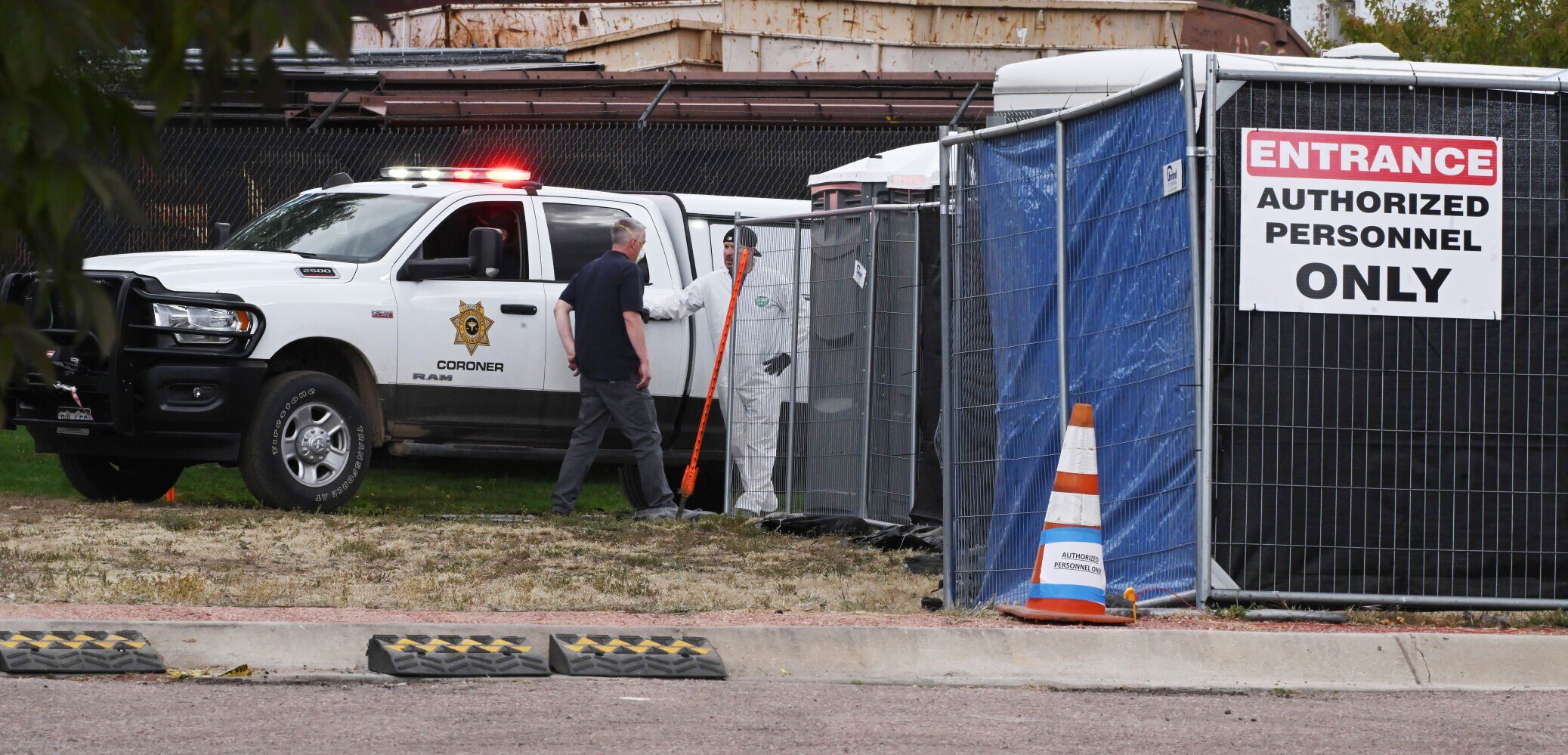
On Oct. 4, at least 115 improperly stored bodies were found at the Return to Nature Funeral Home in Penrose. The facility’s license expired last November, according to the state’s Office of Funeral Home and Crematory Registration. The discovery has led to investigations by the FBI, the Fremont County sheriff and Colorado Bureau of Investigation.
A day later, the state regulatory agency suspended the company’s ability to operate as a funeral home under the state’s mortuary science code.
Whether criminal charges will come for the owner of Return to Nature, Jon Michael Hallford of Colorado Springs, is yet to be determined. There are no state-mandated standards for those who work in funeral homes or crematoriums.
While the situation at the Return to Nature facility in Penrose is alarming, the tragedy may have a silver lining: Colorado may finally take the steps to start licensing its funeral home directors and employees to ensure they’re professionally trained.
Colorado is the only state out of the 50 that does not require its funeral home and crematorium employees to receive any kind of professional training or education.
Under current state law, there are no professional standards work in a funeral home or crematorium. Those facilities must be licensed as businesses, but that does not include any requirement about the experience or education of the employees.
In lieu of licensing, the Colorado Funeral Directors Association maintains credentialing. That’s offered through the Colorado Funeral Service Board, which is run by the association.
But that’s a private matter, and the state doesn’t require people who want to get into the funeral business to apply for those credentials.
The state does have the Office of Funeral Home and Crematory Registration, run by the Department of Regulatory Agencies. That division regulates funeral homes and crematoriums, investigates complaints and issues disciplinary actions against businesses that violate the state’s Mortuary Science Code. The database shows actions taken only against businesses, not against individuals.
The division’s most recent list of disciplinary actions against mortuaries and crematoriums shows that out of more than 300 funeral homes listed — many with multiple locations and licenses — there have been more than 140 disciplinary actions taken. They range from cease and desist orders, suspension of the state’s license to operate or referrals to the Office of Administrative Courts for further legal action.
The lack of regulation over the operators and employees is causing lawmakers to take notice.
Sen. Dylan Roberts, D-Eagle, was part of a quartet of bipartisan lawmakers last year who sponsored a law to require more frequent inspections of funeral homes and crematoriums.
That legislation was in response to the sale of body parts by the owners of Sunset Mesa Funeral Directors facility in Montrose. The owners, Megan Hess and her mother, Shirley Koch, pled guilty to stealing and selling body parts. Hess got 20 years in prison, the maximum allowed. Koch was sentenced to 15 years.
The problem of bad actors in the funeral home industry is not a new one, nor has it escaped the attention of the General Assembly. In 2006, lawmakers overwhelmingly approved legislation to require licensure and education for those who work in the funeral industry. But the bill wasn’t supported by DORA’s executive director, Tambor Williams, and Gov. Bill Owens applied his veto pen to the measure.
Two years after that veto, Darin Barry wrote a letter to the editor, pointing out he went from “being a Walgreens manager to a full fledged manager and mortician of a Colorado funeral home and was embalming, cremating and arranging funeral plans in three days with absolutely no prior experience.”
Barry, whose concerns also extended to the exposure to toxins for funeral home employees, added that: “Colorado has more oversight for a haircut than embalming, cremation and handling of dead bodies, which can become a deadly avenue for the spread of infectious disease.”
Roberts told Colorado Politics Thursday he is already seeking a bill title for the 2024 session, depending on what the Department of Regulatory Agencies recommends with regard to the industry. He noted the Funeral Directors Association is fully supportive of licensure. Roberts said the association’s program could serve as a model for state regulation of the profession, adding there is no need to recreate the wheel.
Funeral directors need a basic level of training and certification, Roberts said. They should have to take a test to get a license, followed by continuing education and recertification to provide a general level of professionalism, he added.
Roberts pointed out 99% of the funeral homes do a good job, “but these bad apples put a stain on the whole industry.”
“I hope DORA agrees it’s time to do a sunrise and formalize this,” and he’s happy to put legislation toward that. But if the agency doesn’t make that recommendation, “I will continue conversations on how to prevent another Penrose from happening.”
Roberts said he intends to work on that legislation with Rep. Matt Soper, R-Delta, who was one of the bipartisan quartet who worked on the 2022 law. Soper told 9News Monday that “seeing what’s happened here in the Fremont County case to me just ignites the fire to move full speed ahead in that direction.”