







Colorado lawmakers to tackle licensure, oversight after bodies uncovered at ‘green’ funeral home in Penrose
Legislation could include licensure for funeral home practitioners and routine inspections
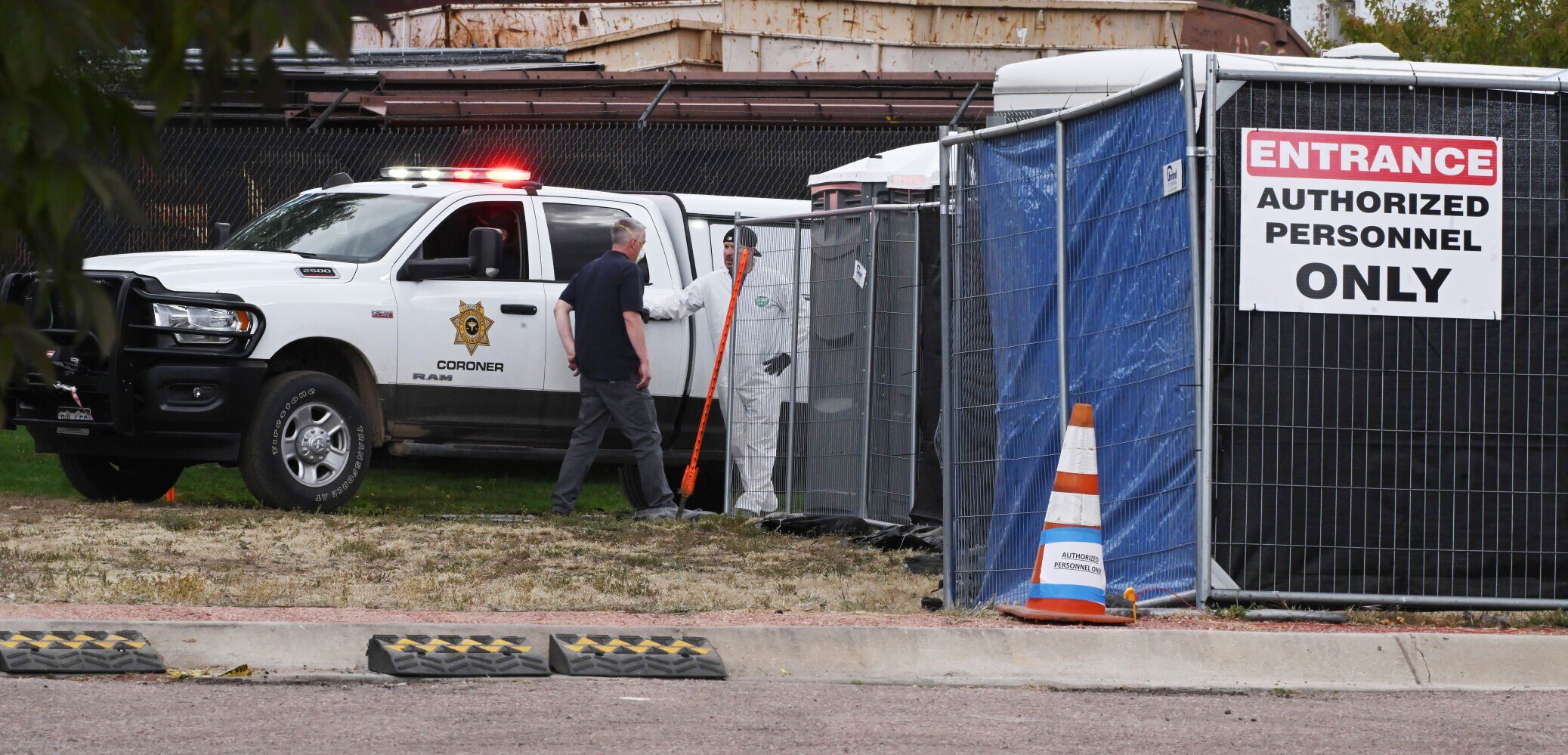
Next year’s lawmakers will likely tackle multiple proposals dealing with the funeral home industry, in part as a response to the problems that surfaced in Montrose in 2018 and in Penrose earlier this month, even though state regulators themselves are balking at imposing additional regulations.
Among the likely legislation is putting into place recommendations from a previously-scheduled sunset review of the industry that was issued on Oct. 13, a week after nearly 200 bodies were found allegedly improperly stored at the Return to Nature facility in Penrose, a city about 100 miles from Colorado’s state Capitol in Denver.
The sunset review — the legislative process for considering regulations, which can lead to extending or even terminating an agency or program — deals only with regulations for the industry, but calls for licensure and better regulation have grown louder after the incident at the Return to Nature facility, which was already closed.
And likely topping that legislation list are licensure for practitioners and routine inspections.
Lawmakers will also likely push for oversight to ensure that out-of-state entities that want to practice in Colorado are somehow vetted.
The 2023 sunset review noted that 220 funeral homes and 77 crematories were registered in Colorado in 2021-22.
The state mortuary code outlines who can “lawfully” hold the title of funeral service director or several related occupations, and while it requires a certain level of experience, it does not require licensure, training or any other education in the profession.
State regulators have repeatedly rejected calls for licensure of funeral service practitioners and employees, but they are now undertaking another review to consider it.
The sunset review recommended extending the state’s mortuary code until 2031.
Notably, the report recommended that the director of the division of occupations and professions under the Department of Regulatory Agencies conduct “routine periodic” inspections on funeral homes and crematories, “as well as when a funeral home or crematory ceases operations.”
Current state law allows inspections by DORA “on their own initiative” or when there’s a complaint, a relatively new regulation that came out of legislation in 2022 in the wake of the Montrose funeral home incident. In that case, Megan Hess and her mother, Shirley Koch, were both sentenced to prison for selling body parts out of their Montrose funeral home.
The Colorado Funeral Directors Association is once again advocating for licensure, as well as training and education, for funeral service employees. The association has been asking for licensure and professional training for funeral service employees for at least 16 years.
“We unfortunately realized it would take an event like this to happen” before the state would take another look, said Joseph Walsh, executive director of the association. “We thought Montrose would have done it but that resulted in minor things.”
The sunset review appears to be ready to look at regulations in response to the Return to Nature incident. The review added an “administrative recommendation” that the department should identify “additional regulatory gaps” to prevent a similar situation from taking place in the future.
Colorado’s regulatory watchdog balks at regulation
Colorado’s Department of Regulatory Agencies, the state’s regulatory watchdog, has repeatedly rejected calls in the past for licensure or training for funeral service practitioners. The department persuaded then-Gov. Bill Owens to veto legislation in 2006 that would have put tougher standards in place for funeral service employees.
The most recent request for licensure, which also came from the Colorado Funeral Directors Association, came in 2007.
That request turned into what’s known as a sunrise review. That’s when state regulators look at an industry or occupation and consider three criteria for deciding whether to make a recommendation on regulations.
Whether the public can be adequately protected by other means in a more cost-effective manner
Whether the public needs and can reasonably be expected to benefit from an assurance of initial and continuing professional or occupational competence
Whether the unregulated practice of the occupation or profession clearly harms or endangers the health, safety or welfare of the public, and whether the potential for harm is easily recognizable and not remote or dependent on tenuous argument.
DORA’s Office of Policy Research and Regulations, which conducted the sunrise review, and similar to the one conducted in 2002 that was requested by a dozen lawmakers, concluded that licensure and further regulation are unnecessary.
The state’s 2002 decision balking at additional regulations noted lawmakers, including Rep. Debbie Stafford, R-Aurora, had brought “newspaper, magazine and Internet articles relating several highly publicized scandals that have occurred in the funeral industry in recent years.”
The 2002 review instead pointed to the certification program developed by the funeral directors association. The review indicated the program was sufficiently utilized by employees in the industry to demonstrate an adherence to high standards, pointing out that 208 industry workers had been certified, or about 18% of the total employed.
In contrast, the 2023 sunset review noted that 43 workers in the industry were certified. Assuming the industry is employing about the same number of workers, that’s about 3%.
Meanwhile, the 2007 request for more oversight cited complaints brought by the funeral directors association, but the review, too, rejected those complaints, stating most could be handled under existing state law.
“The Colorado Funeral Directors Association (Applicant) provided a number of examples of harm from a variety of sources. The Applicant provided various newspaper articles outlining differing degrees of consumer harm. However, accuracy of the newspaper articles was difficult to substantiate,” the review said.
.
The 2007 review also pointed out the dangers of not beefing up the standards for funeral service employees. The request, according to the review, stated that, “because Colorado remains the only state with no direct regulation of the funeral service industry, practitioners who have had difficulties in other states have relocated to Colorado. As a result, the Applicant believes that consumers are not adequately protected, thereby rendering them susceptible to harm by unregulated funeral service practitioners.”
Jon Michael Hallford, 43, the owner of the Return to Nature facility in Penrose where 189 bodies were allegedly improperly stored, faced legal problems when he lived in Oklahoma, including one that involved his funeral business.
The Gazette reported last week that in 2011, court records from Tulsa County show that Hallford and Hallford Cremation & Funeral Options LLC were sued by Shannon Square LLC. Records show that the court issued a default judgment against Hallford in the amount of more than $5,000 after Hallford failed to appear at court for a hearing.
Records reveal Return to Nature Funeral Home owner’s long legal history — including Oklahoma
Further court records from the 2011 civil case show that, in 2013, Shannon Square still had yet to be paid and that it believed “that Defendant J. Michael Hallford is possessed of property which Defendant conceals and refuses to apply to the payment of said judgment.”
Hallford told the Gazette in 2017 that he’s a fourth-generation Oklahoman funeral director. The business he ran appeared to hold a state license for barely a year, between 2010 and 2011.
First green burial funeral home in Colorado Springs open for business
An initial search of Oklahoma’s funeral board database shows that Hallford held an apprentice license, issued in 2001 and which expired in 2004.
Colorado Politics had asked Oklahoma authorities for more information about the Hallford business and other licenses that might have been associated with the business.
Tyler Stiles of the Oklahoma Funeral Board initially said Hallford’s license was listed as “On Hold,” which is meant for those that are about to become licensed and are in between being an apprentice and becoming licensed. However, upon further review, Stiles said Hallford was licensed in Oklahoma between 2005 and Dec. 31, 2012 as a “funeral director in charge.”
Oklahoma law says that funerals “shall be under the personal supervision of a duly licensed funeral director who holds a valid license from the Oklahoma Funeral Board. A registered apprentice may assist in conducting funerals.”
Stiles also said Oklahoma does not require someone to be licensed to work at a funeral home.
“Licensure is required only if they are acting as a Funeral Director and/or Embalmer,” Stiles said.
In addition, someone could be the owner of a funeral home without a funeral director or embalmer license, so long as they have a funeral director in-charge, he said, adding, “Unlicensed practice is taken very seriously in Oklahoma.”
