Denver approves NWSL soccer stadium agreement, but money questions linger

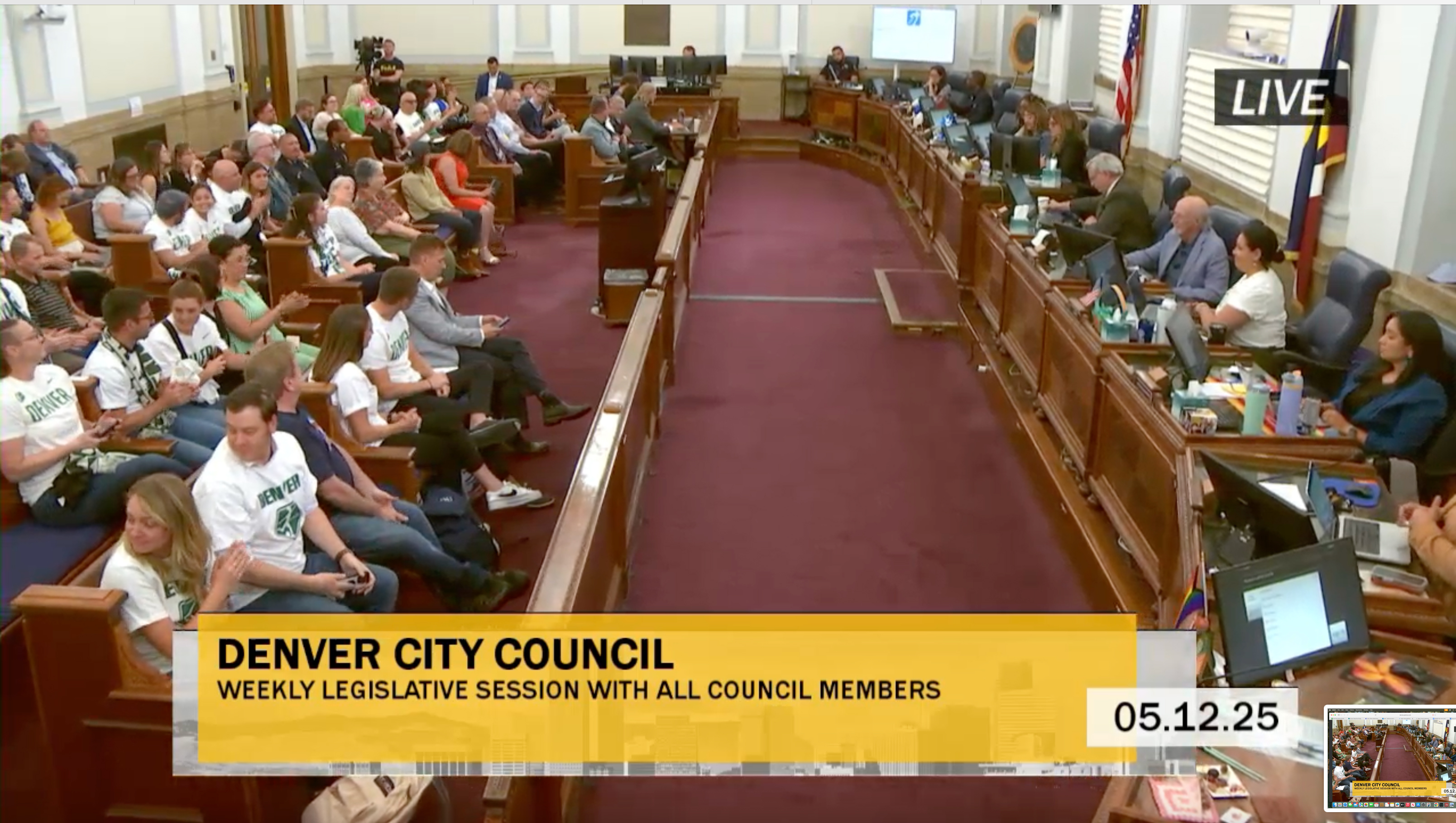
Members of the Denver City Council approved an intergovernmental agreement between the city and the Broadway Station Metropolitan District, which moves the city closer to having a National Women’s Soccer League stadium at Santa Fe Yards at a potential price tag of $70 million.
That price tag still needs the council’s final approval in a vote expected several months away.
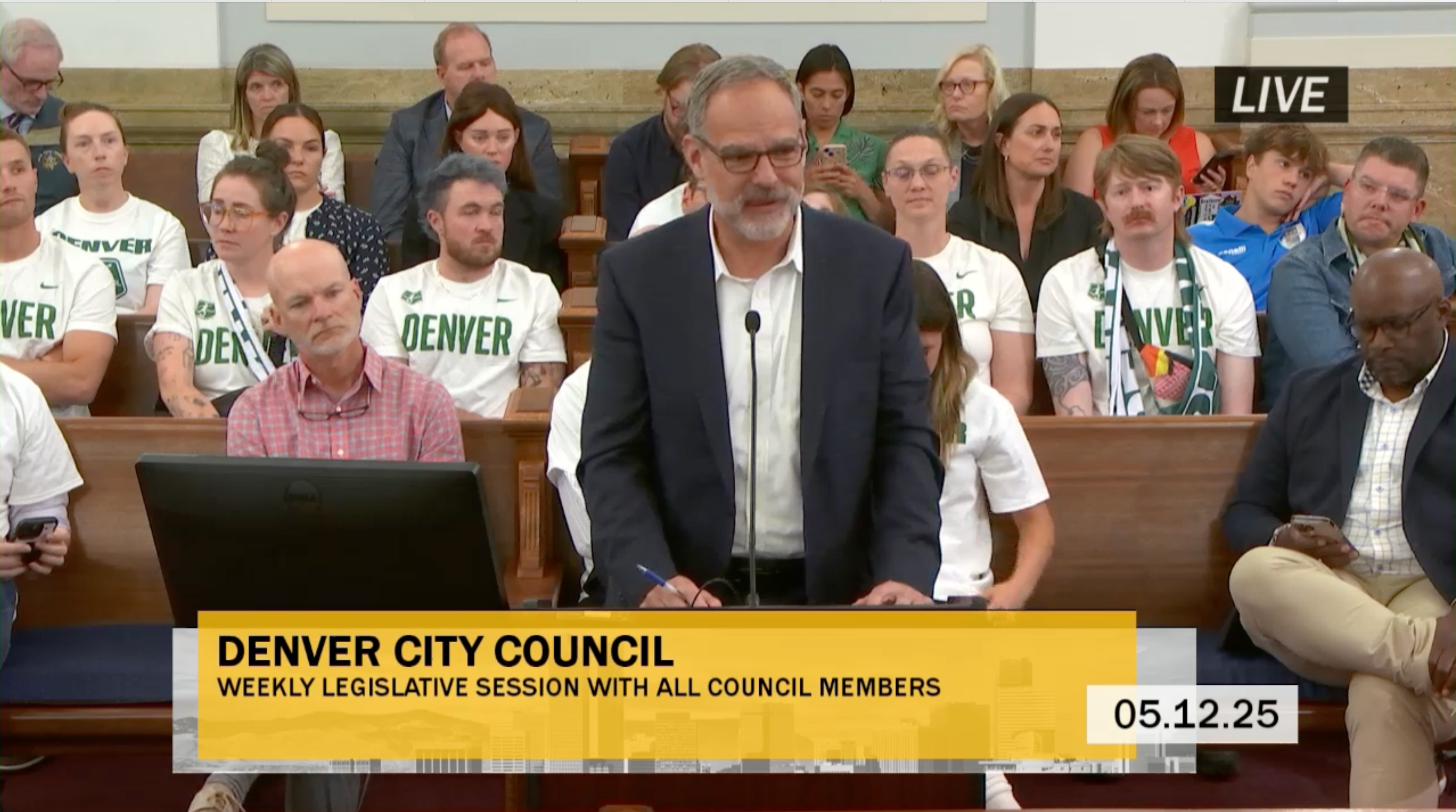
The City Council chambers erupted in applause on Monday after the 11-1 vote, which followed an extended discussion of the agreements and what exactly the city is “on the hook for.”
Although approval of the IGA does not obligate the city to the funding, according to City Attorney Brad Neiman, it provides the framework for the public-private partnership discussion to move forward.
With the IGA in place, the $70 million funding request — most of which will come from the city’s capital improvement funds and be used for land acquisition and improvements — would still need to return to the City Council for official appropriation, possibly in November.
The four-month window provides additional time to clarify financial and contractual details.
“This project has been very complex and very complicated,” Council President Amanda Sandoval said of the IGA and its history moving forward to the council. “This is a handshake agreement to signal to the National Women’s Soccer League that we are committed to taking this to the next step.”
At-large Councilmember Sarah Parady, who cast the sole “no” vote, cited her concerns with the city’s shrinking budget and backlog of capital improvement projects.
“I think people often don’t realize how incredibly constricted Denver’s municipal budget is overall,” Parady said. “If we compare ourselves to other cities, putting aside things like airports, Phoenix spends twice as much money per capita as we do every year as a city, Seattle spends three times as much.”
Parady, who has been critical of the stadium project in the past, has suggested the money could be better used for housing.
“But the largest share of this investment, at $43 million, which is equivalent to a sixth of what we spend on the city’s capital needs every six years, is for the land itself,” she said. “So, we’d be investing in a large parcel that we wouldn’t otherwise be buying just to assist a private ownership group to have a place to build a private stadium, which is ultimately for private profit.”
City officials said the deal promises to inject millions of dollars into the local economy and to help revitalize the area along Interstate 25 and Broadway Avenue.
In April, city economists published a 19-page report that projected that the 14,500-seat stadium and entertainment district could generate up to $2.2 billion in economic output and nearly $500 million in tax revenue over 30 years, as well as support more than 1,100 jobs.
Parady questioned the city’s study, saying it made assumptions and did not account for “substitution effects,” which, she insisted, would better define whether the project actually creates new spending in the city or simply shifts where money is spent.
Local businesses have long said something must be done to attract people back to the area near the once-thriving Gates Rubber Co. plant.
In a joint letter to the Denver City Council, executives from the Denver Metro Chamber of Commerce, Metro Denver Economic Development Corporation, Downtown Denver Partnership, Visit Denver, and Colorado Concern urged council members to support the agreement.
“Supporting this stadium is an investment in infrastructure, but also in equity, in youth, in aspiration — and in positioning Denver at the forefront of a transformative moment in sports and society,” the April 21 letter read. “Denver has faced inflection points before. Following the energy bust of the 1980s, leaders made bold moves — investing in the convention center, building a new airport, and constructing Coors Field in the heart of downtown. Mayor Federico Peña’s vision proved correct: people came, businesses followed, and LoDo became an economic engine.”
If the $70 million funding request is ultimately approved, the money would be paid to the Broadway Station Metropolitan District and not to the franchise owner.
While the franchise owners would fund the stadium’s construction, they would still need to negotiate a lease with the district to use the land, which would be paid for by city funds.
The Denver NWSL franchise has already collected 10,000 season-ticket deposits in record time with season-ticket deposits starting at $30.30.
Franchise officials said the Denver NWSL is expected to begin playing in the 2026 season, when it will host games at a stadium in Centennial.