Behind the scenes at a Denver 911 communications center
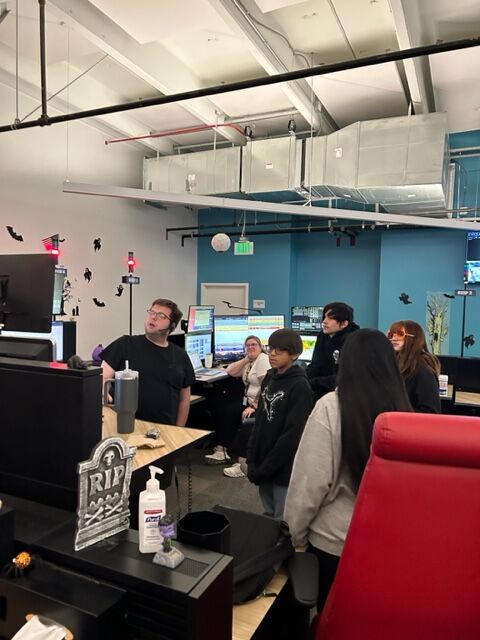
The 911 operator, the first law enforcement voice on the phone during a stressful experience, can be the unsung hero of a police department. A group of middle school students got a chance to consider the job of an Emergency Communication Technicians, or ECT, during a career day visit to Denver’s buzzing 911 Communications Center Monday.
“A 911 call seems abstract. You don’t know who you’re calling, but today the kids actually got to see who takes the calls. They saw that these are caring and kind people,” said Pitt Waller K-8 School Counselor Lindsay Unks.
“We have to be counselors, attorneys and police officers,” said Cliff Tanega, a trainer of emergency and dispatch technicians for the Denver Police department. “Not everyone in public safety runs into a burning building.”
Around two dozen 6th-8th graders from Denver Public School’s Pitt Waller K-8 School and Bear Valley International School participated in the education of a real-life 911 call. They watched the monitors light up, listened to the emergencies and even practiced typing the information as if they were actually responding to the situation.
Two of the students had previously made 911 calls themselves, both to report car crashes.
The Denver Police Museum started the educational school program two years ago in order to introduce students to the possibility of a job with law enforcement.
“With the public safety issues that we face as a community from gang recruitment to fentanyl to traffic safety, to be a good citizen in this day and age, the schools are not well prepared to teach this stuff,” said Denver Police Museum President Mike Hesse. “We feel that we can bridge that gap.”
Hess hopes the program captures hearts and minds at a young age with the knowledge that there are many opportunities in police work beyond car chases.
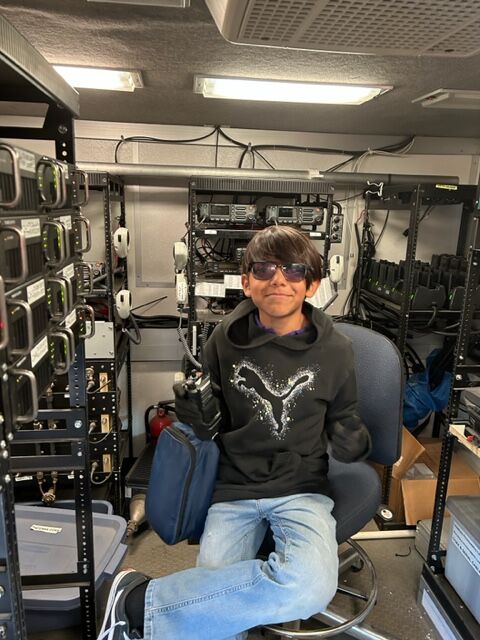
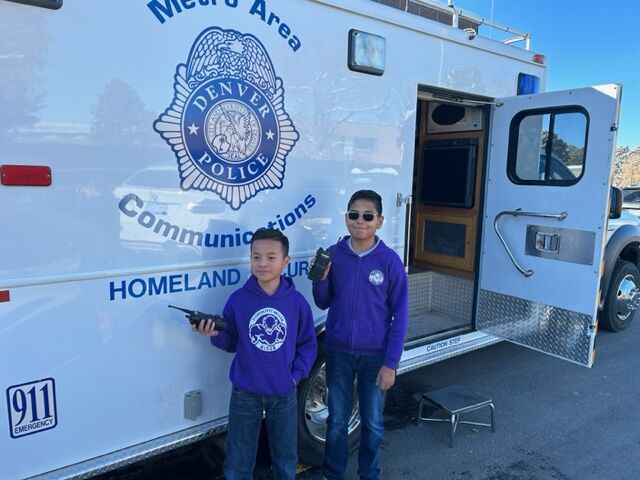
Some of the teenagers got to sit in a police car, others inspected the gadgets inside of a mobile communications van and they got a chance to use a walkie-talkie.
Unks said the students asked questions about what happens when a person’s phone runs out of power while they’re on the call (technicians can track where a signal came from), and they wanted to know how much a technician makes ($29-$37.35 dollars per hour to start depending on experience. Some non-supervisory roles can make up to $45 per hour). The teens also wanted to know if the job requires a college education (no) and whether a technician can take more than one call at a time (yes).
By the time these kids decide what they want to be when they grow up, there could be stable jobs with benefits and little risk that AI will take over — although automation is being explored for a non-emergency line, according to Denver 911 Director Andrew Dameron. There are many calls, for example, that simply need to be transferred to another agency.
“Those could be automated with a smart phone system further freeing up our ECTs to focus on emergencies,” he wrote in an email.
Staffing at Denver’s 911 Communications Center for ETC’s who are fully-trained and at independent duty remains at 69% of full strength. But by the beginning of December, when the second half of the academy graduates, that number should be at 77%, Dameron said.
Because of the competition for ECT’s across the metro area, the city of Denver offers a signing bonus of $2,500 for the job which Tanega described as “not as flashy as being a police officer running after the bad guy, but there’s still an adrenaline rush.”
It’s a law enforcement career which can be rewarding without substantial danger.
“By the time the officer gets there, oftentimes we’ve talked the caller down. We’re the calm voice on the other end. We’re there to listen while you’re in a crisis,” said Tenaga.
The Denver Police Museum is experimenting with teaching several different law enforcement careers.
Last year, a group of students had a crime-scene investigation (CSI) experience where the museum and Denver police created a fake crime and had children solve it by brushing fingerprints on car doors, searching a scene for clues and visiting a crime lab.
“This is our calling,” Hesse said. “We serve as a catalyst so that the kids can ask the questions, meet the people who have the jobs and, mostly, create a better understanding.”