The war for talent: Aerospace industry competing with tech giants for top STEM students
Gen. John “Jay” Raymond, U.S. Space Force’s chief of space operations, understands full well the need to replenish his ranks with the country’s best talent, and he knows much of that talent will come from science, technology, engineering and mathematics (STEM) students.
“(STEM students) are critical to the future of space,” Raymond said.
But the Space Force has a lot of competition for a relatively small talent pool. The country’s top STEM students represent a highly specific segment of the population, and the myriad of aerospace companies attending this week’s Space Symposium in Colorado Springs are all hoping to harvest fruit from the same tree.
And those companies know they aren’t the only ones looking for talented kids with a tech-based skill set.
Top aerospace executives pledge to accelerate equity, inclusion efforts at Space Symposium
“We’re not just competing with Raytheon and Boeing and Northrop Grumman,” said Lockheed Martin spokesman Gary Napier. “We’re competing with tech companies like Apple, Google, Amazon and Microsoft. All these companies are drawing from the same pool.”
The Space Force is locked in a war for talent with both the aerospace and tech industries. Middle and high school STEM students are a highly sought-after resource, and most companies are developing outreach strategies in an effort to pull them in.
The country’s biggest tech corporations have name recognition on their side — not to mention the promise of a lucrative career. An entry-level software engineer at Microsoft, Google, Yahoo or Amazon can expect to make upwards of $100,000 a year, right out of college.
The military can’t begin to compete with that kind of salary, but Raymond said he believes the allure and mystery of the universe — plus an opportunity to serve the country — will help the Space Force fortify its ranks.
“Space can be used to excite the nation’s youth, just like it excited me when I was a young boy watching man’s first walk on the moon,” he said. “We have invested in that.”
Each year, in the weeks leading to the Space Force’s Dec. 20 birthday, the service conducts an outreach program, called STEMtoSpace, which Raymond said operates in a similar vein as the Marine Corps’ Toys for Tots program. Guardians visit local schools to introduce youngsters to the array of opportunities for a curious student with a scientific bent.
Raymond said a key strategy for dealing with the small STEM talent pool is to make it bigger. The Space Force is working to foster STEM interest and development in all 50 states, he said.
“We’re also working very closely with NASA, and reaching out to civilian organizations to really begin to foster STEM development,” Raymond said. “It’s important to us, going forward, and I think it’s important for our nation.”
Asked how Northrop Grumman intends to draw in the cream of the STEM crop, space launch program director Kurt Eberly smiled and said a single word:
Ukraine invasion tests international space cooperation with Russia
“Rockets.”
Eberly said the challenge of designing, building and launching rockets is difficult for a young scientific mind to resist.
“If you work for our part of Northrop Grumman, you’re going to get to work on rockets, and launching payloads into space. You can work on a rocket for two years, designing and testing and other groundwork, and then you find out, in nine minutes, whether or not you did it right. It’s really exciting, and it’s the right kind of job for a STEM student looking for a challenge.”
The Raytheon brand name has been around since the 1920s, said representative Liz Maddy. That name recognition, plus the opportunity to work from a number of different platforms, has been an effective draw, she said.
“(The STEM talent pool) is undeniably a tough market to compete in, for all employers,” Maddy said. “Our hope is that a flexible work environment — instead of a job where you’re stuck behind a desk — will be attractive to the kind of talent we’re looking for.”
In conjunction with Boys’ and Girls’ Club of America, Raytheon coordinates what it calls Centers of Innovation, in which military-affiliated kids ages 5-18 develop STEM skills through hands-on experience with robotics, 3-D printing, video production and other technology.
Witnessing war from orbit: A conversation with the CEO of Colorado-based Maxar Technologies
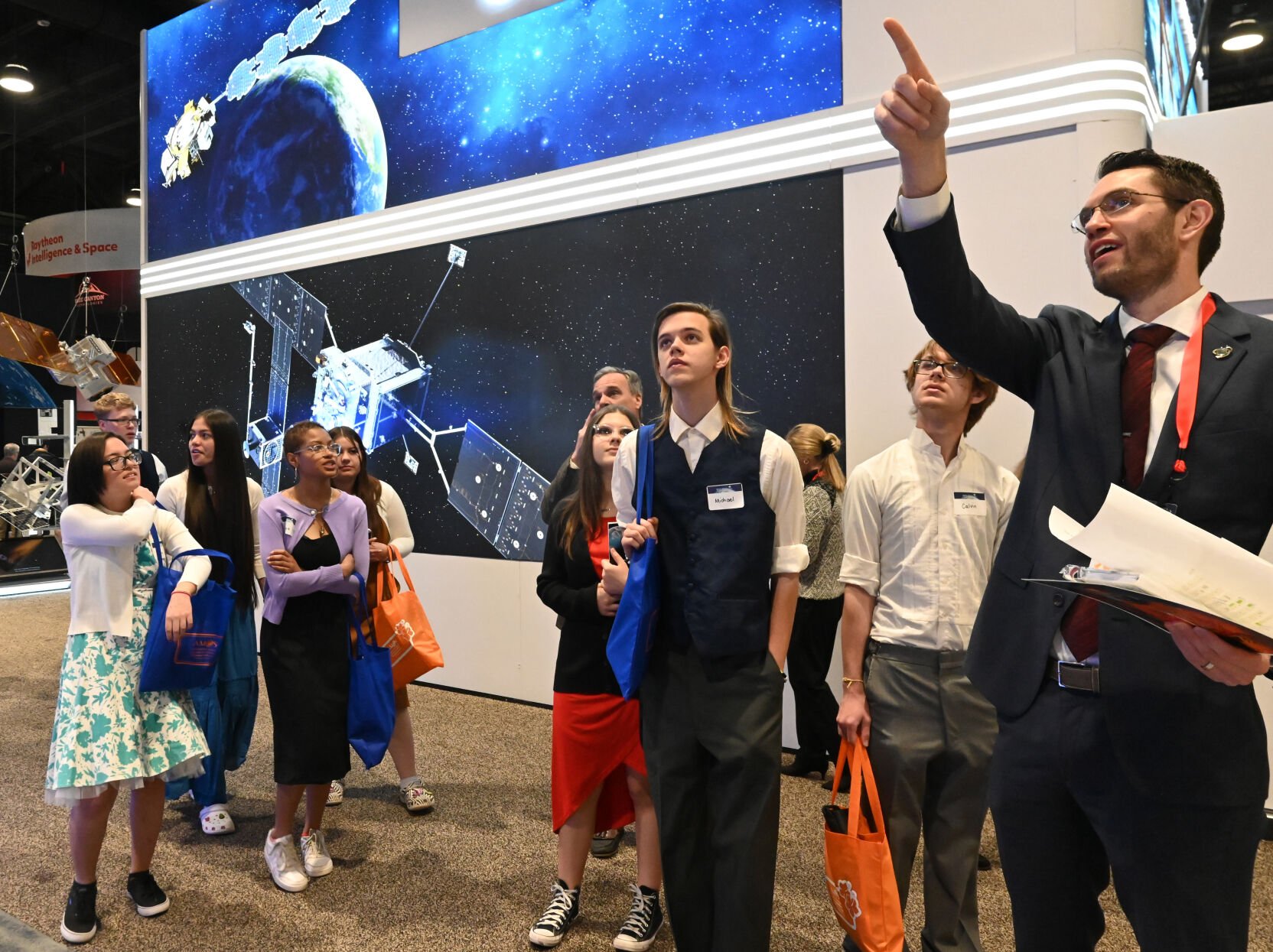
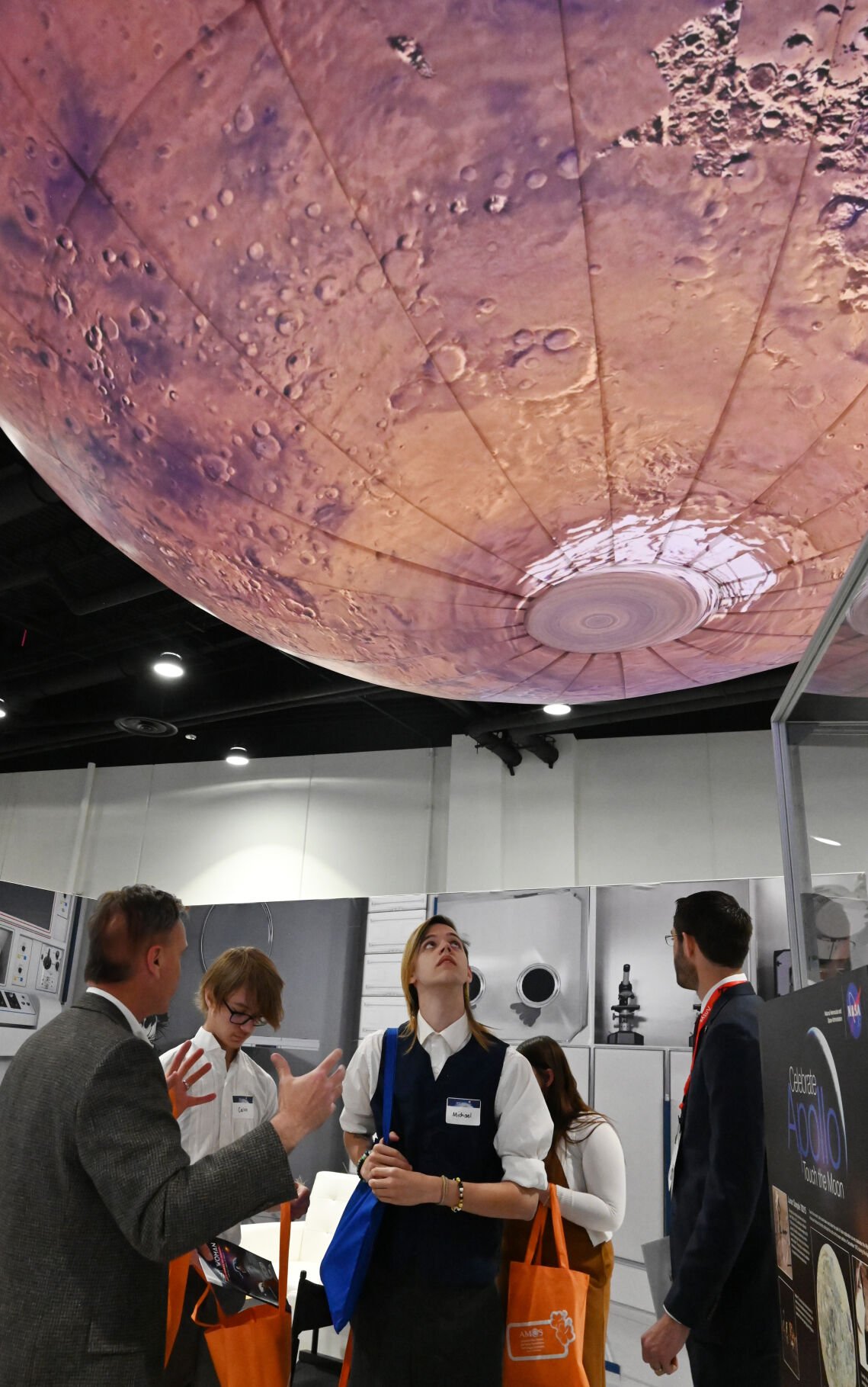
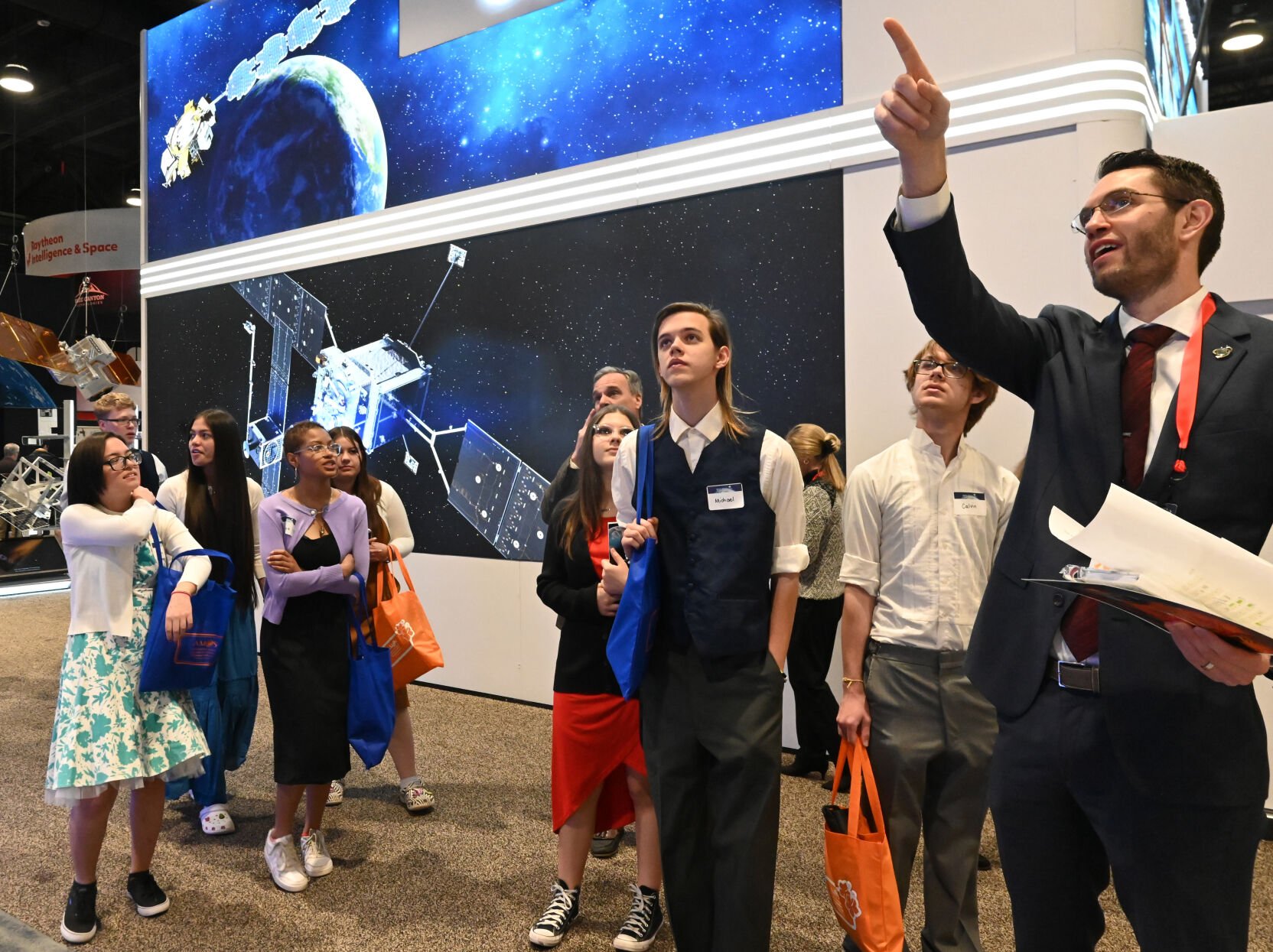
On Thursday, a group of Colorado Springs STEM students visited the Space Symposium, and the aerospace companies pulled out all the stops, showing off eye-popping displays and immersive experiences designed to take kids’ breath away.
“Go big or go home,” said Lockheed Martin representative Valynne Fabrizio.
Lockheed Martin erected a number of exhibits, including a replica of an Orion space capsule, which is set to be used in NASA’s Artemis program this year.
“We want these kids to see cool technology being used in cool situations,” said technician Brandon Briggs.
“Cool” was the overarching sentiment of the high school students as they moved between displays and presentations.
“So much cool tech in one place,” said Calvin McKee, a sophomore at Mitchell High School.
“The GPS displays were really cool,” said freshman Emaya Gonzalez.
The aerospace companies and the Space Force don’t necessarily expect a 15- or 16-year-old to commit to a career choice based on a model rocket they saw at the Space Symposium, but officials are hoping the stunning visuals will inspire a few of them to at least consider a career in space. Judging from the wide eyes of the kids roaming the Broadmoor, the space industry appears to have a chance.
The future of space exploration depends on private companies, Space Symposium speakers say