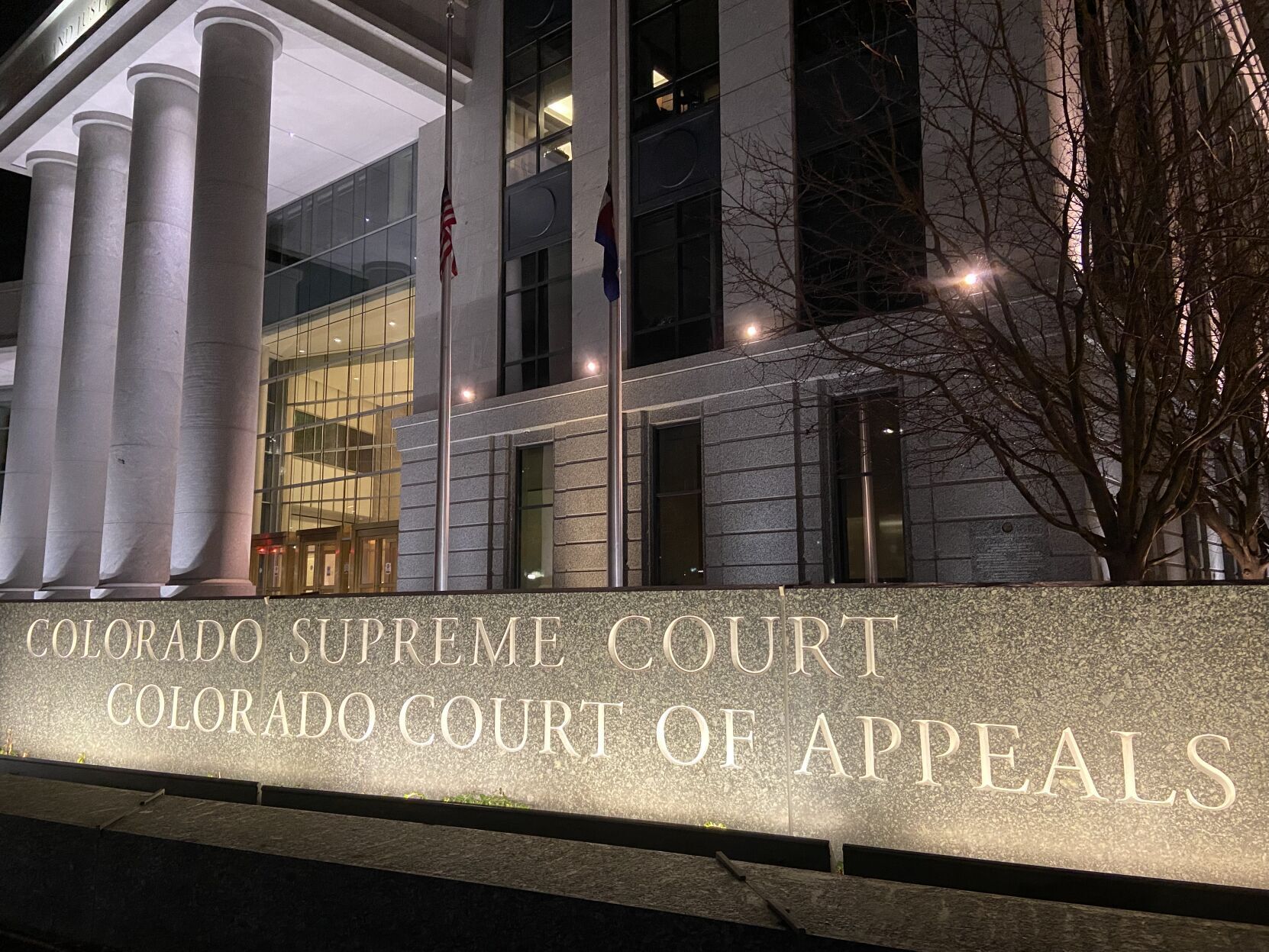

Colorado Senate unanimously approves independent funding for judicial discipline

The Colorado Senate on Wednesday unanimously passed a bill that independently funds the state commission that investigates and disciplines judges, a body whose budget had been under the thumb of the Supreme Court.
Senate Bill 22-201 now heads across the state Capitol to the House, where it will undergo its own set of hearings.
The bill also creates an eight-member committee of legislators — four from the Senate and four from the House — to study how the Colorado Commission on Judicial Discipline operates, including whether a constitutional amendment to make the body autonomous should be brought to voters.
“It is gratifying to see the parties come together to reach an accommodation to ensure the financial independence of the office of judicial discipline,” bill co-sponsor Sen. Pete Lee, D-Colorado Springs, told The Denver Gazette. “The hard work will occur this summer with the legislative interim committee, and we invite public participation in those hearings.”
Prior to the bill’s passage, the Senate appropriations committee tagged on more than $743,000 in additional funding to run the 10-member commission and moved $400,000 in additional taxpayer dollars into a special fund that could pay for lawyers to investigate a scandal that prompted the legislation.
Commission members in January told legislators it needed to separate from the Supreme Court’s financial control because it wasn’t getting the money to pay lawyers it hired to look into claims of covered up misconduct.
The claims are based on a memo at the center of a $2.5 million contract given to a former Judicial Department official who threatened a tell-all sex-discrimination lawsuit. The official, former Chief of Staff Mindy Masias, was being fired over financial irregularities. The memo contained details of alleged judicial misconduct that went undisciplined for years and was proof that conduct worse than hers was routinely tolerated.
In February 2021, after news of the memo’s existence broke and the Supreme Court later released it, the Colorado Commission on Judicial Discipline publicly said its records did not reflect that any of the allegations contained in the memo had been reported.
As a number of investigations into the memo and the circumstances around it were begun – two of them by the Judicial Department alone – the commission looked to begin its own and requested assistance from the Colorado Office of Attorney Regulation Counsel, which it would normally do on any inquiry.
But OARC had hired its own outside attorneys to look into the scandal. The commission chose to hire its own set of investigators – it has no full time staff for such an inquiry – and requested the funding to pay for them.
OARC sits beneath the Supreme Court and is responsible for doling out any funds the commission needs. Because it must first approve billing records before it can make any payment, OARC could see the progress and focus of any commission investigation, which by law is to be kept secret.
Chief Justice Brian Boatright had approved $75,000 for the commission’s lawyers months ago, but the details of the arrangement were only signed last week. The special fund created by the legislation would be used when the current fiscal year ends.
The Colorado Constitution creates the commission but requires the Supreme Court to create the rules under which it operates. Although there is no mandate to how the commission is funded, the Supreme Court eventually chose to do that with license registration fees that attorneys pay annually.
The commission is made up of 10 volunteers: four judges appointed by the chief justice and six others – two lawyers and four citizens – chosen by the governor. Nearly all of its work is done in secret.
The court’s rules also require any discipline the commission recommends to first be approved by the Supreme Court. That means, theoretically, the commission could recommend a judge be disciplined but the court declines to do so.
The commission’s investigation into the scandal could mean it looks into the alleged conduct of former Chief Justice Nathan “Ben” Coats, who is said to have approved giving the contract to Masias in order to prevent her threatened lawsuit.
Masias never asked for the contract directly, people familiar with the arrangement have said. Instead, two others in the department – Human Resources director Eric Brown, who allegedly authored the memo, and State Court Administrator Chris Ryan – determined it was a viable way to appease Masias and prevent the lawsuit.
All three have been referred to the Denver district attorney for criminal investigation by the state auditor’s office, in part because of the circumstances surrounding the memo, but also for other unrelated conduct.
Although publicly supportive of the legislation, several justices privately lobbied lawmakers and attorney groups to oppose it, largely because the measure could eventually remove the commission from the court’s oversight.