







Traffic deaths ‘a crisis’ in Colorado, officials say
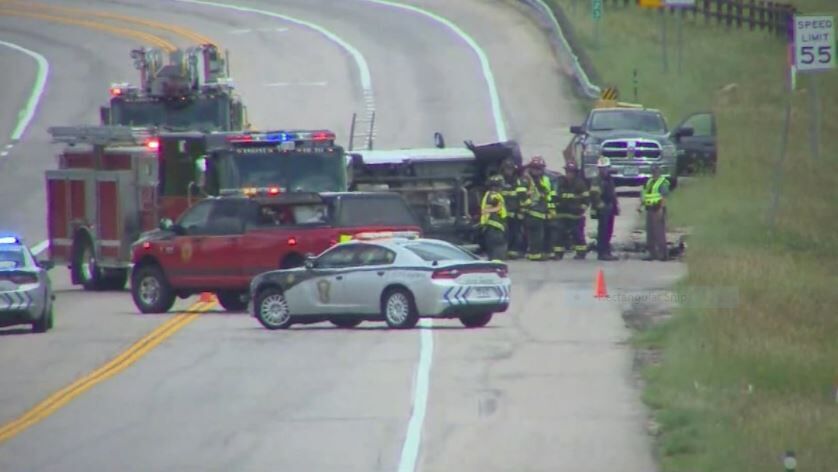
Officials said Tuesday that traffic deaths in Colorado have become “a crisis” after the state had “an unfortunate milestone” last year with the most road fatalities in nearly two decades.
Traffic deaths are 50% higher than they were 10 years ago, officials said during a virtual news conference with Colorado Department of Transportation, Colorado State Patrol and Colorado Springs police.
The surge in road deaths comes after more than 670 people died in Colorado during 2021. In Denver County, there were 65 road deaths last year, beat only by 77 deaths in El Paso County and 66 in Adams County, according to state data.
The press conference was an urgent call by officials for safe driving by Coloradans.
Man killed in weekend crash in Colorado Springs identified
“When the pandemic began, there was a noted increase in risky driving behavior, including speeding, reckless and aggressive driving, distracted and impaired driving,” the Department of Transportation said in a news release. “Those dangerous driving habits have continued as vehicle traffic has returned to pre-pandemic levels, causing a marked increase in road fatalities.”
Across Colorado, motorcycle deaths accounted for 20% of traffic deaths with 130 people killed on bikes, which was a slightly decrease from 2020, as were pedestrian deaths, which made up 13% of deaths statewide with 87 people killed. Bicyclists consisted of 2% of traffic deaths with 15 people killed during 2021. However, car traffic deaths spiked 22%.
“For the average Coloradan, the most dangerous thing you will do all day is driving,” said Col. Matthew Packard, chief of the Colorado State Patrol, in a Department of Transportation release. “These trends are tragic and unacceptable.”
Nationally, there also was an uptick in road deaths. The latest data by the National Highway Traffic Safety Administration shows a nearly 10% increase in traffic fatalities between 2010 and 2019, reaching 33,244.
Pedestrian deaths saw a significant increase, with 44% more deaths between the same time frame, reaching 6,205, traffic safety administration reports. Nearly 850 bicyclists were killed in 2019.
“Drivers making poor decisions — whether it’s speeding, being on their phones, or not buckling up — cause more than 90% of the fatal crashes on our roadways,” said John Lorme, director of maintenance and operations for CDOT.
Impaired driving accounted for 246 of the state’s traffic deaths during 2021 — a 16% increase from the previous year.
Lorme noted that population growth could not be to blame for the pace of traffic deaths since deaths on the road doubled during the past 10 years in Colorado, whereas population growth only expanded by 15%, census data showed.
Law enforcement officials attested that while staffing shortages strained agencies’ ability to enforce traffic laws, the biggest preventive measure for needless deaths is in the hands of drivers themselves.
Packard noted that several troopers stopped drivers topping 107 mph driving through “The Gap,” the approximately 18-mile stretch of Interstate 25 between Monument and Castle Rock, north of Colorado Springs.
“I’m not going to be able to have a trooper on every street corner, on every rural road, at every intersection to be that visual deterrent to bad driving,” Packard said. “What we’re going to need is a true partnership with the people of Colorado.”
Some measures employed to help with traffic safety in Colorado Springs were the installment of 10 red light cameras in the city with plans to install 10 more, said Vincent Niski, chief of police for the Colorado Springs Police Department.
The use of public transportation is also another way to reduce traffic fatalities, official said, but noted that investment in public transit is “costly.”
Colorado Department of Transportation officials added that $2 million would be spent in coming years on public awareness campaigns to educate and remind people about safe driving.
“It takes dedication from the entire community and state to make a difference,” Niski said. “We can all do our part to save lives. Please treat driving with the respect it demands.”