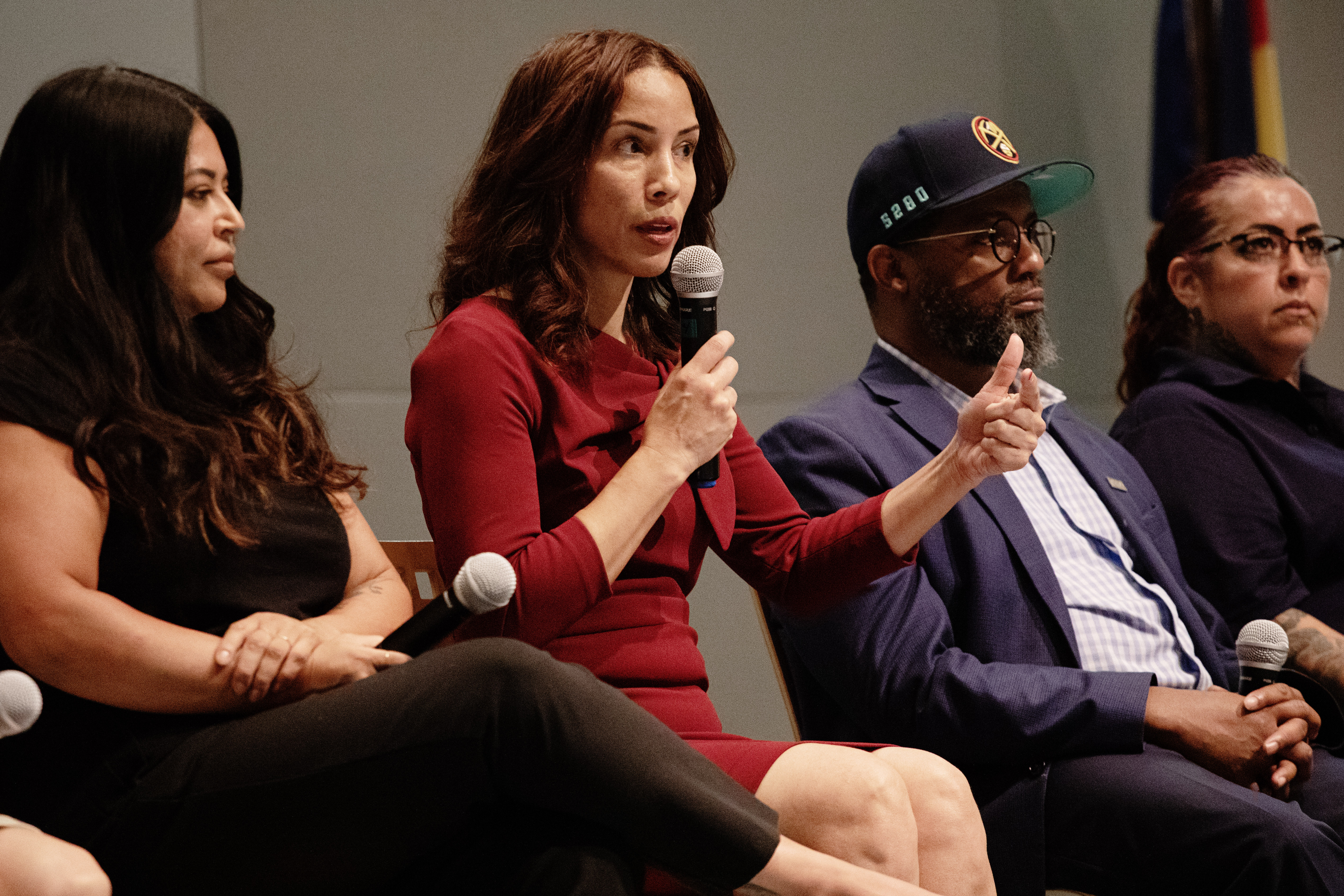
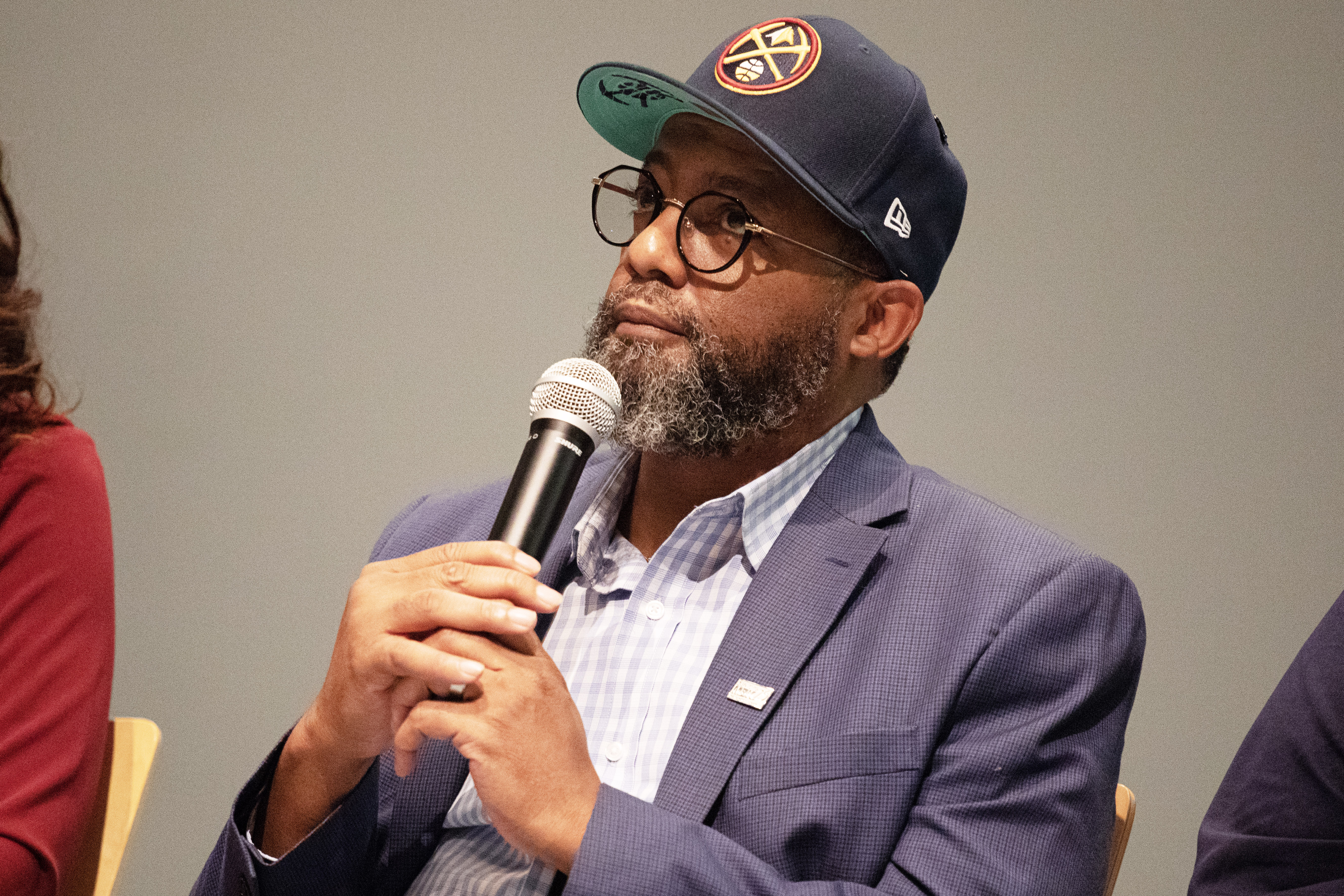
Experts emphasize presence of adult, early intervention in tackling youth violence in Denver
Experts say the presence of an adult in a child's life — especially one that children can see themselves in — is particularly crucial
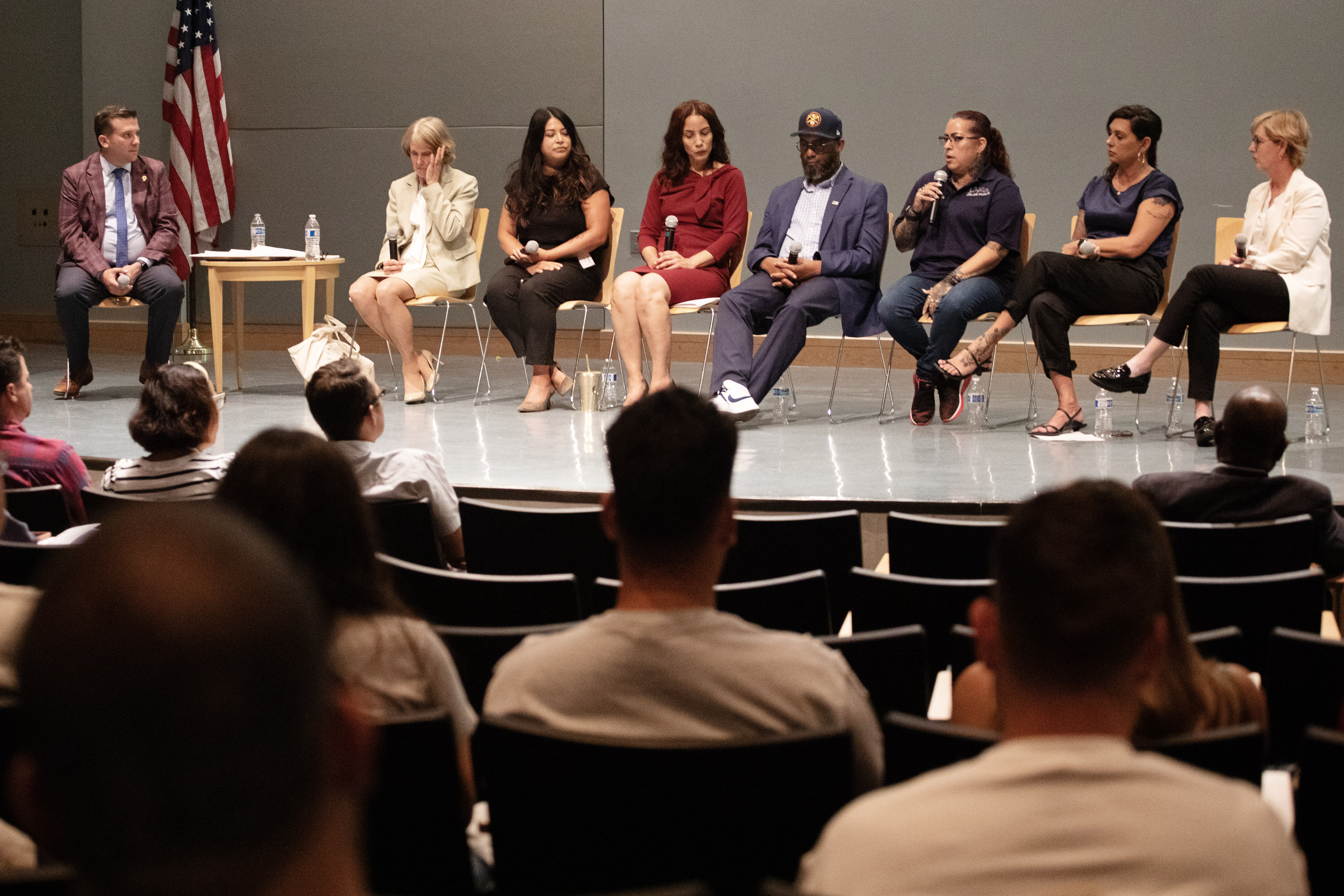
There’s no single magic solution to youth violence in the Denver metro area, but a few common threads emerged in a town hall Tuesday night: Provide adult role models kids can trust, and intervene early.
The presence of an adult in a child’s life — especially in a role that children can see themselves in — is particularly crucial, according to a panel of experts at the town hall hosted by The Denver Gazette and 9News at the Anschutz Medical Campus in Aurora.
The experts emphasized several strategies.
Focus on early prevention efforts. Don’t rely only on tactics that seem like quick solutions. Normalize talking about mental health with kids, which will make it easier for them to reach out for help.
“I think every time we see another tragedy in the news … our tendency is to look for a really quick, easy and fast solution,” said Sarah Goodrum, a research professor with the Center for the Study and Prevention of Violence at the University of Colorado Boulder.
“These are very complicated problems. These are not law enforcement problems. They are not social services problems. They are community problems, and it takes all of these different agencies and institutions working together in partnership,” she said.
Metro Denver, in particular, has seen a string of violence involving children and young individuals in recent months, and the intensity of the crimes and ages of the alleged perpetrators and victims have merely highlighted the tragic complexity of the crisis.
Indeed, while youth crime in general has declined in recent years in Colorado, according to state statistics, violence involving juveniles — as perpetrators, as victims and sometimes both — has stubbornly persisted, particularly in parts of metro Denver, including most acutely in Adams County.
Arrests for juveniles statewide for nonviolent offenses plunged over the past decade. In contrast, violent crime arrests of juveniles rose to a new 14-year high during the third quarter of 2021, when roughly 15 juveniles in 100,000 Coloradans were arrested for crimes of violence. Though that spike subsided and reversed last year, the rate of juvenile arrests for crimes of violence statewide remained higher than a decade ago.
The recent spate of violence included the case of 12-year-old Elias Armstrong, who, in February, was killed when he and a group of young people allegedly stole a car and the owner confronted them, exchanging gunfire with the group, according to police.
An Aurora police officer killed 14-year-old Jor’Dell Richardson in June when he tried to run after he and a group allegedly robbed a convenience store. The officer saw a gun in his waistband, which police later learned was a pellet gun.
Amidst this crisis, nonprofits focused on prevention and intervention vie for finite funds, and lawmakers battle over whether a punitive or rehabilitative approach is best.
Meanwhile, experts say the COVID-19 pandemic exacerbated mental health struggles and hampered community-based support systems for kids in need.
A series of articles by The Denver Gazette has been exploring youth violence and proposed solutions to the crisis.
At Tuesday’s town hall, Denver District Attorney Beth McCann noted the intensity and frequency of the crimes involving children.
“I don’t think it’s either law enforcement, or mental health, or treatment. It’s all of it,” she said of solutions. “We have to hold young people accountable. We have to have consequences. But we also have to recognize the struggles that they suffer from in their lives, and we have to be there to support them.”
Melissa Janiszewski, executive director of Denver’s Office of Children’s Affairs, said intervention needs to be paired with prevention.
“But, I think, oftentimes we want a solution really quickly. And so what’s missing in prevention is just allocating resources to make sure that all of the organizations that are doing this work every single day have what they need to support people,” she said.
Aurora City Councilmember Angela Lawson said she sees “silos” among the different entities that have hunkered down to curb youth violence.
“We have organizations that do a lot of good things, but I think that we’re seeing silos,” she said. “I think what’s happening in organizations is they’re realizing, ‘What does that organization do?’ The concept I hope the city of Aurora really moves forward is bringing these organizations together.”
She also emphasized the need to be good stewards of taxpayer dollars, which translates to showing results.
Jonathan McMillan, director of the Office of Gun Violence Prevention at the Colorado Department of Public Health and Education, said an adult in a child’s life is crucial in steering the child away from a violent path.
“A caring, trusted adult consistently in a young person’s life, from cradle to grave,” he said. “Having that person who a young person can go to to learn from, who they can confide in.”
Rica Rodriguez-Hernandez, director of the Urban Impact team, Life-Line Colorado, said it’s important to talk about mental health with youth.
“When you’re touching on the mental health piece in a creative way, it doesn’t always lead to, ‘You’ve got a mental health problem,'” she said. “Normalizing those conversations is huge for our youth to let them know, it’s OK.”
Tracy Durant, sociology and criminology professor at the University of Denver who works directly with young people, talked about redirecting them away from gangs. Durant also serves as the executive director of Step by Step Youth and Step Up Foundation.
“We’re talking about concepts like power, pride and respect, and the intersection of neighborhood and family gang involvement,” she said. “All of those things can lead youth into gangs. If we can redefine that in a more pro-social way, we can start talking about pride in community; pride in culture. It can be really impactful.”
Meanwhile, Goodrum suggested that everybody should learn and practice “skills for being a good upstander.”
“It really does take people like us, seeing someone going down the wrong path, a pathway toward violence, and ask, ‘What is going on here?’ Practice those skills with your friends, with your children, so when the time comes, you know what to say, and you know what to do,” she said.
For McMillan, solutions rise or fall with whether kids have a trusted adult in their life as a role model.
To illustrate his point, he cited his experience as a father.
He said he cherishes the time he spends with his 11-year-old son each morning. McMillan loves hearing his perspective on everything in his worldview, from politics to sports to school, he said.
“Talking with him on the way to school is my favorite part of the day,” he said.