




Overnight rescue saves hiker injured near treeline on 14,115-foot Colorado peak
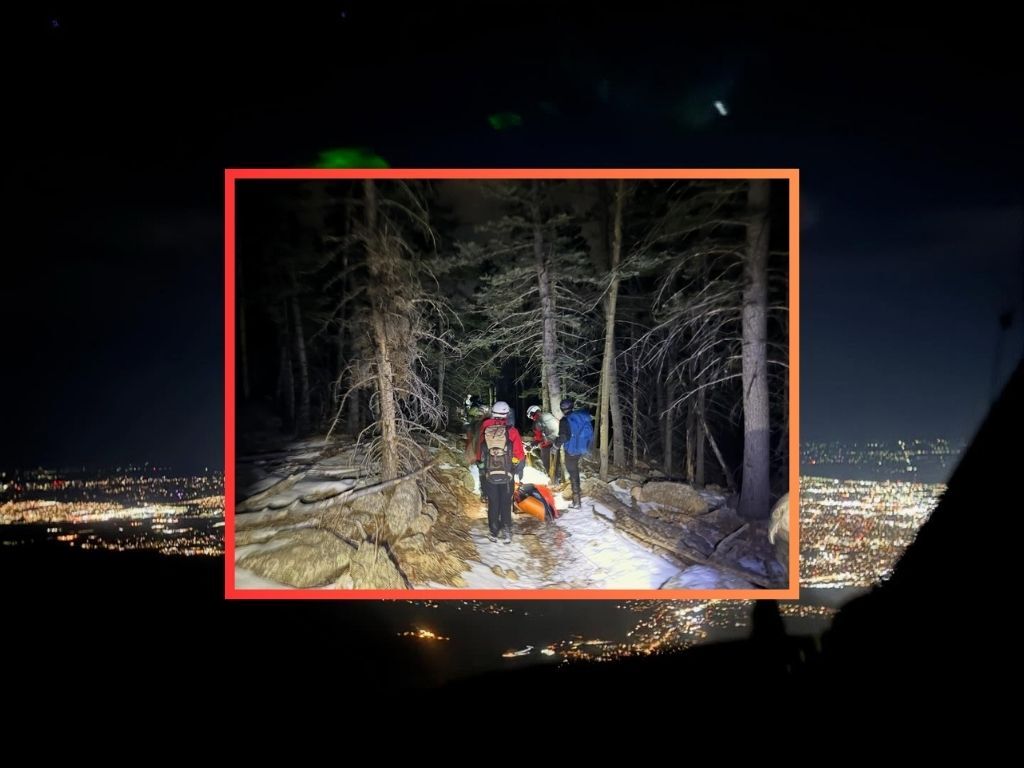
Amid a busy weekend, El Paso County Search and Rescue was called to 14,115-foot Pikes Peak for an overnight rescue involving a stranded hiker.
According to the organization, the hiker was stranded near treeline, with treeline on the mountain located at about 11,500 to 11,800 feet. Per a report from Arapahoe Rescue Patrol – another organization that assisted in the matter, the mission took place from late Sunday night into the early hours of Monday morning.
Once rescue crews were on the mountain, the hiker was found to be injured, requiring what was described as a “lengthy and physically demanding carryout.”
After providing medical care, the subject was successfully brought down from the mountain.
In addition to El Paso County Search and Rescue and Arapahoe Rescue Team, Teller County Search and Rescue, the Colorado Springs Fire Department, Colorado Search and Rescue, UC Health Lifeline, and the El Paso County Sheriff’s Office also assisted in the mission. The El Paso County Search and Rescue team also thanked Barr Camp personnel for their role in the successful mission.
Images from the scene appear to indicate that the mission took place on Barr Trail, which is a lengthy 12 miles each way. Based on the report of the rescue mission, it sounds like the hiker was stuck about eight miles up the trail from the trailhead. The length isn’t the only factor that makes this hike strenuous, there’s also the elevation gain. By the time treeline is hit, hikers have already climbed about 5,000 feet vertically with about 2,500 more to go. A rescue of this nature would mean carrying the subject downhill on slick terrain for a substantial amount of time.
While there’s less snow on Pikes Peak compared to the norm for this point in the season, there’s still snow and the snow that is there has reported to be icy in recent trail reports. It’s also worth noting that snow or not, winter brings frigid temperatures and strong winds to Colorado’s fourteeners. All of these factors mean a much more dangerous climb compared to one during the summer months. Hikers attempting to summit any fourteener during this time of the year should be highly aware of what winter hazards exist, equipped with the right gear and the right knowledge of winter backcountry travel and avalanche risk.
STAY INFORMED: Get free Colorado news with our daily newsletter (Click here)
Get OutThere
Signup today for free and be the first to get notified on new updates.
PREV
PREVIOUS
Two feet of snow expected on many Colorado peaks this week
What could turn out to be Colorado’s most significant snowstorm of the season thus far is set to take place over upcoming days, likely to drop double-digit snow totals across the state’s western half with two feet of accumulation possible on numerous peaks. Pivotal Weather forecasting indicates that flakes start falling on Tuesday morning in […]
Mass-casualty pile-up involving "at least 30 vehicles" shuts down I-25
Those traveling around Colorado on February 17 should be aware that a major closure is underway on I-25 after a wreck involving at least 30 vehicles. The wreck, involving multiple semis and passengers vehicles, took place a few miles south of Pueblo on I-25 at mile marker 92 at about 10:02 a.m. An initial report […]