





CPW provides cause-of-death info related to wolf that died during ‘capture and collar’ operation

Colorado Parks and Wildlife has released the necropsy results of an adult male wolf that died during a capture and collar operation in Routt County on January 28. In addition to providing insight into why the wolf died, the agency also shared more information related to the events surrounding its death.
It was determined that the wolf died due to capture-related complications which led to acute cardiogenic shock. This is a critical condition in which the heart becomes unable to pump sufficient blood to sustain life. Per their report, this condition “could have been exacerbated by several factors, including hyperthermia, exertional/capture myopathy, respiratory distress, or drug reaction.”
“As we said shortly after this mortality occurred, all wildlife capture operations come with a risk and while we meticulously prepare and take every precaution to ensure a positive outcome, there is always the possibility, even if small, that the worst happens,” said CPW Director Laura Clellan. “Our staff and contractors carefully followed CPW Animal Care and Use Committee (ACUC) guidelines during this operation, and by all accounts the capture process was not abnormal nor suggestive of this level of stress response from the animal.”
Colorado Parks and Wildlife says the entire capture operation took place over 24 minutes with three of those minutes involving the pursuit of the wolf that died. Colorado Parks and Wildlife staff didn’t notice any unusual panting or signs of distress prior to darting the now-deceased wolf in the upper left hind leg – a shot placement described by the agency as “appropriate.”
Once the wolf was delivered to the processing location, however, Colorado Parks and Wildlife’s handling crew noticed that it was notably warm – 105.8 degrees compared to the breeding female’s 101.4 degrees. At this time, Colorado Parks and Wildlife says that staff immediately started to work to cool the wolf down. Approximately 20 minutes after the wolf was brought to the Colorado Parks and Wildlife handling crew, the agency’s wildlife veterinarian arrived and confirmed respiratory and cardiac arrest. Attempts to revive the wolf, including through CPR and the use of emergency drugs, were ultimately unsuccessful.
“The female and male wolves were in close proximity to each other during the capture operation,” said Clellan. “Our staff have combed through every detail to try to determine why the male wolf died while the female wolf had no issues. The evidence and facts within the reports still don’t definitively point to a specific reason why the male wolf experienced such a high level of distress. We have a top notch professional team, and this situation has been tough on everyone involved. I have the utmost confidence in our staff and we will continue to work hard to achieve our mandate of restoring a sustainable population of gray wolves in Colorado.”
Per the Colorado Parks and Wildlife report, an independent third-party veterinary pathologist was present when the necropsy took place and confirmed the results.
The wolf that died was the breeding male of the King Mountain pack. During the same capture and collar operation, the breeding female of the pack and a pup were successfully collared, reported to still be traveling together.
STAY INFORMED: Get free Colorado news with our daily newsletter (Click here)
Get OutThere
Signup today for free and be the first to get notified on new updates.

PREV
PREVIOUS
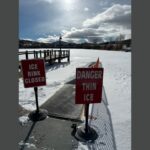
Popular mountain town ice rink that's free to visit closes early due to unsafe conditions amid warm winter
A popular mountain town ice rink found at about 8,700 feet of elevation has closed early and for the remainder of the season amid a warm winter. Per a press release from the Town of Silverthorne, the ice rink at North Pond Park – which opened on January 14 – is already closed for the season […]

Luxury Colorado resort set to offer 3-course prix-fixe meal celebrating local flavors for state's 150th anniversary
Planning for a March fine dining experience in Colorado Springs? The Broadmoor is offering a special prix-fixe meal you won’t want to miss. In celebration of Colorado’s 150th and America’s 250th anniversaries this year, The Broadmoor’s Summit restaurant will be offering a multi-course meal for $150 – or $250 with a wine pairing. The meal […]