




Colorado city among best outdoor recreation hubs in U.S. – but it’s often overlooked
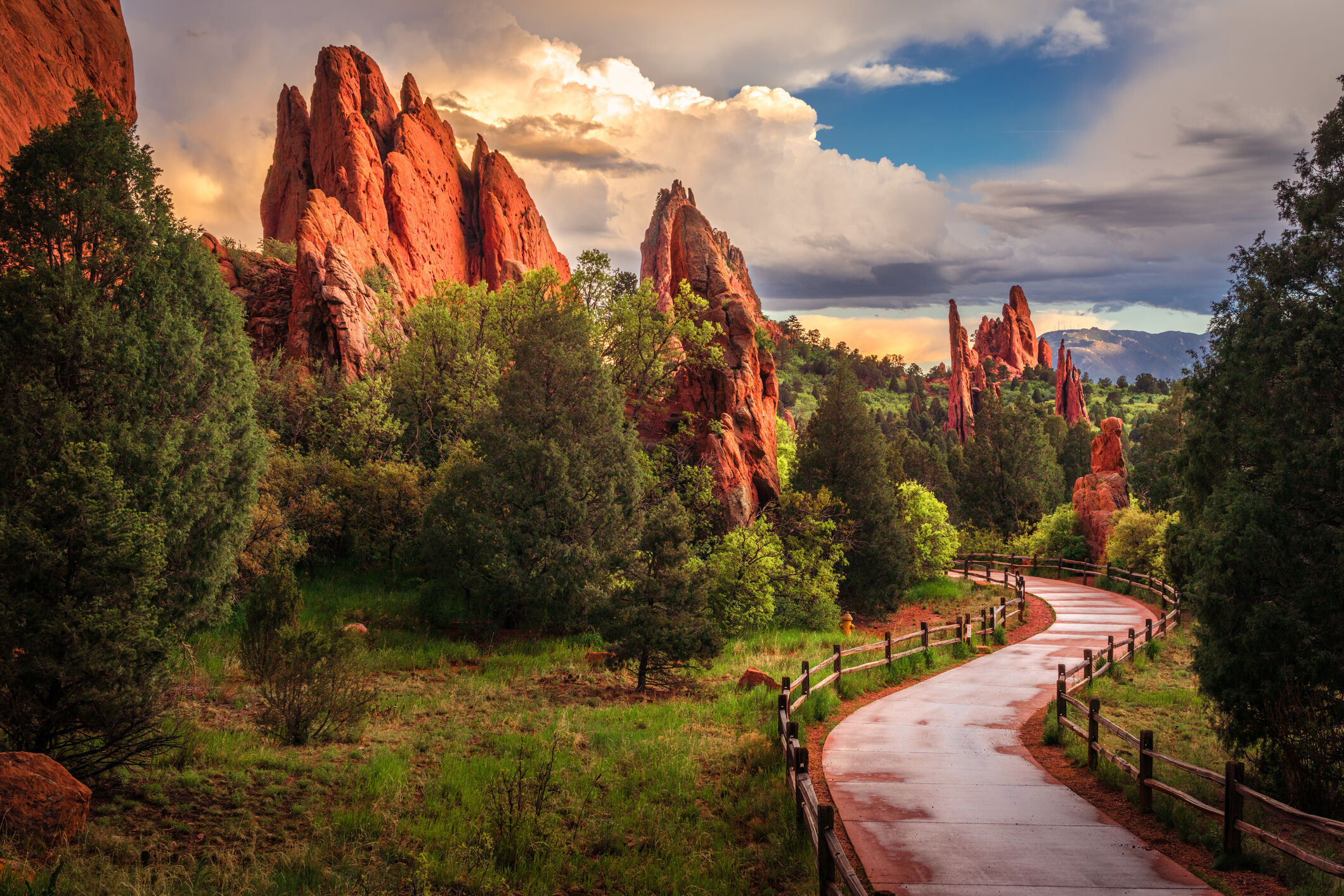
Few – if any – major American cities have as much to offer in terms of local outdoor recreation when compared to Colorado Springs, where getting to the trailhead tends to mean traveling 20 minutes or less. That said, Colorado Springs seems to be mostly left out of the conversation when it comes to ‘top outdoor recreation destinations’ in the United States. In terms of big cities, people tend to set their sights on places like San Diego, Seattle, and Salt Lake City. Even Denver gets mentioned more than Colorado Springs, despite the lack of truly local mountainous terrain and how activities like hiking, mountain biking, and camping typically mean a drive through city traffic to a spot that tends to attract the Mile High City hoards.
Think I’m exaggerating when I say Colorado Springs gets left out of the conversation? Here’s a look at a few times when the city has been totally overlooked:
- REI’s ‘Top 50 cities for access to the Outdoors‘: Despite 50 mentions, including three in Colorado – Aurora, Lakewood, and Thornton – Colorado Springs was skipped.
- Niche.com’s 2026 ‘Best Cities for Outdoor Activities: This list of 25 featured Boulder at 21st, but no other Centennial State spot.
- RVshare’s ‘Most and Least Outdoor-Friendly Cities in America Ranked‘: Of the top 10, Denver ranked 2nd – but no Colorado Springs.
- This Reddit thread titled ‘best places to live for outdoor enthusiasts’: Denver and Estes Park get mentioned, but no Colorado Springs.
- The Packable Life’s ‘best hiking cities’ list: Denver gets a shout-out, but no Colorado Springs.
The list goes on, but you get the point. Places like Boulder and Denver tend to get mentioned the most when it comes to Colorado’s cities for outdoor recreation while Colorado Springs either gets skipped or is viewed as an afterthought – a ‘runner-up.’
As someone who’s lived in Colorado Springs for more than a decade (yes, I might be a bit biased), the lack of attention the city gets on a national scale has always been a bit shocking to me.
Take the single activity of mountain biking, for example – per MTB Project, Colorado Springs is home to 463 miles of trail used for the sport. This compares to Denver’s 97 miles and Boulder’s 203 miles. Colorado Springs’ numbers in terms of mountain biking put it more on par with spots like Moab’s and Pisgah’s 609 miles and 487 miles, respectively, even when compared to many other famous mountain biking towns around Colorado like Durango (358 miles of trail), Crested Butte and Gunnison (301 miles of trail), and Aspen (232 miles of trail). Could one make the argument that the trails are of better quality in some of these other spots? Sure. But the sheer milage of trail in Colorado Springs (the majority of which is rated as ‘intermediate’ or ‘expert’) is undeniable.
The city doesn’t just cater to biking, either – it’s great for hiking, too – and there are so many parks that even locals struggle to visit them all regularly. Spots like Palmer Park, Red Rock Canyon, North Cheyenne Cañon, and Ute Valley all tend to get overlooked by visitors who opt for Pikes Peak or Garden of the Gods, but in any other city, these spots would be places that people travel for.
And then there’s the ease of getting to Colorado Springs, as well – another reason why the city should be considered a top national destination for outdoor recreation. There’s a local airport, and flying in and out of it tends to be a breeze. If someone were to land in Colorado Springs and head straight to one of the area’s most iconic trails – the Manitou Incline – that drive takes just 25 minutes. That might be ill-advised due to altitude sickness concerns, but it’s possible. Keep in mind that a trail found steps away from the base of the Incline travels to 14,115 feet of elevation, too – from airport parking lot to climbing one of the country’s most iconic peaks in less than 30 minutes.
Want to land in Denver instead and then head to Colorado Springs? You’re looking at about 30 minutes of additional driving compared to getting to Boulder – or a little less than the drive to Estes Park, another spot that’s often called an outdoor recreation hub.
It’s not just getting to Colorado Springs that makes the city a convenient destination for outdoor recreation, either. Traveling around town is made fairly simple thanks to its urban trail network. If you’re willing to walk or have access to a bike – or rent an e-bike from the local PikeRide – you’re able to explore much of the city on paved paths.
And don’t forget about local camping – Cheyenne Mountain State Park is a destination in itself. Otherwise, locals are about an hour from plenty of backcountry options.
Rock climbing? There’s plenty of that, too – more than 1,000 local routes per Mountain Project, and that doesn’t include the iconic Shelf Road, found about an hour away near Cañon City.
From how one is able to hike more than a mile of trail a day for a year without hitting the same dirt twice to being able to trek up a 14,000-foot mountain thats got a trailhead about 15 minutes from downtown, there’s no shortage of outdoor recreation in Colorado Springs. It’s easy to get to, easy to navigate, and it’s home to a wide range of meet-up groups and non-profits that make it easier to get outside. Yet still, the city gets overlooked in the national conversation.
Why don’t people consider Colorado Springs to be one of America’s premiere outdoor recreation hubs?
Maybe it’s overshadowed by other Colorado destinations? Maybe it’s the lack of water sports offered locally? Maybe it’s because it’s a city, not a mountain town? Maybe it’s the lack of local lift-served skiing? Maybe it’s how some of the most publicized outdoorsy attractions don’t cater to the ‘expert’ trail user? To be honest, it’s hard to pin down a solid reason that the city gets skipped.
There are a few noteworthy changes that could be coming to the Pikes Peak region in upcoming years that could help to put the city on the map in the minds of more travelers seeking out outdoor recreation. Will it be a trail that travels around the entirety of Pikes Peak, sure to appeal to backpackers and long-distance mountain bikers? Will it be dreams of a bike park that have seemed increasingly closer to reality in recent months? Will it be a trail that links the city’s mountainous skyline from north to south? There’s plenty in the works and while news of any single aforementioned possibility could be capable of making national headlines, I can’t help but think new features might risk getting overlooked, too.
Is Colorado Springs destined to be underrated as an outdoor recreation hub on a national scale? Only time will tell and we’ll have to wait and see. That said, in this writer’s opinion, it absolutely belongs on a list of the best-of-the-best.
STAY INFORMED: Get free Colorado news with our daily newsletter (Click here)
Get OutThere
Signup today for free and be the first to get notified on new updates.
PREV
PREVIOUS

CityROCK indoor climbing gym expanding in northern Colorado Springs
After years of planning and design, shovels have hit dirt and CityROCK North, a new indoor climbing facility coming to northern Colorado Springs, is going vertical. CityROCK, which first debuted in 2009 in the heart of downtown, broke ground last week on its long-awaited second location on the city’s far north side. The new 32,500-square-foot […]
Another backcountry skier rescued in mountains in Pitkin County
A backcountry skier was evacuated by Mountain Rescue Aspen teams on Sunday after sustaining a knee injury, marking MRA’s second backcountry rescue in the area in two days. According to Mountain Rescue Aspen, the Pitkin County Regional Emergency Dispatch Center received a medical SOS at about 11:46 a.m. on Sunday from the Lindley Hut area […]