




5 deaths in 8 days: Park ranger dead after falling into crevasse on America’s tallest peak
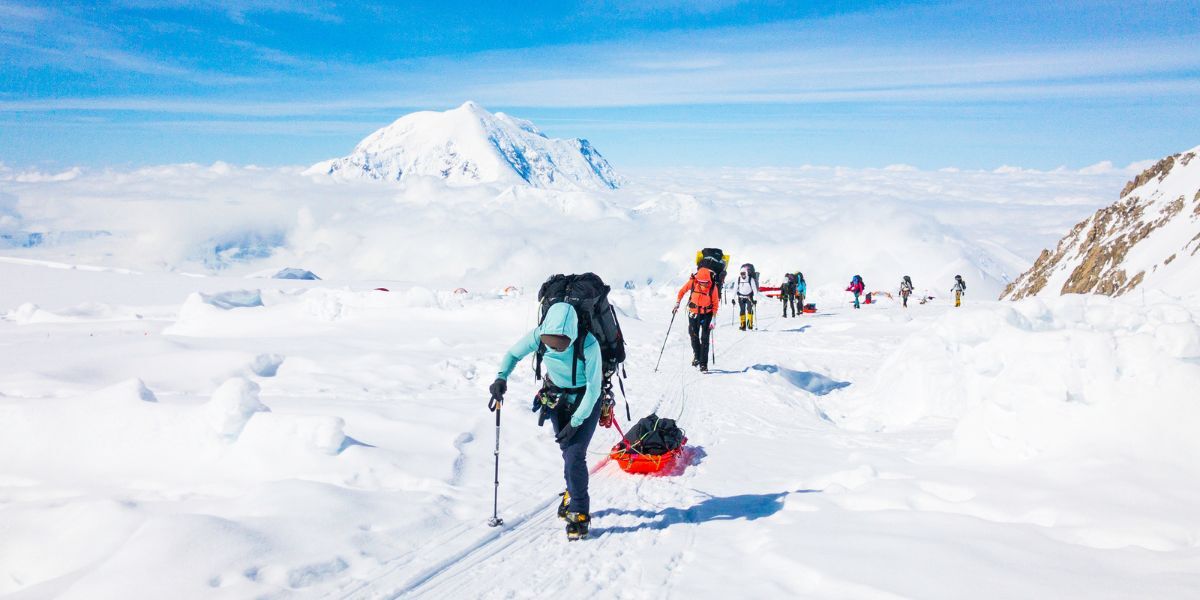
Colorado has some massive mountains, but none that match the scale of Alaska’s 20,310-foot Mount McKinley, found at Denali National Park and Preserve. With its size, scaling the North America’s highest peak poses an entirely different range of risks and hazards compared to peaks that top out about 6,000 feet closer to sea level in the Centennial State. Three recent tragedies that unfolded on McKinley put the ever-present dangers of the peak on display, showing how even with plenty of experience, risks that come with scaling the peak can be difficult to mitigate.
According to a report from the national park, mountaineering ranger Robin Pendery, of Enumclaw, Washington, died while conducting a climbing patrol on McKinley at about 2 p.m. last Thursday. Pendery fell into one of the mountain’s crevasses, and while rescue efforts started immediately, efforts were ultimately unsuccessful. Her fall took place near 14,000 Foot Camp.
Crevasses are a well-known risk of McKinley – deep cracks in the surface that can get covered with fragile snow, thus hidden. Because of their presence, climbers of the mountain are often roped up, carrying specialized gear and trained in self-rescue techniques.
Pendery was working as a seasonal employee for the National Park Service at the time of her death, first joining the Denali mountaineering staff in 2024. The team she was on supports climber safety, emergency response, and mountaineering operations on the mountain.
“We are heartbroken by the loss of a member of our Denali family,” said Superintendent Brooke Merrell in a press release from the park. “Our mountaineering rangers dedicate themselves to serving visitors and helping others in one of the most challenging environments in the world. Today, we mourn the loss of a valued colleague, friend and teammate. Our thoughts are with Robin’s family and loved ones.”
At last report, Pendery’s death remains under investigation with additional details not yet released.
About a week prior to Pendery’s death, three of seven climbers associated with a Latvian expedition fell to their deaths while traversing the exposed Denali Pass at about 18,200 feet on McKinley. A fourth climber of the group was critically injured, but rescued.
The call for help related to that rescue situation came in around midnight on the night of May 27 to May 28. The climber who survived the fall was rescued at about 4 p.m. on May 28 via a long-line extraction. Meanwhile, the three climbers with the group who did not fall assisted with the rescue effort before having to be flown off the mountain due to declining physical condition. At last report, the effort to recover the bodies of the three climbers who died is ongoing.
What was a presumably a third fatal incident in recent days also took place on Mount McKinley during the early morning hours of May 31, though details related to that incident are sparse. According to a report from the park, a climber experienced a “medical event” at about 18,700 feet of elevation during the descent from the summit of Mount McKinley. While a press release from later that day doesn’t provide information regarding the nature of the medical event, nor does it explicitly state that the climber died, it does note that “recovery efforts are ongoing” and that “the National Park Service does not release information about fatality victims until 72 hours after next-of-kin notification has been completed,” with that person’s immediate family having been contacted about the situation.
In addition to the dangers posed by McKinley’s terrain, the environment and strenuous nature of travel can pose serious health risks, as well. Deadly risks can include altitude sickness, frostbite and hypothermia, sudden cardiac death, and hyper-coagulability of the blood that can result in blood clots and a risk of stroke.
While these tragic incidents didn’t take place in Colorado, both serve as a good reminder that risk in the mountains can always exist. Headed into fourteener season, don’t let experience deter you from going through your safety checklist and bringing all of the recommended safety gear for each and every trip above treeline. Find the ‘10 essentials‘ for backcountry safety here, and always make sure you’re checking the weather forecast, telling someone where you’ll be and when you’ll be back. It’s also important to ensure you have a means of calling for help (that doesn’t rely on cell phone connection).
STAY INFORMED: Get free Colorado news with our daily newsletter (Click here)
Get OutThere
Signup today for free and be the first to get notified on new updates.
PREV
PREVIOUS
"Very large hail" among risks of storm set to hit much of Colorado today
According to the National Weather Service, the trend of springtime storms is set to continue in Colorado on Monday, June 8. Mapping from the agency shows that there’s a severe storm threat growing for the Denver metro area and beyond, stretching into the Eastern Plains region. With expected timing of the risk being from 2 […]
Hiker dead after experiencing heat-related symptoms in American canyon
Come summer in the American West, heat can be deadly. A recent case out of Grand Canyon National Park puts this risk on display, and while this situation didn’t unfold in Colorado, it highlights a hazard that Centennial State hikers will need to keep top of mind – especially in parts of the Eastern Plains […]