







The civil rights solution America forgot | Michael Hancock
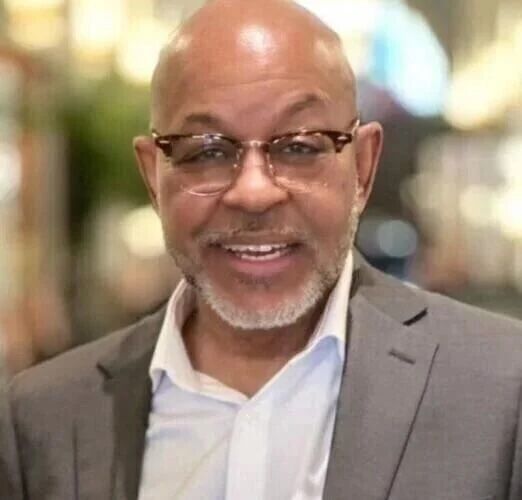
At 27 years old, Cedric Pride walked into a sheet metal company and admitted something most men would have tried to hide.
He could not read a tape measure.
But then he added the sentence that should haunt every serious conversation about civil rights in America: “It’s not because I’m stupid. I’ve never been taught.”
There, in that simple distinction, is the difference between incapacity and exclusion. It is also the difference between the old civil rights movement and much of what now marches under its banner.
The old movement sought to remove barriers so that Americans who had been locked out could fully enter into the life of the country — its schools, jobs, neighborhoods, businesses, institutions, and promises. It demanded equal access to the American project.

The modern civil-rights industry too often asks for something smaller and sadder: recognition without restoration, grievance without growth, representation without actual power. It has mastered the language of injury but too often forgotten the architecture of independence.
Cedric Pride, the CEO of The Pride Initiative, has not forgotten.
Pride is a retired tradesman, a former union delegate, an event promoter, a man of deep faith and, now, the founder of a workforce training operation that deserves far more attention than another symbolic resolution or ceremonial proclamation. His work is not glamorous in the approved political sense. It does not flatter fashionable ideologies. It does not manage victimhood.
It teaches people how to work.
And that may be the only civil-rights strategy that ultimately matters.
During a recent tour of his facility, Pride walked through rooms filled with clothing, tools, classrooms, computers, training equipment and people trying to rebuild their lives. There is a women’s clothing closet where professional clothes and shoes are available at no cost. There are tools for people entering trades who cannot afford the basic equipment required to begin.
There are classrooms for flagging, forklift operation, security, HVAC and other certifications. CNA training is coming. Culinary training is in motion. More programs are being added.
The point is not charity as sentiment. It is charity as formation.
Pride’s philosophy is simple: teach people how to fish. But he has added an important refinement. You cannot teach a man to fish if he does not have a pole, cannot get to the lake, cannot read the instructions, cannot control his anger long enough to keep the job, or has never been told that fishing was an honorable path in the first place.
That is why his model matters.
Pride trained hundreds of people and helped many get jobs. Then he noticed something that should inform every workforce discussion in Colorado: a job placement is not the same thing as life restoration. Some people got jobs and lost them. Not because they lacked a certificate, but because they carried unresolved barriers with them — addiction, anger, trauma, detachment, instability, lack of transportation, lack of housing, lack of identification, lack of habits formed by stable life.
So he did what serious people do. He adjusted the model.
He brought in behavioral health support. He added case management. He built a system to help people not merely get hired, but remain employable. This is the part many public programs miss. The goal is not to announce compassion. The goal is to produce capability.
That word — capability — is the missing term in much of our public life.
We have taught generations to speak fluently about systems, barriers and oppression. Some of that language describes real things. But a language that only names obstacles and never forms people to overcome them becomes its own prison. It may explain failure. It does not build success.
Pride’s own life is the rebuttal.
He began as a young man who could not read a tape measure. He became a 33-year tradesman. He rose through the sheet metal industry. He helped bring Black and brown young people into the trades. He speaks with particular pride about young men becoming homeowners in their early 20s. He understands something our credential-obsessed culture forgot: the trades are not a consolation prize. They are a wealth engine.
For too long, working-class kids were told that college was the only respectable path to success. College has its place. But the lie was not that college had value. The lie was that everything else meant failure.
That lie did enormous damage.
It taught too many young people to overlook the very fields where wages, pensions, health care, skills, discipline and ownership were available. It treated blue-collar work as cultural defeat instead of economic power. It pushed debt as aspiration and ignored apprenticeships as liberation.
A union card, a trade certification, a forklift license, an HVAC skill, a security credential, a culinary pathway — these are not small things. For a person coming out of incarceration, addiction, homelessness or generational instability, they can be the first rung back into ordered life.
And ordered life is the true object of civil rights.
Not endless agitation. Not dependency dressed up as justice. Not public rituals in which elites speak on behalf of people they rarely equip. Real civil rights means the ability to stand, work, build, own, provide, worship, marry, raise children, serve neighbors and govern oneself.
That is why Pride’s story matters for Aurora and Colorado.
We do not need another bureaucracy that converts human suffering into budget lines and moral slogans. We need practical institutions that move people from instability to competence. We need partnerships with employers, unions, recovery programs, reentry services, churches and cities. We need vacant spaces turned into training rooms.
We need fewer speeches about dignity and more rooms where dignity is practiced into existence.
Cedric Pride is building one of those rooms.
Michael A. Hancock is a retired high-tech business executive and a Coloradan since 1973. Originally from Texas, he is a musician, composer, software engineer and U.S. Air Force veteran whose wide-ranging interests — from science and religion to politics, the arts and philosophy — shape his perspective on culture, innovation and what it means to be a Coloradan.