







10th Circuit tosses GOP challenge to Colorado’s campaign spending limits
colorado politics file
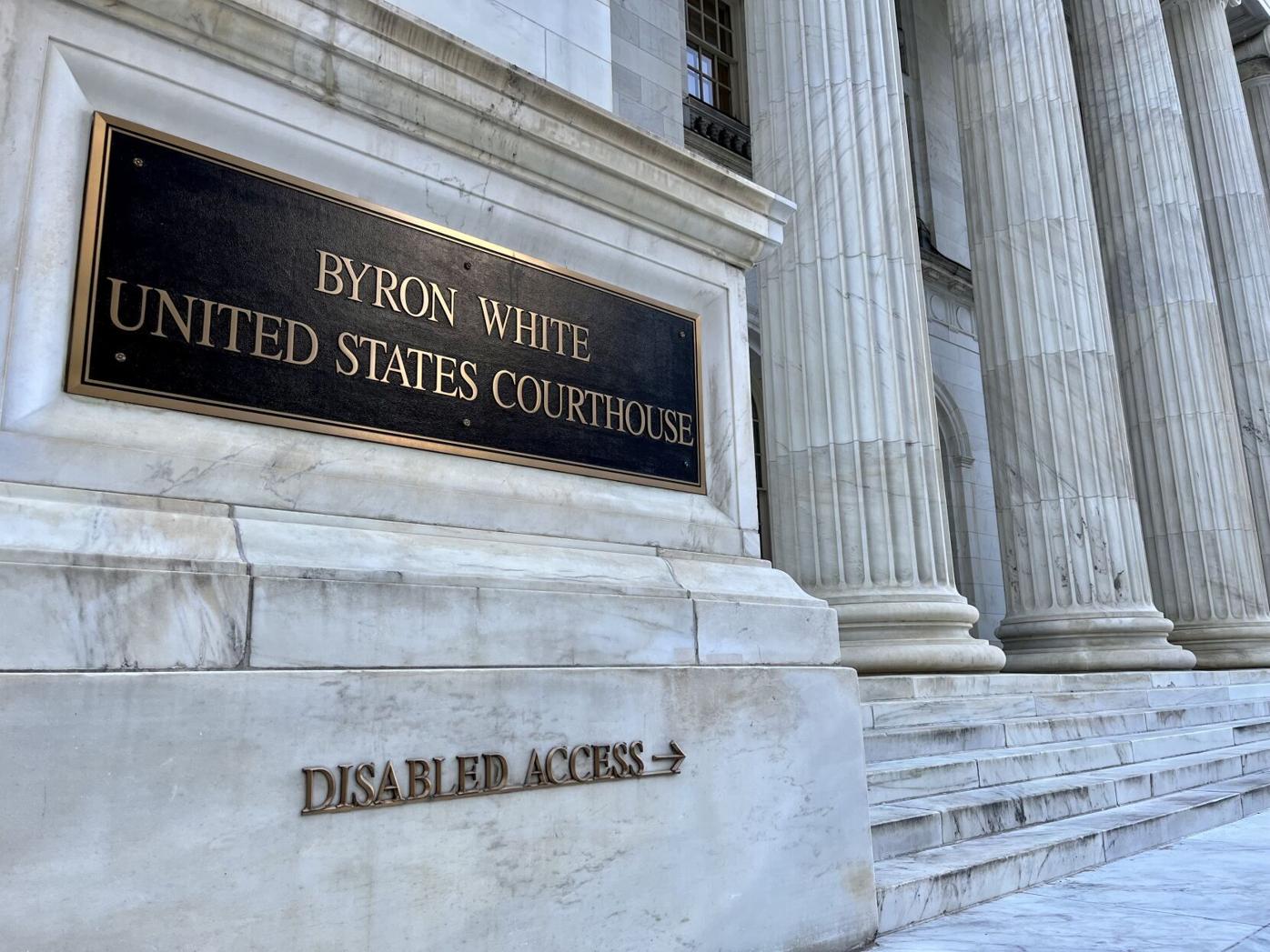
The federal appeals court based in Denver rejected an attempt by a trio of Republicans to temporarily block enforcement of the voluntary campaign spending limits Colorado voters enacted two decades ago as an anti-corruption measure.
Although the plaintiffs brought their lawsuit and request for an injunction in early 2022, prior to the midterm election, the U.S. Court of Appeals for the 10th Circuit declined to analyze the First Amendment implications of Colorado’s campaign finance system. A three-judge panel reasoned the appeal was moot now that the election is over.
In 2002, voters enshrined Article 28 into the state constitution to prevent special interests and wealthy persons from exercising “a disproportionate level of influence” in politics. The amendment limits donors’ contributions to candidates per election cycle, adjusted for inflation, to $400 per legislative candidate and $1,250 per statewide executive candidate. Article 28 also gives office-seekers an option: They may collect twice those amounts per donor in exchange for voluntarily limiting their overall spending.
Then-Rep. Rod Pelton, R-Cheyenne Wells; Greg Lopez, a former gubernatorial candidate; and Steve House, the former chair of the Colorado Republican Party and former candidate for Congressional District 6 filed suit in federal court, alleging the limits were so low as to violate the First Amendment right to expression and association.
After a two-day hearing in March, U.S. District Court Senior Judge John L. Kane refused to issue a preliminary injunction that would have temporarily blocked the state from enforcing Article 28. Kane acknowledged Colorado’s contribution thresholds were among the lowest, if not the lowest, of any state. But he was skeptical of how the limits actually harmed the three plaintiffs, and decided the voluntary spending feature did not appear to burden any of the men’s constitutional rights.
“A statutory choice to limit campaign speech that is offered to all candidates without discrimination entails no such burden,” Kane wrote on March 10. “Again, there is no First Amendment right to be free from having to make a choice regarding campaign financing. Indeed, each candidate must pursue some strategy throughout his campaign.”
The plaintiffs appealed to the 10th Circuit, but focused only on the alleged unconstitutionality of the candidates’ spending limits. They argued the provision forces a trade-off in First Amendment rights: Either a candidate can limit their own “speech” while allowing their donors to contribute more, or candidates can spend unlimited amounts while contributors’ “speech” is cut in half.
The defendant, Colorado Secretary of State Jena Griswold, rejected that interpretation of the financing options available to candidates.
“Such choice-increasing laws are constitutional so long as they are not coercive,” wrote Senior Assistant Attorney General Michael Kotlarczyk, adding that there was no evidence of candidate coercion. “To the contrary, most candidates reject the limits.”
The 10th Circuit panel rejected the plaintiffs’ appeal in a brief order. As for Lopez, he lost the GOP gubernatorial primary to Heidi Ganahl and conceded his claims were now moot. Pelton won his Senate election and, if he ran for a second term, would not face voters until 2026. But Kane would likely resolve the case — and end any preliminary injunction — before Pelton would need to worry about the spending limit, wrote Judge Robert E. Bacharach for the panel.
Finally, House contended that because he “supports some candidates” who have rejected spending limits, the state has placed “greater limits on his right” than it has for other donors. But the 10th Circuit pointed out that the same contribution caps apply to House as they do to all donors.
“We don’t know who Mr. House will support in future elections,” wrote Bacharach, “whether those candidates will accept or decline the spending limit, whether those candidates will face opponents, or whether those opponents would accept or decline the spending limit.”
Ryan Morrison, an attorney with the Washington, D.C.-based Institute for Free Speech who represents the plaintiffs, said the 10th Circuit will consider the merits of the case in a future appeal after Kane issues a decision in the underlying lawsuit.
The case is Lopez et al. v. Griswold et al.


Rockies announce Dinger Day, Harry Potter Night, Grateful Dead Night among theme events | Colorado Sunshine
Paul Klee
paul-klee@denvergazette.com
Updated 20 hours ago
Where good news shines The Rockies announced their 2026 theme days Wednesday. April 18 (vs. Dodgers): Hello Kitty April 10 (vs. Dodgers): Dinger Day May 18-19 (vs. Rangers): Bark at the Park June 5 (vs. Brewers): Pride Night July 31...

Paul Klee
Reporter

Denver Weather: Unseasonably warm and sunny Thursday
Emily Moyer
emily.moyer@gazette.com
Updated 2 hours ago
Another day of warm weather for Denver area residents on Thursday with mostly clear skies and sunshine continuing into the weekend. The National Weather Service in Boulder predicts trends to stay warm and sunny through the weekend, with some light...

Emily Moyer
Reporter
EDITORIAL: Don’t leave Coloradans in the dark
The Gazette Editorial Board
thegazette-editorial-board@gazette.com
Updated 13 hours ago
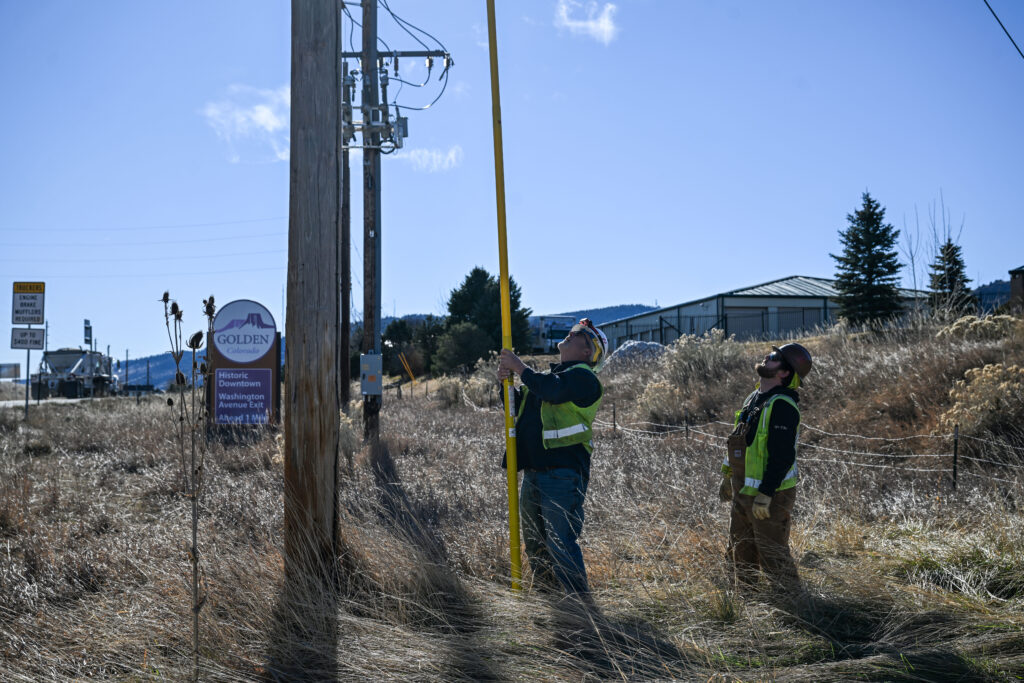
When residents spoke at last week’s meeting of the Colorado Public Utilities Commission, which regulates the state’s utility companies, they gave them an earful about Xcel Energy’s “Public Safety Power Shutoffs” in December. The utility giant — a state-regulated monopoly...

The Gazette Editorial Board
Reporter

EDITORIAL: A scar heals above the Springs
The Gazette Editorial Board
thegazette-editorial-board@gazette.com
Updated 14 hours ago
A Gazette report last month summarized the legacy of the Pikeview Quarry on the city’s northwest side with one simple yet accurate word: complicated. For decades, the “Scar Wars” that were fought over the quarry had cast a shadow over...
The Gazette Editorial Board
Reporter

Aurora needs adults, not symbolism | Michael Hancock
Michael Hancock
michael-hancock@gazette.com
Updated 21 hours ago
Aurora is not short on real problems. We have a public-safety imperative: keep crime trending down and keep it down. We have a humanitarian imperative: move the homeless off sidewalks and into services that restore people to stability, treatment and...

Michael Hancock
Reporter
Denver area events for Feb. 5
Carlotta Olson
carlotta-olson@denvergazette.com
Updated 18 hours ago
If you have an event taking place in the Denver area, email information to carlotta.olson@gazette.com at least two weeks in advance. All events are listed in the calendar on space availability. Thursday Vinicius Cantuária & Chico Pinheiro Duo — 6:30 and 9...

Carlotta Olson
Reporter

Josh Manson hitting high marks offensively for Avalanche heading into Olympic Break
Evan Rawal
evan-rawal@denvergazette.com
Updated 9 hours ago
The Colorado Avalanche encourage all their defensemen to get involved offensively throughout the game. Josh Manson is taking advantage of it. The veteran defenseman scored the game-winning goal in Wednesday’s 4-2 win at Ball Arena, blasting a shot from the...

Evan Rawal
Reporter
Nuggets vs. Knicks | More Nikola Jokic history not enough for Denver
Vinny Benedetto
vinny-benedetto@denvergazette.com
Updated 11 hours ago
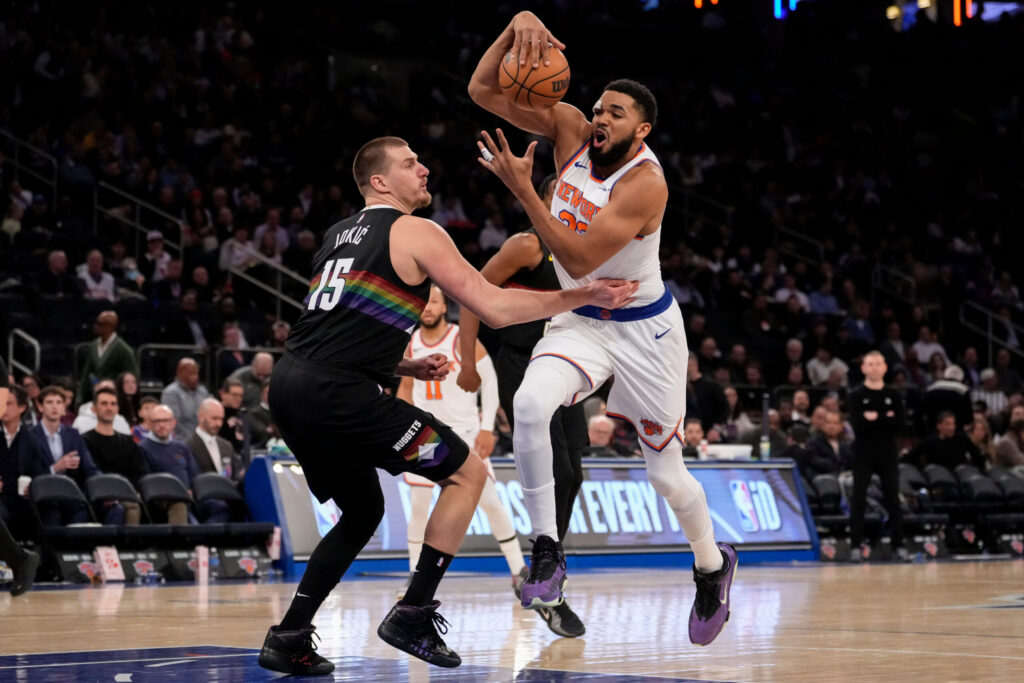
A couple of extra periods allowed Nikola Jokic to make a little more NBA history Wednesday, but it wasn’t enough to prevent the Nuggets’ first three-game losing streak of the season. Jokic recorded the 181st triple-double of his career and...

Vinny Benedetto
Reporter
Olympics broadcast schedule: Thursday/Friday
Brent Briggeman
brent-briggeman@denvergazette.com
Updated 13 hours ago
Events streamed through Peacock unless a network is noted Thursday 2:05 a.m. – Curling (Norway v. United States, Sweden vs. Chechia, Great Britain vs. Estonia, South Korea vs. Italy, 3:30 a.m. – Alpine skiing (men’s downhill: training) 4:10 a.m. –...

Brent Briggeman
Reporter
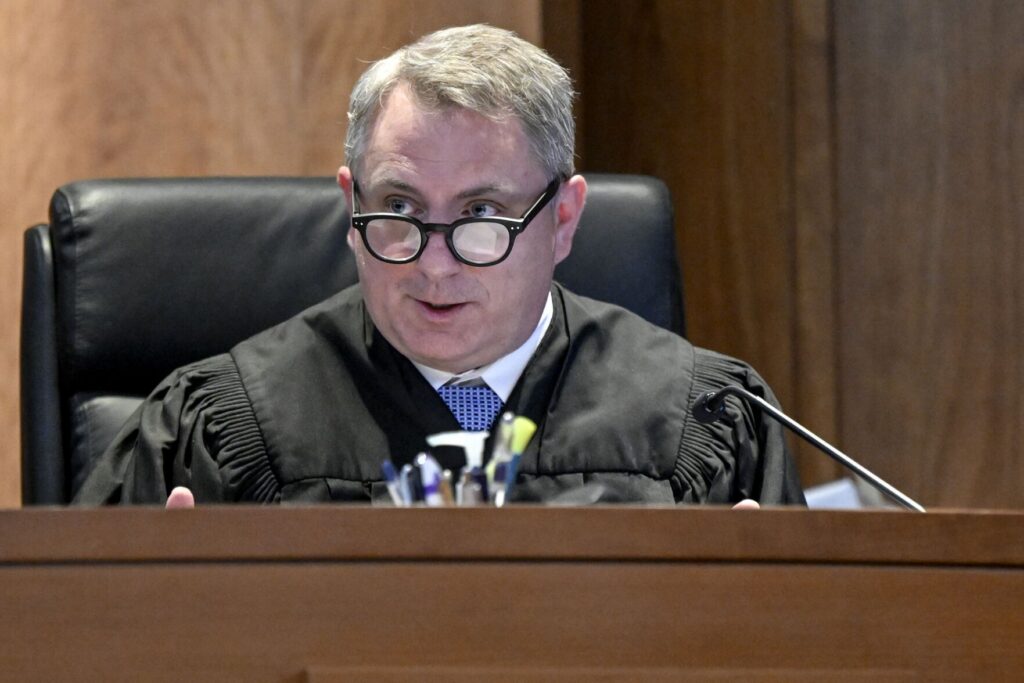
Christopher Zenisek, trial judge experienced with high-profile cases | SUPREME COURT FINALISTS
Michael Karlik
michael-karlik@denvergazette.com
Updated 13 hours ago
After the Marshall fire burned through Boulder County in the final days of 2021 and wound up destroying more than 1,000 homes, the sprawling 4,000-plaintiff litigation was assigned to District Court Judge Christopher Zenisek of Jefferson County. Zenisek would go...
Michael Karlik
Reporter