







Bird Call: American kestrels on decline, nest boxes needed in Colorado to help grow population
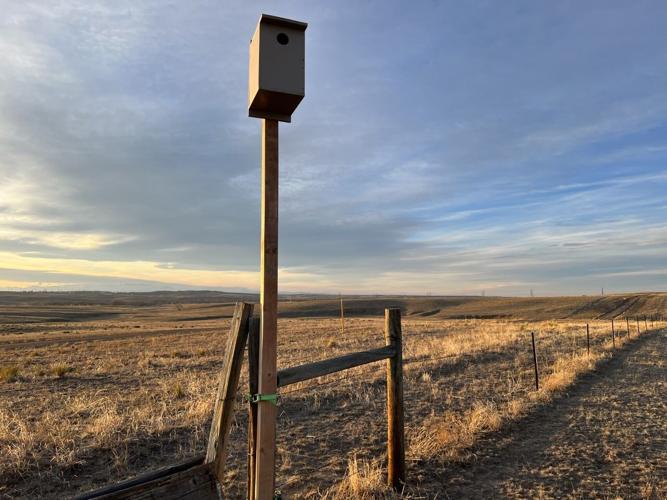
American kestrels need about 2 miles of open fields and ditches to hunt.
Courtesy photos
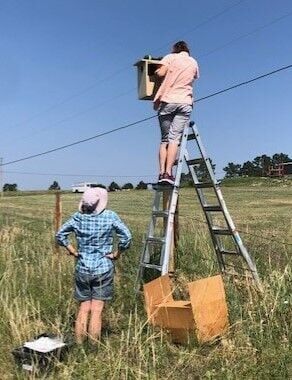
Our American kestrels need more nests.
The numbers of North America’s smallest falcon have been in freefall since the 1960s and are now down by half due to loss of habitat, predation by Cooper’s hawks and other larger hawks, car strikes and eating poisoned prey, such as mice who’ve ingested d-CON pellets.
“With a population like this, that’s wildly declining, we have concerns about longevity of the species,” said Jennifer Redmond, a volunteer for the Estes Park nonprofit Colorado Avian Research and Rehabilitation Institute. “It’s important to be proactive instead of waiting until the species is endangered.”
Bird Call: A great horned owl love affair
Not sure you’ve ever seen a kestrel in the wild? You probably have.
“They win the hearts of the public because they’re colorful, striking and charismatic,” said Redmond, who lives in Parker. “They’ll perch on telephone wires and bob their tail. They’re about the size of a robin or jay. Many think they’re a songbird.”


An American kestrel nestling.


Jennifer Redmond holds an American kestrel.
Kestrels, which eat insects, small mice and snakes and voles, are vital to the natural world. Having predators in the food chain helps increase biodiversity and contributes to the health of an ecosystem. Studies have found kestrels living next to agricultural land are a boon due to their voracious appetite for the aforementioned pests, which can wreck a crop. And farmers can rely on the diminutive falcons instead of chemicals to keep vermin at bay. But if there are no predators, like the kestrels, those pest populations will increase and upset the ecosystem’s balance, which could create problems for farmers and the food supply. We all lose if kestrels are extinguished.
To improve the bird’s numbers, CARRI has placed nest boxes throughout the Front Range for years. There are now 100 boxes from the Wyoming border south to Pueblo, though there’s a significant gap in boxes from Colorado Springs southward. Pueblo only has one.
The lack is due to not having enough participants in the community science project, says Redmond, who recently received an Aiken Audubon Foothills and Prairie Grant. She’ll use the funds to continue placing those boxes throughout the Pikes Peak region, along with gathering data and engaging with the community about the bird.
Kestrels are cavity nesters. They don’t build nests but will find abandoned woodpecker holes and lay their eggs.
“I’m partial to boxes because they’re made in a way that is predator resistant, with the depth of the box and overhang,” Redmond said.
Bird Call: To rescue or not to rescue a baby bird
“So raccoons are not able to get in and reach the young. They’re built in a way that allows easy access and safety for birds.”
If people are interested, CARRI will place nest boxes on their property, though they’re not intended for regular backyards, unless the home backs up to an open space. Kestrels need a 2-mile range to hunt and preferably over open fields and ditches.
The boxes are important for two reasons. The loss of habitat means the birds need a safe place to raise their young. And having the boxes allows CARRI to help with research. Each one has a door on the side so workers can reach in and pull nestlings out for banding, which means putting a metal ID on one leg. It doesn’t disturb the birds and it doesn’t cause a parent to abandon the nest due to the lingering smell of a human, Redmond says.
The bands help researchers follow the birds. They can learn if the birds nest in another monitored box or, if someone gets a good enough photo of a banded bird in the wild, they can identify the bird and note how long it’s lived, how far it’s traveled, and how loyal they are to their nest site and mate, as kestrels tend to keep the same mate. That data is used by the Peregrine Fund’s American Kestrel Partnership. It is an international community science project that keeps tabs on how many eggs kestrels lay, if they successfully hatch and if the birds fledge.
“This is all information to solve the mystery of why numbers are declining,” Redmond said. “It’s a research project and conservation project at the same time.”
Contact the writer: 636-0270
Contact the writer: 636-0270

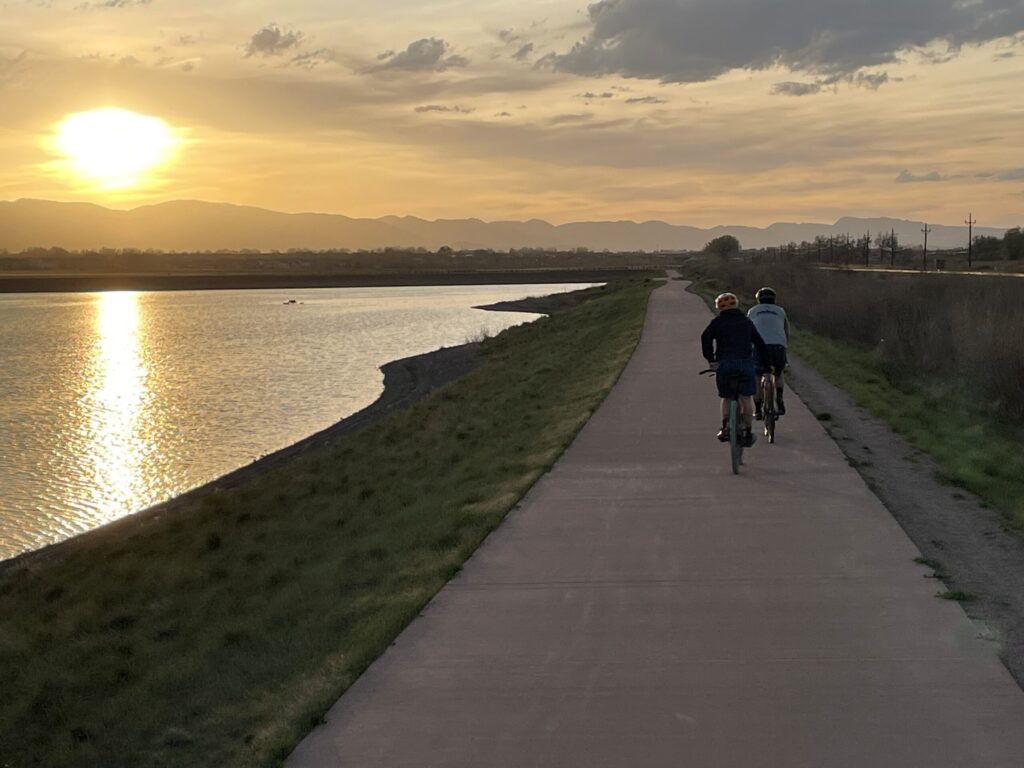
‘A major accomplishment’: Poudre River Trail nears completion, touring 45 miles in northern Colorado
Seth Boster
seth-boster@denvergazette.com
Updated 2 hours ago
In northern Colorado, around a leafy preserve fed by the Poudre River and old farmland left between ever-growing neighborhoods, crews have been building a trail that will stretch about a mile. Only about a mile ー fairly small in one...

Seth Boster
Reporter

Why two widows who loved the same man married each other
John Moore
john.moore@denvergazette.com
Updated 1 hour ago
The marriage of Wendy Ishii and Bo Dimon is the story of creative conflict resolution, forgiveness and financial pragmatism LAPORTE – When Bo Dimon learned that Wendy Ishii keeps a voodoo doll of her on her fireplace mantle – and she...

John Moore
Reporter

Rockmount — maker of Western wear for rock stars and truckers — turns 80 this year
Bernadette Berdychowski
bernadette.berdychowski@denvergazette.com
Updated 1 day ago
While most clothing labels follow the latest trends or aim to make new ones, Rockmount Ranch Wear is content with the Western style it fashioned nearly 80 years ago. Its Lower Downtown shop — showcasing the Western wear it spread...

Bernadette Berdychowski
Reporter

This winter, treat yourself to theater with music, mirth or meat on its bones
John Moore
john.moore@denvergazette.com
Updated 4 days ago
The top 2026 trend in local theater: Companies are moving their plays from city to city staged for your enjoyment and convenience There is an embarrassment of riches on Colorado theater stages this winter. And, to a growing degree, you...
John Moore
Reporter

U.S. overdose deaths fell through most of 2025, federal data reveals
The Associated Press
the-associated-press@denvergazette.com
Updated 5 days ago
NEW YORK — U.S. overdose deaths fell through most of last year, suggesting a lasting improvement in an epidemic that had been worsening for decades. Federal data released Wednesday showed that overdose deaths have been falling for more than two...

The Associated Press
Reporter
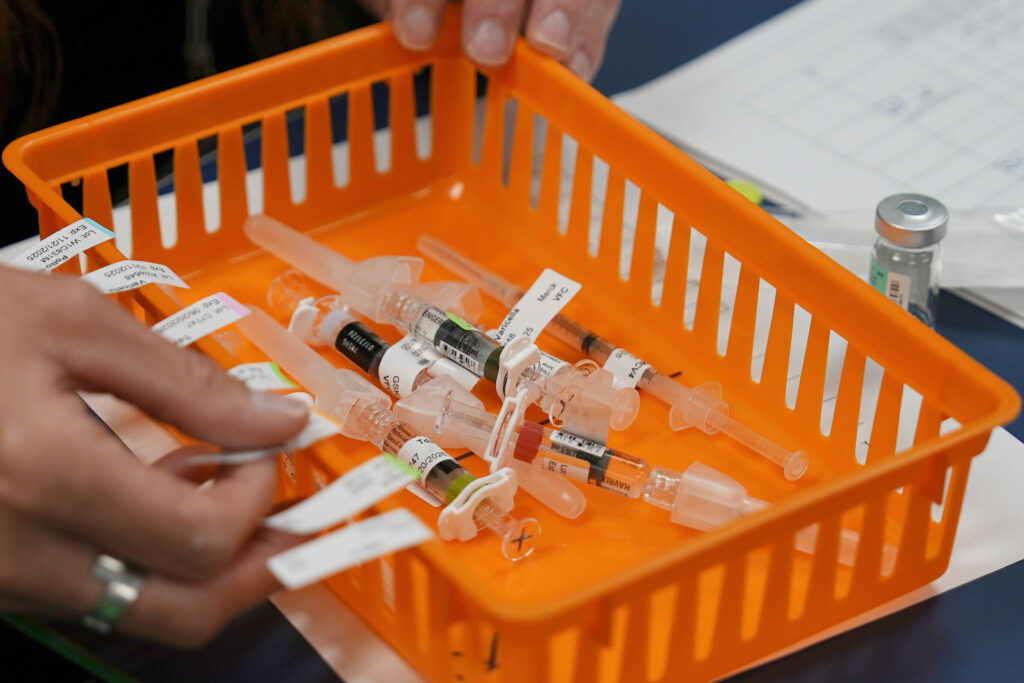
Doctors: Changes to U.S. vaccine recommendations are confusing parents
Bob Smith
bob.smith@gazette.com
Updated 6 days ago
Dr. Molly O’Shea has noticed growing skepticism about vaccines at both of her Michigan pediatric offices and says this week’s unprecedented and confusing changes to federal vaccine guidance will only make things worse. One of her offices is in a...

Bob Smith
Reporter
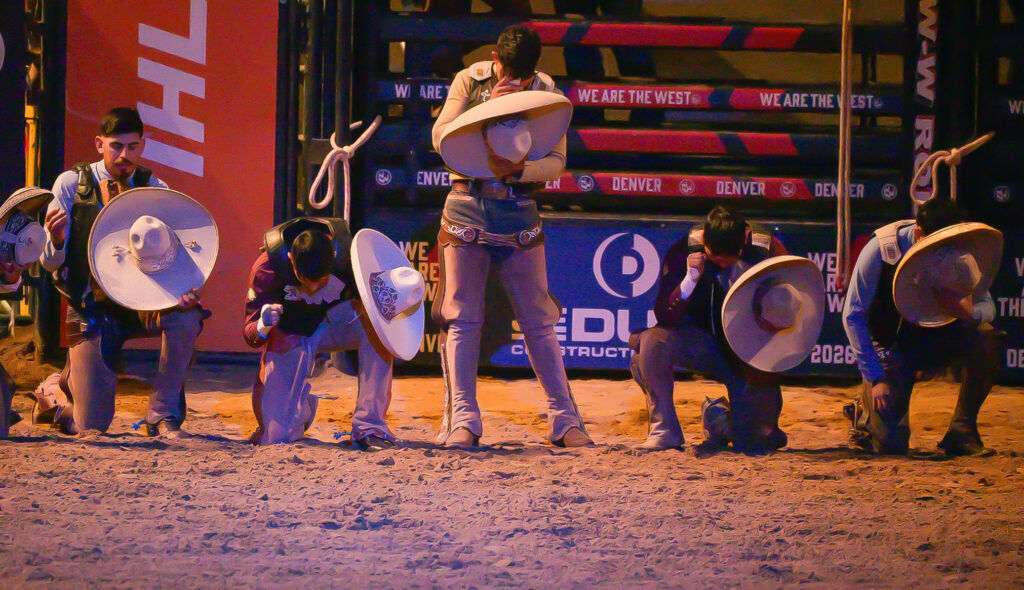
PHOTOS: Mexican Rodeo Extravaganza
Jerilee Bennett
jerilee-bennett@denvergazette.com
Updated 6 days ago

Jerilee Bennett
Reporter

Grateful Dead founding member Bob Weir dies at 78
The Associated Press
the-associated-press@denvergazette.com
Updated 7 days ago
LOS ANGELES — Bob Weir, the guitarist and singer who as an essential member of the Grateful Dead helped found the sound of the San Francisco counterculture of the 1960s and kept it alive through decades of endless tours and...
The Associated Press
Reporter

Snow farming: How some Colorado ski areas combat a dry winter
Seth Boster
seth-boster@denvergazette.com
Updated 7 days ago
When the snow isn’t falling at some Colorado ski areas, the directive is simple. Go find it. “We gotta do what we gotta do,” said Tim Kerrigan, vice president of mountain maintenance at Ski Cooper. And it might sound simple,...
Seth Boster
Reporter

AROUND TOWN: Holiday Debutante Ball has 58-year tradition
Linda Navarro
linda-navarro@denvergazette.com
Updated 2 weeks ago
Ten young women in traditional formal white gowns, long gloves and pearls were presented as the 2025 Colorado Springs Debutantes in a sparkling December ball in Broadmoor International Center. The evening’s floral theme was “Velvet and Vines” and special flowers...

Linda Navarro
Reporter
PREV
PREVIOUS

Changes coming to Colorado's iconic Hanging Lake Trail
Land managers have approved work aimed at “the long-term sustainability” of one of Colorado’s most renowned trails. Sustainability along Hanging Lake Trail garnered heightened concern after the 2020 Grizzly Creek fire, which burned above the popular waterfall and surrounding canyon. Cleared of vegetation, the fire introduced the corridor to flooding and rock and mud slides […]

Year-round gardening: Incorporating yuccas in your Colorado landscape
As global warming causes temperatures to rise and water supplies dwindle, many people are turning to water-wise plants for their gardens. Yuccas can contribute to a beautiful and usable landscape that adds value to your home in our semiarid climate. Coming in several shapes and sizes, yuccas are interesting and attractive when used in landscapes. […]