







Jury hears about Aurora police’s medical emergency training in trial over Elijah McClain’s death

AP/file photo
Aurora police officers can’t diagnose anyone’s medical condition, but they’re expected to call paramedics if they believe there’s any chance a person they’ve made contact with is having a medical emergency, according to a trainer in the department.
The jury for two Aurora officers on trial for Elijah McClain’s 2019 death heard from Sgt. Kevin Smyth, the Aurora Police Department’s training supervisor. He did not give any opinions about the actions of the officers on trial, but testified Thursday about training officers receive for when medical emergencies arise.
“When in doubt, call them out,” Smyth said.
'A mammoth caught in La Brea': Judge asks for more efficiency in Elijah McClain trial
He said officers go through training for recognizing signs of someone in respiratory distress or respiratory arrest, which they have to complete both as new officers and on an ongoing basis. One slide, showed by prosecutors from a training presentation, said respiratory distress or arrest is a medical emergency.
If someone shows signs of those conditions, that means officers should call paramedics and provide first aid as needed, Smyth said. He added the person making any complaint about breathing should be taken seriously and treated as a possible sign they are suffering from respiratory failure.
And the notion that if a person can talk, that means they can breathe is a “myth,” Smyth said.
“It can actually create a (circumstance) where an officer is blind to certain situations if they believe this is true.”
Randy Roedema and Jason Rosenblatt each face charges of assault, manslaughter and criminally negligent homicide for McClain’s death. The case accuses them of stopping him the night of Aug. 24, 2019 as McClain walked home from a convenience store, taking him to the ground and putting him in a type of neck hold meant to temporarily restrict blood flow to a person’s brain.
A paramedic called to the scene injected McClain with 500 milligrams of the sedative ketamine. Shortly after, he went into cardiac arrest and stopped breathing. He died in a hospital a few days later after being declared brain dead.
McClain, a Black man, was 23 at the time.
Roedema and Rosenblatt are accused of ignoring McClain’s pleas that he could not breathe while pinned on the ground. A previous witness called by the attorney general’s office, pulmonary physician David Beuther, said he believes McClain’s struggle with officers caused him to labor increasingly to breathe, deteriorating over the course of the encounter as he struggled to get enough oxygen and inhaled his own vomit.
Doctor declines to assign fault for Elijah McClain's death
On cross-examination, the officers’ attorneys asked Smyth about when responsibility for a person in their custody passes to paramedics. Smyth said officers should communicate as accurate of information as they have about the person’s condition, but when paramedics arrive, they assume responsibility for medical care.
The officers’ defense attorneys have previously argued the ketamine injection alone caused McClain’s death, and that the officers did not have authority over the decision to administer it.
Once paramedics arrive, the officers’ role is to maintain safety of the scene and work with paramedics to facilitate their ability to help the person, Smyth said, such as holding them still or making sure the person doesn’t pose a threat to the paramedics.
“But not to second-guess their medical role?” asked Donald Sisson, one of Roedema’s attorneys.
“Correct,” Smyth said.
Along with Officer Nathan Woodyard, Roedema and Rosenblatt had responded to a 911 call reporting a suspicious person walking down the street. Defense attorneys for the two officers on trial say McClain violently resisted them.
Woodyard also faces charges for McClain’s death and has a trial set for October.
Elijah McClain already at risk of death before ketamine injection, physician says

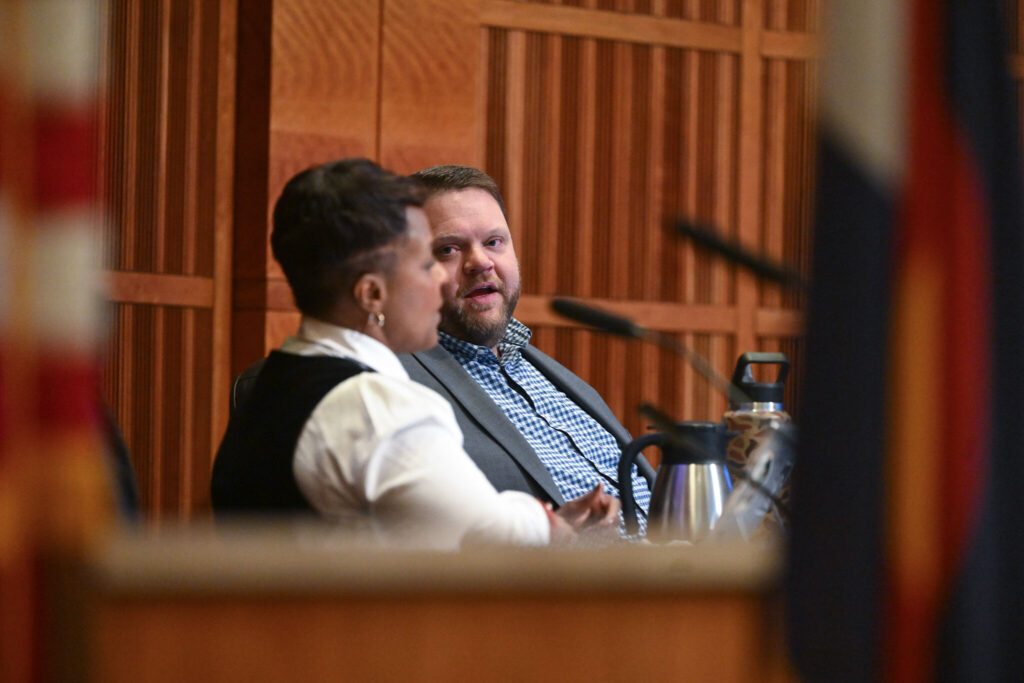
Aurora lawmakers move forward with tobacco license ordinance
Kyla Pearce
kyla-pearce@denvergazette.com
Updated 9 minutes ago
Aurora councilmembers moved forward with a proposed ordinance in Monday night’s study session that would create a license for businesses that sell tobacco, Kratom and psychoactive substances. Councilmember Curtis Gardner was the only member in opposition to the ordinance, expressing...

Kyla Pearce
Reporter

One of Denver’s most prolific painters prepares his retrospective
Colleen Smith
colleen-smith@gazette.com
Updated 3 hours ago
Longtime Arts Students League of Denver teacher to show paintings and 3-D works Robert Gratiot’s Congress Park home, like most residences in the historic central Denver neighborhood, stands as a charming, one-of-a-kind brick house. Yet beyond the arched, wooden front...

Colleen Smith
Reporter
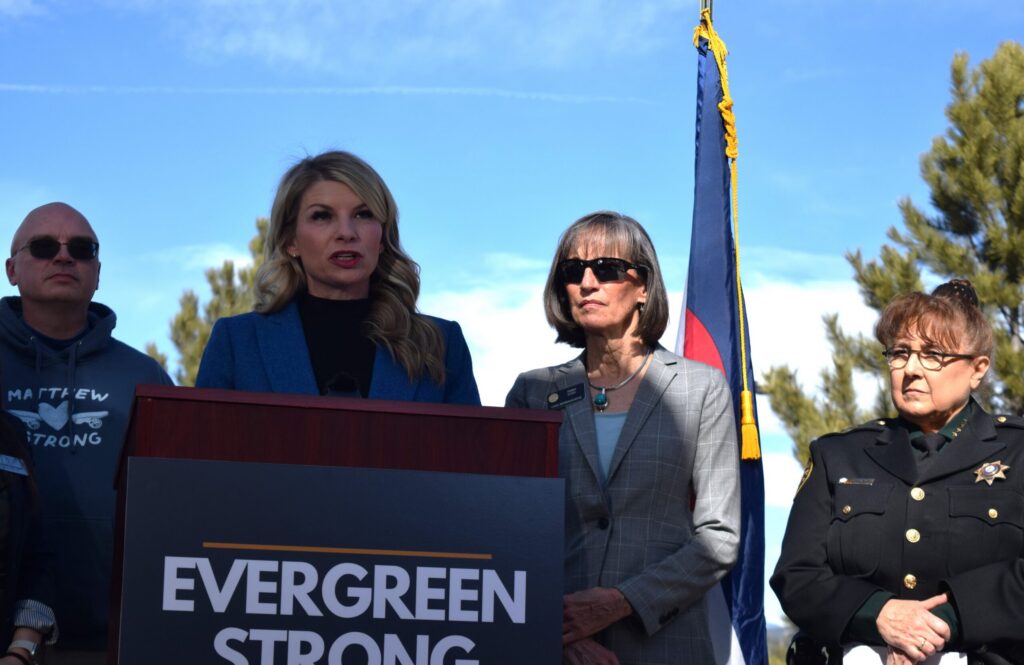
Colorado lawmakers seek faster warrant response from social media firms
Sage Kelley
sage.kelley@denvergazette.com
Updated 36 minutes ago
Proponents argue legislation would prevent school shootings Colorado officials on Monday claimed that the Evergreen High School shooting could have been prevented if social media companies had been required to respond faster to warrants — and they are pushing legislation...

Sage Kelley
Reporter

Lindsey Vonn says she has complex tibia fracture requiring multiple surgeries after Olympic crash
Pat Graham
pat.graham@associatedpress.com
Updated 25 minutes ago
CORTINA D’AMPEZZO, Italy (AP) — Lindsey Vonn sustained a “complex tibia fracture that is currently stable but will require multiple surgeries to fix properly” after her devastating crash in the Olympic downhill, the skier said in a social media post...

Pat Graham
Reporter
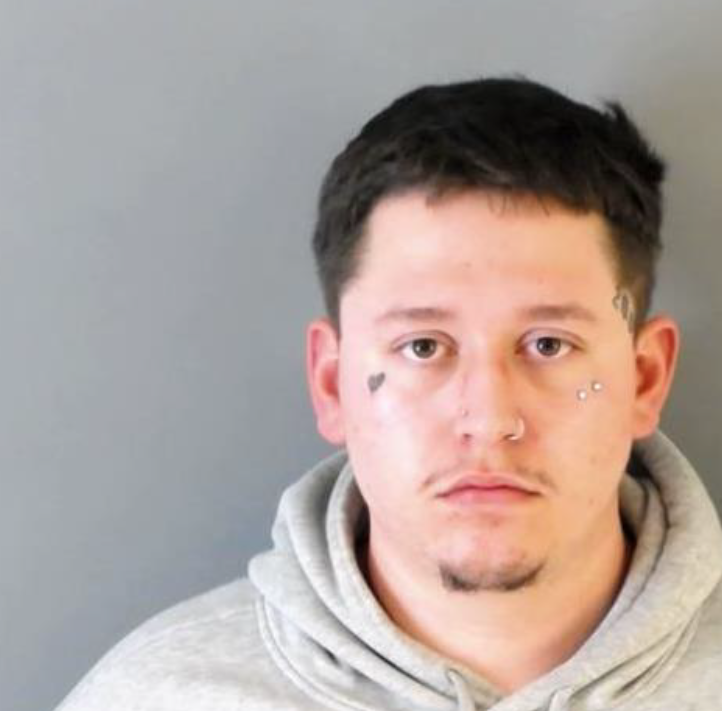
23-year-old arrested in fatal Thornton hit-and-run; GoFundMe identifies 14-year-old victim
Kyla Pearce
kyla-pearce@denvergazette.com
Updated 4 hours ago
Thornton police identified the suspect in Saturday night’s fatal hit-and-run as 23-year-old Jeremy Nobles. Police officials arrested Nobles on Sunday in connection with the incident, which killed 14-year-old boy, a Monday afternoon news release from the Thornton Police Department said....
Kyla Pearce
Reporter

Metro Moves: Glo Noodle House owners to open sushi spot in Boulder
Bernadette Berdychowski
bernadette.berdychowski@denvergazette.com
Updated 5 hours ago
Welcome to the Denver Gazette’s Metro Moves. You’ll get the latest metro Denver openings, closings, hiring and promotion news here. To submit your company’s news, drop an email to bernadette.berdychowski@denvergazette.com. NEW SUSHI SPOT COMING TO DENVER The owners of acclaimed glo...

Bernadette Berdychowski
Reporter
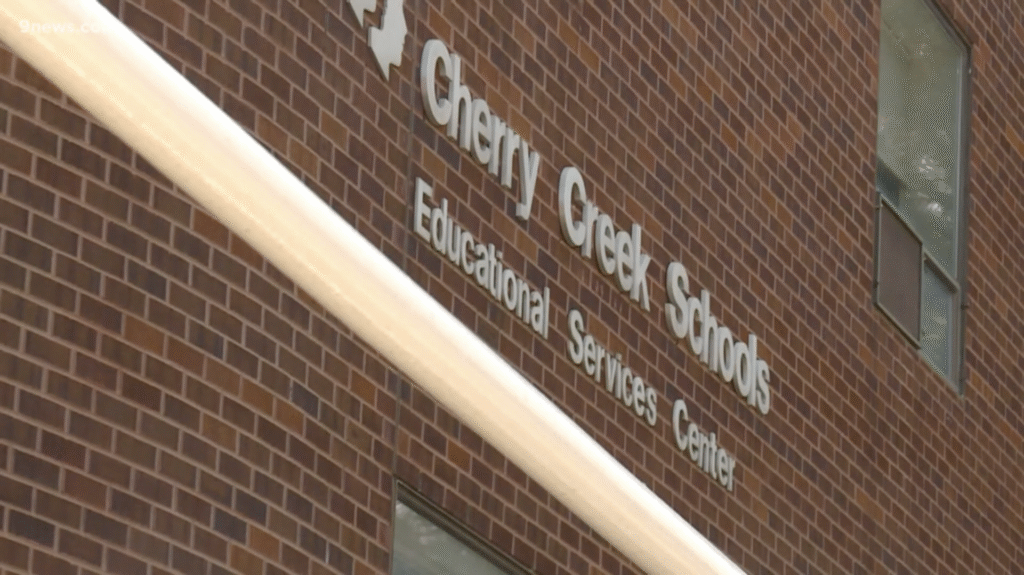
Cherry Creek Assistant Superintendent Tony Poole announces retirement amid district leadership upheaval
Nicole C. Brambila nico.brambila@denvergazette.com
nico.brambila@denvergazette.com
Updated 33 minutes ago
Cherry Creek School District Assistant Superintendent Tony Poole announced his plans to retire at the end of the school year, The Denver Gazette has learned. His announcement comes just two weeks after former Superintendent Chris Smith abruptly resigned amid allegations...


Lindsey Vonn’s choice to race Olympic downhill on injured knee questioned after crash
Pat Graham
pat.graham@associatedpress.com
Updated 8 hours ago
CORTINA D’AMPEZZO, Italy (AP) — The fallout from Lindsey Vonn’s devastating crash in the Olympic downhill included a key question: Given her severely injured left knee, should she have even been allowed on a course that is dangerous even to...
Pat Graham
Reporter

Denver’s Underground Music Showcase returns this summer, but moves
Sage Kelley
sage.kelley@denvergazette.com
Updated 1 hour ago
Despite tearful goodbyes, the Underground Music Showcase won’t miss a beat. The three-day South Broadway music festival will return in the summer of 2026 at a new location — the River North Art District — despite fears last year that...
Sage Kelley
Reporter
Denver weather: Temperature climbs near record high Monday
Daniel Boniface
dan.boniface@denvergazette.com
Updated 13 hours ago
Temperatures are expected to be unseasonably warm with partly sunny skies in Denver on Monday, weather forecasters predict. The National Weather Service in Boulder said the high is expected to reach 70 degrees at Denver International Airport, the city’s official...

Daniel Boniface
Reporter