





Aurora moves forward with navigation campus for the homeless
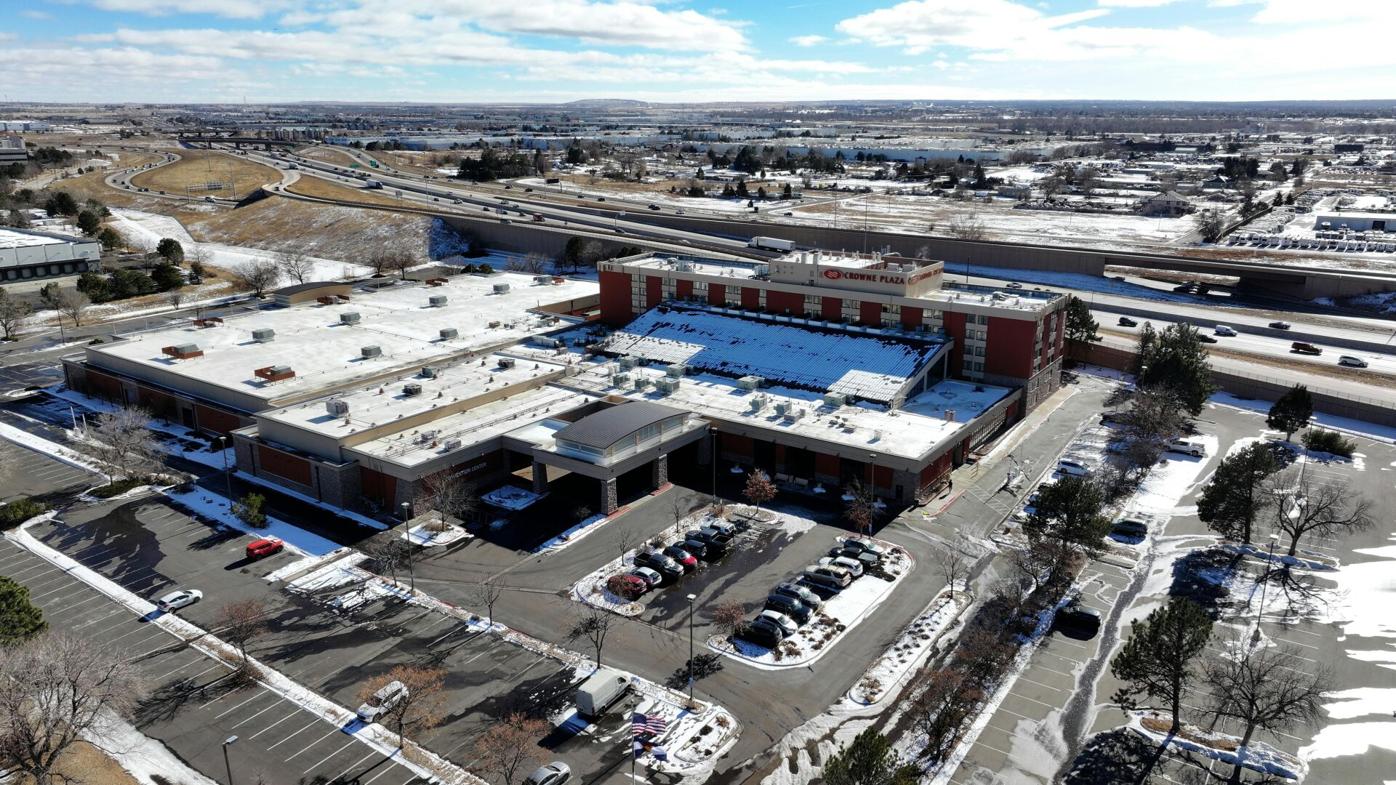
Courtesy of the City of Aurora
Aurora’s councilmembers voted on Monday to move forward with plans for a 13-acre “navigation center” they hope would make a significant dent in the city’s campaign to get people out of homelessness.
Purchased by the city in January, the proposed Aurora Regional Navigation Campus will consolidate services for homeless people in one location once it is established in early 2025, according to city plans.
On Monday, the council appointed councilmembers to oversee the operation — meaning they will be in charge of annual performance audits gauging the center’s success.
Only Councilmembers Rubin Medina and Crystal Murillo voted against the plan. They did not say why.
During the hearing, Councilmember Dustin Zvonek affirmed Aurora’s “work-first approach” to homelessness, a strategy that offers services at levels that depend on how much individuals are willing to work for them.
Mayor Mike Coffman called the strategy “tough love” in a June council meeting, arguing that Aurora measures success by employment and self-sufficiency, rather than how many people are taken off the streets.
The navigation center will offer a variety of services, including transitional housing, employment services, workforce development, emergency shelter, a medical clinic, addiction counseling, mental health services, medical respite beds, housing navigation, case management and meals, according to a news release.
The campus at Crowne Plaza will have three tiers, the first of which will be a “low-barrier” shelter with congregate housing for people who need services but aren’t working with case managers yet.
The second tier will require people to work part time, including jobs in and around the facility, and participation in programs for addiction and mental health recovery and job training. The second tier will have “materially better” living conditions, Coffman said.
People in the third tier will have “even better” living conditions, including a private room.
“The goal is to have a facility where each tier is fully aware of the other in order to encourage work and the participation in programs,” Coffman added.
The shelter is only available for people over 18 and does not accommodate families. Supporters said it is better to have separate shelters for families and individuals, according to the city’s website.
Zvonek stressed the importance of measuring the success of the shelter by self-sufficiency and defined it as “using the lowest level of public subsidies as possible and producing self-support through employment.”
That strategy stands in stark contrast to Denver, which has adopted a “housing first” approach, in which the goal is to get people off the streets and offer them services after, regardless of whether they accept the additional help.
After some debate, the council voted at a meeting in January to move forward with the purchase agreement for the site of the navigation campus.
In total, the city will pay $26.5 million for the property at 15550 E. 40th Ave., based on an appraisal prepared by a third-party firm in November.
Coffman expects the facility to be operational in early 2025.
The city has collected almost $40 million in funds for the project so far, with funding coming from the Colorado Department of Local Affairs (DOLA), Aurora American Rescue Plan (ARPA), Aurora Housing and Urban Development (HUD), Adams County ARPA, Adams County HUD, Arapahoe County ARPA, Douglas County ARPA, and Community Development Block Grant COVID funds.
Councilmember Francoise Bergan said that, while she has struggled with the idea of the navigation campus because it will cost a lot of money, she has decided to support it.
The campus is a “good solution” to help homeless people get the help they need and eventually transition into work and permanent housing, she said in the January meeting.
Councilmember Curtis Gardner expressed concern in previous meetings about whether the campus would be the best use of taxpayer dollars, saying spending on homelessness in the Denver metro area has increased and so has the number of homeless people.
He noted that Denver and “other cities” haven’t seen a decrease in homelessness, and intimated that Aurora’s approach is similar.
Zvonek called Denver’s housing-first approach an “abject failure,” saying Aurora’s future navigation campus is completely different.
“This isn’t money going just toward housing homeless,” Zvonek said. “Denver’s going around buying a bunch of hotels and people view that as we’re doing the same thing. It’s not. We have a different system, a different model and an entirely different plan for this campus.”

Large weekend storm drops 33″ of snow at one Colorado spot, snowpack doubles over 7 day stretch
Jonathan Ingraham
jonathan.ingraham@denvergazette.com
Updated 4 minutes ago
The first big snow storm of winter 2025-26 for Colorado dropped about 10-20 inches in the northern mountains, 8-14 inches in the central mountains and 3-8 inches in the southern mountains. Colorado’s snowpack doubled in both median average and snow...

Jonathan Ingraham
Reporter

Denver weather: More melting on Monday as temperatures climb
Jonathan Ingraham
jonathan.ingraham@denvergazette.com
Updated 11 minutes ago
Melting snow will continue Monday across metro Denver as the sun is forecast to come out in full as temperatures push into the 50s today. Denverites can expect sunny skies, with a high near 53 today, according to the National...
Jonathan Ingraham
Reporter

EDITORIAL: Another sign wolf reintroduction needs to halt
The Gazette Editorial Board
thegazette-editorial-board@gazette.com
Updated 3 days ago
Five years after Coloradans voted by a razor-thin margin to reintroduce wolves to Colorado, they are right to look at the job state officials and agencies have done and ponder whether this a dog that just doesn’t hunt. Amid criticism...

The Gazette Editorial Board
Reporter

Ag industry can’t surrender the keys to the Kingdom
Rachel Gabel
rachel-gabel@denvergazette.com
Updated 3 days ago
Animal agriculture, ranching, hunting, and farming are not dying ways of life. The cowboy is not about to ride off into the sunset and certain extinction. Beef is not going to be replaced by cultured meat, any variety of bugs,...

Rachel Gabel
Reporter

Denver Broncos ready to ‘test our stuff’ as schedule toughens after 10th straight win
Chris Tomasson
chris.tomasson@gazette.com
Updated 6 hours ago
LAS VEGAS – During their 10-game winning streak, the Broncos have fattened up against some losing foes. The schedule, though, is about to change. The Broncos (11-2) next Sunday will face Green Bay (9-3-1) at home in a battle of...

Chris Tomasson
Reporter

Broncos’ Harvey steals spotlight from first-round pick Jeanty in Week 14 win
Kyle Fredrickson
kyle-fredrickson@denvergazette.com
Updated 9 hours ago
LAS VEGAS — RJ Harvey stole the show from Ashton Jeanty. The Broncos defeated the Raiders, 24-17, on Sunday at Allegiant Stadium in a clash of rookie running backs. Las Vegas selected Jeanty at No. 6 overall (first round) out of Boise State. Denver picked Harvey at No....

Kyle Fredrickson
Reporter

Mark Kiszla: How Bo Nix has become the Wayne Newton of NFL QBs, singing all the hits he knows by heart
Mark Kiszla
mark-kiszla@denvergazette.com
Updated 10 hours ago
LAS VEGAS – Paying tribute to Mr. Las Vegas, Broncos quarterback Bo Nix followed the tried-and-true showbiz rule of Wayne Newton. When bringing your act to the bright lights of the Strip, the audience demands you play the greatest hits....

Mark Kiszla
Reporter

Sparked by Marvin Mims’ first career punt return for TD, Broncos roll to 24-17 win over Raiders
Chris Tomasson
chris.tomasson@gazette.com
Updated 10 hours ago
LAS VEGAS – The Broncos are winning big these days, so it was only appropriate Marvin Mims Jr. did the Mile High Salute on Sunday. The wide receiver did so after his 48-yard punt return for a touchdown in the...
Chris Tomasson
Reporter

Nikola Jokic passes Michael Jordan on NBA’s assists list as Nuggets add 10th straight road win | 3 takeaways
Vinny Benedetto
vinny-benedetto@denvergazette.com
Updated 9 hours ago
The Nuggets probably were buzzing on the flight back from Charlotte after extending the franchise-record road winning streak to 10 games. Here are three takeaways from Denver’s 115-106 win over the Hornets on Sunday at Spectrum Center: 1. For a...

Vinny Benedetto
Reporter

Broncos WR Marvin Mims returns punt for ‘clutch’ touchdown in road win over Raiders
Kyle Fredrickson
kyle-fredrickson@denvergazette.com
Updated 9 hours ago
LAS VEGAS — A buzz started growing on the Broncos’ sideline when Marvin Mims dropped back to return a punt against the Raiders. “We talked about it: Marvin is going to break through and score him a touchdown,” cornerback Patrick...
Kyle Fredrickson
Reporter