







CU Boulder launches Space Policy Center to help tackle industry challenges

The Ann & H.J. Smead Department of Aerospace Engineering Sciences building.
Courtesy of CU Boulder and David Lauer Photography


The University of Colorado Boulder established a new center to address the policy challenges of the rapidly expanding space industry.
The Colorado Space Policy Center, announced at the end of June, will serve as a hub for research and public policy conversations for local, national and perhaps international stakeholders.
CU Boulder already has notable aerospace engineering, public policy and international law programs — but the center aims to help unify multiple disciplines to approach issues facing legislators from a more well-rounded viewpoint.
Alongside the new center, a professorship in space policy and law will rotate every two years between the College of Engineering and Applied Science, the Leeds Schools of Business and Silicon Flatirons, a research center at the University of Colorado Law School.
CU Boulder donors Dale and Patricia Hatfield are funding the endeavor with $2.5 million to establish the Hatfield Endowed Professorship in Space Policy & Law.
Aerospace Engineering Sciences Professor Marcus Holzinger spent the last few years of his career working on space debris policy and is the first to take up the professorship.
“Most of the Space Policy centers are across the nation, and frankly, also internationally, are run by people who are experts in policy, which is necessary,” Holzinger said. “Our position is that we can add to the conversation by making sure that these discussions are, I’ll say, physics aware.”
With rapid expansion in the commercial space industry, new center Director Professor Daniel Baker said space is involved in our everyday lives more than most people even realize.
“Dr. Burns and I have been thinking for at least a decade that we needed to have a place, a safe place for people to come and talk about the issues and to find solutions to the vexing challenges that are confronting the space program,” he said.
One of the most pressing issues on Baker’s mind is the lack of regulation in Low Earth Orbit.
LEO refers to the area of space where satellites orbit relatively close to Earth, and are considered near enough for convenient transportation.
“Soon there will be tens of thousands of spacecrafts that are launched not only by U.S. companies, but by other companies abroad for a point-to-point communication,” said Baker.
Jack Burns, a professor of astrophysics in the department of Astrophysical and Planetary Sciences — and a close colleague of Baker — shares the concern.
“Looking at the regulatory environment for space is important. And frankly, right now, it’s kind of the wild west as far as space law is concerned,” he said.
The hope is that the center will serve as a place for informed conversations about how policy can keep up with the advancing technological landscape; and that CU can share the expertise it has gained with those making important decisions.
According to the Colorado Space Coalition, the state ranks first in the nation for per-capita private aerospace workers. Professors said it only makes sense that the university takes on the role of a hub for addressing current gaps in the legal space.
Holzinger’s new professorship will allow him to travel to policy talks around the country and internationally, in an aim to contribute towards the impact of those decisions.
“It’s increasingly clear that there was a demand on the part of our students as well as with industry and our federal delegation in Washington for more inputs and more help on space policy issues,” Burns said.
The center will also give students from many disciplines a chance to be a part of its work, from engineering to law and even perhaps the humanities.
Burns said the center is looking at having a certificate of space policy that students could earn, and eventually perhaps more advanced degrees.
Although the center may not be able to solve every problem facing the rapidly expanding industry, Baker said he hopes some of their work will lead to wiser decisions.
“We’re rapidly falling behind. I think competitors in the world like China, because we’re not making wise enough investments, wise enough choices, politically and economically,” he said. “We want to elevate the understanding amongst policymakers, so that we do the right thing, and that we may remain the world’s leading space Nation.”


Cherry Creek interim superintendent pushes for restructuring during board session
Michael Braithwaite
michael.braithwaite@gazette.com
Updated 3 days ago
The newly-appointed interim superintendent of the Cherry Creek School District is pushing for an organizational restructuring to limit conflicts of interest, including some that previously took place under her watch as deputy superintendent. Jennifer Perry, who was formally introduced as...

Michael Braithwaite
Reporter
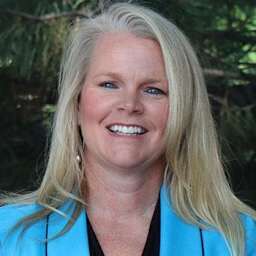
Wife of former Cherry Creek superintendent placed on paid administrative leave
Nicole C. Brambila nico.brambila@denvergazette.com
nico.brambila@denvergazette.com
Updated 5 days ago
Less than a week after Cherry Creek Schools Superintendent Chris Smith abruptly resigned following allegations of a toxic work environment, his wife, Brenda Smith, has been placed on paid, administrative leave, officials confirmed Tuesday. Brenda Smith is the district’s chief...


Jeffco counselor pleads guilty on sexual assault charge
Sage Kelley
sage.kelley@denvergazette.com
Updated 7 days ago
A Jeffco Public Schools counselor pleaded guilty to a sexual assault charge Monday morning following a multitude of delays. Chloe Castro — standing next to her defense attorney, Marshall Breit — pleaded guilty to one count of sexual assault on...

Sage Kelley
Reporter
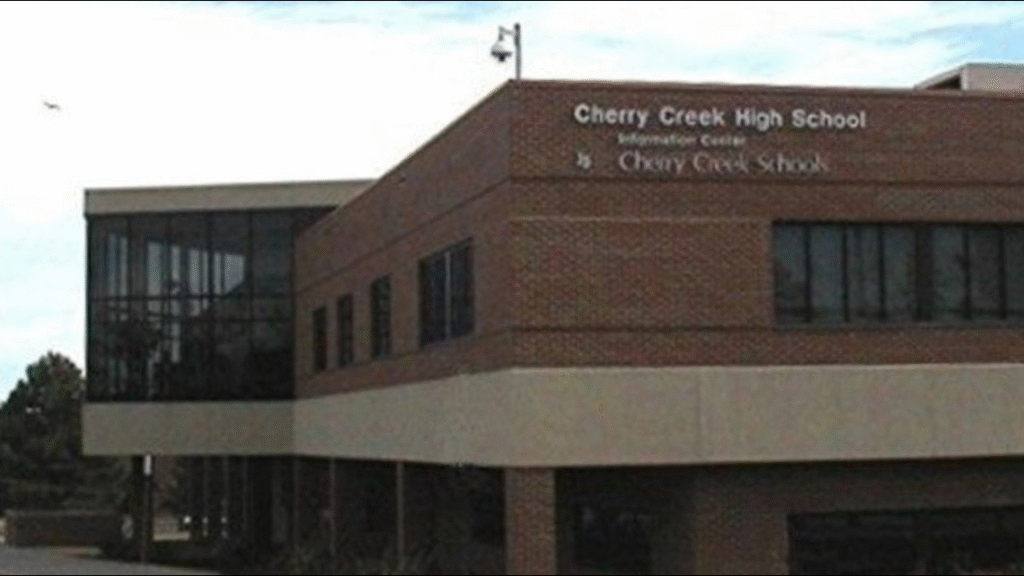
Cherry Creek school board was warned four years ago that superintendent’s marriage could be a problem
DAVID MIGOYA david.migoya@gazette.com
david.migoya@gazette.com
Updated 6 days ago
The former president of the Cherry Creek School Board warned the panel nearly four years ago – prompted by Denver Gazette stories detailing allegations of a toxic and misogynistic work environment within the district – that employee grievances might not...


Colorado School of Mines wants to prove a masters isn’t needed to work in quantum
Bernadette Berdychowski
bernadette.berdychowski@denvergazette.com
Updated 1 week ago
A new program at the Colorado School of Mines aims to fix a major misconception in the budding quantum industry: that a master’s or doctorate degree is required to secure a job in the field. It doesn’t help when nearly...

Bernadette Berdychowski
Reporter

Several Denver-area school districts cancel classes Friday amid national shutdown
Michael Braithwaite
michael.braithwaite@gazette.com
Updated 1 week ago
The protest is in response to ICE operations Several Denver-area school districts canceled classes on Friday due to staff shortages amid a shutdown campaign nationwide. The shutdown, held across the country on Friday, came about in response to recent U.S....
Michael Braithwaite
Reporter
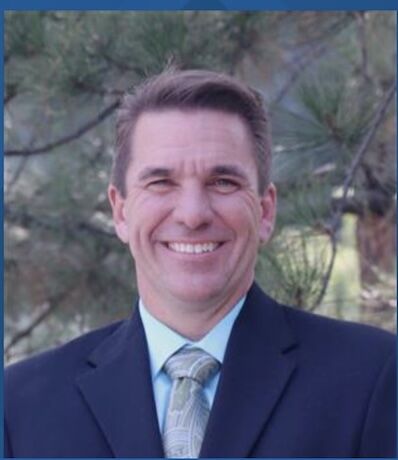
Conflict-of-interest safeguards at Cherry Creek Schools lacked clear oversight, memo shows
Nicole C. Brambila nico.brambila@denvergazette.com
nico.brambila@denvergazette.com
Updated 1 week ago
To avoid a conflict of interest, the wife of Cherry Creek Schools Superintendent Chris Smith — who resigned this week amid allegations of a toxic work environment — was supposed to report to Deputy Superintendent Jennifer Perry. In the wake...
Cherry Creek Schools superintendent resigns after allegations of toxic workplace
Nicole C. Brambila nico.brambila@denvergazette.com
nico.brambila@denvergazette.com
Updated 2 weeks ago
Cherry Creek Schools Superintendent Chris Smith resigned abruptly during an executive session Tuesday, school officials confirmed, after allegations of a toxic work environment surfaced earlier this month. “We’ve had some tremendous achievements under Chris’ leadership including Traverse, the first of...

CU system set to expand collective bargaining rights
Eric Young
eric-young@denvergazette.com
Updated 2 weeks ago
Following recent rallying and advocacy, workers across the University of Colorado system are one step closer to greater collective bargaining. CU Regent Elliott Hood announced a plan to introduce a policy expanding collective bargaining rights for faculty, university staff and...

Eric Young
Reporter

Federal judge recommends dismissing trans athletics lawsuit by area school districts
Eric Young
eric-young@denvergazette.com
Updated 3 weeks ago
A judge has recommended dismissing a federal lawsuit filed by multiple school districts against the Colorado Attorney General’s and Civil Rights Offices over their policies dictating students’ participation in athletics and activities based on their biological sex rather than gender...
Eric Young
Reporter
PREV
PREVIOUS

Drones to stop school shootings? One Texas company believes the technology is here
Facebook Twitter WhatsApp SMS Email Print Copy article link Save Regis Jesuit High School hosted a demonstration of new drone technology in Colorado, meant to stop school shootings before there’s mass victims. Campus Guardian Angel, a drone startup company based in Austin, Texas, designs on-site technology, partnering with local law enforcement to confront and disarm […]
Homeschooling grows in Colorado as worries over safety, drugs, bullying overtake religious motives
Facebook Twitter WhatsApp SMS Email Print Copy article link Save Homeschooling is on the rise in Colorado, with enrollment growing 51% over the past decade — far outpacing traditional public schools. While homeschooling once primarily appealed to families looking for curriculum aligned with their religious beliefs, today’s parents are more likely to cite concerns about […]