







Colorado eyes shift in particulate oversight amid EV push
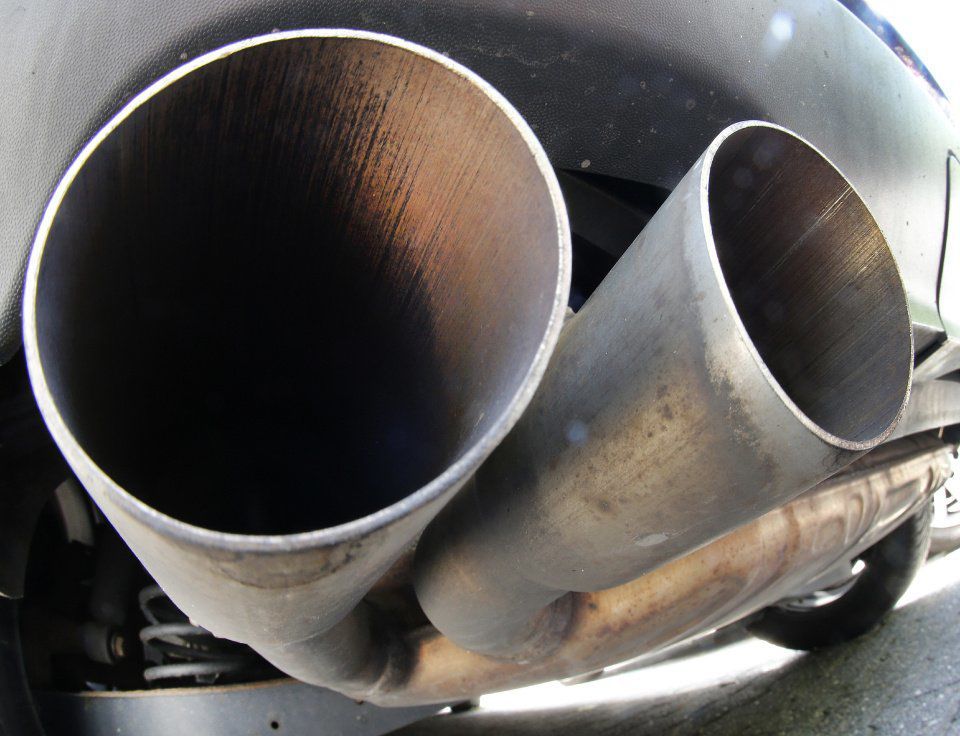
Colorado’s Air Pollution Control Division proposed shifting oversight of solid particulates as small as one-seventh the width of a human hair from federal to state-only authority on Dec. 19, citing more than 20 years of compliance with national standards.
The proposal seeks to repeal EPA-approved particulate controls in seven areas once out of compliance with Clean Air Act standards: Aspen, Cañon City, Denver metro, Lamar, Pagosa Springs, Steamboat Springs and Telluride.
The proposed rule would remove federal oversight on particulate emissions, including stoves, sanding and vehicle emissions, making them state-only. It shifts control to a state authority, allowing revisions without federal approval under the Clean Air Act, which permits states to adopt stricter standards.
States retain the right to enforce standards or limitations on emissions of air pollutants stricter than federal standards, according to the act.
The Air Quality Control Commission adopted these plans in the 2000s as part of federally-approved State Implementation Plans.
The division called the changes an administrative action with no impact on particulate levels or requirements of individuals or entities.
State law gives the commission authority to make rules to meet Clean Air Act standards, the proposal said.
The proposal aligns with Gov. Jared Polis’ policies advancing stricter vehicle emission standards to reduce criteria pollutants, including PM10 from on-road sources.
Polis signed a compact with California and 13 other states, plus the District of Columbia, in July 2020 to align medium- and heavy-duty vehicle emissions with California’s stricter-than-federal rules.

The Multi-State Medium- and Heavy-Duty Zero Emission Vehicle Memorandum of Understanding commits signatories to strive for 30% zero-emission vehicle sales in that category by 2030, and 100% by 2050.
“The Signatory States agree to strive to make sales of all new medium- and heavy-duty vehicles in our jurisdictions zero-emission vehicles by no later than 2050,” the memorandum said. “In order to ensure adequate progress toward the 2050 goal, the Signatory States will strive to make at least 30 percent of all new medium- and heavy-duty vehicle sales in our jurisdictions zero-emission vehicles by no later than 2030.”
Polis’ 2019 executive order directed the adoption of California’s zero-emission vehicle program, which Colorado implemented to require more electric vehicle sales.
Polis stated a goal of 940,000 electric vehicles on Colorado roads by 2030 in the state’s 2020 Electric Vehicle Plan.
“We applaud the EPA on this new rule that will significantly reduce emissions from trucks and buses nationwide, improving our air quality and public health,” Polis said in a statement on the federal heavy-duty vehicle standards in 2024. “Colorado is proud of our nation-leading work to reduce air pollution and greenhouse gas emissions, which includes a successful transition to zero-emission trucks and buses.”
Environmental groups supporting Polis’ policies describe strict criteria pollutant standards as tools to phase out internal combustion engine vehicles.
“The adoption of the Advanced Clean Cars II (ACCII) regulation means that by 2035, every new car and truck sold in California would be zero-emission,” the Natural Resources Defense Council said in a blog post on California’s standards, which Colorado adopted in modified form.
Industry leaders oppose such standards, arguing they effectively ban internal combustion engines through stringent limits on pollutants like PM10.
“Auto Innovators does not believe (the proposed standards) can be met without substantially increasing the cost of vehicles, reducing consumer choice, and disadvantaging major portions of the United States population and territory,” John Bozzella, CEO of the Alliance for Automotive Innovation, said.
Government documents connect vehicle traffic to particulate pollution from dust kicked up by cars on roads and vehicle emissions.
Federal actions revoked California’s waivers on June 12, 2025, affecting Colorado’s adoption of those standards.
“We officially rescue the U.S. auto industry from destruction by terminating California’s electric vehicle mandate,” President Donald Trump said.
The division scheduled a rulemaking request for Feb. 19.
A public meeting is set from 10 a.m. to noon on Jan. 10.
Contact Rick Coffin at rick.coffin@state.co.us for details.


Metro Moves: Ikea will open store in Fort Collins
Bernadette Berdychowski
bernadette.berdychowski@denvergazette.com
Updated 9 hours ago
Welcome to the Denver Gazette’s Metro Moves. You’ll get the latest metro Denver openings, closings, hiring and promotion news here. To submit your company’s news, drop an email to bernadette.berdychowski@denvergazette.com. Ikea, the Swedish furniture store, is opening a new location in...

Bernadette Berdychowski
Reporter
Palantir moves HQ from Denver to Miami
Bernadette Berdychowski
bernadette.berdychowski@denvergazette.com
Updated 6 hours ago
Palantir Technologies Inc., a large artificial intelligence and software company with many government contracts, including federal immigration forces and the U.S. military, is moving its headquarters out of Denver. “We have moved our headquarters to Miami, Florida,” the company posted...
Bernadette Berdychowski
Reporter
New exhibit tells the story of Leadville’s Irish immigrant community
April Borjon
april.borjon@gazette.com
Updated 18 hours ago
At 10,000 feet, winter doesn’t just arrive; it settles into your bones. Snow swallows rooftops. Oxygen thins. In the mines, darkness is constant; above ground, the cold is merciless. If a cough lingers too long or the sun doesn’t shine...

April Borjon
Reporter

A dream for spring? Colorado gardeners still wait to see if winter comes first
Bernadette Berdychowski
bernadette.berdychowski@denvergazette.com
Updated 2 days ago
Last year, Front Range Gardens began selling cacti and succulents sourced from the Phoenix area and they were a hit. The desert-climate plants sold out, said Scott Jeffries, the owner of the garden center located in Broomfield. And this year,...
Bernadette Berdychowski
Reporter

Greeley-based Alquist emerges as leading 3D construction printing company
Hap Fry, Special to The Gazette
hap-fry@gazette.com
Updated 2 days ago
GREELEY • One might say that Zachary Mannheimer is a bit of a riverboat gambler — a calculated one, though. As founder and chairman of Greeley-based Alquist 3D, Mannheimer didn’t follow the most conventional path into the world of 3D...

Hap Fry, Special to The Gazette
Reporter

Supermarket chain H Mart hopes to revive mineral water bottling in Manitou Springs
Savannah Eller
savannah-eller@denvergazette.com
Updated 4 days ago
A major U.S. grocer has acquired the vestiges of a historic industry in Manitou Springs with the hope of bringing it back to life. H Mart, an Asian supermarket chain based in New Jersey with nearly a hundred locations across...

Savannah Eller
Reporter

Ken Salazar donates archives to Borderlands project, hoping history helps unify country
Vince Bzdek
vince-bzdek@denvergazette.com
Updated 15 hours ago
About the same time the Pilgrims were setting up shop 400 years ago in Plymouth, Ken Salazar’s family was scratching out a toehold in what is now New Mexico, helping to establish the city of Santa Fe. The Salazars had...

Vince Bzdek
Reporter

HF Sinclair gives state regulators preliminary report on contaminated fuel incident
Dennis Huspeni
dennis.huspeni@gazette.com
Updated 4 days ago
HF Sinclair has provided regulators with the state’s Division of Oil and Public Safety a preliminary report on the cause of the Jan. 7 contaminated fuel fiasco that impacted more than 1,000 motorists, but the investigation is still weeks from...

Dennis Huspeni
Reporter
Mountain resorts feel the pinch as brokers pray for snow
Mark Samuelson
mark-samuelson@denvergazette.com
Updated 4 days ago
As Colorado’s mountain resorts headed into the holiday weekend hoping for more white stuff, brokers in those markets were lamenting the effect of a dry winter on real estate sales. “We’ve seen the impact from the lack of snow for...

Mark Samuelson
Reporter

Push to regulate high concession prices in Colorado could hurt vendors, critics warn
Bernadette Berdychowski
bernadette.berdychowski@denvergazette.com
Updated 17 hours ago
High food and drink prices have long been a staple of going to a sports game, concert, festival or the airport. But as inflation has increasingly pinched people’s wallets, pushback against higher concession prices is growing. The issue has reached...
Bernadette Berdychowski
Reporter
PREV
PREVIOUS
Denver's warm winter weather brings out 'fair weather fliers' among record-setting conditions
“We will be dealing with snow in May, so enjoy it now!” Coloradans associate December with snowy conditions, white Christmases, powder skiing, and cold temperatures. But Denver’s December weather this year has been unseasonably warm, with several new record-high temperature days and wind gusts over the last two weeks. Further west in Colorado’s high country, […]

Several changes coming to Colorado family medical leave program in 2026
Colorado’s Family and Medical Leave Insurance program will take on two smaller, but still consequential, changes in 2026 — one less than was expected as recently as the middle of last week — of which employers should be aware. First, a law passed during the 2025 legislative session will double the 12 weeks of potential […]