







Several changes coming to Colorado family medical leave program in 2026
Colorado’s Family and Medical Leave Insurance program will take on two smaller, but still consequential, changes in 2026 — one less than was expected as recently as the middle of last week — of which employers should be aware.

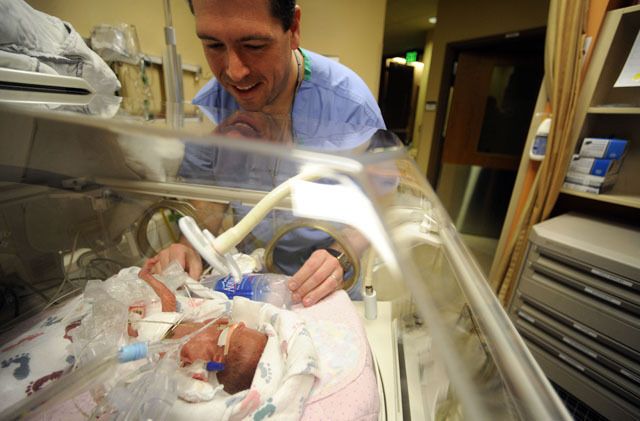
First, a law passed during the 2025 legislative session will double the 12 weeks of potential paid leave that a new parent can take if their child is receiving inpatient care in a neonatal intensive care unit.
Second, the fee that Colorado employers must pay to sustain the program — or can split with their employees — will dip slightly from 0.9% of each worker’s paycheck to 0.88%.
Up until last week, it looked like many employers also would have to start covering their portion of Social Security and FICA/Medicare taxes on certain FAMLI medical-leave benefits because of an Internal Revenue Service rule change. However, the IRS late last week granted Colorado and other states with similar programs a one-year extension to implement the new federal tax withholding and reporting requirements.
WHAT BUSINESSES NEED TO KNOW
The two changes that are going into effect aren’t expected to have huge impacts on employers. The fee decrease will save businesses paying into the insurance program a cumulative $35 million annually, although the change will barely be noticeable in most employees’ paychecks. And the NICU extended-leave allowance is expected to be used by very few new parents in any given year.
However, it’s still important that employers prepare internally for the application of the new extended-leave allowance in particular, said David Gartenberg, Denver office managing shareholder for the Littler law firm.
Employers will need to tweak their employee handbooks to include the new allowance, put up a new FAMLI poster with the updated information and include the rule in paperwork distributed to new employees, he said. And for the smallest companies in particular, they should plan ahead as to how they will deal with the absence of one of their workers not for just 12 weeks but 24 — and an extra four weeks on top of that if the parent has serious health conditions following childbirth.
“Twenty-four weeks is a long time. That’s almost half the year,” Gartenberg said, noting that employers also must reinstate workers in their jobs or in similar positions when they return from leave, as long as they worked there for 180 days before taking leave. “This expansion to FAMLI will, I believe, provide the largest bank of job-protected leave in the country.”
EXPANDED MEDICAL LEAVE FOR NICU STAYS
The expansion comes courtesy of Senate Bill 144, which was cosponsored by Sen. Jeff Bridges, a Greenwood Village Democrat whose son ended up in the NICU dealing with serious health concerns immediately after his birth. Bridges said that he saw firsthand how terrifying the experience could be and didn’t want new parents to have to choose between keeping their jobs or being with their infants.
“It is so important for a child’s development to be with their parents in those first few months of life,” Bridges said in a news release after Gov. Jared Polis signed the bill. “We need to make it easier for parents with kids in the NICU to have access to that quality time.”
The FAMLI program, approved by voters in the 2020 general election, launched fully in 2024. It allows workers to take as much as 12 weeks of partially paid leave to welcome newborns, deal with their own or a family member’s illness, escape domestic violence or care for their family when a military spouse is called for duty outside of the state.
In its first year, the state received 174,000 claims for medical leave, averaging eight weeks, and dispensed $618 million in benefits to workers at the 96% of Colorado companies participating through the state-run program, program director Tracy Marshall said. The other 4% of employers have state-approved private plans to handle the claims.
CHANGE IN FAMLI FEES
Legislative and business-community opponents cautioned as creation of the program was being debated that the estimates for anticipated claims could be low, which could lead the 0.9% fees assessed on each worker to have to rise to as much as 1.2%. Employers can ask workers to pay no more than half of that cost, and companies with fewer than 10 employees do not have to pay the employer’s share of the fees.
And indeed, the number of monthly claimants rose from 9,348 in January 2024 to a high of 31,180 in August 2025 before starting a downward trend, according to state figures. But the average payment dropped from $926 per week in that first month to $495 in June of this year, and the first-year payments still came in below those predicted by actuarial studies, Colorado Department of Labor and Employment Executive Director Joe Barela said.
With that stability, the per-paycheck fees are dropping slightly come Jan. 1, a move that Marshall said reflects the strong economic footing of the fund. Meanwhile, because average weekly wages for employees statewide rose during the fiscal year that ended on June 30, the weekly maximum benefits through the program increased to $1,381.45.
The stability doesn’t mean employers haven’t struggled with a rush of workers seeking benefits that far outpaces the expectations after 33 years in which workers at companies of at least 50 employees have already been able to take 12 weeks of unpaid leave.
One employer at a medium-sized company, who asked to remain anonymous, noted that after a combined 14 workers took federally sponsored family leave in 2022 and 2023, 38 took it in 2024, accounting for $186,000 in gross wages paid.
SOME EMPLOYERS STRUGGLE WITH REQUESTS FOR MEDICAL LEAVE
And in a March presentation to city leaders about staffing problems that led to slowing responses to 911 calls, the Denver Department of Public Safety cited a 334% increase in overall leave usage in 2024 after FAMLI launched, according to published media reports.
Still, even if the change in per-employee fees is a small one, it is one that can be appreciated by employers — and gives an indication that the FAMLI program is being run correctly as far as its finances go, Gartenberg said.
“I don’t think it’s going to feel that much different for employers and employees,” he said. “But it means the program is solvent.”
Employers may feel the federal rule change in 2027, when any company with 10 or more workers will be required to pay Social Security and FICA taxes for their portion of FAMLI benefits because the IRS will begin treating them as “third-party sick pay,” which is taxable. That means if a worker is paid $2,000 for leave, employers who cover 50% of benefits would be required to pay taxes on $1,000 of that total, explained Ian McKenzie, FAMLI program communications manager, during a recent talk to the West Metro Chamber of Commerce.
The rule change has irked both employers and legislators. Senate Majority Leader Robert Rodriguez, D-Denver, told the Colorado Chamber of Commerce board of directors during a December meeting that Senate Democrats may introduce a bill in 2026 that would ask the state program to cover that expense.
Ed Sealover authors Sum & Substance, a news site of the Colorado Chamber of Commerce. To read more, please visit tsscolorado.com.


Metro Moves: Ikea will open store in Fort Collins
Bernadette Berdychowski
bernadette.berdychowski@denvergazette.com
Updated 12 hours ago
Welcome to the Denver Gazette’s Metro Moves. You’ll get the latest metro Denver openings, closings, hiring and promotion news here. To submit your company’s news, drop an email to bernadette.berdychowski@denvergazette.com. Ikea, the Swedish furniture store, is opening a new location in...

Bernadette Berdychowski
Reporter
Palantir moves HQ from Denver to Miami
Bernadette Berdychowski
bernadette.berdychowski@denvergazette.com
Updated 9 hours ago
Palantir Technologies Inc., a large artificial intelligence and software company with many government contracts, including federal immigration forces and the U.S. military, is moving its headquarters out of Denver. “We have moved our headquarters to Miami, Florida,” the company posted...
Bernadette Berdychowski
Reporter
New exhibit tells the story of Leadville’s Irish immigrant community
April Borjon
april.borjon@gazette.com
Updated 21 hours ago
At 10,000 feet, winter doesn’t just arrive; it settles into your bones. Snow swallows rooftops. Oxygen thins. In the mines, darkness is constant; above ground, the cold is merciless. If a cough lingers too long or the sun doesn’t shine...

April Borjon
Reporter

A dream for spring? Colorado gardeners still wait to see if winter comes first
Bernadette Berdychowski
bernadette.berdychowski@denvergazette.com
Updated 2 days ago
Last year, Front Range Gardens began selling cacti and succulents sourced from the Phoenix area and they were a hit. The desert-climate plants sold out, said Scott Jeffries, the owner of the garden center located in Broomfield. And this year,...
Bernadette Berdychowski
Reporter
Greeley-based Alquist emerges as leading 3D construction printing company
Hap Fry, Special to The Gazette
hap-fry@gazette.com
Updated 2 days ago
GREELEY • One might say that Zachary Mannheimer is a bit of a riverboat gambler — a calculated one, though. As founder and chairman of Greeley-based Alquist 3D, Mannheimer didn’t follow the most conventional path into the world of 3D...

Hap Fry, Special to The Gazette
Reporter

Supermarket chain H Mart hopes to revive mineral water bottling in Manitou Springs
Savannah Eller
savannah-eller@denvergazette.com
Updated 4 days ago
A major U.S. grocer has acquired the vestiges of a historic industry in Manitou Springs with the hope of bringing it back to life. H Mart, an Asian supermarket chain based in New Jersey with nearly a hundred locations across...

Savannah Eller
Reporter

Ken Salazar donates archives to Borderlands project, hoping history helps unify country
Vince Bzdek
vince-bzdek@denvergazette.com
Updated 18 hours ago
About the same time the Pilgrims were setting up shop 400 years ago in Plymouth, Ken Salazar’s family was scratching out a toehold in what is now New Mexico, helping to establish the city of Santa Fe. The Salazars had...

Vince Bzdek
Reporter

HF Sinclair gives state regulators preliminary report on contaminated fuel incident
Dennis Huspeni
dennis.huspeni@gazette.com
Updated 4 days ago
HF Sinclair has provided regulators with the state’s Division of Oil and Public Safety a preliminary report on the cause of the Jan. 7 contaminated fuel fiasco that impacted more than 1,000 motorists, but the investigation is still weeks from...

Dennis Huspeni
Reporter
Mountain resorts feel the pinch as brokers pray for snow
Mark Samuelson
mark-samuelson@denvergazette.com
Updated 4 days ago
As Colorado’s mountain resorts headed into the holiday weekend hoping for more white stuff, brokers in those markets were lamenting the effect of a dry winter on real estate sales. “We’ve seen the impact from the lack of snow for...

Mark Samuelson
Reporter

Push to regulate high concession prices in Colorado could hurt vendors, critics warn
Bernadette Berdychowski
bernadette.berdychowski@denvergazette.com
Updated 19 hours ago
High food and drink prices have long been a staple of going to a sports game, concert, festival or the airport. But as inflation has increasingly pinched people’s wallets, pushback against higher concession prices is growing. The issue has reached...
Bernadette Berdychowski
Reporter
PREV
PREVIOUS

Colorado eyes shift in particulate oversight amid EV push
Colorado’s Air Pollution Control Division proposed shifting oversight of solid particulates as small as one-seventh the width of a human hair from federal to state-only authority on Dec. 19, citing more than 20 years of compliance with national standards. The proposal seeks to repeal EPA-approved particulate controls in seven areas once out of compliance with […]

'Our downtown, our way': Aurora residents, business owners share hopes, fears for new Colfax authority
When Heather Adams and her partner bought their Colfax Avenue location for Vanishing West Ciders, the area immediately felt right, she said. “As we started to walk through the neighborhood, we started loving and feeling opportunities here,” she said about the Colfax corridor in Aurora. “You can feel it. It was something bubbling out of […]