







Artists as corporations? Colorado is changing the game

Bipartisan A-Corp concept would make Colorado the first in the country to allow artists to treat their crafts as businesses
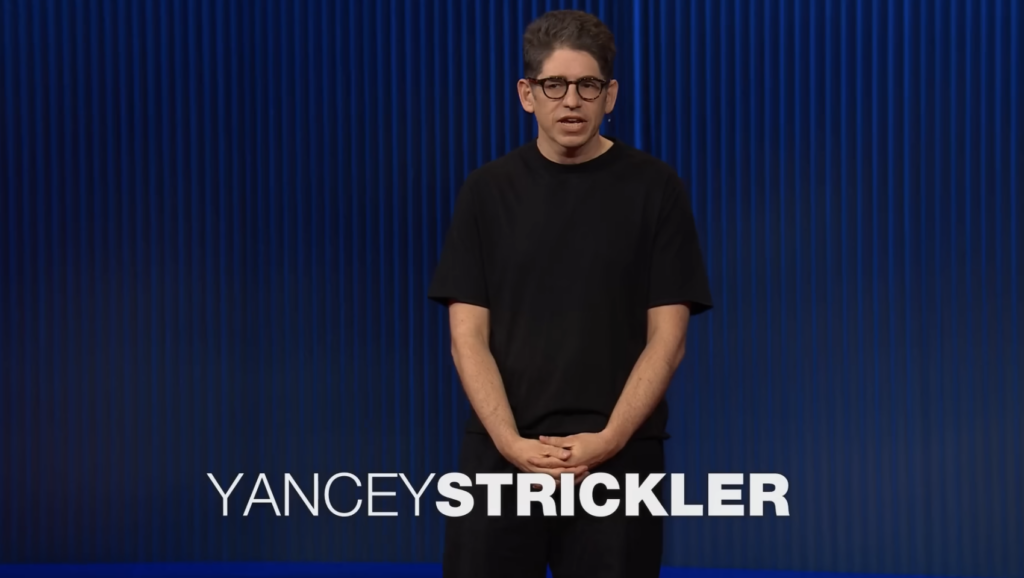
Yancey Strickler, a co-founder of Kickstarter, thinks of creative people as much more than simply artists. Those who learn how to make their financial way in the world are, in fact, leaders. Innovators. Entrepreneurs.
“We just don’t think of them that way,” Strickler said on a TED Talk that is circulating its way all the way up to Colorado’s gold dome.
Take the artist known as Tyler, the Creator. The hip-hop phenom-turned fashion impresario has built a net worth of $35 million at age 35. Or Dolly Parton, who turned her talent and fame into a $650 million empire that celebrates her humble Smoky Mountain beginnings.
“Those are people at the top of their game who used their agency to take big risks,” Strickler said. “But what if you don’t happen to be among the 1% who get that chance?”
It is estimated, he said, “that 85% of visual artists make less than $25,000 a year, and that just 13% of creative people earn a full-time living from their work.
“So we’re not talking about aristocrats and rock stars. We’re talking about people working hard, trying to make a living by doing what comes natural to them: A musician, a craftsperson, a community theater director, a potter. Millions of people who are our friends, our family, our neighbors. People who inspire us – and millions more, too.”
Colorado is clearly a state that appreciates its artists, and why not? According to the Colorado Business Committee for the Arts, the cultural sector in metro Denver alone generated a record-breaking $3.12 billion in economic activity in 2024, supporting more than 14,000 jobs and attracting 14.5 million attendees.
“But despite what you hear about the creator economy, the reality for most creative people is stark,” Strickler said. “Despite being so central to how we experience life, we don’t make things easy for these folks.”
So – what about them?
Strickler thinks he has the revolutionary answer, and Colorado stands on the brink of becoming the first state to make it happen. It’s called an Artist Corporation, or A-Corp.
“Now, I realize these two words are the exact opposite of each other,” Strickler said. “But the A-Corp just might be the door that opens up a new path to prosperity for creative people.”
You could think of an A-Corp as like a company, but built exclusively for how creative people work.
SB26-133, sponsored by two Colorado Republicans (Marc Catlin and Rick Taggart) and two Democrats (Jeff Bridges and Matthew Martinez), is super-complicated. But, bottom line: It would ensure that artists maintain at least 51% ownership and continuing control over all their work. That’s a game-changer.
The proposal has passed in the state Senate by a 31-3 vote, and will next be taken up in the House.
Here’s a sample scenario posted on an advocacy website to illustrate both the need for, and possible benefits of, the proposed A-Corp system.
Let’s begin with a solo singer/songwriter who writes, produces and performs her own music. She has a small but devoted audience – say, 1.2 million Spotify streams per year. She plays out 40 shows a year. She grosses $72,000 a year before expenses. Not bad, but not great for a city like Denver. She’s been treading water at roughly this level for three years.
Here’s how that $72,000 breaks down: She’ll make $28,000 from live shows; $18,000 from merch and direct sales; $14,000 from sync licensing and placements; about $7,200 from Patreon and other fan support; and $4,800 from streaming (at roughly $0.004 per stream).
But then there are the expenses: $8,400 for health insurance she’s bought on the marketplace; $6,000 for her studio space, $4,200 for gear and software, $3,600 for marketing, and $2,400 for travel. That leaves roughly $47,400 to pay for rent, the car and all things real life. No retirement savings. No equity. No safety net. If she gets sick for three months, the income stops. If she gets hit with a medical diagnosis or ER stay, no insurance plan will spare her from the fallout.
But now let’s imagine good things happen to good people: Say an indie label wants to sign her. They will advance $30,000 for her next album, handle distribution and put some marketing dollars behind her. In exchange, they want her master recordings and an industry-standard 82/18 split on recording revenue — meaning, the label takes 82%. They also want a three-album commitment. Her manager (who takes 15% of gross) says it’s a standard deal for someone at her level.
If she’s lucky enough to break through, that advance turns out to be really nothing more than a loan that will be paid back out of her royalties. If her music gets placed in a TV show or a commercial five years from now, 82% of that goes to the label. If she wants to leave after the second album, she can’t — and her masters stay with them regardless.
It’s a wonder anyone bothers to risk the life of the artist in the first place.
But, now for the fun part: Let’s go back and imagine she can form an A-Corp from the start. The business’ stated artistic mission will be “to create, record and perform original music.”
She decides to hold 80% of the voting shares in her corporation. She assigns 20% to her co-producer. She raises $35,000 by issuing shares to two close supporters: Let’s say a family friend puts in $20,000, and a local music investor puts in $15,000. In return, they will earn 15% of her net revenue for seven years. But they get no vote. No creative control. No ownership of her master recordings. Those are all assigned to the A-Corp. If the company ever dissolves, all rights automatically revert to the artist.
This isn’t a contractual promise, advocates say — it’s now Colorado law.
But here are the numbers that really matter: Advocates contend that, 10 years out, had this sample artist signed with a label, she will have generated $490,000 in total wealth. As an A-Corp, that number would be $795,000. Notably: She would have $85,000 built into a retirement account and $200,000 in catalog value.
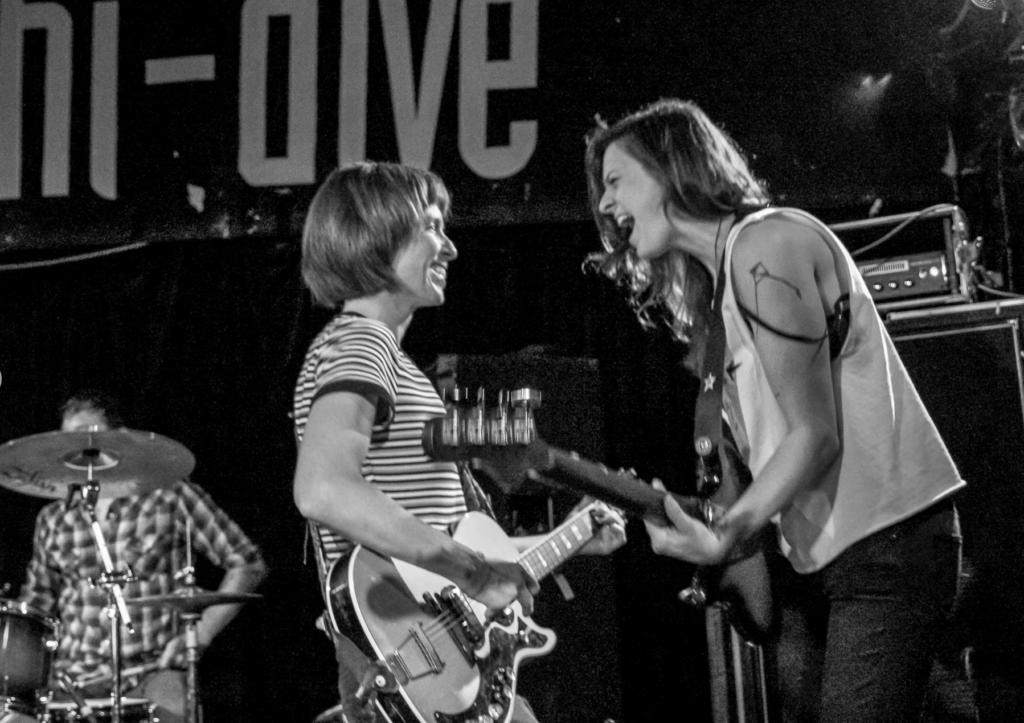
Here’s another example to help bring this into better focus: Imagine we have a band made up of five people and, right from the beginning, they form an A-Corp.
“Now they’re no longer just five individuals,” Strickler said. “They are five people who collectively own an organization that has the power to own their intellectual property, their gear and their business.
“As they start to get paid, that money can automatically flow to each of the members according to preset amounts. They could even set aside money to be saved for future projects in a treasury, or pool together with other artist corporations to get better health care or other benefits. As an artist corporation, they would also be able to receive both commercial revenue as well as nonprofit sources of funding.
“Now, if a label or a bigger commercial entity came along, rather than just selling the rights to their intellectual property, which has been customary until now, as an Artist Corporation, they can issue shares. So instead, that entity would then make an investment in the A-Corp, allowing it to be valued more highly, and for everyone to benefit if things went well.”
People will joke about the anachronism: Artists as business owners. The jokes write themselves. But put the right tools in an artist’s hands, and who knows who might be the next Mike Kelley. He was a massive deal in the contemporary art world, a pivotal figure for installations that often used stuffed animals and found objects to challenge cultural norms until his death in 2012.
Kelley once said: “I started out as an anarchist and a hippie, and now I’m an entrepreneur with 15 employees.”
So, what if the law made self-determination a part of every artist’s kit? What’s the downside? The hidden cost to taxpayers? Zero, Strickler said. That’s why it has such broad bipartisan support.
“This is not a government handout. This is not charity. This is not a special favorite. This is the exact opposite of that. Right now, creative people are excluded from the full benefits of capitalism. Artist corporations will treat them as real economic actors for the first time.”
Click here to watch this virtual info session about the Artist Corporation concept as presented by the CBCA, and here to read SB26-133 itself.
John Moore is the Denver Gazette’s Senior Arts Journalist. Email him at [email protected].
- Read John Moore’s essay: “The case for artists as everyday heroes”