







Denver Summit FC to make home debut in Colorado’s soccer ‘greenhouse’
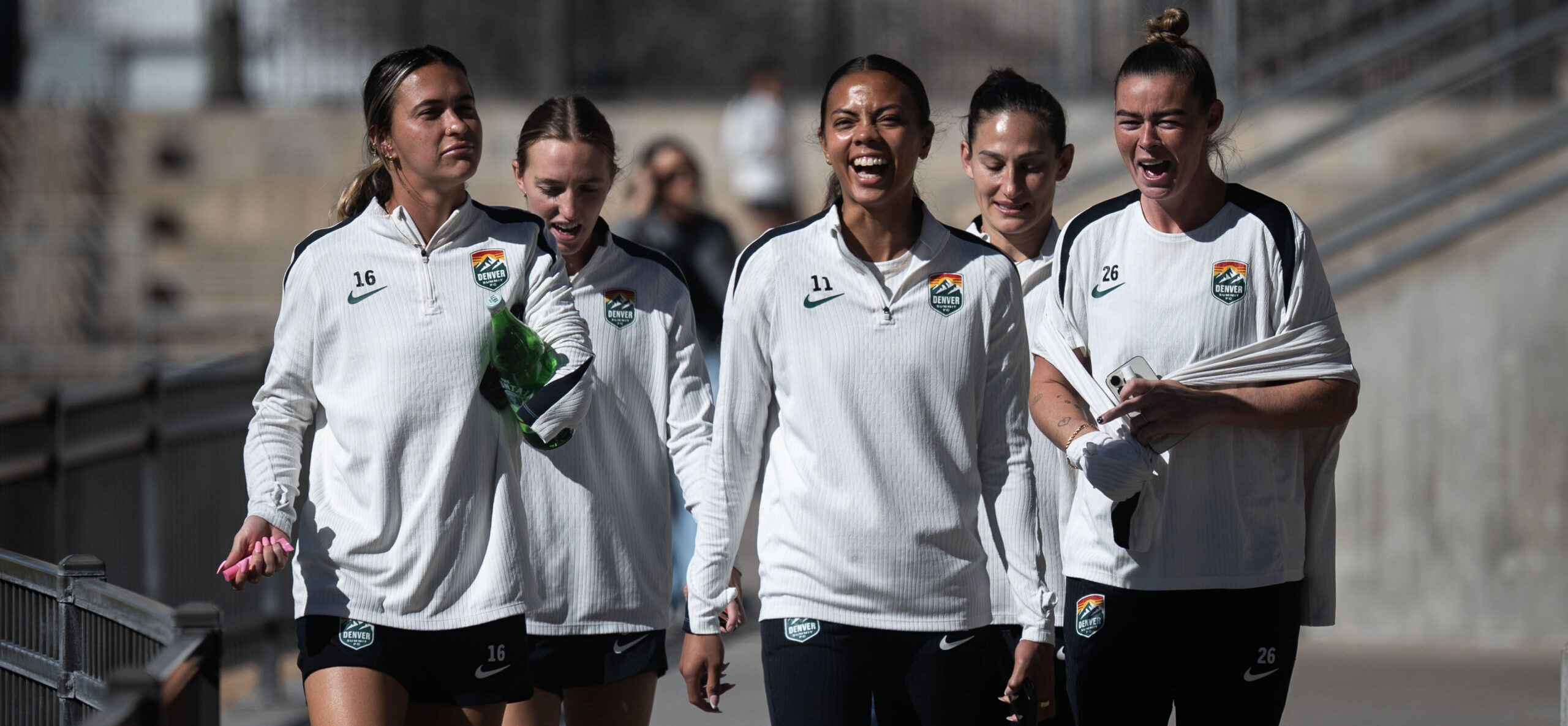
Colorado is the heartbeat of Denver Summit FC.
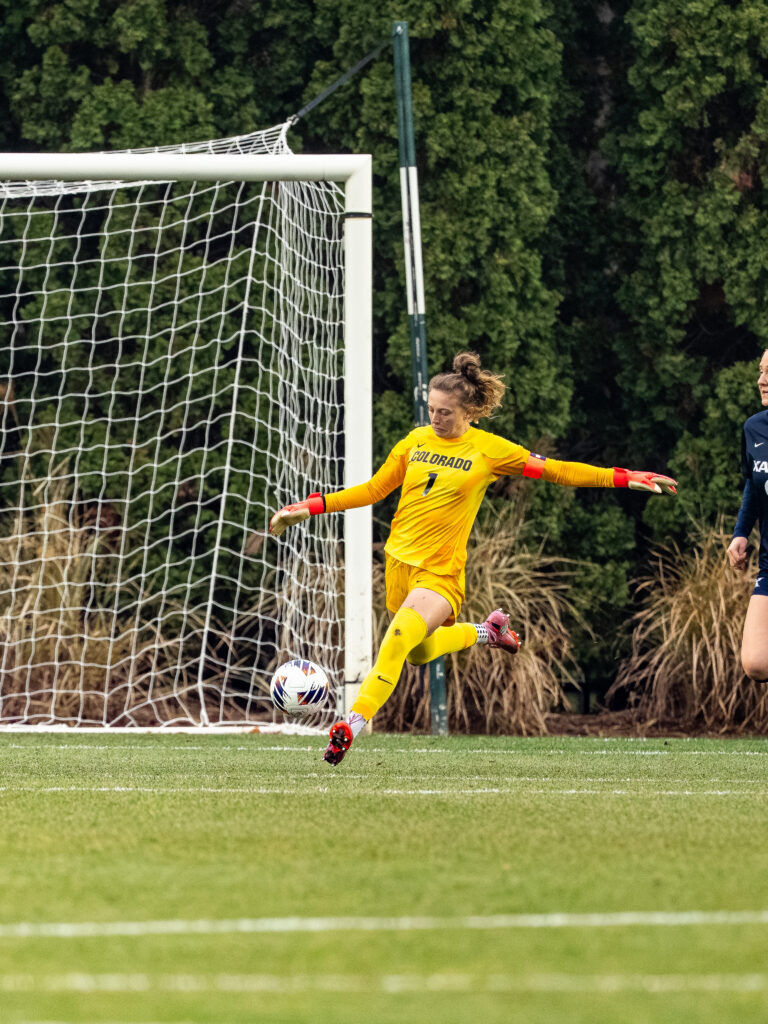
It will be racing for goalkeeper Jordan Nytes, an Aurora native, on Saturday afternoon before her home debut in the National Women’s Soccer League.
The smell of fresh-cut grass at Empower Field. The roar of 50,000-plus breaking the NWSL attendance record. The sight of two dozen women carrying a torch for the next generation of girls. The palpable feeling of sports history in the making.
“I think everybody is going to need a deep breath,” Nytes told The Denver Gazette. “It’s crazy. It’s the moment we’ve all been looking forward to since the very first meeting.”
Nytes embodies the Colorado grassroots soccer culture that made it possible. She grew up playing for Grandview High School and Real Colorado before twice earning first-team All-American honors at the University of Colorado. In January, her agent set up a meeting with Summit coach Nick Cushing.
The team called back: “Let’s make this happen.”
“I was over the moon,” Nytes said. “This is what I’ve wanted from the beginning.”
Colorado ranks among the nation’s hotbeds for youth soccer, and, more specifically, molding girls on the pitch into elite women players.
The state developed four recent members of the U.S. Women’s National Team: Lindsey Heaps (Golden), Jaelin Howell (Windsor), Mallory Swanson (Highlands Ranch) and Sophia Wilson (Windsor).
There are 21 active players in the NWSL who list a hometown in Colorado. That ranks third in the league behind California (73) and Texas (23). Five in-state products are on the Summit roster for its inaugural season: Meg Boade (Lone Tree), Ally Brazier (Colorado Springs), Janine Sonis (Highlands Ranch), Heaps and Nytes.
In 2020, Colorado produced the third-most NCAA Division I women’s soccer players in the country, per capita, with 260 total and 4.5 for every 100,000 residents, according to Top Drawer Soccer.
But there are obvious disadvantages in Colorado to developing elite soccer talent. Fewer games are played outdoors due to unpredictable winters. Club teams are forced to travel further and more often, to national showcases to help make up for lost practice time.
Phil Nielsen, a former youth scout with the U.S. Soccer Federation, is the executive director of Colorado United, a Littleton-based soccer club that serves about 5,000 players. The Denver Gazette sought to understand how the state earned its reputation for soccer greatness.
“It’s been sort of a greenhouse for players to develop,” Nielsen said.
Nate Shotts witnessed the sport’s evolution over two decades as CEO of the Colorado Soccer Association, a nonprofit with a mission to “promote, facilitate, and nurture the growth of soccer throughout Colorado.”
“When I first came to town, there were only a few paid club directors and most of them were volunteer coaches,” Shotts told The Denver Gazette. “But Colorado has been willing to jump into the future a little sooner than some of the other states that I’m familiar with, because they were willing to put the kids in a position to succeed.”
The CSA oversees 64 youth member soccer clubs across Colorado (as of January) with 51,742 participants. That includes 21,293 competitive youth players. The association has five adult leagues with 1,490 total players.
The CSA is the only state association in the U.S. that manages “youth players, adult players, referees and the major soccer leagues,” according to its website. Some established clubs have roots in Colorado dating back to the 1960s with continuity that’s allowed for natural growth and better coaching. Increased parity across the Front Range makes for strong intrastate competition, too.
“In most other states, it is way more of a Wild, Wild West. New clubs pop up any day of the week,” Nielsen said. “You can’t really do that in Colorado, because the CSA has done a really good job of making the entry to the club market be much more professional.”
Nielsen added the isolated soccer environment allows coaches to “nurture their players to be elite.”
But at what cost to the athlete? It takes an unusual level of commitment. Just ask Brazier, a Summit defender, who once played for Pride Soccer Club in Colorado Springs.
“I remember my mom having to drop me off at the airport. She’d be crying, because I was traveling to California by myself,” Brazier recalled. “Getting into high school, I did a lot of track traveling and soccer traveling. Then the national (soccer) team happened with the U-20s. So, I missed a lot of my senior year for that.”
The model is proven successful, of course, with necessary financial resources. The average U.S. sports family spent $1,016 on their child’s primary sport in 2024, according to The Aspen Institute’s Project Play initiative. That marks an increase of 46% since 2019.
The cost for elite club soccer — travel, lodging, meals, uniforms, tournament fees, etc. — can exceed $10,000 annually. Some programs, like the Arvada-based Colorado Edge Soccer Club, offer scholarships based on financial need.
“The youth soccer landscape in our country has some deep talks going on right now on how to limit the amount of travel that certain areas have to go,” said David Kramer, the CEO of Colorado Edge. “But that’s just reality here in our state. If you want to play at that highest level, or at least try to do it, you’re going to have to get in an airplane and pay some money to play soccer.”
There is a strong track record of Colorado success stories developing youth soccer players.
Yet Zac Crawford is not content.
Crawford serves as chief technical director of the Colorado Rapids Youth Soccer Club, which this summer is transitioning to Colorado Storm, and oversees programming for 12,000 kids between the ages of 4 and 19 across the Front Range. He has questions.
Crawford asked: When is the last time Colorado produced a U.S. Men’s National Team player? It’s been a while since Highlands Ranch native and goalkeeper Ethan Horvath played his last USMNT game in 2023.
He followed up: How often are Colorado teams winning national club championships? It’s not a regular occurrence, either.
“I take the perspective that we need to stay hungry and continue to strive (and) not feel that we’ve arrived as a state,” Crawford told The Denver Gazette. “Right now, we don’t really have anybody new that’s coming into the (national team) fold from our state. But that could change. We’ve got some really good youth players across the state. It’s just about getting them seen and getting them opportunities.”
Janine Sonis once played soccer for Valor Christian High School. She’s now a seventh-year NWSL veteran who returned from a stint with the Canadian Women’s National Team to play for a team even closer to home — Denver Summit FC.
“I didn’t think that Denver would get a team while I was still playing in my career. So, when the announcement happened, I was psyched,” Sonis said. “Then when I found out that I was going to get the opportunity to come here, it was just a dream come true. It’s so nice the club has been so intentional about bringing us natives back here. I think there’s a little bit of extra fire there to play and to represent Denver.”
The large contingent of Colorado natives is no coincidence. Summit general manager Curt Johnson and coach Nick Cushing assembled a roster that reflects their approach to culture building in their NWSL expansion season. Cushing, after two decades coaching under the City Football Group, explained how with a thick English accent.
“It’s definitely a reflection of Colorado producing really, really good soccer players. I think I’m really fortunate to be in a place where there is a real plethora of talent to pick from,” Cushing said. “But it was definitely my desire to be strategic in bringing back Colorado-native players. Because as a coach, I like a real emotional connection with my team, and a real emotional connection to our crowd. It makes my job really easy to have players that want to win for Colorado, right?
“They’re proud of being in that home jersey.”
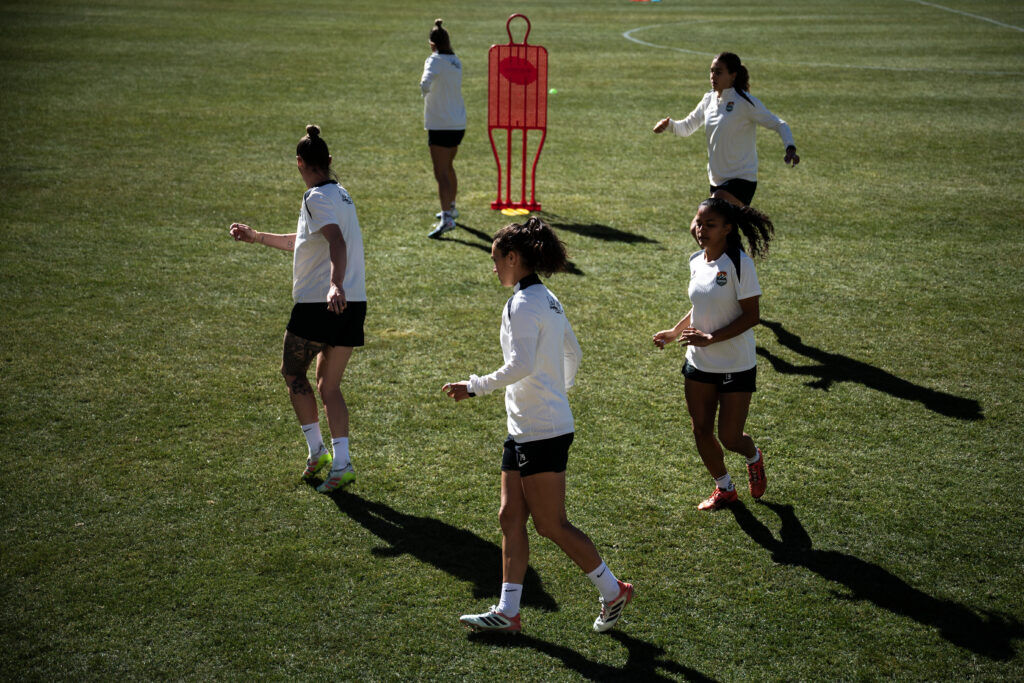
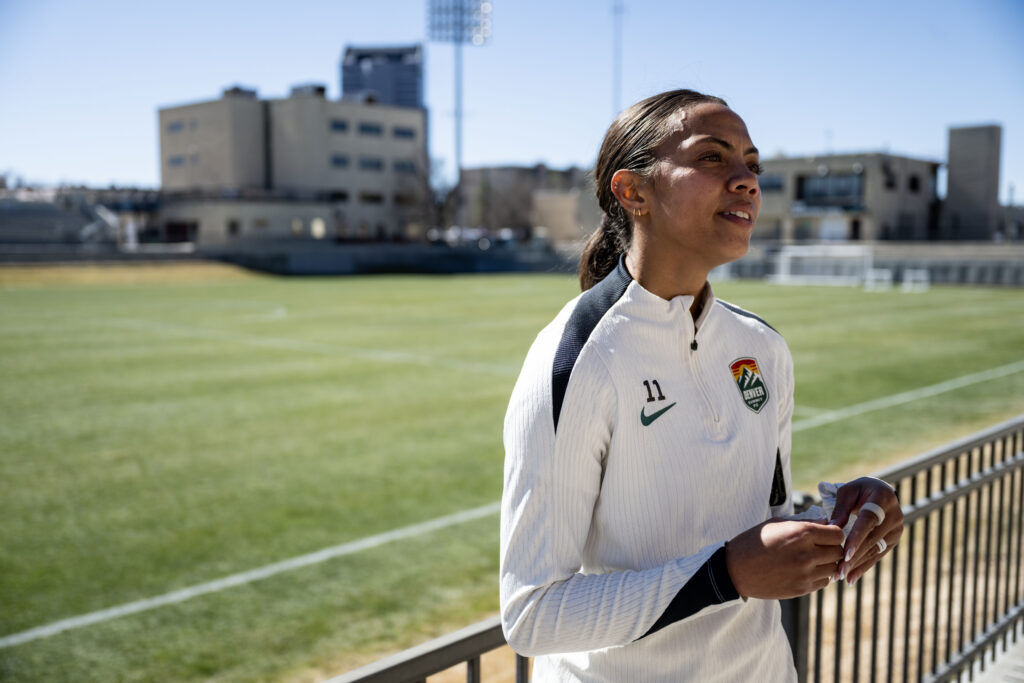
The Summit opened training camp at Infinity Park in Glendale while its permanent training facility and temporary stadium are being constructed in Centennial. Players gathered recently for a high-energy practice wearing their inaugural kit — jerseys and shorts in “rich evergreen green” with light blue and sage accents — to celebrate Colorado’s forests, skies and high desert plains.
The wait is almost over.
“You can definitely feel the energy coming into practice,” Nytes said. “There are a lot of people that are really excited for us. It’s on us to prove those people right and show them what we can do. What we’ve been building the last couple of months.”
Katie Hooker gets emotional thinking about it.
Hooker, the Metropolitan State University of Denver women’s soccer head coach, will join her family on Saturday for the first Denver Summit FC home game in team history.
“There’s absolutely going to be kids and youth players at that game who say: ‘I want to be here.’ And they do make it there,” Hooker told The Denver Gazette.
Her daughter, Aubrey Hooker, is 13 years old and plays for the Colorado Edge Soccer Club.
“It’s cool that I get to be a part of the history of that first game,” Aubrey told The Denver Gazette. “It’s amazing that we get to have a team here to have role models to look up to. … I think that’s a really cool thing to know that you can get there one day, if you really work hard and put the effort in.”
Marin Kotschau is even closer to making her soccer dreams a reality.
The Broomfield High School junior is verbally committed to the soccer program at the University of North Carolina. Kotschau imagines a future in the NWSL. She draws confidence from her experience playing in the Elite Clubs National League (ECNL) with the Rapids youth program.
“We play some of the best teams in the country,” said Kotschau, who will also be in attendance at the home opener. “You have to give a lot with training, practices and everything. But it’s always super fun, because you basically hang out with all your friends to strive and compete for the same goals. I feel like we get so much exposure when we go to these ECNL national showcases where you have hundreds of coaches coming to watch you. … They know so many girls are produced from Colorado that they come to watch.
“It’s really awesome to see.”
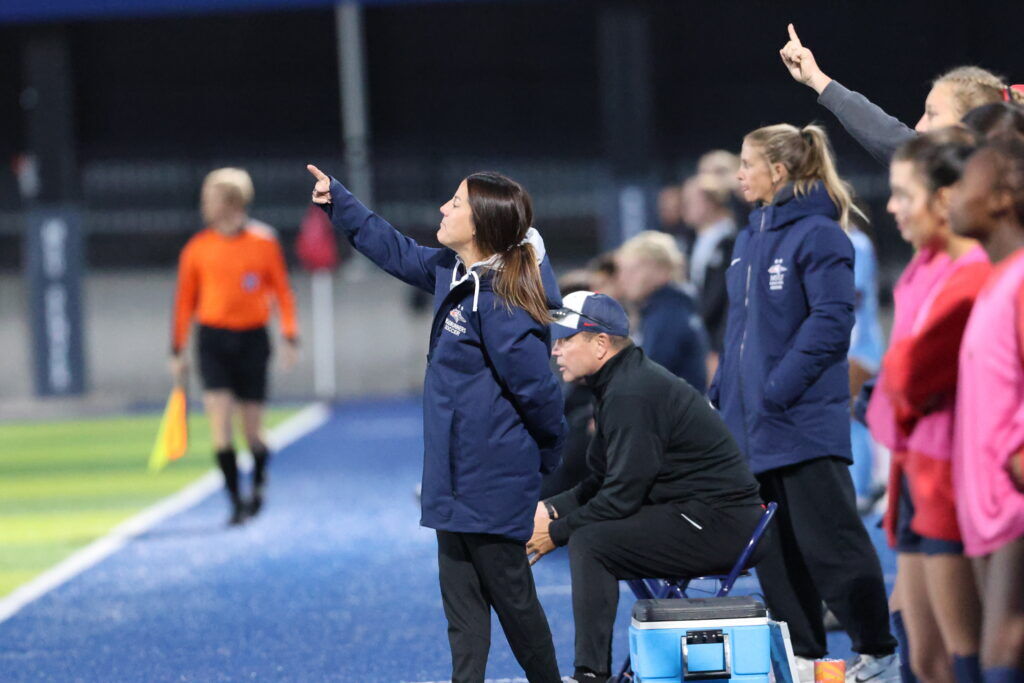
Hooker has spent about 25 years around the game of soccer in Colorado. That includes almost two decades as both an assistant and volunteer coach at the University of Denver before landing the head job at Metro State. Hooker recalled multiple turning points in soccer history, like a USWNT gold medal at the 1999 FIFA World Cup, that advanced girls in the sport.
Denver Summit FC represents the next chapter.
“Having that so tangible and right down the street, it’s going to inspire, 100%,” Hooker said. “Some of those players will absolutely follow in the path of the other top players from the state. That’s what is really cool.”
COLORADO SOCCER BY THE NUMBERS
51,742 — Youth players in the Colorado Soccer Association
21,293 — Competitive youth players in the CSA
64 — Youth member clubs in the CSA
21 — Players in the National Women’s Soccer League with a hometown in Colorado
5 — Players on the Denver Summit FC roster with a hometown in Colorado
4 — Recent Colorado natives selected to the U.S. Women’s National Team