







Aurora highlights successes, hurdles in first year of consent decree

Jessica Gibbs/The Denver Gazette
A photo of Elijah McClain flashed across the screen and the room fell quiet.
Omar Montgomery, co-chair of the Aurora Community Advisory Council helping shepherd the city’s consent decree process, wanted to remind the audience why the community was gathered on a Tuesday night to discuss the city’s progress toward changing its public safety policies.
McClain’s 2019 death following a violent police stop is the key reason the Aurora Police and Fire departments are under a consent decree, he said, and why city officials are trying to ensure public servants who abuse their power are held accountable.
Montgomery knows on a personal level the toll of bad policing and the effects of great policing, he said.
In high school he was beaten by Englewood police officers, hit with a night stick, and placed in a choke hold, he said. On the day he graduated college, police pulled guns on him in front of his mother.
On the other hand, he said, the person who killed a relative of his two years ago would still be walking the streets if it were not for good police officers who investigated her death, he said.
“Today, that person is on trial for murder,” he said.
The city has spent roughly one year under its five-year consent decree. At the Tuesday night public meeting, residents heard a recap of the city’s progress toward meeting the decree’s mandates.
The fourth and most recent report issued by the independent monitor found that Aurora has reached “substantial compliance” with 19 mandates in the decree. This is the best level of compliance the city can receive.
The city is considered as being on a “cautionary track” when it comes to 24 mandates, largely regarding use of force reforms. This rating was due to missed deadlines and uncertainty around whether the monitor team’s expectations will be met.
Lead Monitor Jeff Schlanger said both the Aurora Police Department and Aurora Fire Rescue “are on the right track” toward reaching compliance with the decree. He emphasized the work is not a sprint but a marathon, and that the city is in its first year of a multi-year initiative.
The timeline laid out in the consent decree proved unrealistic for some goals, he said. Improving the city agencies’ data collection systems remains a concern for the monitoring team. New use of force policies will be signed off on in the next few days, however, and training of first responders is expected to wrap up in the next few months, he said. And in the first year of the decree, the use of force review board significantly improved its introspection of incidents, he said.
Colorado Attorney General Phil Weiser attended the meeting and underscored that the city is making progress toward meeting the decree mandates.
“We know some of it has moved less quickly than some would have liked,” he said.
There are new policies governing use of force, anti-bias, data collection and constitutional policing, he said. The fire department has committed to no longer using ketamine — the sedative that killed McClain — and the fire department now has a review team looking at when and why sedatives are used, he said.
The work happening in Aurora is part of a broader effort in the state to better incorporate anti-bias and de-escalation practices in first responder work, he said.
Aurora entered into the consent decree with the state in November 2021, agreeing to implement sweeping public safety reforms.
Earlier that year, Weiser’s office announced that an investigation into the city’s police and fire departments found a pattern of racially biased policing, among other civil rights concerns. The investigation called for reforms of first responders’ use of force practices, investigative practices and use of chemical sedatives. The office’s investigation also found needed changes in recruiting, hiring and promotional practices, along with a greater need for accountability and transparency.
The city is tasked with developing and implementing changes during the first two years of the five-year decree. IntegrAssure, the independent monitor overseeing the city’s compliance with the mandates, would monitor Aurora’s police and fire departments for the last three years of the agreement — or longer if it decides the city is not upholding the consent decree requirements.
A panel of the independent monitor team, acting City Manager Jason Batchelor, Interim Chief of Police Art Acevedo, and new fire Chief Alec Oughton responded to community questions to close out the event.
All three city leaders voiced strong support for the consent decree, calling it a roadmap to ensuring the public safety departments’ are successful and are restoring community trust.
All personnel in the agencies are expected to receive diversity, equity and inclusion training by the end of the calendar year, they said. Acevedo vowed to protect whistleblowers in the agency, adding he has been a whistleblower twice in his career and will have “zero tolerance for retaliation” against officers who report bad conduct among the rank and file.
Oughton committed to undergoing the city’s diversity, equity and inclusion training this month when pressed by the moderator, although he said that in his previous job he helped mold diversity, equity and inclusion (DEI) training programs about understanding implicit biases.
Oughton called the consent decree a critical document to making Aurora Fire and Rescue a successful department, but also said he hopes to go above and beyond what it requires and work to connect with the community.
“In a lot of ways, it’s a starting point,” he said.

Denver weather: Cloudy skies and temperatures in the low 50s
Daniel Boniface
dan.boniface@denvergazette.com
Updated 1 hour ago
Expect mostly cloudy skies and temperatures slightly warmer than usual on Tuesday in Denver, weather forecasters said. The National Weather Service in Boulder predicts a high temperature of 52 degrees at Denver International Airport on Tuesday. That’s almost 20 degrees...

Daniel Boniface
Reporter
Colorado ski areas could see double-digit snow totals over the next two weeks
Spencer McKee
spencer@outtherecolorado.com
Updated 2 hours ago
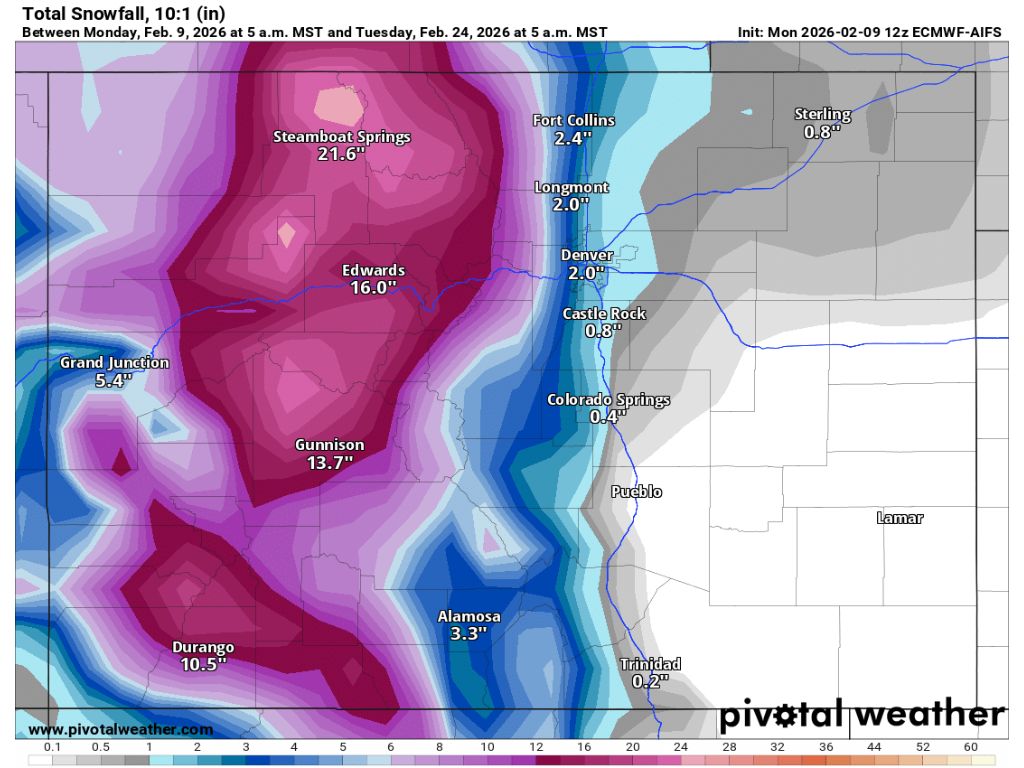
Over the next two weeks, on-and-off snow is expected to hit Colorado in a shift toward weather that’s more typical of mid-February. A first storm that’s expected to hit should drop snow between Feb. 10 and Feb. 14, according to...

Spencer McKee
Reporter
Aurora lawmakers move forward with tobacco license ordinance
Kyla Pearce
kyla-pearce@denvergazette.com
Updated 12 hours ago
Aurora councilmembers moved forward with a proposed ordinance in Monday night’s study session that would create a license for businesses that sell tobacco, Kratom and psychoactive substances. Councilmember Curtis Gardner was the only member in opposition to the ordinance, expressing...

Kyla Pearce
Reporter

One of Denver’s most prolific painters prepares his retrospective
Colleen Smith
colleen-smith@gazette.com
Updated 11 hours ago
Longtime Arts Students League of Denver teacher to show paintings and 3-D works Robert Gratiot’s Congress Park home, like most residences in the historic central Denver neighborhood, stands as a charming, one-of-a-kind brick house. Yet beyond the arched, wooden front...

Colleen Smith
Reporter
Colorado lawmakers seek faster warrant response from social media firms
Sage Kelley
sage.kelley@denvergazette.com
Updated 11 hours ago
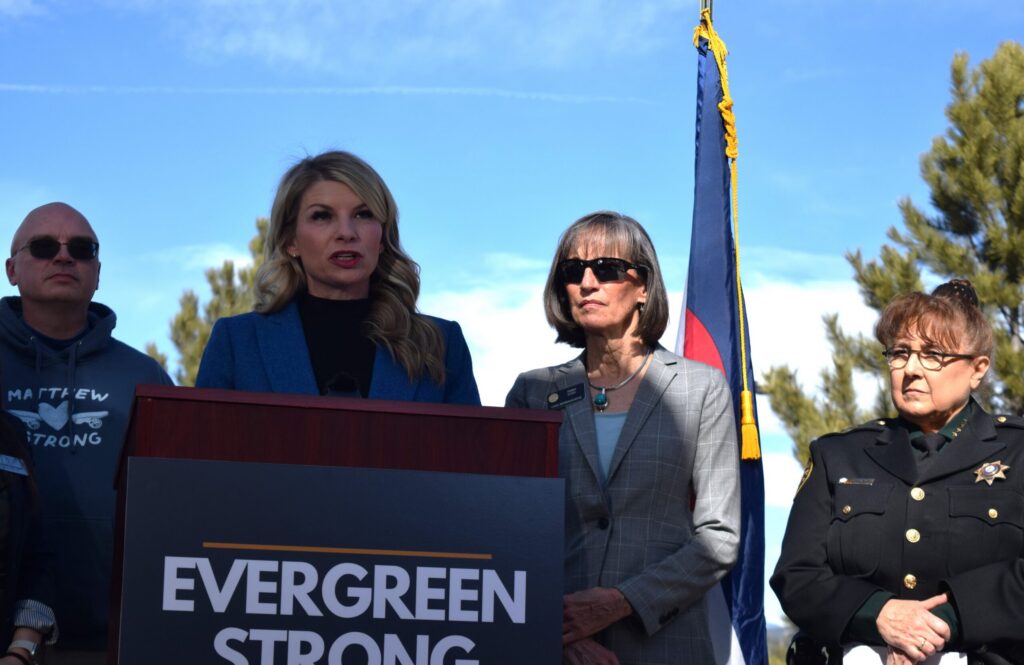
Proponents argue legislation would prevent school shootings Colorado officials on Monday claimed that the Evergreen High School shooting could have been prevented if social media companies had been required to respond faster to warrants — and they are pushing legislation...

Sage Kelley
Reporter

Lindsey Vonn says she has complex tibia fracture requiring multiple surgeries after Olympic crash
Pat Graham
pat.graham@associatedpress.com
Updated 12 hours ago
CORTINA D’AMPEZZO, Italy (AP) — Lindsey Vonn sustained a “complex tibia fracture that is currently stable but will require multiple surgeries to fix properly” after her devastating crash in the Olympic downhill, the skier said in a social media post...

Pat Graham
Reporter
23-year-old arrested in fatal Thornton hit-and-run; GoFundMe identifies 14-year-old victim
Kyla Pearce
kyla-pearce@denvergazette.com
Updated 16 hours ago
Thornton police identified the suspect in Saturday night’s fatal hit-and-run as 23-year-old Jeremy Nobles. Police officials arrested Nobles on Sunday in connection with the incident, which killed 14-year-old boy, a Monday afternoon news release from the Thornton Police Department said....
Kyla Pearce
Reporter

Metro Moves: Glo Noodle House owners to open sushi spot in Boulder
Bernadette Berdychowski
bernadette.berdychowski@denvergazette.com
Updated 2 hours ago
Welcome to the Denver Gazette’s Metro Moves. You’ll get the latest metro Denver openings, closings, hiring and promotion news here. To submit your company’s news, drop an email to bernadette.berdychowski@denvergazette.com. NEW SUSHI SPOT COMING TO DENVER The owners of acclaimed glo...

Bernadette Berdychowski
Reporter
Cherry Creek assistant superintendent to leave full-time post amid district leadership upheaval
Nicole C. Brambila nico.brambila@denvergazette.com
nico.brambila@denvergazette.com
Updated 11 hours ago
Cherry Creek School District Assistant Superintendent Tony Poole will not return to full-time work at the end of the school year and will instead transition to a limited post-employment arrangement. Ashley Verville, a district spokesperson, said the move was not...


Lindsey Vonn’s choice to race Olympic downhill on injured knee questioned after crash
Pat Graham
pat.graham@associatedpress.com
Updated 12 hours ago
CORTINA D’AMPEZZO, Italy (AP) — The fallout from Lindsey Vonn’s devastating crash in the Olympic downhill included a key question: Given her severely injured left knee, should she have even been allowed on a course that is dangerous even to...
Pat Graham
Reporter
PREV
PREVIOUS

Aurora Police arrest four after shooting and police chase near Southlands Mall
Aurora Police arrested four people after being called to a shooting scene Sunday night that ended up in a police chase at Southlands Mall. Just before 10 p.m. Sunday, Aurora Police responded to a report of a shooting in the 6100 block of South Aurora Parkway. After arriving, officers found many shell casings of differing […]
Two geese, Gracie and George, return to Aurora's city hall each year to nest
Visitors to Aurora City Hall will notice new signage at some of the building entrances. “Caution. Be alert. Nesting and aggressive geese. Use another entrance.” Gracie and George, two Canadian geese named by city staff, nest each year in a planter outside of the building at 15151 E. Alameda Parkway. They’ve been coming for so […]