







Perspective: The fentanyl fight goes on

Colorado has seen signs of progress in the fight against fentanyl, but we are nowhere near declaring victory. To craft a path forward, Colorado will have to bolster its successes with new ideas and new energy. New data make it clear that the overdose crisis responds to policy at both the state and federal levels. Our leaders should take that to heart and show the rest of the country what it looks like to tackle the problem with full force.
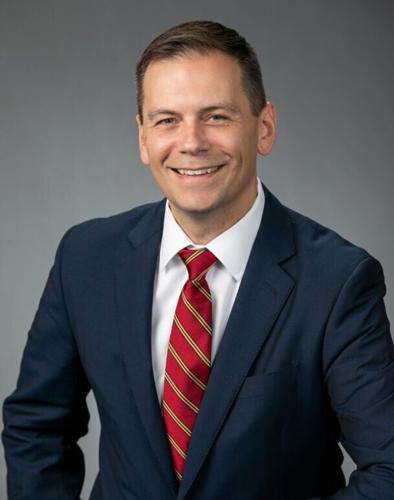
I have spent nearly two decades as a state and federal prosecutor, and I most recently served as the district attorney for Colorado’s 18th Judicial District, representing nearly 1.1 million people. My team aggressively prosecuted fentanyl traffickers, often seizing hundreds of thousands of illegal pills and firearms from suspected Mexican cartel members. I also saw the overwhelming grief of family members who lost loved ones, sometimes children, to fentanyl. Since my term as district attorney ended, I now serve as an Owens-Early Criminal Justice Fellow at the Common Sense Institute, along with former Denver District Attorney Mitch Morrissey, studying the impact of policy decisions on Coloradans and the economy.
The Common Sense Institute has been following the state’s trouble with fentanyl for years. Our latest report for the institute has a mix of good news and bad news.
On the one hand, Colorado’s fentanyl-related outcomes have improved. Fentanyl-related deaths are down from their pandemic-era peak. On the other hand, the state is far from out of the woods. Fentanyl deaths remain at historically high levels — far above anything seen before 2020.
These deaths are not only tragedies. They are economic and civic crises. Three out of 4 victims are men, and most are in the prime working years of 25 to 54. Their loss devastates families, reduces workforce productivity, and increases strain on health care, law enforcement, and social systems.
Using methodology developed by the Centers for Disease Control and Prevention, our report examines the economic toll of a fentanyl overdose death, including the costs associated with health care and lost productivity. The data show the economic cost of fentanyl deaths in Colorado as recently as 2019, before the law decriminalizing possession, was $4.4 billion. In 2024 alone, fentanyl overdose deaths cost Colorado $13.1 billion, or roughly $2,220 per resident. By comparison, that’s nearly 31% of the state’s annual budget.
Colorado’s progress lags behind most other states. CSI produces a drug overdose per capita metric and competitiveness index for all 50 states and the District of Columbia. The drug overdose per capita metric is then ranked relative to all 50 states and the District of Columbia. The ranking of 1 is best, 51 is worst. While Colorado’s ranking on this metric has not been strong, the state was 26th in 2011. Now, in 2024, Colorado comes in at 30, meaning that relative to other states, the problem is getting worse in Colorado. Or put another way, other states are making faster and better progress combating the fentanyl epidemic.
The state’s leaders have not ignored the issue, and they should get the appropriate amount of credit for taking steps in the right direction. Legislators rightly took action in 2022 with HB 22-1326, which increased penalties for fentanyl possession and distribution. That policy coincided with a 32% drop in fentanyl-related deaths and a measurable reduction in narcotics seized across Colorado.
The Drug Enforcement Administration Rocky Mountain Field Division (RMFD) reported record fentanyl seizures in 2023. The RFMD is responsible for 450,000 square miles of territory with 13 offices across Colorado, Utah, Wyoming and Montana. In 2023, the RMFD seized more fentanyl pills than any previous year, and Colorado had the most fentanyl seizures by the RMFD, by far, with 425.6 kilograms. This is enough fentanyl to potentially kill everyone in the state 36 times over.
Notably, due to federal policies, including stronger border controls, fentanyl seizures at the Southwestern border were 21% lower in 2023 than 2024. Despite the decline in seizures at the Southwestern border, the RFMD announced that through November 2024 they had seized a record 2.7 million fentanyl pills, an increase of 3.5% over the 2023 full year seizures of 2.61 million pills.
Another source of data for the number of narcotics seizures over time is the Colorado Bureau of Investigation’s Colorado Crime Stats, which continuously collects crime data from all law enforcement agencies in the state, validates the data, and reports it. The data does not specifically isolate fentanyl from other narcotics, but since fentanyl represents a large share of total narcotics, it offers an indication of the growth in fentanyl seizures over time.
In 2008, the number of drug seizure reports for narcotics was 3,639 with 4,044 units seized. By 2023, the number of reports peaked at 7,434, a 104.3% increase, and the units seized rose to 150,844. In 2024, the number of reports declined to 7,391, a decrease of 0.6%, but the units seized increased to 189,589, a 25.7% increase. These numbers indicate aggressive law enforcement cooperation and interdiction by state and federal authorities, like the recent DEA-led raid on an illegal underground nightclub in Colorado Springs.
Legislators have stopped short of a full fix, however. CSI’s research outlines a comprehensive strategy to address fentanyl throughout the system:
• Reinstating felony penalties for any amount of fentanyl, cocaine, heroin or methamphetamine sends a clear message: possession of these substances are not minor infractions. Moreover, hundreds of fentanyl-related overdoses are mixed with the use of these other drugs. Stronger criminal consequences are also a proven lever for diverting users into treatment through successful models like drug courts. Given that 2 milligrams of pure fentanyl is a lethal dose, state law should reflect just how deadly the substance is. A follow-up bill last year, HB 24-1306, which would have made possession of any amount of fentanyl a low-level felony, died in committee.
• The state must expand its public health infrastructure to match the scale of the crisis. HB 22-1326 wisely funded initiatives like naloxone access, test strip distribution, and treatment services. These efforts must be tracked, measured, and improved, particularly in light of the state’s budgetary situation. The public deserves to know whether these programs are actually reducing overdoses and connecting people to help. The state should require annual performance reports and outcome audits for all funded prevention efforts.
• Education must become a frontline defense. That means integrating fentanyl awareness into school curricula, social media campaigns, and high-risk community outreach. Just as Colorado once tackled meth use with high-visibility messaging, the same approach must be applied to fentanyl — especially given how often users don’t even realize the drugs they’re taking are laced with it.
• Finally, policymakers must get ahead of the next wave. Fentanyl didn’t arrive in Colorado by accident — it followed patterns already seen in coastal cities. Whatever replaces fentanyl will follow the same path. A forward-looking policy framework should include an early warning drug trend system, coordination with the DEA and border enforcement, and a standing contingency plan for emerging synthetic drugs. Waiting for the next epidemic is a luxury we can’t afford.
The fentanyl epidemic did not appear overnight. It took root because of well-intentioned but misguided policies that decriminalized the possession of highly lethal substances. It is not enough to reverse course partially — we must learn from the data and act decisively.
Fentanyl is a once-in-a-generation public safety and economic stability issue. The data is clear: Colorado is making progress, but has much more work to do.
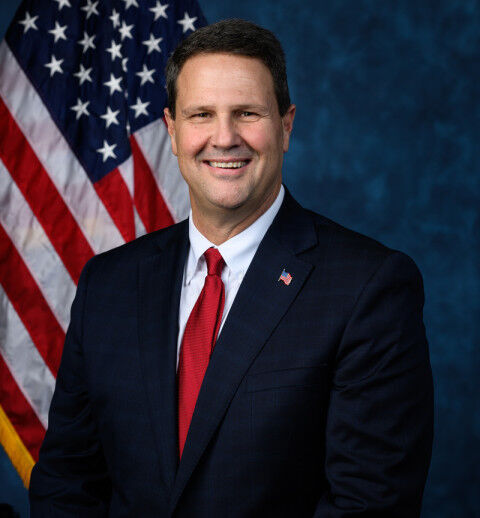
John Kellner is the former district attorney for the 18th Judicial District and is an Owens-Early Criminal Justice Fellow at the Common Sense Institute. He serves as the managing partner and director of litigation at Dan Caplis Law and is a lieutenant colonel in the Marine Corps.
John Kellner is the former district attorney for the 18th Judicial District and is an Owens-Early Criminal Justice Fellow at the Common Sense Institute. He serves as the managing partner and director of litigation at Dan Caplis Law and is a lieutenant colonel in the Marine Corps.


9 great Colorado story lines to follow in the Olympics | Vince Bzdek
Vince Bzdek
vince-bzdek@denvergazette.com
Updated 13 hours ago
The Broncos may not have quite made it to the Super Bowl, but you know what, there’s another Super Bowl this weekend for a certain Colorado team. Boasting 33 athletes plus one alternate, Colorado has the most athletes of any...

Vince Bzdek
Reporter
Capitol M: Olympic version | Week of Feb. 7, 2026
Marianne Goodland
marianne-goodland@denvergazette.com
Updated 2 days ago
The lighter side of the state Capitol, usually. Sen. Byron Pelton, R-Sterling, who turns 50 this year, is sporting eyeglasses for the first time. He blames the lege. “With 700 bills to read a year, my eyes are failing me,”...

Marianne Goodland
Reporter
GUEST COLUMN: Parental notification is a safeguard for minors, not a barrier
Wendy Smith
wendy-smith@gazette.com
Updated 2 days ago
I have volunteered in the sphere of Domestic Minor Sex Trafficking (DMST) for over seven years and in prisons for over 18 years. I have met girls who were sexually abused/exploited by peers, online perpetrators, or adults they thought they...

Wendy Smith
Reporter
Colorado has no need for nationalized elections | Jimmy Sengenberger
Jimmy Sengenberger
jimmy-sengenberger@denvergazette.com
Updated 3 days ago
When President Donald Trump embraces an approach long pushed by Colorado Secretary of State Jena Griswold, it’s a sign that something is deeply wrong. On Tuesday, the president declared he wanted a federal takeover of elections, suggesting doing so “in...

Jimmy Sengenberger
Reporter

Aurora needs adults, not symbolism | Michael Hancock
Michael Hancock
michael-hancock@gazette.com
Updated 4 days ago
Aurora is not short on real problems. We have a public-safety imperative: keep crime trending down and keep it down. We have a humanitarian imperative: move the homeless off sidewalks and into services that restore people to stability, treatment and...

Michael Hancock
Reporter

The governor and the inmate: Trying to make sense of Polis and Peters | Eric Sondermann
Eric Sondermann
eric-sondermann@denvergazette.com
Updated 5 days ago
Amidst the excess of news and outrage competing for our attention, much time and oxygen have been expended in trying to make sense of Jared Polis’s angst-ridden consideration of a sentence reduction for Tina Peters, former county clerk and now...

Eric Sondermann
Reporter
DPS inflamed fears about ICE raids | Jimmy Sengenberger
Jimmy Sengenberger
jimmy-sengenberger@denvergazette.com
Updated 6 days ago
Protests seemingly swept cities across the country Friday and Saturday as part of a “National Shutdown” opposing immigration enforcement. The premise: “No Work. No School. No Shopping. Stop Funding ICE.” Nurses, teachers and others were urged to walk off the...
Jimmy Sengenberger
Reporter
GUEST COLUMN: FRAMER Act works for American homebuyers
Jeff Crank
jeff-crank@midtc.com
Updated 6 days ago
Unfortunately, the cost of homeownership continues to be out of reach for many Americans, as home prices continue to reach all-time highs, further jeopardizing the American dream. Many states’ energy efficiency codes, like those here in Colorado, have driven up the total cost of building...

Jeff Crank
Reporter

Another major attack on agriculture | Rachel Gabel
Rachel Gabel
rachel-gabel@denvergazette.com
Updated 6 days ago
Neonicotinoids seems to be the word rolling off the tongues of lawmakers this year as the legislative session kicks off. Senate bill 26-065, concerning limitations on the use of certain insecticides in the state, sponsored by Sen. Katie Wallace, a...

Rachel Gabel
Reporter

PERSPECTIVE: TABOR betrayed by deliberate legislative circumvention
Nash Herman
nahh@gmail.com
Updated 6 days ago
If you have lived in Colorado for any length of time, you are likely familiar with the near-constant claims that TABOR’s limit on government growth restricts the state’s ability to fund essential services. Without TABOR, critics say, the state could...

Nash Herman
Reporter
PREV
PREVIOUS
Founders put all on the line — for all of us | Jimmy Sengenberger
Today marks the 249th anniversary of our nation’s courageous separation from Great Britain. But did you know they have the Fourth of July in England, too? It just doesn’t come with fireworks, hot dogs or patriotic birthday parties. That’s why I make a point of calling it Independence Day, not “the Fourth of July.” It’s […]

COLUMN: Important CPW appointments, stunning wolf plan costs
Waiting for word on the names of the newly appointed Colorado Parks and Wildlife Commission members has been a bit like waiting for an upcoming birthday, knowing you’re not going to get what you asked for. If there weren’t a special commission meeting on July 7 to discuss – without public comment or in the […]