







GUEST COLUMN: Empowering Colorado’s parents and workforce
Colorado parents know a simple truth that policymakers too often ignore: no two children learn the same way. Yet for decades, weve asked families — especially working and middle-income families — to fit their children into rigid systems instead of building systems that fit children.
Thats starting to change.
At a recent press conference, Gov. Jared Polis proudly announced that Colorado is the first Democratic-led state in the nation to opt into the new federal scholarship tax credit. That matters — not as a political statement, but as a signal that empowering families and strengthening our workforce can transcend party lines. Twenty-three Republican-led states (governors) have officially opted into the program so far.
The program is straightforward. Taxpayers may donate up to $1,700 to qualified education nonprofits and receive a dollar-for-dollar federal tax credit. Those funds support K-12 students through scholarships, tutoring, after-school programs, special education services, and other educational supports. Importantly, this is not public spending. These scholarships are funded entirely through private donations — not state dollars and not federal education budgets.
That distinction matters.
For parents, this policy is about agency. It recognizes what families already know: parents are best positioned to decide what educational environment works for their child. Some students thrive in traditional public schools. Others need tutoring, specialized services, or a different learning model altogether. This policy doesnt dictate outcomes — it gives families the ability to choose.
For Colorado’s business community, this is a workforce issue hiding in plain sight. Education outcomes directly affect labor readiness, productivity, and long-term competitiveness. Employers consistently say they need workers who can read proficiently, think critically, adapt quickly, and show up prepared. Those skills begin long before a resume is submitted.
The results are measurable. Colorado-based scholarship organizations report strong gains in literacy, math proficiency, graduation rates, and post-secondary success. These outcomes correlate with lower crime, reduced dependency on social services, and a stronger workforce. Investing early reduces costs later — a principle every business leader understands.

What makes this policy especially compelling is that it expands opportunity without weakening public schools. No funding is diverted from school districts. Instead, private dollars are mobilized to address unmet needs — tutoring gaps, learning loss, and special education supports — that systems alone often struggle to meet.
This is not about privatizing education. It is about modernizing it.
Education today must be flexible, responsive, and student-centered. We dont expect a single business model, health plan, or career pathway to work for everyone. Education should be no different. This policy embraces innovation and allows communities to respond to student needs in practical ways.
Just as important, it treats families with dignity. This is not a handout. Qualified programs include accountability requirements, parental engagement, and guardrails to ensure funds directly benefit students. Parents are partners, not passive recipients.
Some critics argue that expanding educational choice undermines public education. That argument misses the point.
Public education is not weakened when families receive additional support. It is weakened when students fall behind and we pretend one system can meet every need. Choice without resources is an empty promise, particularly for low and middle-income families. This policy fills that gap without taking a single dollar from public classrooms.
Colorados employers now have an opportunity to invest directly in the future workforce while receiving a full federal tax credit. This is not charity. It is a strategic investment in human capital.
Business leaders, chambers of commerce, and entrepreneurs should engage with trusted education nonprofits and help strengthen the talent pipeline Colorado will rely on for decades to come.
When we invest in children on their terms we invest in parents, productivity, and prosperity.
That is a return Colorado cannot afford to ignore.
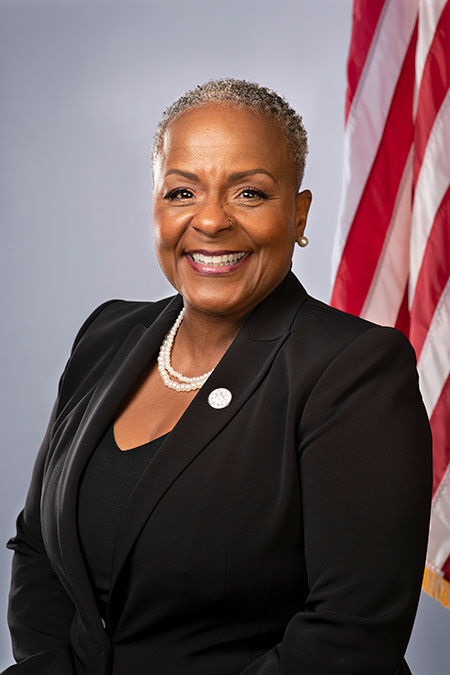
Stephanie Hancock is a Colorado civic leader and small-business advocate focused on public safety, economic growth and practical solutions that strengthen families and communities. She currently serves on the Aurora City Council.


Hick, much like Trump, harmed rural Colorado | Dick Wadhams
Dick Wadhams
dick-wadhams@denvergazette.com
Updated 3 days ago
Colorado’s congressional delegation unanimously opposed President Donald Trump’s recent veto of the Arkansas Valley Conduit water project which had been passed by Congress without opposition. But Trump is not the first chief executive to unilaterally harm communities in rural southeastern...

Dick Wadhams
Reporter

Record prices, expenses plague agriculture industry
Rachel Gabel
rachel-gabel@denvergazette.com
Updated 3 days ago
This time of year, the salebarns are full of bidders, buyers, and cream pie connoisseurs. The adrenalin and anxiety in the building and around the ring is as thick as the gravy served in the café. In the back of...

Rachel Gabel
Reporter
PERSPECTIVE: A crazy train to energy oblivion in Colorado
Sean Paige
sean-paige@denvergazette.com
Updated 4 hours ago
Colorado’s Green Energy Express is careening out of control and heading for a derailment. The only thing that can prevent it now are alert ratepayers recognizing the warning signs and regaining control of this runaway train. It’ll require a return...

Sean Paige
Reporter

Why U.S. Sen. Michael Bennet won’t be governor of Colorado | Jon Caldara
Jon Caldara
jon-caldara@denvergazette.com
Updated 4 days ago
I suggest we get used to saying the words, “Governor Weiser.” The election for Colorado’s next governor does not take place in November. It’s in fewer than five months, on June 30. That’s the state’s primary election. Whoever wins the...

Jon Caldara
Reporter

A tribute to Denver Health’s good work | Pius Kamau
Pius Kamau
pius-kamau@denvergazette.com
Updated 3 days ago
The latest Colorado health-care facilities ’construction news is that University of Colorado Health (UCH) and Advent Health, two nonprofit hospital systems plan to build hospitals adjacent to one another in Broomfield, an area with more hospital beds than in most...

Pius Kamau
Reporter

9 great Colorado story lines to follow in the Olympics | Vince Bzdek
Vince Bzdek
vince-bzdek@denvergazette.com
Updated 2 days ago
The Broncos may not have quite made it to the Super Bowl, but you know what, there’s another Super Bowl this weekend for a certain Colorado team. Boasting 33 athletes plus one alternate, Colorado has the most athletes of any...

Vince Bzdek
Reporter
Capitol M: Olympic version | Week of Feb. 7, 2026
Marianne Goodland
marianne-goodland@denvergazette.com
Updated 4 days ago
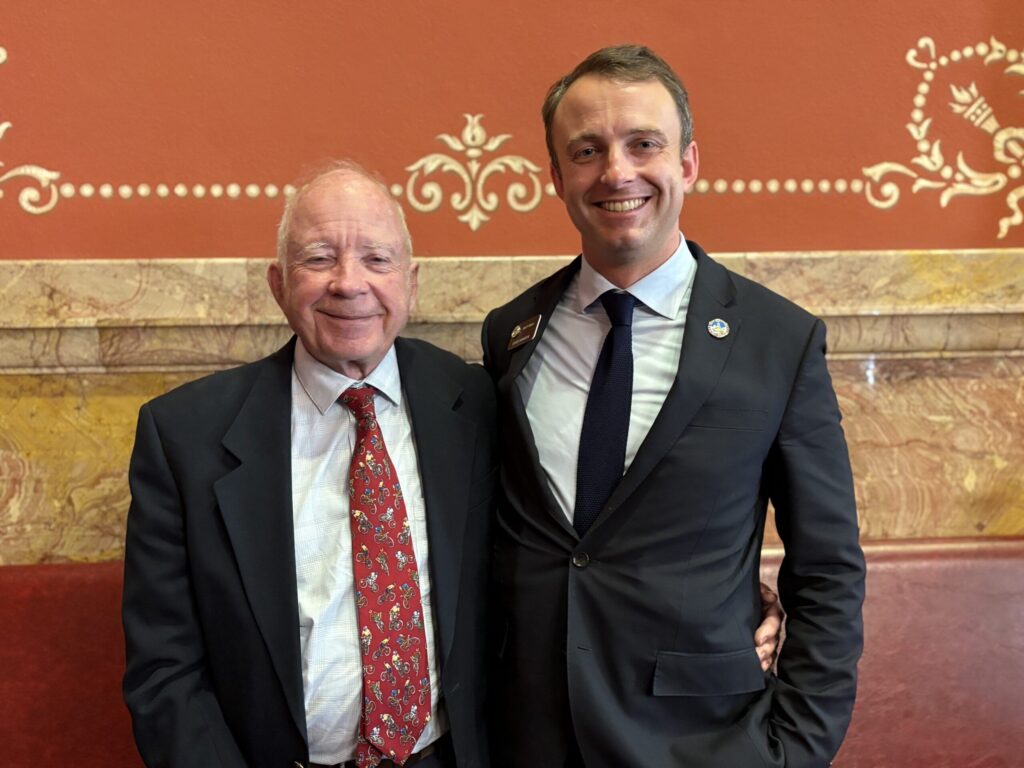
The lighter side of the state Capitol, usually. Sen. Byron Pelton, R-Sterling, who turns 50 this year, is sporting eyeglasses for the first time. He blames the lege. “With 700 bills to read a year, my eyes are failing me,”...

Marianne Goodland
Reporter
GUEST COLUMN: Parental notification is a safeguard for minors, not a barrier
Wendy Smith
wendy-smith@gazette.com
Updated 3 days ago
I have volunteered in the sphere of Domestic Minor Sex Trafficking (DMST) for over seven years and in prisons for over 18 years. I have met girls who were sexually abused/exploited by peers, online perpetrators, or adults they thought they...

Wendy Smith
Reporter

Colorado has no need for nationalized elections | Jimmy Sengenberger
Jimmy Sengenberger
jimmy-sengenberger@denvergazette.com
Updated 4 days ago
When President Donald Trump embraces an approach long pushed by Colorado Secretary of State Jena Griswold, it’s a sign that something is deeply wrong. On Tuesday, the president declared he wanted a federal takeover of elections, suggesting doing so “in...

Jimmy Sengenberger
Reporter

Aurora needs adults, not symbolism | Michael Hancock
Michael Hancock
michael-hancock@gazette.com
Updated 5 days ago
Aurora is not short on real problems. We have a public-safety imperative: keep crime trending down and keep it down. We have a humanitarian imperative: move the homeless off sidewalks and into services that restore people to stability, treatment and...

Michael Hancock
Reporter
PREV
PREVIOUS

PERSPECTIVE: A crazy train to energy oblivion in Colorado
Colorado’s Green Energy Express is careening out of control and heading for a derailment. The only thing that can prevent it now are alert ratepayers recognizing the warning signs and regaining control of this runaway train. It’ll require a return to common sense and energy realism. Nothing short of a utility ratepayer revolt will avert […]

Record prices, expenses plague agriculture industry
This time of year, the salebarns are full of bidders, buyers, and cream pie connoisseurs. The adrenalin and anxiety in the building and around the ring is as thick as the gravy served in the café. In the back of the barn, the crews are bringing loads of cattle, many of which are 600-ish to […]