







Colorado governor insists local officers can work with DEA agents amid non-cooperation law
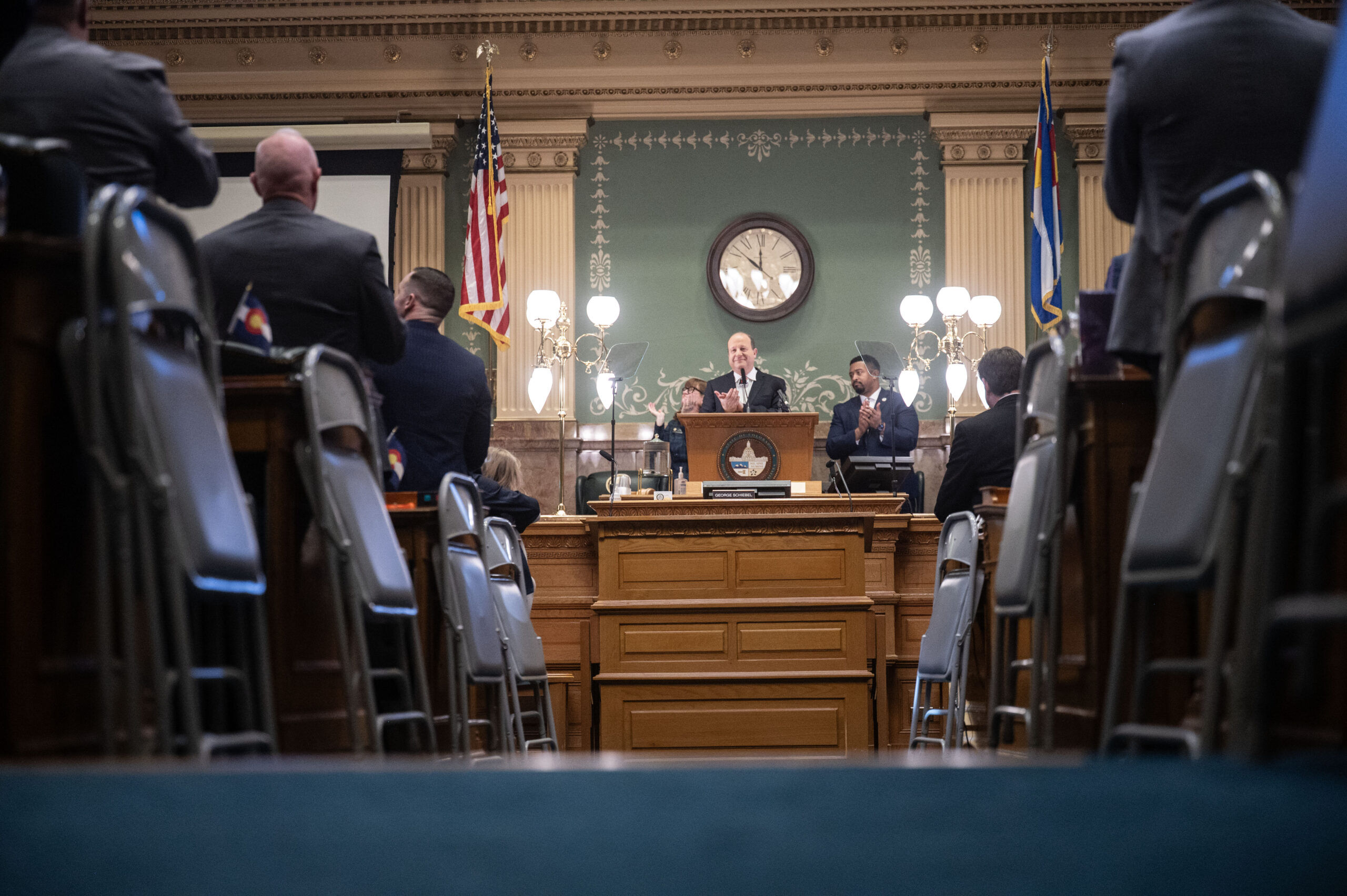
Gov. Jared Polis on Friday insisted that local law enforcement officers in Colorado can — and should — work with federal drug enforcement authorities to go after criminal activity.
An official of the U.S. Drug Enforcement Agency earlier said Colorado’s “sanctuary” laws, notably its prohibition against cooperating with federal authorities on illegal immigration matters, are having a “chilling effect” on law enforcement’s ability to pursue drug cartels operating in the state.
“There’s always a matter of making sure local line officers are educated in our laws and that they know that they’re able to work with our federal partners on criminal matters,” Polis told The Denver Gazette. “So, it doesn’t shock me that there are some line officers somewhere that didn’t know they’re able to work with law enforcement federally on criminal investigations.”
“But, generally, we hope our sheriffs and our police chiefs are doing a good job, making sure that we can work closely with our federal partners. I’ll be happy to talk to them,” he added. “So, I’ll set that up.”
David Olesky, the special agent in charge of the Drug Enforcement Administration’s (DEA) Rocky Mountain Field Division, earlier said that local law enforcers are hesitant to even ask for standard information, such as the name and date of birth of those possibly affiliated with drug activity, out of fear their action could later be used against them by their own state.
“Local and state authorities are fearful that the state is going to come back to them — that the passing of their information, even though it originated in drugs, is going to cause civil liability, where they can get sued up to $50,000,” Olesky said.
On May 23, Polis signed into law Senate Bill 25-276, which, at its core, reemphasized existing state law that precludes local law enforcers from detaining an individual based on an “immigration detainer.”
State statutes already prohibit an employee of a state agency from disclosing any identifying information of a person to assist with immigration enforcement. The new legislation extended that to employees of all political subdivisions, such as “home rule” counties and municipalities. The law, which imposes a civil fine of $50,000 for each violation, includes an exemption for criminal investigations.
Backers of the non-cooperation law have long argued that Colorado’s local police officers should not be commandeered to conduct the work of federal immigration authorities. Others have raised worries about violating due process rights for immigrants living illegally in the country who might be swept up in the Trump administration’s illegal immigration crackdown.
Critics of the “sanctuary” statutes, meanwhile, countered that they made it more difficult for local law enforcement to work with federal agents to interdict crime, and that, ultimately, negatively affects residents, whether they are in the country illegally or not.
Colorado’s drug “sanctuary” label comes amid rising tensions between local and federal law enforcement in Colorado, especially after Attorney General Phil Weiser filed a lawsuit against a Mesa County sheriff’s department deputy for providing a woman’s personal information to federal officials during a traffic stop.
The woman arrested, a University of Utah student, was born in Brazil, came to the U.S. under a tourist visa when she was 7, and has been living in Utah for 12 years. She overstayed her visa about a decade ago and has a pending asylum case.
A Mesa County judge dismissed the case after the sheriff’s deputy resigned from his position and promised not to work for another law enforcement agency in the state, according to local news reports. The deputy, along with several other officers, had been placed on unpaid leave and reassigned from a drug task force.
Court documents and an investigative report into the case had offered glimpses into how local and federal agents interact along America’s major corridors.
Notably, the practice of sharing information about interdictions to other agencies appeared routine, and, when the subject of a police stop is in the country illegally, immigration agents showed up to detain the individual, according to the documents.
But that practice of information sharing — a sore point of contention in other parts of the state, notably in Denver, whose political leaders had perennially balked at cooperating with immigration agents unless the case is criminal in nature — is evolving, particularly following the passage of Colorado’s latest law.
Already, the Colorado State Patrol said it will stop communicating via a Signal chat channel shared by local officers and federal drug and immigration agents.
Last month, Olesky, the DEA agent, said Colorado’s approach toward crime and illegal immigration has changed over the years.
“(Cartel members) said Colorado es un santuario … Colorado is a sanctuary,” he said. “They know Denver es un santuario. If they get arrested by the feds here, they know they will go. But if they get arrested by the state, their immigration status means nothing.”
Of particular worry to Olesky is that Denver is “on the verge of breaking” drug activity records, while the rest of the country is headed in the other direction.
Polis once anew rejected the label “sanctuary state.”
“In our state, we share criminal information with our federal partners nearly every day in some way, shape, or form. And whether the suspects are here legally or illegally doesn’t matter,” he said. “We’re fully able to cooperate on apprehending suspects, whether their presence here is legal or illegal.”
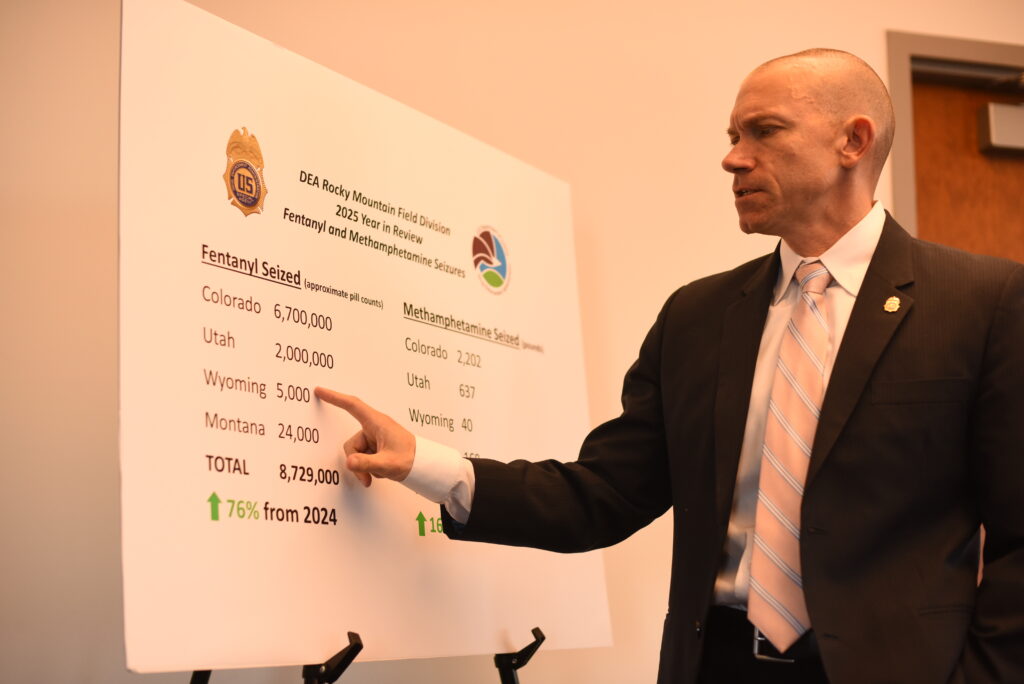
The Rocky Mountain region saw record-breaking amounts of fentanyl pills and methamphetamines seized in 2025, according to DEA officials. The seizures — a 76% increase compared to the year before — accounted for 6.7 million, or over 14%, of the 47 million pills seized by the DEA throughout the U.S., federal authorities said.
Meanwhile, fatal fentanyl overdoses in Denver rose by nearly 25% last year to the second-highest total in the past half-decade: 346 people died, up from 277 the year before.
Reporters Michael Braithwaite, Marianne Goodland and Luige del Puerto contributed to this article.

Flock cameras assist in road rage shooting arrest in Douglas County
Daniel Boniface
dan.boniface@denvergazette.com
Updated 1 hour ago
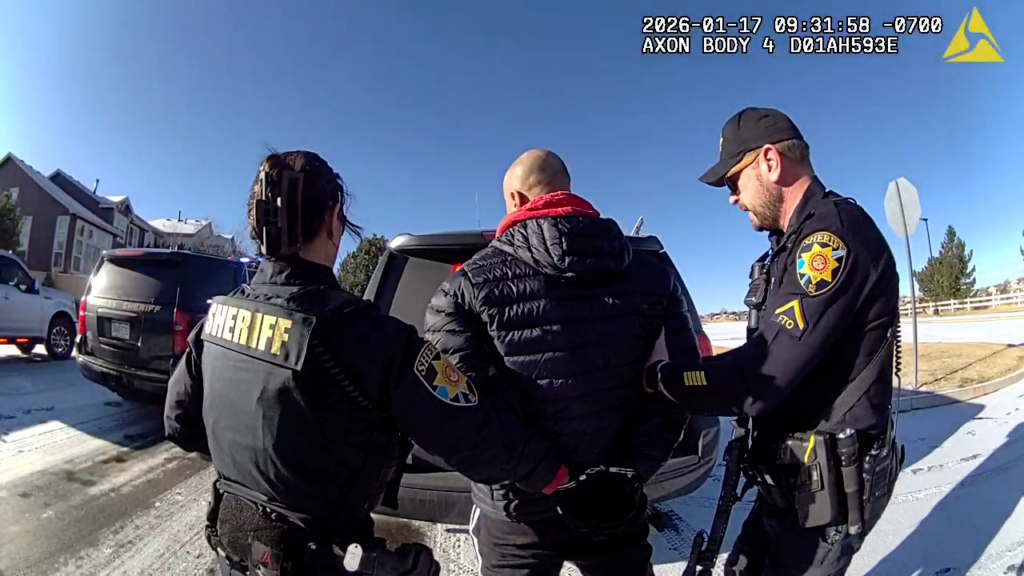
Douglas County deputies on Monday said Flock Safety cameras were critical in an investigation that led to the arrest of a road rage shooting suspect. Deputies with the Douglas County Sheriff’s Office said 43-year-old Mitchell Aaron Weber was arrested Saturday...

Daniel Boniface
Reporter

2-year-old dead in Denver; man arrested
Daniel Boniface
dan.boniface@denvergazette.com
Updated 10 hours ago
Police have launched a homicide investigation after a 2-year-old was found dead Sunday in Denver. The Denver Police Department said they were called out to a home in the 100 block of South Vrain Street on a report of a...
Daniel Boniface
Reporter
Aurora police arrest driver, seek vehicle in fatal hit-and-run
Michael Braithwaite
michael.braithwaite@gazette.com
Updated 3 days ago
Aurora police arrested a suspect but are still looking for the vehicle he allegedly killed a female pedestrian with near a bus stop Friday morning. Marcos Ortega-Lopez, 31, faces a felony charge of leaving the scene of a crash involving...

Michael Braithwaite
Reporter

Police arrest second suspect in connection with Wolff Run Park shooting
Michael Braithwaite
michael.braithwaite@gazette.com
Updated 3 days ago
Police arrested a second suspect in connection with a fatal shooting at Westminster’s Wolff Run Park last weekend. Charity Johnson, 35, faces first-degree murder charges after police connected her to the fatal shooting of a man in the parking lot...
Michael Braithwaite
Reporter
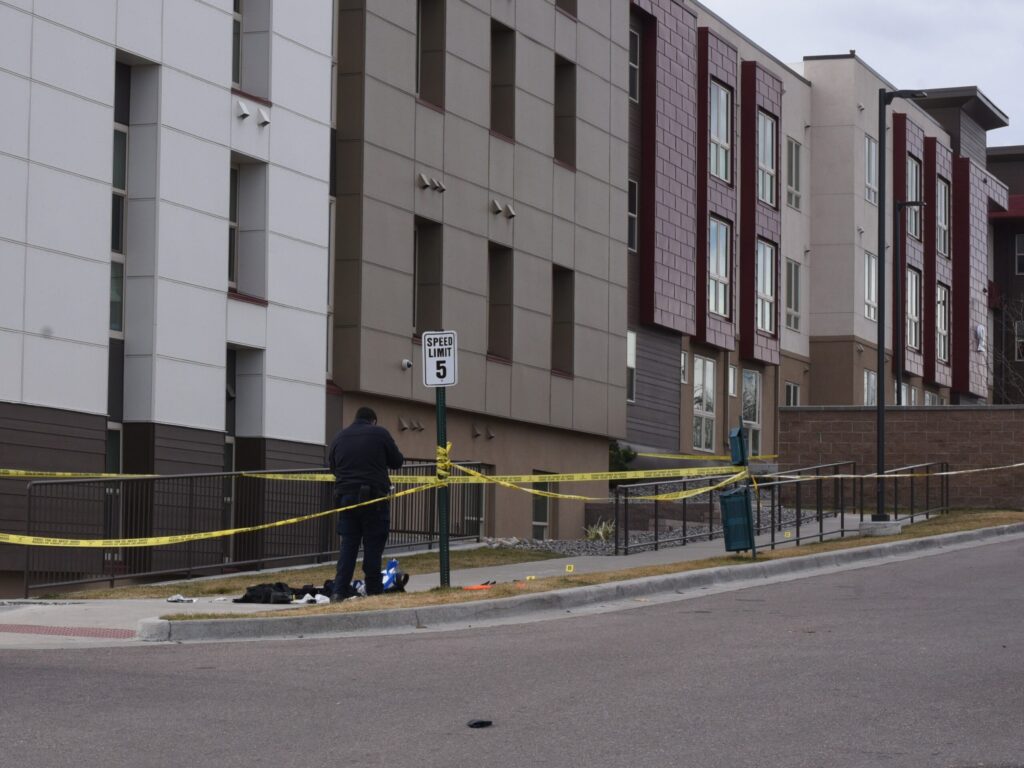
Adams County deputy who was shot in stable condition, another man dies in hospital
Michael Braithwaite
michael.braithwaite@gazette.com
Updated 3 days ago
An Adams County Sheriff’s Office deputy is stable — though likely still in critical condition, as he remains in the intensive care unit — while a man died after both suffered gunshot wounds from what appeared to be a shootout...
Michael Braithwaite
Reporter
Police arrest 17-year-old in connection with fatal weekend shooting
Michael Braithwaite
michael.braithwaite@gazette.com
Updated 4 days ago
The Adams County Sheriff’s Office on Tuesday arrested a teenager in connection with a shooting that took place a few days earlier. The suspect, 17, is suspected of killing one person and injuring three others in an overnight shooting on...
Michael Braithwaite
Reporter
Man arrested for attempted murder after DougCo carjacking, chase
Michael Braithwaite
michael.braithwaite@gazette.com
Updated 4 days ago
Authorities arrested a man in connection with a carjacking and ensuing chase through Highlands Ranch Monday night that left a sheriff’s deputy “bloodied and bruised.” Daniel Reynaldo Tolentino, 43, faces charges of attempted first-degree murder of a peace officer, aggravated...
Michael Braithwaite
Reporter
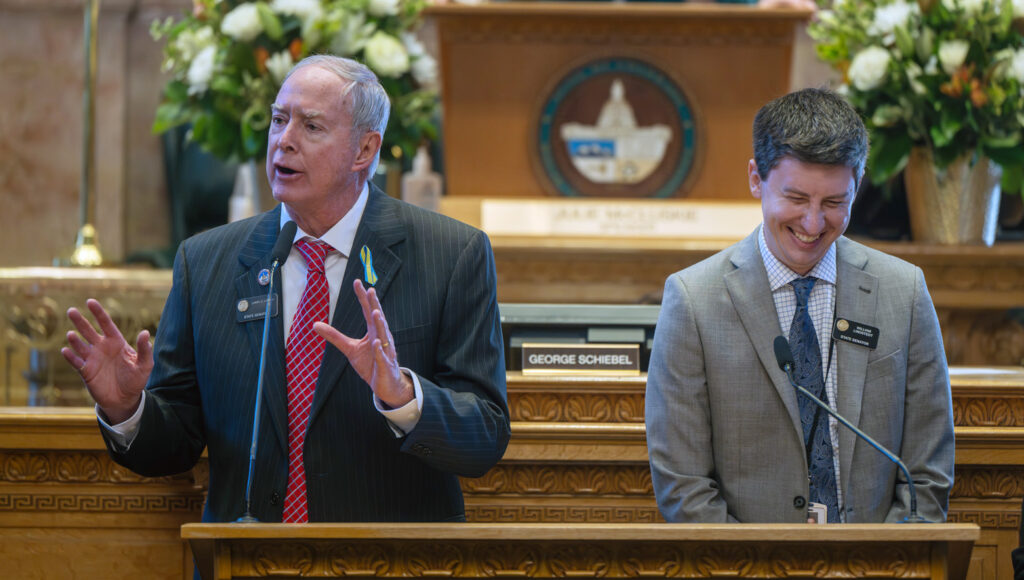
Colorado Senate kicks off 2026 session with bills on competency law, housing, schools and public safety
Marianne Goodland
marianne-goodland@denvergazette.com
Updated 5 days ago
The Colorado Senate opened the 2026 legislative session Wednesday with a flurry of policy proposals, including changes to the state’s competency law, tougher penalties for child trafficking, early action on school funding and measures addressing housing, firearms and immigration enforcement....

Marianne Goodland
Reporter
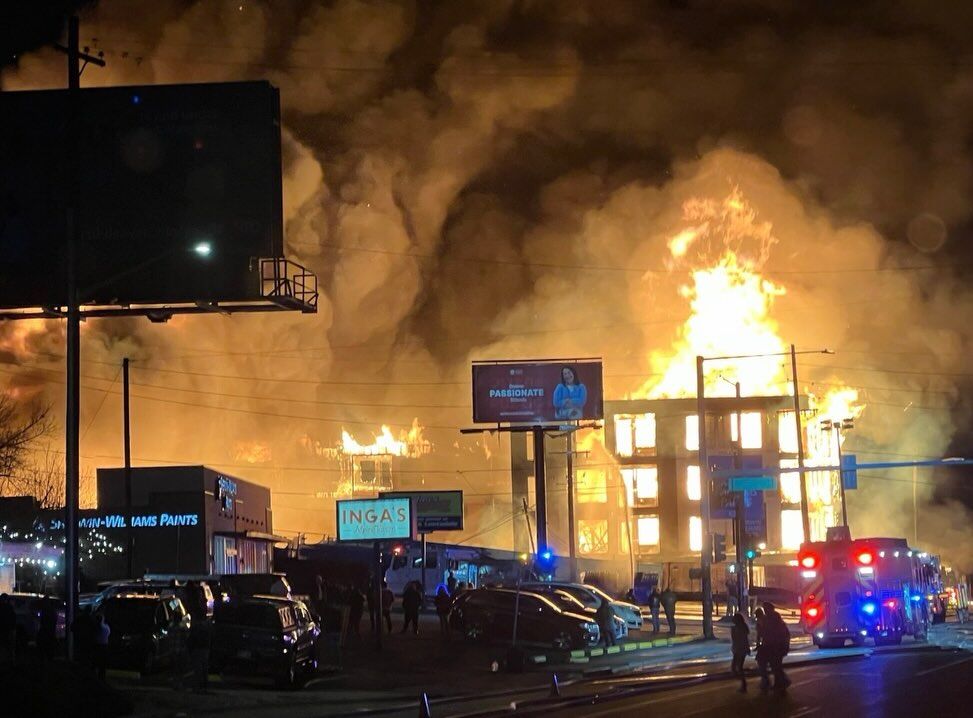
Man arrested for arson in connection with five-alarm Leetsdale fire
Michael Braithwaite
michael.braithwaite@gazette.com
Updated 3 days ago
Authorities announced Wednesday the arrest of a man in connection with one of the largest fires Denver has seen in decades. Tony Becerra, 38, faces arson charges in relation to a five-alarm fire on Leetsdale Drive that burned and destroyed...
Michael Braithwaite
Reporter
Man at Keystone Resort dies in police custody after traffic stop
Michael Braithwaite
michael.braithwaite@gazette.com
Updated 5 days ago
A man wanted on three outstanding warrants died soon after police arrested him at Keystone Resort on Monday. The 43-year-old man, who police are not currently publicly identifying, died an hour after he was placed into handcuffs around 1:15 p.m....
Michael Braithwaite
Reporter
PREV
PREVIOUS

PHOTOS: Broncos Defeat Bills in Divisional Playoff
Flock cameras assist in road rage shooting arrest in Douglas County
Douglas County deputies on Monday said Flock Safety cameras were critical in an investigation that led to the arrest of a road rage shooting suspect. Deputies with the Douglas County Sheriff’s Office said 43-year-old Mitchell Aaron Weber was arrested Saturday morning after they said he fired a weapon at another vehicle near Quebec Street and […]