







11 years ago, Southern Colorado Boy Scouts camp survived ‘terrifying’ flash flood
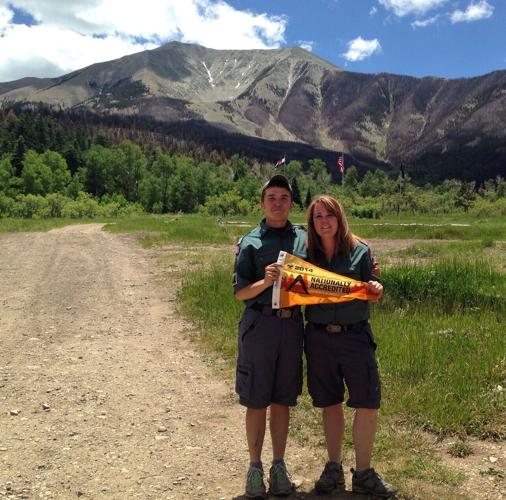
Shelly Salley-Jarrett, right, with Program Director Matt Schneider and their accreditation flag in 2014, the year of the flash flood.
Courtesy of Shelly Salley-Jarrett
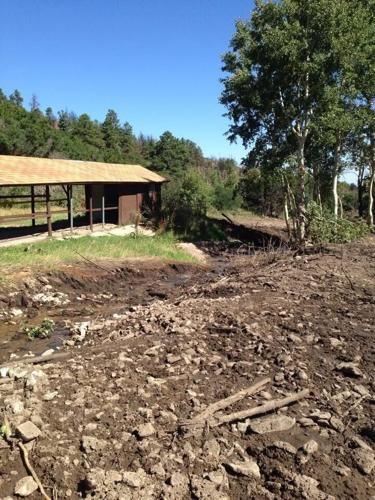



Eleven years after flash flooding forced the overnight evacuation of Spanish Peaks Scout Ranch near Walsenburg, Shelly Salley-Jarrett still recalls the “terrifying” nature of the ordeal.
Salley-Jarrett was the camp director in 2014 at Spanish Peaks, a Boy Scouts camp that served kids from Kansas for several decades. After midnight on a July night, 145 scouts and staff were evacuated from the campsite on Bear Creek Road in Huerfano County, according to reports.
As search and recovery continues along the Guadalupe River in Texas after the deadly flooding over the Fourth of July weekend, Salley-Jarrett knows how Mother Nature can take control.
Texas governor says more than 160 people are still missing after deadly floods
Salley-Jarrett called the National Weather Service in Pueblo, just like she did every night, on July 11, 2014, to ensure there would be no emergency weather situations that may surprise campers in the middle of the night. The Weather Service told her there was less than an inch of rain predicted to fall on their camp site.
However, Salley-Jarrett said the rain that caused the flooding came from the peaks of the mountain, which saw much more than what was forecast.
“When it was raining at the top, we didn’t know what it looked like until it was upon us,” she said.
Salley-Jarrett recalls seeing the flash flood separate portions of the campground. As she tended to the evacuation of campers and staff, she noticed the men’s staff house grew further and further away, divided by a fast-flowing stream of water.
“I had just called the National Weather Service, and we had just let our guard down, and it was within minutes that everything happened at once. Even if you are prepared and have systems in place, there’s a lot that can happen that you can’t be prepared for until it’s going on at that moment,” she said.
Salley-Jarrett said putting trust in her fellow camp leaders and staff was hard, but she will forever be impressed by the professionalism shown by the scouts and staff during evacuation due to the safety drills pressed into them.
“After an experience like that, you view things through a new set of lenses. You understand why you have drills — drills save lives. You understand why we have systems in place — these systems assure people are accounted for, especially in a camp-setting,” Salley-Jarrett said.

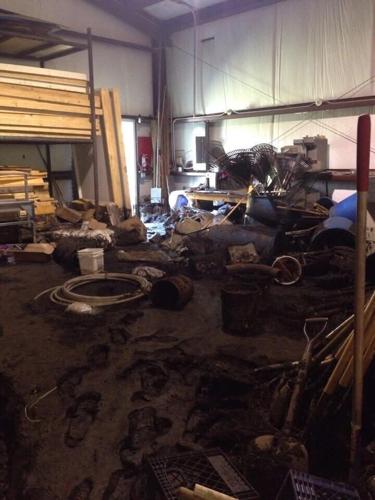
Thick mud in the corner of the Spanish Peaks Scout Ranch maintenance building following the flash flood on July 11, 2014, in southern Colorado’s Huerfano County.
On the day of the flash flood, some areas of Colorado Springs saw 18 inches of standing water, but records indicate that there were no deaths reported, including at the Spanish Peaks Scout Ranch.
Even though no one from the campsite died, Salley-Jarrett says that traumatic, late-night experience bonded many of the staff and campers for life.
Just one year before the flood, the scout ranch went through a 13,000-acre wildfire that forced the evacuation of 78 campers and killed as many as 80% of the area’s trees.
Despite back-to-back natural disasters, Salley-Jarrett said she saw the same campers return, time and time again.
“The people came back, and they continued to be there. The traditions were there, it maybe looked different, but it was still there… it never stopped,” she said.
The Spanish Peaks Scout Ranch closed doors in 2023, switching ownership from the Santa Fe Trail Council based out of Garden City, Kan., to a rancher based in Huerfano County. Still, Salley-Jarrett is in contact with campers and staff who were present for the fire and floods.
Just this last weekend, a previous camper who frequented Spanish Peaks visited Salley-Jarret with his new wife, who is pregnant with their first child. Though the flood was traumatic and terrifying, that experience only brought campers and staff together, transforming them from friends to family.
“It was an awful experience to go through, but it’s amazing how communities come through and find a way of connecting and coming together,” Salley-Jarrett said. “Many of the campers and staff I worked around are lifelong friends. They’re more family than friends.”
Local summer camp preparedness
Summer camps along bodies of water in Colorado are prepared for disasters like those that the Spanish Peaks Scout Ranch faced.
The Boy Scouts of America, with three Colorado councils and more than 14,000 members, has mandatory flash flood and natural disaster drills weekly, ensuring new campers know what to do in case of an emergency.
The Pathways to the Rockies council, with a Colorado Springs headquarters, oversees Camp Alexander, a Boy Scouts camp near Lake George. Camp Alexander sees around 6,000 scouts each year, with seven weeks of camp cycles throughout the summer, according to the camp’s website.
To maintain the safety of campers, each time a new group of boys comes in, counselors and administrators guide campers through safety drills, according to Jim Machamer, chief executive officer of the Pathway to the Rockies council.
During the safety drills, a natural disaster siren is sounded, and the boys learn safety measures that keep the Boy Scouts’ motto true: always be prepared.
“Every Sunday, we get a new batch of campers, and every Monday, we do what we call a fire drill. This includes teaching what to do in the case of a fire, flash flood, lost camper, severe weather and intruder,” said Machamer.
Repair work underway on flood-damaged North Cheyenne Canyon Road
Beyond the Boy Scouts, there are dozens of summer camps in Colorado that are near water.
Avid4 Adventure is an overnight summer camp that serves an estimated 50,000 kids each year, according to the camp’s staff handbook. The summer camp program offers dozens of outdoor experiences for Colorado youth, including backpacking, water sports and climbing.
Each of Avid4 Adventure’s camping experiences are unique and require different safety measures. Several of the camping experiences offered are along the Arkansas River.
For river expeditions, Avid4 Adventure outsources guidance from Dvorak Expeditions, a Colorado-owned whitewater rafting and kayaking tour company.
Chase Jurgaitis, an expedition instructor at Avid4 Adventure, said before every trip, instructors check the week’s forecast and get prepared for any weather that may come. They also assure every expedition has the proper supplies, such as extra flash lights and life jackets, in case of a natural disaster.
Tips for safer recreation
When outside of cell service, the National Weather Service recommends that people in the outdoors invest in a NOAA weather radio, an AM radio that transmits hazardous weather conditions to those out of service.
“There are certain rural areas that just don’t have cell phone service. Having that NOAA weather radio assures you get emergency information even when your phone is out of reach,” said a Weather Service spokesperson.
Another tip for campers is to avoid areas that have recently seen a forest fire. These charred areas have less nutrient-dense soil, and its ability to absorb water is less, according to Justin Louen, a hydrologist with the National Weather Service.
“Those recently burnt areas naturally require a lot less rain to start causing flash flooding or debris run off,” Louen said.
When exploring public lands, Bridget O’Rourke, a Colorado Parks and Wildlife spokesperson, urges Coloradans to stay off closed trails.
“If a trail is closed, please do not walk past those gates. They are set up for a reason. Do not ignore the signs,” O’Rourke said.
When it comes to evacuation in times of disaster in CPW jurisdiction, O’Rourke says there are public land officials who will travel from campsite to campsite, enforcing evacuation.
“When it comes to any emergency situation, we have on-call staff that will go into full enforcement mode, getting people out of the danger area,” O’Rourke said.


Denver area events for Feb. 3
Carlotta Olson
carlotta-olson@denvergazette.com
Updated 18 hours ago
If you have an event taking place in the Denver area, email information to carlotta.olson@gazette.com at least two weeks in advance. All events are listed in the calendar on space availability. Tuesday Sipping N’ Painting Hampden — “Moonlit Pine,” 6:30-8:30 p.m., Sipping...

Carlotta Olson
Reporter

Colorado legislators advance proposal allowing lawsuits against federal immigration agents
Marianne Goodland
marianne-goodland@denvergazette.com
Updated 9 hours ago
A divided panel of Colorado legislators on Monday advanced a proposal to give individuals injured during an immigration enforcement operation the ability to sue federal agents in state court. The measure comes amid speculation that Colorado could be next on...

Marianne Goodland
Reporter
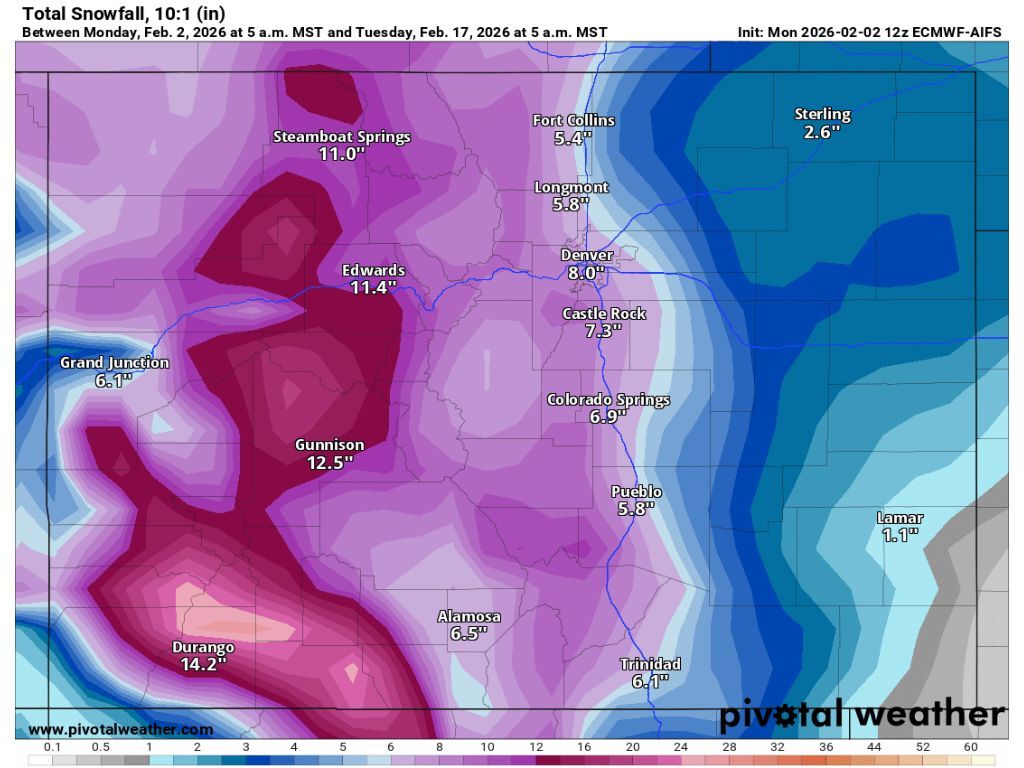
Big snow could bring double-digit totals to Colorado peaks in upcoming days
Spencer McKee
spencer@outtherecolorado.com
Updated 9 hours ago
Not much snow is expected this week in Colorado, but the extended forecast is showing that heavy precipitation is likely later this month. According to the National Weather Service, parts of northern Colorado could get about 1 to 3 inches...

Spencer McKee
Reporter

Denver City Council approves $325K settlement, $15M equipment purchase
Deborah Grigsby
deborah.smith@denvergazette.com
Updated 13 hours ago
The Denver City Council on Monday approved a $325,000 liability settlement involving the Denver Sheriff’s Department, along with a $15 million purchase order for parks and golf equipment. This is the first liability settlement of this type approved by the...

Deborah Grigsby
Reporter

So … why do we care about Bad Bunny?
Isabelle Rosewater, Special to The Gazette
Isabelle-Rosewater@gazette.com
Updated 12 hours ago
Puerto Rican superstar’s selection to headline first Super Bowl halftime show in Spanish has sparked global conversation and controversy Bad Bunny: The artist who has sent America down a rabbit hole. The Puerto Rican superstar’s selection as the first artist...


DA charges 3 suspects in fatal Thornton burglary attempt
Sage Kelley
sage.kelley@denvergazette.com
Updated 12 hours ago
The Adams County District Attorney’s Office filed charges against three suspects in connection to a burglary attempt that ended with a fourth suspect being shot to death. The 17th Judicial District Attorney’s Office filed burglary and crime of violence charges...

Sage Kelley
Reporter
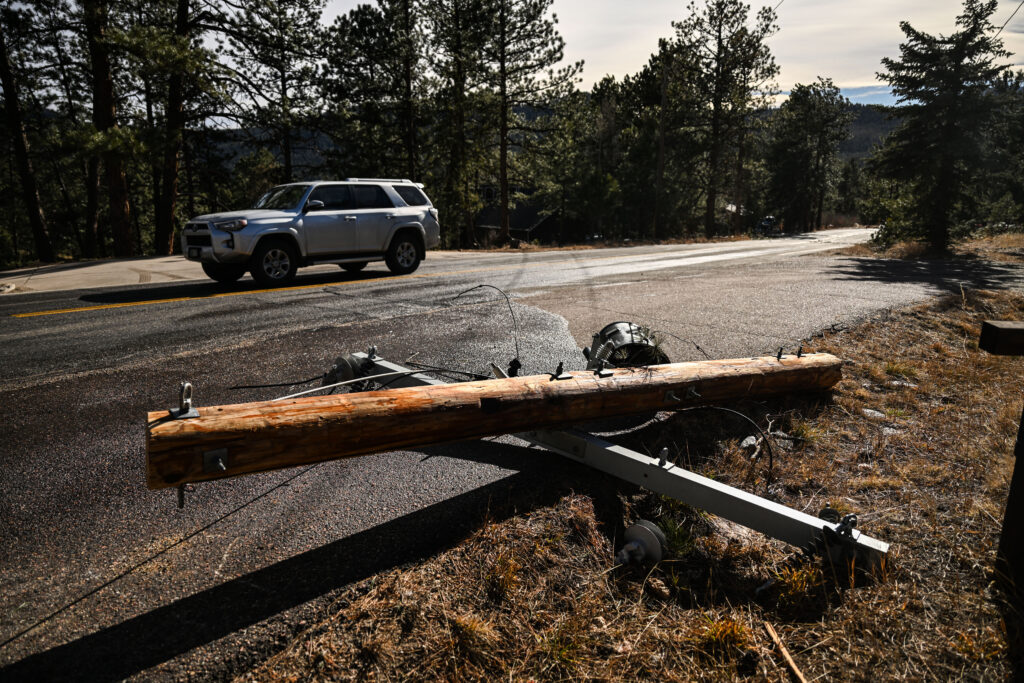
Xcel Energy defends power shutoffs
Scott Weiser
scott-weiser@denvergazette.com
Updated 9 hours ago
Xcel Energy officials defended the company’s use of public safety power shutoffs during extreme wind events as a necessary step to prevent wildfires, while telling Colorado lawmakers the company is accelerating efforts to make future outages more targeted and shorter....

Scott Weiser
Reporter
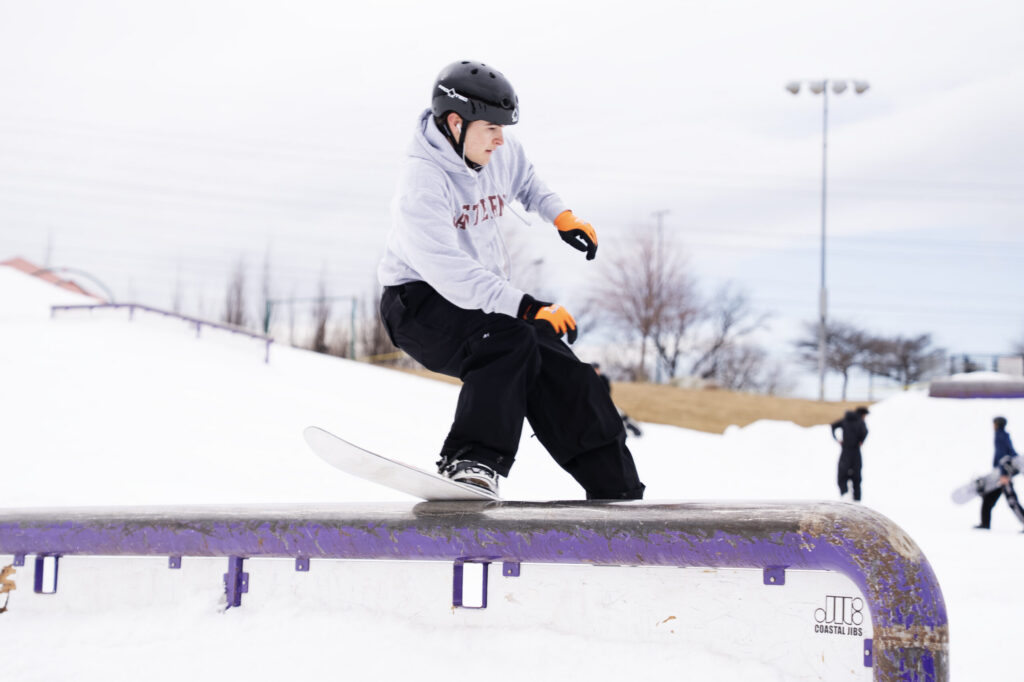
Ruby Hill Rail Yard kicks off season despite warm winter
Sage Kelley
sage.kelley@denvergazette.com
Updated 9 hours ago
Despite a blistering winter season wreaking havoc amidst snow sport enthusiasts, Denver’s Ruby Hill Rail Yard has created a snowy oasis in a dry land. The free terrain park — located just south of downtown Denver near the south Platte...
Sage Kelley
Reporter

Denver’s layoffs may cost more than just employees
Deborah Grigsby
deborah.smith@denvergazette.com
Updated 9 hours ago
Last summer, the city of Denver lost nearly 160 employees as part of structured layoffs to help Denver Mayor Mike Johnston close a $250 million budget gap. But the city lost much more than just its employees. It lost more...
Deborah Grigsby
Reporter

Avian flu spreads to backyard flocks in Larimer and Logan counties
Nicole C. Brambila nico.brambila@denvergazette.com
nico.brambila@denvergazette.com
Updated 11 hours ago
The new cases follow last week’s disaster declaration tied to a commercial outbreak in Weld County. The Colorado Department of Agriculture confirmed three additional cases of the highly pathogenic avian flu in backyard flocks in Larimer and Logan counties, in...

PREV
PREVIOUS

Man dies after following boat into water during launch at Colorado reservoir
Facebook Twitter WhatsApp SMS Email Print Copy article link Save Facebook Twitter WhatsApp SMS Email Print Copy article link Save Colorado Parks and Wildlife is investigating a fatal boating accident that took place at Prewitt Reservoir on Tuesday afternoon. According to a press release on the matter, the situation stemmed from a boat launch at […]

Music fest billed as "ultimate adult summer camp experience" returns to Colorado
Facebook Twitter WhatsApp SMS Email Print Copy article link Save Facebook Twitter WhatsApp SMS Email Print Copy article link Save A music festival that’s headed into its fourth year in southern Colorado bills itself as the “ultimate adult ‘summer camp’ experience” – and it sounds like its set to be a blast. Scheduled to take […]